The short answer for Plano chemical plants in 2026
For Plano chemical factories in 2026, the default technology choice hinges on whether the waste is floating or settling. A dissolved air flotation (DAF) unit removes up to 95% of FOG versus roughly 70% for a clarifier on the same stream (Ecologix, 2026); a gravity or lamella clarifier running at 20–40 m/h surface loading wins when heavy suspended solids dominate. Most specialty chemical and petrochemical sites in the Plano–Duck Creek service area run a hybrid train: DAF for the emulsion step, lamella for polishing, with MBR or RO downstream.
This decision is tethered to regulatory requirements. Every significant industrial user in Plano discharges to the Duck Creek WWTP and is gated by the City of Plano Industrial Pretreatment Program, codified in Chapter 18, Article IX of the city code. Above the local limits sits the federal floor: EPA's 40 CFR Part 414, which sets categorical pretreatment standards for organic chemicals (subpart 414.40 series) and inorganic chemicals (subpart 414.60 series) manufacturing. Your technology must clear both, making the FOG vs. TSS choice a direct function of your compliance strategy.
How a DAF system actually treats chemical wastewater
DAF operates by depressurizing a saturated recycle stream inside a micro-bubble generator to produce a cloud of 20–40 micron bubbles that attach to oil droplets, emulsified organics, and low-density colloids, lifting them to the surface for removal by a rotary skimmer (DAF Corp micro-bubble generator spec). The clarified subnatant exits below the separation wall, typically with a thickened sludge consistency of 2–4% total solids.
This process benefits Plano chemistry plants by capturing contaminants that clarifiers miss: emulsified oils from polymer production, low-density solvents like toluene or xylene, and free oil surges from tank-farm washdowns. The Aguasigma SIGMA work on selenium co-precipitation with FeCl3 demonstrates how flotation and chemistry integrate: holding pH stable through the DAF outlet while dosing ferric chloride upstream delivers at least 80% selenium removal, with the resulting Fe(OH)3 floc simultaneously scavenging suspended solids, oils, and FOG in one pass.
The DAF platform covers 4–300 m³/h across 13 standard models, with the round FC-150 design point benchmarked at 2,000 mg/L TSS in and 50 mg/L TSS out (DAF Corp, 2026). Two configurations dominate chemical-plant bids in 2026: the round FC Maximizer at 92–98% TSS removal and the rectangular RC UniMax at 85–90% TSS removal. The skid-mounted FC unit serves as a retrofit workhorse for Texas chemical parks, arriving with pre-wired ancillary piping, valves, and controls for rapid installation on a concrete pad. See the HydropureWater DAF system for the standard model range.
How a clarifier (and a lamella) actually treats chemical wastewater
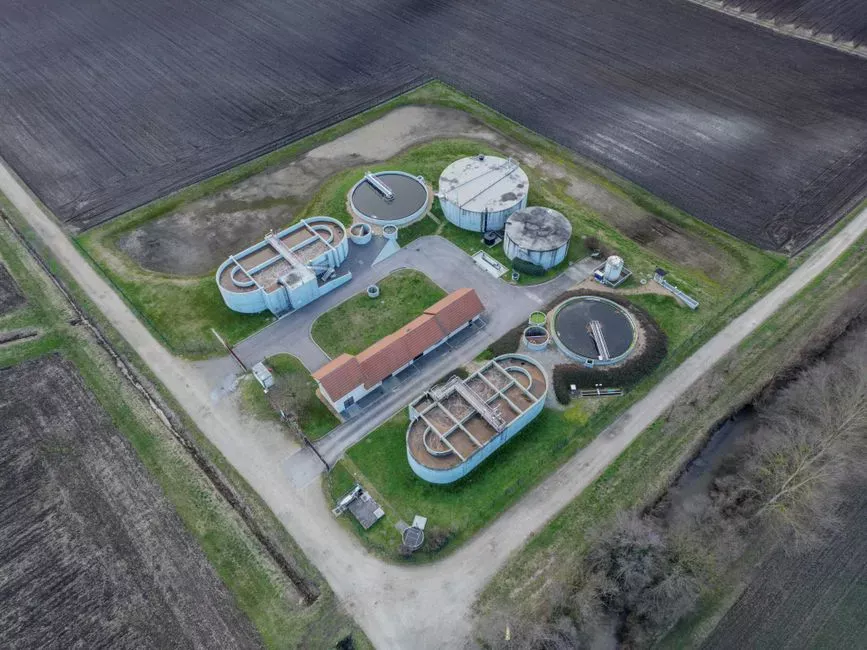
A clarifier employs gravity to settle heavy solids by dropping wastewater through a center well into a sludge blanket, while clarified water rises over a peripheral weir. The lamella variant inserts a stack of inclined plates at 55–60°, shortening the effective settling distance and compressing the footprint by roughly 5–10× versus a conventional clarifier while sustaining a 20–40 m/h surface loading rate.
The trade-off is selectivity, as clarifiers struggle with emulsions and FOG. They also require a pre-coagulation step for colloidal material that would otherwise pass through the system. Clarifiers earn their place in Plano chemical plants on streams that DAF handles inefficiently: catalyst fines from hydrogenation reactors, lime and gypsum sludges from neutralization, and metal hydroxide flocs generated during pH adjustment. The HydropureWater lamella clarifier line is typically specified at the 30% polymer reduction benchmark, as the inclined plates produce a denser underflow that flocculates more easily than a standard clarifier blanket.
Rule in a clarifier or lamella when the contaminant is heavy, dense, and settleable; rule it out when the contaminant floats, emulsifies, or resists coagulation without a heavy polymer dose.
DAF vs clarifier: 12-row head-to-head for chemical plants
The 12-row matrix below provides data for CAPEX planning, based on Ecologix (2026), DAF Corp (2026), and Aguasigma (2026) operating benchmarks.
| Parameter | DAF (round FC) | DAF (rectangular RC) | Clarifier / Lamella |
|---|---|---|---|
| Mechanism | Micro-bubble flotation | Micro-bubble flotation | Gravity sedimentation (± inclined plates) |
| Target contaminants | Oils, FOG, emulsions, colloids | Oils, FOG, emulsions, colloids | Dense TSS, metal hydroxides, lime sludge |
| FOG removal | ~95% | ~90% | ~70% (Ecologix 2026) |
| TSS removal | 92–98% | 85–90% | ~90% on heavy-solids streams |
| Footprint | Compact (6–70 ft diameter) | Compact (rectangular) | Large; lamella cuts area 5–10× |
| Surface loading | N/A (flotation) | N/A (flotation) | 20–40 m/h (lamella) |
| CAPEX per m³/h | Higher | Higher | Lower (lamella especially) |
| OPEX driver | Air compressor, polymer, FeCl3 | Air compressor, polymer | Polymer, larger tank volume |
| Chemical demand | Moderate; tied to FOG and metal removal | Moderate | Polymer drops ~30% on lamella |
| Oil surge handling | Strong | Strong | Weak; floating oil escapes over weir |
| Sludge consistency | 2–4% TS float | 2–4% TS float | 1–3% TS underflow (higher on lamella) |
| Best for chemical sub-sectors | Specialty organics, polymer emulsions, FOG-bearing washwater | Tight-footprint retrofits, lower flow | Electroplating, acid neutralization, catalyst fines |
Clarifiers generally offer lower OPEX, DAF excels at removing oils and FOG, and hybrid systems handle the complex, mixed-waste streams common in Plano facilities.
40 CFR Part 414 and Plano's pretreatment overlay
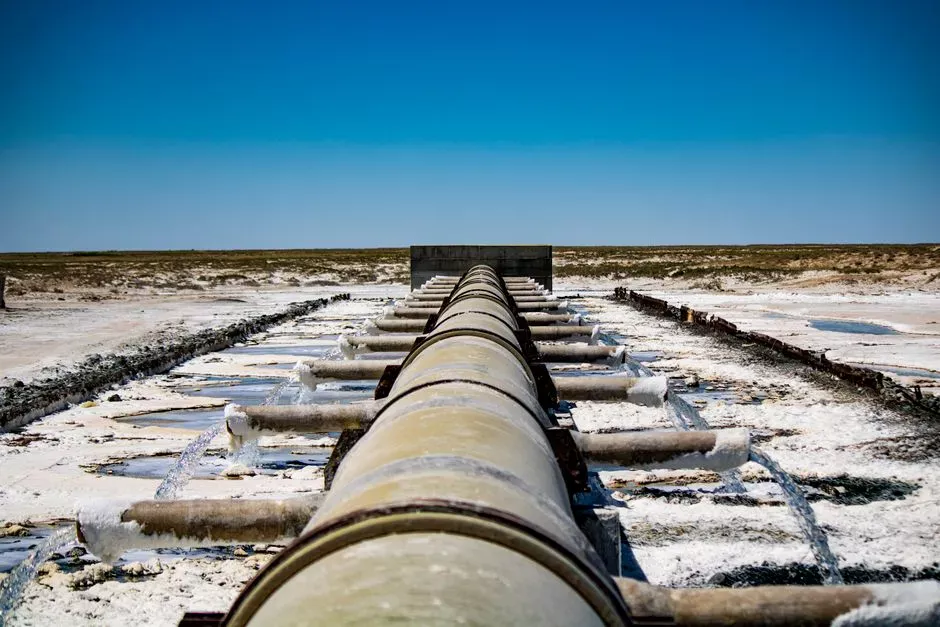
40 CFR Part 414 is the categorical pretreatment standard the EPA wrote for inorganic and organic chemicals manufacturing. Subpart 414.40 governs organic chemicals, plastics, and synthetic fibers, while subpart 414.60 covers inorganic chemicals. Each subpart carries its own Best Available Technology (BAT) and Best Conventional Technology (BCT) effluent limits, setting the numerical ceiling for parameters like TSS, oil and grease, total metals, and pH.
The City of Plano Industrial Pretreatment Program operates under Chapter 18, Article IX of the municipal code, administering Significant Industrial User (SIU) permitting, categorical compliance sampling, and local discharge limits for facilities routing wastewater to the Duck Creek system. Local limits are typically tighter than federal standards for heavy metals and certain organics, requiring technology that demonstrates BAT/BCT compliance rather than just nominal removal efficiency. The regulatory pathway is dissected in our 2026 chemical plant pretreatment compliance guide; Houston serves as a useful analog for North Texas, as both cities manage industrial pretreatment under the same 40 CFR 403 framework.
Decision tree: pick DAF, clarifier, or hybrid for your influent
Use this four-step workflow to translate these technical requirements into a project plan.
- Characterize the influent. FOG levels above ~50 mg/L or the presence of stable emulsions necessitate DAF. Bulk TSS above 2,000 mg/L with low oil content (catalyst fines, lime sludge, metal hydroxide floc) favors a clarifier or lamella. Mixed streams, typical of Plano specialty chemical and petrochemical influent, require a hybrid approach.
- Check pH and metal loading. If selenium, arsenic, or other co-precipitation-friendly metals are present, DAF + FeCl3 achieves ≥80% metal removal provided the pH remains stable through the DAF outlet (Aguasigma SIGMA operating data, 2026).
- Check the downstream train. If MBR or RO processes follow, target DAF effluent TSS below 50 mg/L. The DAF Corp FC-150 design point (2,000 mg/L in, 50 mg/L out at 500 gpm) provides the necessary spec for mass balance calculations.
- Default to hybrid for retrofits. A DAF + lamella sequence handles emulsions first and polishes residual TSS in a small footprint, making it ideal for Texas chemical parks where existing concrete tanks and pipe racks constrain single-technology layouts. Pair the train with a PLC-controlled dosing skid to maintain consistent pH and polymer dosing across diurnal swings. See the HydropureWater automatic chemical dosing skid for typical specifications.
If your plant's waste profile is high in polymer emulsions or solvent-bearing washwater, FOG-vs-TSS ratios point toward DAF. If the profile consists of acid–alkali neutralization with metal-bearing catalysts, a lamella clarifier should be positioned ahead of or in place of a DAF unit.
Rough CAPEX and 5-year OPEX for a Plano chemical plant

For a 50 m³/h (220 gpm) chemical wastewater train in 2026, indicative CAPEX is $80,000–$140,000 per m³/h for a DAF system (skid-mounted FC, including air saturator, recycle pump, and controls) and $30,000–$70,000 per m³/h for a lamella clarifier package, including sludge hopper and polymer makeup. Costs vary based on stainless vs. carbon-steel tankage, explosion-proof ratings, and PLC scope.
OPEX is the primary driver of technology selection. DAF OPEX is dominated by the air compressor (5–8 kWh per m³ treated), polymer dose (3–8 mg/L active), and FeCl3 usage for metal co-precipitation. Clarifier OPEX is driven by polymer dose and energy for tank volume management, though the lamella reduces polymer usage by approximately 30% compared to conventional clarifiers. Hybrid systems increase CAPEX by 15–25% but typically reduce chemical OPEX by 20–30% over five years, as the DAF absorbs the FOG and colloid load, allowing the lamella to focus on residual floc. Texas electricity and polymer price volatility in 2026 makes this OPEX comparison a critical factor in bid analysis. For a fuller cost breakdown, see the 2026 ETP cost breakdown.
| Cost line | DAF only | Lamella only | Hybrid DAF + lamella |
|---|---|---|---|
| CAPEX per m³/h (50 m³/h basis) | $80,000–$140,000 | $30,000–$70,000 | +15–25% vs single-tech |
| 5-yr chemical OPEX (relative) | Baseline | −30% polymer vs conv. clarifier | −20–30% vs DAF only |
| 5-yr energy OPEX | Higher (air compressor) | Lower | Moderate |
| Footprint | Compact | Compact (lamella) | Compact, two skids |
| Best when | FOG/emulsion dominant | Heavy TSS, low oil | Mixed chemical stream |
Frequently Asked Questions
Which is better for chemical wastewater in Plano, DAF or a clarifier?
DAF is superior when FOG or emulsified organics dominate, removing up to 95% of FOG versus ~70% for a clar
Frequently Asked Questions
Should a chemical plant in Plano choose DAF or clarifier in 2026?
The choice depends primarily on the density and morphology of the suspended solids in your specific waste stream. DAF (Dissolved Air Flotation) is superior for Plano facilities handling low-density particles, oils, or grease that naturally float, typically achieving higher throughput in a smaller footprint. Conversely, traditional gravity clarifiers are more effective for dense, inorganic precipitates or metal hydroxides that settle rapidly and require high-volume sludge consolidation.
In 2026, many Plano plants are opting for DAF units when space is constrained or when the chemical process generates significant emulsified hydrocarbons. However, if your plant produces heavy sludge with high specific gravity, a clarifier remains the industry standard for minimizing chemical conditioning costs and optimizing long-term maintenance cycles.
What is the FOG removal efficiency of a DAF versus a clarifier?
A DAF system typically achieves 80% to 95% removal efficiency for Fats, Oils, and Grease (FOG), provided that chemical coagulation and flocculation are properly optimized for the specific wastewater chemistry. The micro-bubble injection allows for the rapid flotation of non-emulsified and emulsified oils that would otherwise remain suspended in a gravity-fed system.
In contrast, a standard gravity clarifier usually achieves only 40% to 60% FOG removal, as it relies solely on Stokes' Law for particle separation. Because FOG often has a specific gravity lower than water, gravity clarifiers are inherently inefficient at capturing these lighter contaminants, often requiring additional skimming mechanisms or downstream polishing to meet municipal discharge limits.
Does 40 CFR Part 414 apply to specialty chemical manufacturers in Texas?
Yes, 40 CFR Part 414 (Organic Chemicals, Plastics, and Synthetic Fibers) applies to specialty chemical manufacturers in Texas if their processes fall under the defined subcategories of the regulation. This federal standard establishes effluent limitations guidelines and pretreatment standards for the discharge of pollutants into publicly owned treatment works (POTWs) or direct surface water bodies.
Compliance is mandatory for any facility discharging process wastewater, and the specific limits vary based on the production volume and the nature of the chemical intermediates manufactured. Texas facilities must ensure that their pretreatment systems, such as DAF or clarifier units, are sized and configured to meet the mass-based or concentration-based limits mandated by these federal guidelines.
Can a DAF and a lamella clarifier be used together on chemical wastewater?
Yes, a DAF and a lamella clarifier are frequently used in series as part of a multi-stage physical-chemical treatment train. In this configuration, the DAF is typically placed upstream to perform primary separation of light solids and oils, while the downstream lamella clarifier captures denser, settleable solids that bypass the flotation stage.
This hybrid approach is particularly beneficial for complex chemical wastewater streams containing a mix of high-density metal precipitates and low-density organic contaminants. By utilizing both technologies, plants can achieve a significantly higher overall removal rate for Total Suspended Solids (TSS) and protect downstream membrane or biological processes from fouling.
What TSS target should a DAF hit before an MBR in a chemical plant?
For a DAF system serving as a pretreatment step for a Membrane Bioreactor (MBR), the TSS concentration should ideally be reduced to below 50 mg/L, with a target range of 20 mg/L to 40 mg/L. Exceeding these levels can cause rapid membrane fouling, increased back-pulsing frequency, and premature degradation of the MBR filtration media.
To ensure consistent performance, the DAF must be calibrated for precise coagulant dosing to ensure that the floc size and density are sufficient for air-bubble attachment. Achieving this target consistently protects the MBR from hydraulic shocks and ensures that the downstream biological process remains within its optimal organic loading rate.