Why Oxford Mining and Metals Plants Are Re-Evaluating Solids Removal in 2026
Aggregate, clay, and light-metals operations across Lafayette County generate three effluent streams that no longer behave like a single "dirty water" load: (1) aggregate wash water carrying silt and clay fines below 50 µm, (2) steel and aluminum rinse water with emulsified oils and spent pickling acid, and (3) acid mine drainage (AMD) seepage loaded with iron, manganese, aluminum, and sulfate. Rainfall-driven runoff in north Mississippi routinely pushes TSS and total iron above 200 mg/L at the outfall of basic settling ponds, and MDEQ inspectors have increasingly flagged the iron-stained oxbow-lake discharges west of Oxford as the visual trigger for a permit review.
Three regulatory documents define what a 2026 retrofit has to hit. The EPA Multi-Sector General Permit (MSGP) sets benchmark monitoring for TSS, total metals, and pH at each outfall, with mandatory corrective action if any benchmark is exceeded in two consecutive monitoring events (per EPA MSGP 2026). 40 CFR Part 440 (ore mining and dressing) sets categorical limits on TSS, settleable solids, pH, and the gating metals — typically aluminum, copper, lead, zinc, and iron — for active mining and milling operations. Mississippi DEQ's Mining Storm Water and NPDES permits layer in TMDL constraints for impaired streams in the Lafayette County watershed, which often translates to iron and manganese caps tighter than the federal numbers.
The practical consequence: a basic gravity clarifier handles the average day but misses the worst-case week, and the worst-case week is now what triggers the NOV. Most 2026 capital reviews in this region are no longer "clarifier versus DAF" in isolation — they are sizing DAF, clarifier, or DAF-then-clarifier for the highest single-day influent load the plant will see, not the mean. The biosolids and process-water treatment tie-ups reported from WEFTEC 2026 confirm that operators across the U.S. are now specifying equipment to peak-week loads rather than design averages.
How DAF and Clarifiers Actually Work in a Mining/Metals Context
A DAF system has four functional pieces: an air supply, a pressurizing pump, a retention/saturation tank, and the flotation chamber itself (per Sarı, "Dissolved Air Flotation for Wastewater Treatment"). Pressurized water is saturated with air at 2.5–5.5 atm, then released into the flotation chamber at atmospheric pressure, generating micro-bubbles in the 30–100 µm range that attach to fine particles and float them to the surface for skimming. Compared with plain sedimentation, DAF delivers better final water quality, rapid startup, higher rate operation, thicker sludge, smaller footprint, and modular installation (per Sarı chapter).
For mining specifically, DAF with micro-bubbles recovers fine mineral particles below 13 µm and even below 5 µm where conventional coarse-bubble flotation cells lose efficiency, because smaller bubbles raise the bubble surface flux and improve fines capture (per Rodrigues, International Journal of Mineral Processing, 2007). The same paper documents DAF applications in mining-vehicle wash water reuse, AMD neutralization, high-rate solids/water separation, removal of emulsified or free oils, and capture of heavy metals and anions for water recirculation.
A clarifier works on gravity settling alone. A conventional circular clarifier only reliably removes particles above roughly 50 µm, which makes it inadequate for AMD iron floc and pickling rinse fines. A lamella (inclined-plate) clarifier adds parallel plates spaced 50–80 mm apart at 55–60° to reach surface loading rates of 20–40 m/h in a footprint that is typically 60–80% smaller than a conventional clarifier of equal throughput. The catch: lamellas still depend on settleable particles and do not handle emulsified oil or sub-13 µm fines without chemical assistance.
DAF effluent TSS of 20–30 mg/L with 2–3% thickened sludge is achievable without a separate thickening step, because the float layer is already concentrated enough to send to dewatering (per Wang & Wang, Lenox Institute, 2022). The same paper reports a 3-minute hydraulic retention time and a specific clarification capacity of 4–5 GPM/sqft — figures that are useful for sizing Oxford-area retrofits against a clarifier's much larger footprint. For a deeper mechanical view, the DAF system process flow diagram walkthrough breaks down each component in line with current 2026 engineering practice.
2026 Effluent Rules Oxford Plants Must Hit
40 CFR Part 440 subparts cover active ore mining and dressing, with daily maximum and monthly average limits for TSS (typically 30 mg/L daily max for many subcategories), settleable solids, pH within 6.0–9.0, and total recoverable metals including aluminum, copper, lead, zinc, and iron. The exact subpart and BAT/NSPS applicability depend on whether the site mines copper, lead-zinc, gold, taconite, or western uranium, but for north-Mississippi aggregate, clay, and light-metals operations, iron, aluminum, and TSS are the recurring gating parameters.
The 2026 EPA MSGP (Multi-Sector General Permit) reissued in 2025 with an effective date running through 2026 imposes benchmark monitoring for TSS, oil and grease, total nitrogen, total phosphorus, and total metals (iron, lead, zinc, copper, aluminum) at each outfall. Corrective action is triggered when any benchmark is exceeded in two consecutive monitoring events, and the corrective-action menu typically forces operators to add treatment capacity, not just tweak operations. The permit is administered in Mississippi by MDEQ's Office of Pollution Control, which layers in Total Maximum Daily Load (TMDL) waste-load allocations for impaired receiving streams.
The implication for equipment selection: a basic gravity clarifier often meets TSS on the average day but misses residual oil and grease (O&G) and dissolved/particulate metals that trigger MSGP benchmark exceedances. DAF, paired with pH adjustment and coagulant, closes the O&G and fine-particle gap and produces a float layer that is rich in floated metal-hydroxide floc, which is exactly the species that MSGP and 40 CFR Part 440 are measuring for.
DAF vs Clarifier for Oxford Mining and Metals: Side-by-Side Comparison
The decision matrix below ties each technology to the streams and permit numbers an Oxford-area plant actually faces. Numbers come from the cited DAF and lamella clarifier literature, not from marketing copy.
| Parameter | DAF (micro-bubble) | Lamella / Inclined-Plate Clarifier | Conventional Circular Clarifier |
|---|---|---|---|
| Target contaminants | Emulsified oil, fines <13 µm, coagulated metals (Fe, Al, Mn) | Settleable TSS, grit, metal hydroxide floc >~50 µm | Coarse settleables >~50 µm only |
| Typical effluent TSS | 20–30 mg/L (per Wang & Wang 2022) | 30–60 mg/L with coagulant; higher without | 50–100+ mg/L at variable load |
| Specific capacity | 4–5 GPM/sqft (per Wang & Wang 2022) | 20–40 m/h surface loading | 0.3–0.8 GPM/sqft |
| Hydraulic retention | ~3 minutes (per Wang & Wang 2022) | 20–30 minutes | 1.5–3 hours |
| Oil & grease removal | 89–94% with polyacrylamide or alum at 2.5–5.5 atm (per Mohammed 2019) | <30% on emulsified oil | Not applicable |
| Sludge consistency | 2–3% float, no secondary thickener needed | 0.5–1.5% underflow, usually needs thickening | 0.5–1.5% underflow |
| CAPEX per m³/h | Moderate–high, but very compact | Moderate | Lowest first cost |
| Footprint relative to throughput | Smallest | ~3–5× DAF footprint | Largest |
| OPEX drivers | Coagulant/polymer, recycle pump, float handling | Sludge hauling, downstream thickening | Sludge hauling |
| Best-fit Oxford stream | Pickling rinse, AMD, oily quench water, metal fines | Aggregate wash water (no oil), neutralized metal hydroxide | Pre-treatment ahead of DAF on high-flow streams |
Embedded decision rule: DAF wins when the influent carries emulsified oil, sub-13 µm ore or metal fines, or coagulated metals that need micro-bubble capture. A lamella clarifier wins when TSS is mostly settleable, oil is below roughly 50 mg/L, and the plant values lowest CAPEX and simplest operation. A packaged dissolved air flotation (DAF) system sized at 4–300 m³/h covers most 50–500 m³/h Oxford retrofits; a HydropureWater high-efficiency lamella clarifier fits the high-flow, low-oil aggregate duty.
When Oxford Plants Should Pair DAF With a Clarifier (or Skip the DAF)
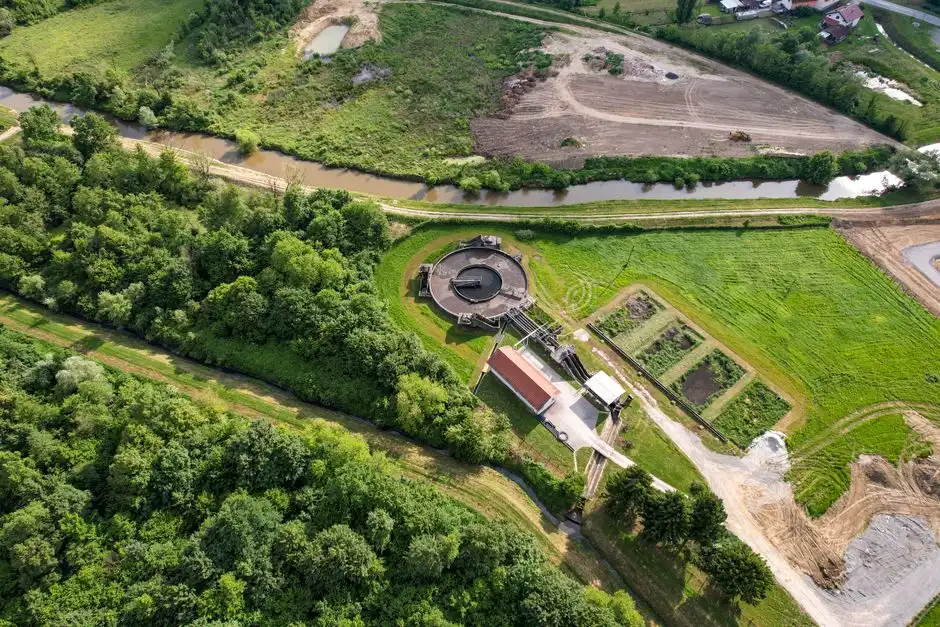
Pick DAF only when the influent carries emulsified oils, ultrafine ore or metal fines, or coagulated metals (Fe, Al, Mn) that need micro-bubble capture. The textbook case is steel pickling rinse mixed with light oil and high iron: the DAF pulls oil and floated metal-hydroxide floc together, and the chemical dose stays in a workable range. The Elder 2011 DAF study at the Logan, Utah wastewater plant established 30 mg/L of aluminum sulfate as an effective coagulant dose for fine-particle capture on a full-scale unit, a number an Oxford operator can use as a pilot starting point before optimizing on site (per Elder, 2011).
Pick a lamella clarifier only when TSS is mostly settleable, oil is below ~50 mg/L, and the plant values lowest CAPEX and simplest operation. Aggregate wash water with no oil or metals is the cleanest fit. A lamella also works as a polisher downstream of DAF when the operator wants extra TSS insurance without rebuilding the primary unit.
Pick DAF plus lamella clarifier in series for the worst 2026 case: DAF removes oils, fines, and floated metals; the clarifier polishes residual TSS and absorbs hydraulic surges without resuspending the DAF float layer. This is the configuration that survives a sustained AMD seep event or a pickling bath dump without triggering an MSGP benchmark exceedance.
Pick DAF plus chemical dosing plus sludge dewatering when AMD or pickling streams are present. An automatic coagulant and polymer dosing skid keeps pH and coagulant on target across the variable loads an Oxford aggregate or steel plant sees in a wet week, and a small plate-and-frame filter press drops the 2–3% float sludge to a handleable cake without sending a slurry hauler to site every shift.
2026 CAPEX, Footprint, and OPEX Ranges for Oxford Projects
A packaged DAF skid in the 4–300 m³/h range typically fits a 50–500 m³/h Oxford-area operation without custom tankage, because 13 standard models cover most flow rates. A lamella clarifier of the same nominal flow is comparable in CAPEX but consumes roughly 3–5× the footprint, which matters on tight quarry or steel-finishing sites where the existing settling pond cannot be expanded. DAF OPEX is dominated by coagulant and polymer dose, saturated-recycle pump energy, and float handling; the 30 mg/L aluminum-sulfate dose from the Elder 2011 work is a realistic budgeting number, not a worst case for an Oxford aggregate or pickling stream.
Clarifier OPEX is dominated by sludge hauling and downstream thickening, because the 0.5–1.5% underflow means more truck trips than the 2–3% float a DAF produces. On a 200 m³/h aggregate plant running 16 hours a day, the trucking delta alone can pay back the DAF CAPEX differential in 18–36 months once sludge disposal tipping fees are included. A skid-mounted DAF with automatic chemical dosing and a small filter press installs in weeks, which fits 2026 permit-driven retrofit schedules at Oxford quarries and metals plants. The dissolved air flotation (DAF) system and the HydropureWater high-efficiency lamella clarifier are the two equipment anchors most Oxford 2026 budgets are being built around, and the CAPEX case strengthens further when the site already has a clarifier that can be retained as the polishing step.
Frequently Asked Questions
Is DAF or a clarifier better for mining wastewater in Oxford, MS in 2026?
DAF is the right primary unit when streams carry emulsified oils, ultrafine ore particles below 13 µm, or amphoteric heavy metals that need micro-bubble capture; a lamella clarifier wins for high-flow, low-oil settleable-solids streams where footprint and CAPEX dominate. Most Oxford plants run DAF ahead of a clarifier for AMD, pickling rinse, and aggregate wash water to meet EPA MSGP and 40 CFR Part 440 limits.
Can a DAF remove heavy metals from AMD?
Yes, when paired with pH adjustment and coagulant, floated metal-hydroxide floc is a documented DAF mining application, with cited cases covering iron, aluminum, and manganese capture for water recirculation (per Rodrigues, International Journal of Mineral Processing, 2007). DAF with micro-bubbles specifically targets the sub-13 µm fraction that conventional coarse-bubble flotation misses.
What effluent TSS can a DAF realistically hit?
20–30 mg/L is the documented range for a properly sized and chemically conditioned DAF, with a 2–3% thickened sludge that does not need a separate thickener (per Wang & Wang, Lenox Institute, 2022). That TSS range lines up with the daily-maximum numbers in 40 CFR Part 440 for most ore-mining subcategories.
How much space does a DAF save versus a clarifier?
DAF operates at 4–5 GPM/sqft specific clarification capacity versus roughly 0.3–0.8 GPM/sqft for a conventional circular clarifier of similar service (per Wang & Wang 2022). A lamella clarifier narrows the gap but still requires 3–5× the footprint of an equivalently rated DAF.
Do Oxford plants need both DAF and a clarifier?
Only when the stream mixes emulsified oil or AMD with high settleable-solids loads. Otherwise, one unit — DAF for oil/fines/metals service, lamella for settleable-solids duty — sized for the worst-case week is enough to keep a 2026 MSGP and 40 CFR Part 440 monitoring program out of corrective action.