Why Orlando Food and Beverage Factories Are Rethinking Primary Treatment in 2026
The 2026 compliance landscape for Orlando food processors is defined by 40 CFR Part 405, which sets dairy discharge limits at TSS <30 mg/L and FOG <15 mg/L, alongside Florida DEP Chapter 62-625 (F.A.C.) requirements enforced by the City of Orlando. High-FOG effluent exceeding these limits triggers significant surcharges and risks "fatbergs" in the collection system; one Midwest cheese plant cited by HydropureWater paid $250,000 annually in surcharges at 1,200 mg/L FOG before installing pretreatment (HydropureWater food processing article, 2026 update).
Orlando's food cluster is diverse, ranging from seasonal citrus juice campaigns with high BOD to dairy operations producing FOG levels of 800-2,000 mg/L. Craft breweries push sugar-rich, lower-FOG streams, while resort central kitchens discharge high-surfactant FOG with sharp diurnal peaks. Across this mix, raw influent typically lands at 500-5,000 mg/L TSS and 200-2,000 mg/L FOG (HydropureWater food processing article, 2026 update), exceeding levels acceptable to the City of Orlando POTW without pretreatment.
Central Florida’s high groundwater table forces most treatment equipment above-grade on structural pads, making the horizontal footprint of a clarifier a primary siting cost. A dissolved air flotation system at 0.2-0.5 m² per m³/h of capacity provides a more compact solution than a 0.5-1.0 m²/m³/h clarifier (HydropureWater alternatives article, 2026 update).
How DAF and Clarifiers Actually Work in a Food Plant
Dissolved air flotation and gravity clarification remove suspended solids, oils, and grease using opposing physical principles. A DAF system pressurizes a recycle stream of clarified effluent to 4-6 bar, dissolves air into it, and releases the "whitewater" at atmospheric pressure inside the flotation tank. The resulting micro-bubbles (10-80 μm) attach to hydrophobic FOG particles, lifting them to the surface for removal by a mechanical skimmer as a 3-5% solids float (HydropureWater food processing article, 2026 update).
A gravity clarifier relies on sedimentation. Heavier inorganic solids settle to a sludge bed at the bottom while clarified water overflows a peripheral weir. Retention typically runs 2-4 hours, hydraulic loading sits at 1-3 m/h, and the underflow sludge is approximately 1% solids (HydropureWater alternatives article, 2026 update; Ecologix selection guide, 2026).
This difference in residence time—20-30 minutes in a DAF versus 2-4 hours in a clarifier—drives the footprint penalty for gravity units. Furthermore, DAF sludge at 3-5% solids reduces hauled waste volume by roughly 75% compared to clarifier underflow, significantly impacting OPEX (HydropureWater food processing article, 2026 update).
Head-to-Head: DAF vs Clarifier Performance Parameters
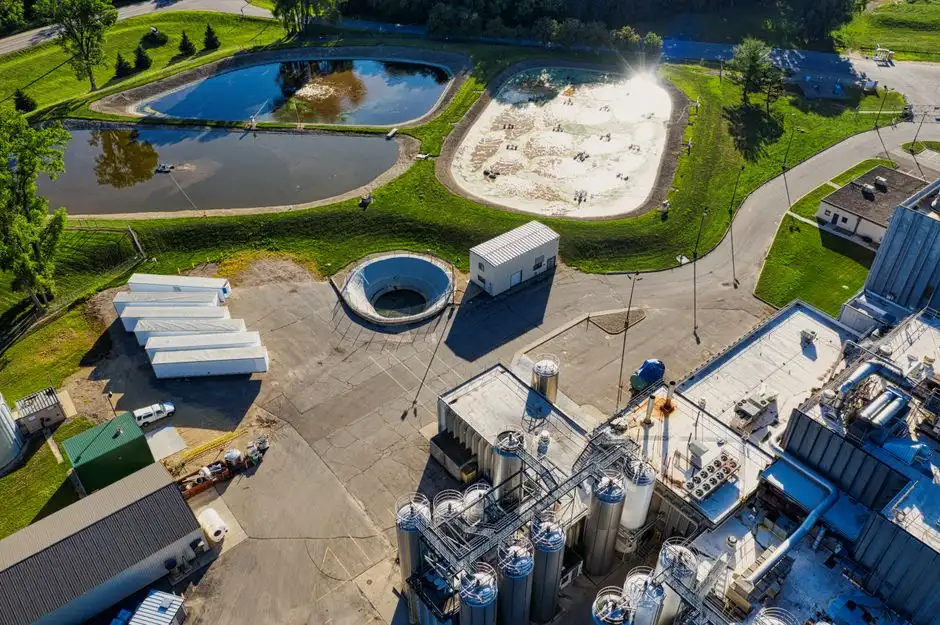
The 2026 benchmark numbers provide a direct comparison of these technologies.
| Parameter | DAF | Gravity / Lamella Clarifier |
|---|---|---|
| TSS removal | 92-97% | 80-90% |
| FOG removal | 95-99% | 60-80% |
| Hydraulic loading rate | 5-15 m/h | 1-3 m/h |
| Footprint | 0.2-0.5 m²/m³/h | 0.5-1.0 m²/m³/h |
| Energy use | 0.2-0.5 kWh/m³ | 0.1-0.3 kWh/m³ |
| Sludge solids | 2-5% (typical 3-5%) | ~1% |
| Retention time | 20-30 min | 2-4 h |
| CAPEX | $150-$400/m³ treated | $80-$200/m³ treated |
| Best-fit waste stream | FOG >200 mg/L; TSS 50-500 mg/L | TSS >1,000 mg/L, FOG <100 mg/L |
If FOG exceeds 200 mg/L or fine low-density TSS sits in the 50-500 mg/L band, DAF serves as the optimal primary treatment. If TSS exceeds 1,000 mg/L and FOG is below 100 mg/L, a high-efficiency lamella clarifier at 20-40 m/h surface loading may be the more cost-effective choice (HydropureWater food processing article, 2026 update; Ecologix selection guide, 2026).
Which Fits Orlando's Effluent Profiles: Citrus, Dairy, Brewery, Resort Kitchens
Citrus juice and concentrate processors deal with moderate FOG but high BOD/COD and pH swings. A PLC-controlled DAF with PAC dosing at 50-200 mg/L and polymer at 1-5 mg/L manages seasonal variability more effectively than a quiescent clarifier, while providing automated protection for 304/316 stainless surfaces (HydropureWater food processing article, 2026 update).
Dairy operations face the most significant FOG challenges. Plants processing 500,000 lb/day often run 800-2,000 mg/L FOG; a Midwest cheese plant using DAF successfully reduced FOG to 8 mg/L and TSS to 25 mg/L, falling well within EPA 40 CFR Part 405 limits (HydropureWater food processing article, 2026 update). For downstream membrane polishing, refer to the ultrafiltration system for dairy wastewater 2026 design guide.
Craft brewery and beverage streams contain high sugars and lower FOG. For facilities pursuing water reuse, a DAF ahead of an MBR is the standard configuration, as MBR membranes are susceptible to fouling from residual FOG (HydropureWater food processing article, 2026 update). Resort and theme-park kitchens require equalization tanks ahead of a DAF to manage peak flows, as the extended retention time of a clarifier cannot accommodate rapid surge changes.
Decision Framework: Pick DAF, Clarifier, or Both
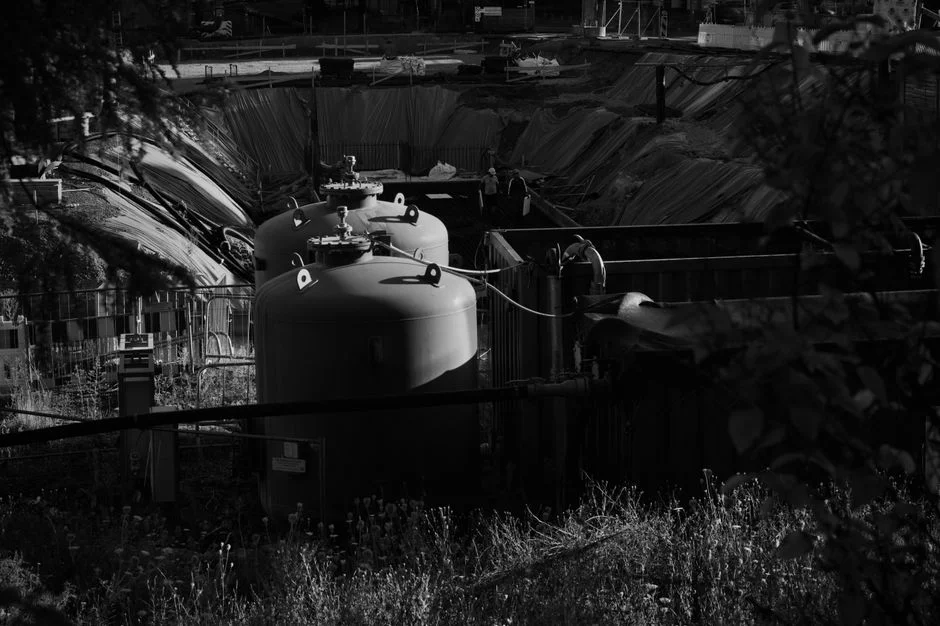
The following table outlines the decision criteria for Orlando facilities.
| If your waste stream looks like… | Then specify… | Why |
|---|---|---|
| FOG >200 mg/L and/or TSS 50-500 mg/L | DAF | 95-99% FOG, 92-97% TSS, 20-30 min retention, compact footprint |
| TSS >1,000 mg/L, FOG <100 mg/L, CAPEX-driven | Lamella clarifier | 20-40 m/h surface loading, ~30% lower chemical use, ~50% lower CAPEX than DAF |
| Mixed: high FOG + heavy mineral grit | Hybrid train — lamella first, DAF polish | Settles grit cheaply, then floats FOG; documented in Ecologix hybrid cases |
| Water reuse for cooling/irrigation | DAF → MBR (or DAF → RO) | Protects membranes from FOG fouling; MBR CAPEX is 3-4× DAF |
A hybrid train is often the most effective approach for complex waste streams. If influent contains both emulsified FOG and dense mineral grit, utilizing a lamella clarifier as a primary settler followed by a dissolved air flotation system handles both fractions efficiently. For a comparison in a different U.S. food cluster, see the Springdale food factory DAF vs clarifier 2026 guide.
2026 Cost and Payback Math for an Orlando Plant
CAPEX for 2026 ranges from $50,000 for a small 4 m³/h DAF skid to $500,000 for a 300 m³/h unit, with civil and electrical work adding 20-30% (HydropureWater food processing article, 2026 update). While gravity clarifiers cost roughly half as much per cubic meter, the higher sludge hauling costs of lower-density underflow often make DAF more economical over the equipment lifecycle (HydropureWater alternatives article, 2026 update).
OPEX is primarily driven by chemistry, which accounts for 50-60% of the annual budget. Energy consumption typically ranges from $0.10-0.30/m³, while maintenance accounts for 5-10% of annual costs (HydropureWater food processing article, 2026 update).
| Line item | DAF (50 m³/h example) | Lamella clarifier equivalent |
|---|---|---|
| Equipment CAPEX | ~$150,000 | ~$80,000-$110,000 |
| Installation (+25%) | ~$37,500 | ~$22,500 |
| Annual OPEX (chem + energy + maint) | ~$50,000 | ~$35,000 |
| FOG removal | 95% | 60-80% |
| Surcharge avoidance (yr 1) | ~$120,000 | ~$85,000 |
| Net annual savings | ~$70,000 | ~$50,000 |
| Payback | ~2.1 years | ~2.0-2.2 years at lower CAPEX, but higher residual surcharges |
| Sludge volume hauled | ~25% of clarifier equivalent (3-5% vs 1% solids) | Baseline |
For a 100 m³/h plant with high FOG, DAF achieves a 3.2-year payback compared to 4.5 years for a clarifier, as the latter fails to eliminate residual surcharges. DAF sludge at 3-5% solids can save $15,000-$25,000 annually in disposal costs in the Central Florida market (HydropureWater food processing and alternatives articles, 2026 update).
Compliance, Permitting, and Jar Testing Before You Buy
On-site jar testing on your specific waste stream is necessary before submitting equipment orders to the City of Orlando. Bench-scale testing confirms projected FOG and TSS removal rates and provides essential data for permit applications. Pairing this with online TSS, FOG, and pH monitoring allows plants to defend surcharge bills with continuous data rather than relying on monthly composites.
Design targets should align with EPA 40 CFR Part 405 and EU Directive 91/271/EEC benchmarks, which are increasingly mirrored in local industrial discharge permits. A PLC-controlled chemical dosing skid integrated with the DAF ensures precise PAC and polymer feed, preventing chemical waste during seasonal production shifts (HydropureWater food processing article, 2026 update). Use 304 or 316 stainless steel for all units handling citrus effluent or CIP chemicals.
Frequently Asked Questions
Is DAF or a clarifier the better default for an Orlando food and beverage plant in 2026?
DAF is the better default. Orlando food plant
Frequently Asked Questions
Should an Orlando food factory choose DAF or a clarifier in 2026?
The choice for Orlando facilities depends primarily on the density of the suspended solids and the local FDEP pretreatment requirements. In 2026, DAF remains the preferred solution for food processing streams with high oil, grease, and low-density organic loads that require rapid separation, whereas clarifiers are generally reserved for heavier, inorganic solids or as a secondary polishing step after initial pretreatment.
What FOG level requires DAF instead of a clarifier?
Once Fats, Oils, and Grease (FOG) concentrations exceed 100-150 mg/L, a clarifier typically fails to achieve adequate removal efficiency due to the buoyancy of the particles. DAF systems are required for influent streams where FOG levels range from 200 mg/L to over 2,000 mg/L, as the micro-bubble aeration process is necessary to float these contaminants for mechanical skimming.
How much does a DAF system cost for a 50 m³/h food plant?
For a standard 50 m³/h capacity DAF system in a food and beverage application, capital expenditure typically ranges between $150,000 and $350,000, depending on the metallurgy (304 vs. 316 stainless steel), automation levels, and chemical dosing integration. This estimate excludes site civil work, installation, and specialized sludge dewatering equipment which may be required to meet local municipal discharge standards.
Is a lamella clarifier better than DAF for high TSS wastewater?
A lamella clarifier is superior for high Total Suspended Solids (TSS) streams characterized by heavy, settleable inorganic matter, as it utilizes inclined plates to maximize settling surface area in a compact footprint. However, if the high TSS consists of biological solids or food-grade fats, a DAF system is significantly more effective, as it prevents the sludge compaction issues and potential anaerobic septic conditions that frequently occur in clarifier hoppers.
Can DAF and a clarifier be used together in food and beverage plants?
Yes, many high-load food processing plants employ a hybrid treatment train where a DAF unit acts as the primary pretreatment stage to remove FOG and light organics, followed by a lamella clarifier to remove remaining settleable solids. This configuration is often used to ensure compliance with strict Orlando municipal sewer surcharges, protecting downstream biological reactors from shock loads of grease and high-density debris.