The Three-Layer Rule Stack a Byhalia Chemical Plant Must Clear
Chemical plants near Byhalia, MS meet pretreatment limits by complying with three stacked rule sets: EPA's 40 CFR Part 403 General Pretreatment Regulations, applicable categorical standards (e.g., 40 CFR Part 414 for organic chemicals), and the receiving POTW's site-specific local limits developed under 40 CFR 403.5(c). Plants typically install an on-site train — flow equalization, pH adjustment, DAF, biological treatment, and polishing — then verify end-of-pipe compliance with self-monitoring and BMR reporting.
Layer 1 is 40 CFR Part 403, the General Pretreatment Regulations. This is the umbrella rule that defines an industrial user (IU) at 40 CFR 403.3(j), sets the prohibited discharge standards at 40 CFR 403.5, and gives the Control Authority its enforcement power (source S1). Two terms from this layer drive everything else: pass through, defined at 40 CFR 403.3(p) as a discharge that exits the POTW into waters of the U.S. in quantities or concentrations that, alone or in conjunction with other sources, cause a violation of the POTW's NPDES permit; and interference, defined at 40 CFR 403.3(k) as a discharge that inhibits or disrupts the POTW, its treatment processes, or its sludge processes and is therefore a cause of an NPDES or sludge-use violation (source S1). If the receiving POTW can show your stream causes either, you are out of compliance even if your numbers look clean.
Layer 2 is the categorical pretreatment standards. A chemical plant in Marshall County typically falls under 40 CFR Part 414 (Organic Chemicals, Plastics, and Synthetic Fibers), which sets effluent limits for toxic pollutants, organics, BOD, COD, TSS, and pH specific to that industry category. Depending on the product slate, Part 455 (Pesticides) or Part 419 (Petroleum Refining) may also apply, and each category dictates its own sampling points and analytical methods.
Layer 3 is the POTW's local limits — site-specific numeric or narrative limits developed per 40 CFR 403.5(c) to protect the POTW, its sludge, and its receiving waters (source S1). Local limits vary from one treatment plant to the next and can be stricter than the federal categorical number. The Control Authority enforces these local limits at the end-of-pipe connection to the POTW collection system (source S1).
| Layer | Rule | What it controls | Where it applies |
|---|---|---|---|
| 1 — Federal general | 40 CFR Part 403 | Defines IU, pass through, interference; sets prohibited discharge standards at 40 CFR 403.5 | All IUs discharging to any POTW |
| 2 — Federal categorical | 40 CFR Part 414 (organic chemicals), Part 455 (pesticides), Part 419 (petroleum refining) | Industry-specific numeric limits for organics, toxics, BOD/COD/TSS, pH | End-of-pipe, after on-site treatment |
| 3 — POTW local limits | 40 CFR 403.5(c) | Site-specific numeric or narrative limits to protect POTW, sludge, and receiving waters | Point of connection to the POTW collection system |
Who Is the Control Authority — and What Are They Enforcing?
The Mississippi Department of Environmental Quality (MDEQ) holds delegated NPDES and pretreatment oversight from the EPA and serves as the state-level Control Authority. MDEQ sets the policy framework, but the day-to-day permit signer for an industrial user in the Byhalia / Marshall County area is the local POTW, acting as the delegated Control Authority once MDEQ approves its pretreatment program.
The receiving POTW depends on where the plant's sewer line terminates. The Marshall County sewer utilities and adjacent systems serving industrial corridors along I-22 and the Holly Springs–Byhalia growth area are the most likely Control Authorities for a chemical plant in this geography. Engineers should confirm the receiving POTW's name on their existing permit and verify that the POTW has an MDEQ-approved pretreatment program.
Only POTWs with a total design flow greater than 5 million gallons per day (5 MGD) that receive industrial pollutants are required to implement a pretreatment program; smaller POTWs may also be required if they receive industrial waste and pretreatment is warranted (source S5). A chemical plant that bypasses a 5-MGD POTW and connects to a smaller satellite system can still trigger a local pretreatment program on a case-by-case basis.
Whichever agency signs the permit, the enforcement point is the same: the Control Authority measures compliance at the end-of-pipe connection to the POTW collection system (source S1). Local limits are imposed at this connection, requiring on-site treatment to be designed against end-of-pipe targets rather than mid-train values.
The Typical Pretreatment Train for a Chemical Plant
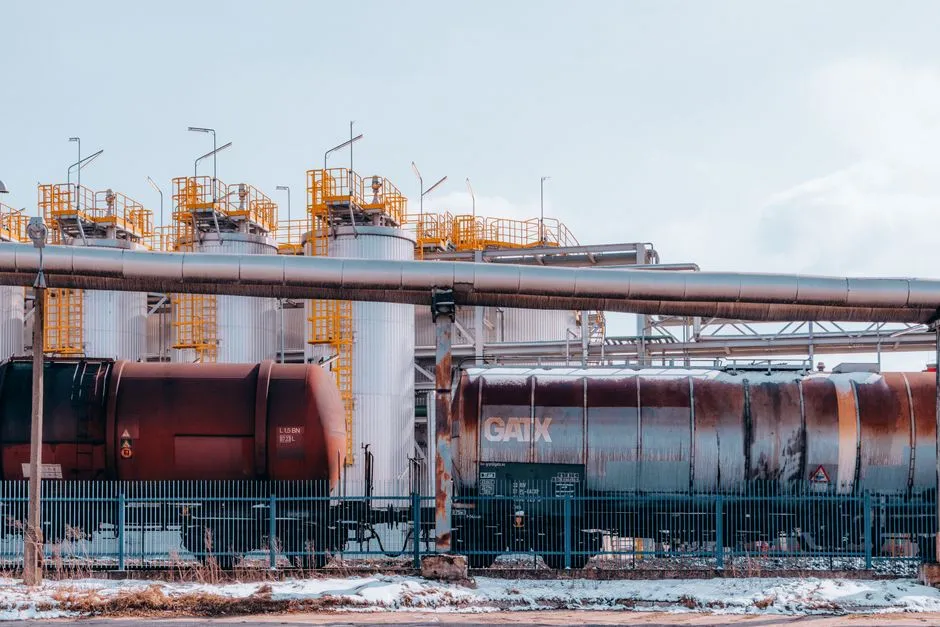
A working pretreatment train takes end-of-pipe wastewater from raw chemical process effluent to within local-limit range. The unit operations below are the ones a chemical plant in Marshall County would typically scope, in the order they appear in the flow sheet.
- Flow and load equalization. Surge tanks or EQ basins dampen batch discharges and keep downstream units at steady design loading. Typical hydraulic residence time is 8–24 hours, sized off the longest batch cycle in the plant. Without EQ, a slug of high-pH or high-COD wastewater will blow through pH adjustment and slam the biological stage.
- pH and oxidation-reduction adjustment. Chemical dosing brings pH into the 6–9 band most POTWs require and, depending on the stream, can break cyanide, sulfide, or hexavalent chrome if any of those are present. Local limits on pH are commonly in the 5–10 range, but most plants target 6–9 to leave margin. A PLC-controlled chemical dosing system for pH and coagulant adjustment provides precise closed-loop trim.
- Coagulation, flocculation, and Dissolved Air Flotation (DAF). DAF removes suspended solids, free and emulsified oil and grease, and colloidal matter that would otherwise slug the biological stage. A well-sized DAF system for chemical plant pretreatment typically cuts TSS by 70–95% and brings FOG into the range a downstream MBR can absorb without fouling.
- Biological treatment. Activated sludge or an MBR handles dissolved organics. Categorical standards under 40 CFR Part 414 for organic chemicals often set stringent BOD and COD limits that require biological polishing. An MBR for biological organics removal is a common choice for plants that need a small footprint and consistent effluent quality.
- Polishing. A multi-media filter for polishing drives TSS down further, and activated carbon downstream captures residual organics, color, and any toxicity that would trigger local limits on specific toxic pollutants or whole-effluent toxicity (WET).
- Disinfection before sewer. Chlorination or UV is added where the POTW requires a fecal coliform or bacteria limit at the connection. Some local limits are silent on bacteria; check the permit before scoping this stage.
Engineers scoping similar trains elsewhere in the region can compare notes with our write-up on chemical plant pretreatment in Columbus, OH, which follows the same sequence. For streams carrying metal catalysts or pigments, a separate metals-removal stage may be needed ahead of biological treatment — see our heavy metals removal technology comparison for guidance on precipitation versus ion exchange versus membrane selection. Refineries running into similar local-limit issues in another geography are covered in petroleum plant pretreatment near Lynchburg.
Parameter Targets by Unit Process — What Each Stage Is Hitting
The table below ties each unit process to typical influent and effluent targets so a chemical plant engineer can sanity-check their own data against what a working pretreatment train is expected to deliver. Numbers represent typical design ranges drawn from standard wastewater engineering practice and HydropureWater field data, 2026.
| Unit process | Influent target | Effluent target | Design notes |
|---|---|---|---|
| EQ basin | Raw batch discharge, pH swings ±2–3 units, variable COD | Smoothed pH swing ±0.5 units | HRT 8–24 h; sized off longest batch cycle |
| Chemical dosing | EQ effluent, pH outside 6–9 | pH 6–9; ORP adjusted for CN⁻, S²⁻, Cr⁶⁺ if present | Lime, caustic, ferric chloride, or polymer; PLC trim on pH probe |
| DAF | Dosed effluent, high TSS/FOG | TSS −70–95%, FOG pulled to skim | Surface loading 5–20 m/h typical; air-to-solids ratio critical for FOG |
| Biological (activated sludge or MBR) | DAF underflow, dissolved organics | BOD −85–95%, COD −70–90% | 40 CFR Part 414 organics limits drive SRT; MBR gives stable mixed liquor at high MLSS |
| Multimedia filter + carbon | Biological effluent with residual color and trace organics | TSS < ~5 mg/L post-filter; carbon adsorbs residual toxics to below local-limit values | Backwash cycle on filter sized to TSS loading; carbon change-out on TOC breakthrough |
| Final effluent (end-of-pipe) | — | pH 6–9; TSS typically < 50 mg/L (often lower per local limit); oil & grease < 50 mg/L or non-detect; BOD/COD per categorical standard; WET pass per local limit | Sample at the connection to the POTW collection system per 40 CFR 403.5(c) |
If your influent values sit well outside the table — for example, raw pH swings greater than ±3 units or TSS above 2,000 mg/L — then EQ retention time has to grow, or a stronger coagulant dose is needed ahead of DAF. If your biological effluent BOD is still above 100 mg/L after the MBR, common causes include toxic slug from the upstream process, low MLSS, or fouled membranes; check those before adding tanks.
Sampling, Self-Monitoring, and BMR Reporting
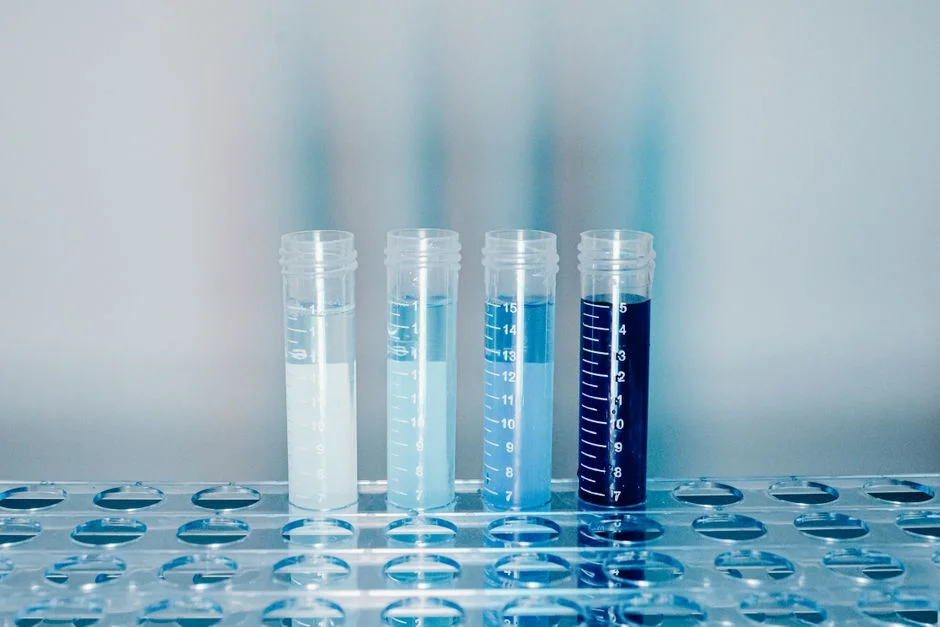
Hitting the numbers is only half the job — the POTW also has to see them on its reporting schedule, or the plant is out of compliance on paper. Categorical standards specify sampling points in the regulation itself; for 40 CFR Part 414 organics, the regulated sampling point is typically end-of-pipe after on-site treatment, with 24-hour composite samples for the listed organic and toxic pollutants.
Local limits add their own cadence. Most POTWs require periodic compliance reports (often monthly or quarterly) with 24-hour composite samples for organics and grab samples for reactive parameters — pH, cyanide, phenols, sulfides, hexavalent chrome, and residual chlorine — because composite bottles misrepresent these species. Annual and semi-annual reports are the routine deliverables the Control Authority expects, and pretreatment compliance inspections are standard on at least an annual cycle.
The Baseline Monitoring Report (BMR) is the one-time document an industrial user files when it first becomes subject to a categorical standard. The standard BMR deadline structure gives the IU 180 days from the date it becomes subject to the standard to submit the report, and the report must characterize every regulated pollutant at the designated sampling point. Plants that miss the BMR window often find themselves negotiating compliance schedules that are harder to close than the original permit. Whole-effluent toxicity (WET) testing, where required by the local limit, has its own separate schedule and lab certification requirements.
Frequently Asked Questions
What is the difference between pass through and interference under 40 CFR Part 403
Frequently Asked Questions
What pretreatment limits apply to chemical plants discharging to a POTW in Mississippi?
Chemical plants discharging into a Publicly Owned Treatment Works (POTW) in Mississippi must comply with both federal Categorical Pretreatment Standards (CPS) and site-specific local limits established by the local sewer authority. The federal standards, dictated by 40 CFR Part 414, set strict mass-based or concentration-based limits for specific organic and inorganic pollutants generated during chemical manufacturing processes.
Local limits are defined by the POTW’s National Pollutant Discharge Elimination System (NPDES) permit to prevent pass-through or interference with the treatment plant's operations. These often include specific numerical thresholds for parameters such as Biochemical Oxygen Demand (BOD), Total Suspended Solids (TSS), pH (typically between 5.0 and 12.0), and heavy metals like copper, zinc, and lead, which are determined based on the POTW's headworks loading capacity.
How does a chemical plant meet EPA categorical standards under 40 CFR Part 414?
To comply with 40 CFR Part 414, chemical plants must implement Best Available Technology (BAT) or Pretreatment Standards for Existing Sources (PSES) to remove regulated pollutants before discharge. This involves calculating the allowable pollutant mass based on the production rate of the specific manufacturing process, ensuring that the total mass discharged does not exceed the production-normalized limits established by the EPA for each subcategory.
Compliance is demonstrated through rigorous monitoring and analytical testing of wastewater effluent samples. Plants must employ EPA-approved analytical methods to verify that concentrations of organic priority pollutants, such as benzene, toluene, or phenols, are reduced to levels that meet the specific effluent limitation guidelines (ELGs) assigned to their manufacturing subcategory.
What is the difference between categorical pretreatment standards and POTW local limits?
Categorical Pretreatment Standards are uniform, technology-based federal regulations developed by the EPA that apply to all industrial facilities within a specific industrial category, regardless of their location. These standards ensure a baseline level of treatment across the chemical industry to prevent the discharge of toxic pollutants into sewer systems.
Conversely, POTW local limits are site-specific restrictions developed by the local municipality to protect their unique infrastructure and ensure compliance with their own NPDES discharge permit. While categorical standards address process-specific pollutants, local limits address the overall health of the POTW, including the protection of sludge quality and the prevention of toxic inhibition of the biological treatment process.
How often does a POTW inspect industrial users for pretreatment compliance?
Under the General Pretreatment Regulations (40 CFR Part 403), a POTW with an approved pretreatment program is required to inspect Significant Industrial Users (SIUs) at least once per year. During these inspections, the POTW evaluates the facility's pretreatment equipment, reviews operational records, and performs independent sampling to verify compliance with discharge permits.
Beyond annual inspections, SIUs are typically required to submit self-monitoring reports on a semi-annual or quarterly basis, depending on the severity of the pollutants and the facility's compliance history. If a facility demonstrates significant non-compliance, the POTW may increase the frequency of inspections and require more frequent sampling to ensure corrective actions are effective.
What equipment does a chemical plant need for sewer pretreatment?
Chemical plants typically utilize a multi-stage pretreatment train to meet 2026 limits, starting with primary treatment such as equalization tanks to buffer flow and pH adjustment systems using caustic or acid dosing. These systems are essential for stabilizing influent streams before they reach downstream biological or physical-chemical treatment units.
Secondary treatment often involves technologies such as Dissolved Air Flotation (DAF) for oil and grease removal, chemical precipitation units for heavy metal removal, and activated carbon adsorption or advanced oxidation processes (AOPs) for the removal of recalcitrant organic compounds. Additionally, plants must install flow monitoring equipment, such as ultrasonic flow meters, and automated composite samplers to ensure accurate data collection for regulatory reporting.