How DAF and Clarifiers Behave on Chemical-Industry Wastewater
For chemicals wastewater in West Helena, AR, choose a DAF system when the stream carries emulsified oils, organic solvents, or low-density flocs — DAF routinely hits 90–95% FOG removal on similar industrial streams. Choose a clarifier when the waste is dominated by heavy inorganic precipitates and dense settleable solids, where gravity sedimentation can cut TSS by roughly 90% at lower operating cost. Many chemical plants run a DAF–clarifier hybrid to cover both contaminant classes.
A DAF system pressurizes a recycle sidestream (typically 20–30% of the total flow) to 4–6 bar, saturates it with air, and releases the pressure inside a flotation cell. The dissolved air comes out of solution as a cloud of 10–100 µm micro-bubbles that attach to chemically conditioned floc, free oil, and emulsified droplets, lifting them to the surface where a skimmer removes the float layer. The mechanism is identical to a food-processing DAF, but the chemistry in a chemicals plant is harder: emulsions are often stabilized by surfactants, pH swings drive floc re-dissolution, and TDS can reach 20,000–30,000 mg/L. Under those conditions, coagulant selection and dispersion matter as much as the air system itself.
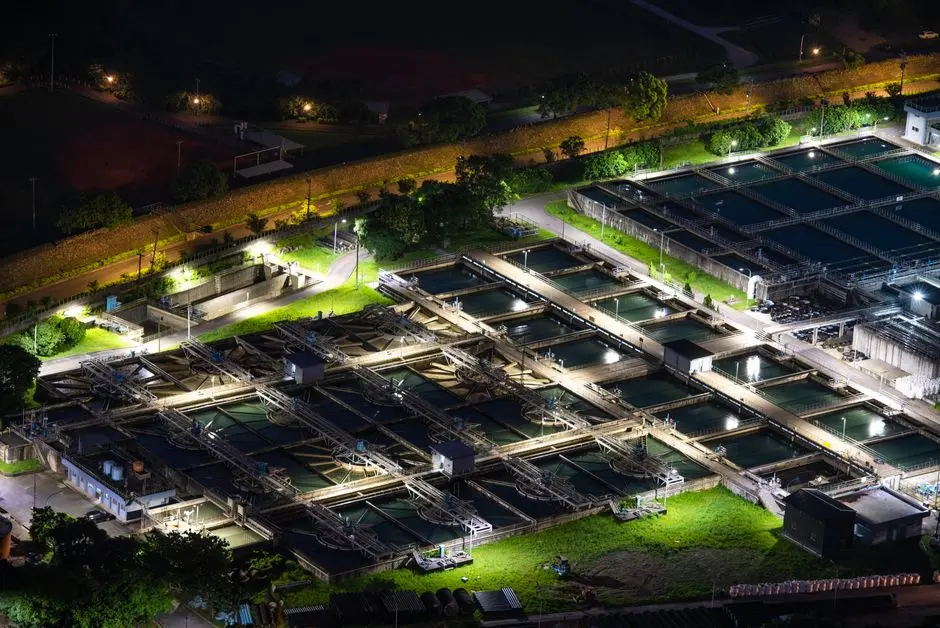
A clarifier separates by gravity. Solids settle to a bottom hopper where a rake or scraper concentrates them; clarified supernatant overflows a peripheral weir. The modern high-rate variant is the lamella (inclined-plate) clarifier, which uses 50–60° inclined plates spaced at 50–80 mm to multiply the effective settling area inside a small footprint, reaching surface loading rates of 20–40 m/h versus 1–2 m/h for a conventional clarifier. Lamella units are well suited to dense metal-hydroxide sludges, salt precipitates, and other inorganic solids generated by specialty-chemicals and agrochemicals operations around West Helena.
The two technologies are not interchangeable. DAF wins on low-density, floatable, or emulsified material; lamella clarifiers win on heavy, settleable, inorganic precipitates. No published removal-rate data exists for DAF or clarifier on a representative chemicals-plant stream — the 95% FOG figure for DAF and the 70% FOG figure for clarifier come from a food-processing case, and the 90% TSS figure for clarifier comes from a mining case (Ecologix Systems, 2026). Treat those as order-of-magnitude anchors, not chemical-industry guarantees, and verify with jar tests on your own influent. Typical West Helena chemical-plant envelopes run pH 2–12, TDS up to 30,000 mg/L, and FOG 200–5,000 mg/L — a wider and more reactive range than food or mining streams.
Side-by-Side Comparison: DAF vs Clarifier for Chemical Plants
The table below consolidates the parameters a West Helena procurement manager needs to defend an equipment choice to finance and EHS. Removal-efficiency cells are populated only with the data points that exist in the public record; everything else is marked application-dependent so the reader knows where to budget a pilot test rather than a vendor claim.
| Parameter | DAF System | Lamella Clarifier |
|---|---|---|
| Removal mechanism | Micro-bubble flotation of conditioned floc and emulsified droplets | Gravity sedimentation on inclined plates |
| Best target contaminant | Emulsified FOG, free oil, low-density floc, fibres | Heavy inorganic precipitates, metal hydroxides, dense TSS |
| FOG removal (industrial benchmark) | 90–95% (food-processing case, 2026 data) | ~70% (same food-processing case) |
| TSS removal (industrial benchmark) | Application-dependent (typically 60–85%) | ~90% (mining case, 2026 data) |
| Footprint per m³/h | Compact (small tank, high hydraulic loading) | Compact at 20–40 m/h surface loading (lamella) — much smaller than conventional clarifier |
| Hydraulic retention time | 15–30 minutes | 2–4 hours |
| Chemical demand (coagulant + flocculant) | Higher — bubble-attachment chemistry does most of the work | Lower — up to 30% chemical reduction per lamella design |
| Sludge consistency | Thick float (3–5% DS typical) | Thickened underflow (2–4% DS typical) |
| CAPEX class (2026) | Higher (compressors, recycle pump, saturator) | 30–50% lower than equivalently rated DAF |
| OPEX class | Higher (compressed air + polymer) | Lower (polymer + sludge pumping only) |
| Sensitivity to flow surges | Low — short HRT buffers ±50% swings | Moderate — long HRT risks washout |
| Sensitivity to pH swings (2–12) | Manageable with proper coagulant choice | Manageable; metal-hydroxide floc is pH-dependent |
| Best-fit chemical sub-sector | Petrochemicals, plastics additives, surfactant manufacture, agrochemical formulators | Salt processors, mineral acids, metal-finishing rinse waters, fertilizer production |
The HRT difference alone is decisive for batch chemical operations. A 2–4 hour clarifier inventory forces an operator to either equalize flow aggressively or accept effluent quality drift during reactor dumps; a 15–30 minute DAF turns the same hydraulic event into a 20-minute blip on the effluent monitor. For a specialty-chemicals plant running 6–12 batch campaigns per day, that resilience is worth real money.
What West Helena Chemical Plants Actually Discharge
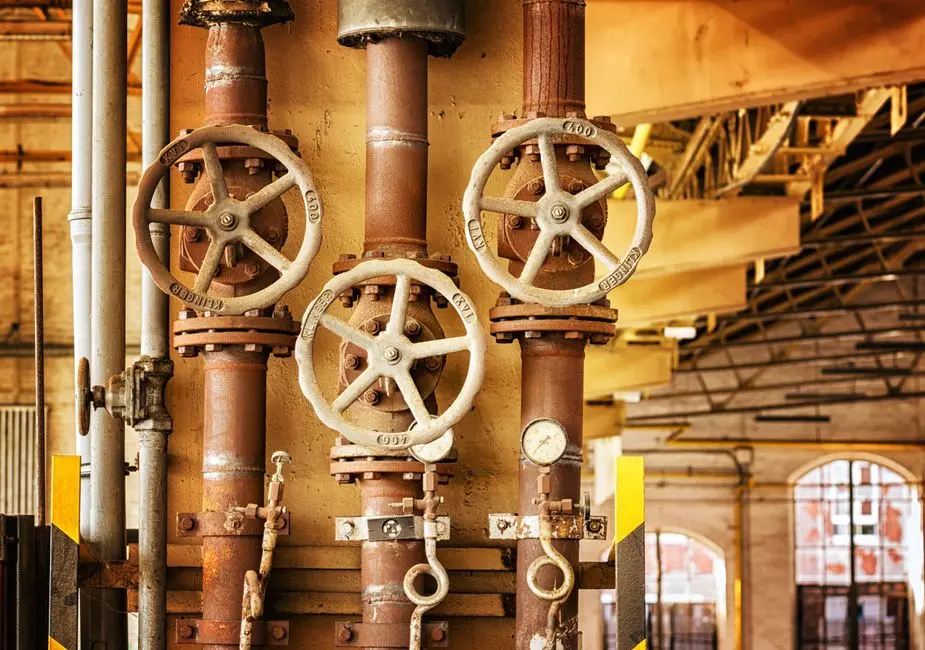
West Helena chemical manufacturers discharge to the West Helena Wastewater Treatment Plant (POTW) and are subject to 40 CFR Part 403 General Pretreatment Standards, plus any applicable categorical standards such as 40 CFR Part 414 (organic chemicals, plastics, and synthetic fibers) and 40 CFR Part 433 (metal finishing). The Arkansas Department of Energy and Environment (ADEE) administers delegated NPDES authority and enforces local limits through the POTW's pretreatment program — a fact most national comparison articles omit entirely. For a West Helena procurement manager, the equipment choice is defensible only if it is anchored to those local limits, not generic EPA guidance.
The local POTW flags four pollutant classes on its industrial discharge reports: high BOD/COD (typically 800–3,000 mg/L BOD from specialty-chemicals reactors), FOG above the 100 mg/L surcharge threshold, sulfides from sulfide-bearing reducing streams, and pH excursions below 5 or above 10 that corrode the collection system. Occasional heavy metals (chromium, nickel, zinc) appear from on-site plating or catalyst operations and trigger categorical standards. DAF addresses FOG and fine suspended solids directly; a lamella clarifier addresses settleable metals and pH-driven hydroxide precipitates; neither technology alone reliably covers the full 40 CFR Part 403 envelope on a mixed chemicals stream.
That is why a DAF upstream of a lamella clarifier has become the 2026 default for West Helena plants with mixed organic/inorganic loads — the DAF strips emulsified FOG and floatable floc, the lamella polishes the settleable inorganics, and the combined train hits the POTW's BOD, TSS, FOG, and metals limits in a single pass. The same hybrid logic shows up in the chemical-plant pretreatment compliance guide for similar mid-South facilities.
2026 Cost Comparison: DAF vs Clarifier CAPEX and OPEX
The DAF covers 4–300 m³/h across 13 standard skid models, while the high-efficiency lamella clarifier covers comparable flows at 20–40 m/h surface loading. Anchoring the budget conversation to 2026 dollars — not directional "lower/higher" language — is what separates a defensible capital request from a hand-wave. The figures below are 2026 installed-cost ranges for packaged and field-erected systems in the U.S. Mid-South; actual numbers depend on tankage material of construction (carbon steel vs FRP vs polypropylene), civil works, and instrumentation scope.
| Cost Line | DAF System | Lamella Clarifier |
|---|---|---|
| Packaged skid CAPEX (small plant, 4–50 m³/h) | $40,000–$180,000 | $25,000–$110,000 |
| Field-erected CAPEX (mid-large plant, 50–300 m³/h) | $400,000–$1,200,000 | $250,000–$700,000 |
| Civil works share | Lower (small footprint) | Moderate (tankage and plate pack) |
| Power draw (continuous) | 5–10 kWh per 1,000 gal treated (recycle pump + saturator compressor) | 1–3 kWh per 1,000 gal (rake + sludge pump only) |
| Polymer/coagulant cost index | 1.0 (baseline) | ~0.7 (lamella design reduces chemical demand by up to 30%) |
| Sludge hauling & dewatering | Thicker float (3–5% DS) — lower hauling cost per ton | Thinner underflow (2–4% DS) — higher hauling cost per ton |
| 5-year TCO direction | Higher CAPEX, often recovered in 2–4 years via FOG surcharge avoidance | Lower CAPEX, lower OPEX; longer payback only when FOG surcharges are high |
The DAF premium is rarely a permanent burden when FOG surcharges are real. A West Helena specialty-chemicals plant discharging 200 m³/day at 800 mg/L FOG into a POTW that surcharges $0.20/lb above 100 mg/L can save $40,000–$80,000 per year on surcharges alone — enough to amortize the DAF CAPEX delta in 2–3 years. Plants with low-FOG, mineral-heavy streams never recover that delta and should stay with a lamella clarifier plus an automatic chemical dosing skid sized for hydroxide precipitation chemistry. The DAF engineering specs and 2026 cost data reference covers the same economics in a different regulatory jurisdiction and is worth a read for cross-checking.
Decision Framework: Which One Should Your West Helena Plant Choose?
Run your influent data through the four questions below before you write the equipment specification. Each question is binary and maps to a defensible 2026 equipment choice.
- Is FOG or emulsified organics above 200 mg/L? If yes, lead with a DAF system, or specify a DAF–lamella hybrid if the stream also carries precipitates. If no, skip DAF.
- Is the stream dominated by heavy inorganic precipitates (metal hydroxides, salts) with negligible oil? If yes, a lamella clarifier is sufficient and 30–50% cheaper than DAF. Add DAF only if FOG violations persist downstream.
- Does hydraulic flow swing more than ±50% during batch campaigns? If yes, DAF is the safer lead unit because 15–30 minute HRT absorbs the surge; a 2–4 hour clarifier will wash out and force re-treatment.
- Is footprint constrained (indoor retrofit, skid-mount requirement, no headroom for civil works)? If yes, DAF is the default. A lamella clarifier is the fallback when the chemistry is too corrosive for the DAF's air-saturation metallurgy.
For a typical West Helena specialty-chemicals or agrochemicals plant with mixed organics and precipitates, spec a DAF ahead of a lamella clarifier. For a salt- or mineral-heavy inorganic chemicals plant, spec a lamella clarifier first and add DAF only if FOG violations persist. This mirrors the selection logic in the DAF vs clarifier for mining wastewater guide, but with a higher weight on FOG because chemicals streams carry more emulsified load than mining streams.
Frequently Asked Questions
Can a DAF system and a clarifier be used together at a chemical plant?
Yes — this is the 2026 default for plants with mixed FOG and inorganic-precipitate streams. A DAF system upstream strips the floatable fraction, and a lamella clarifier downstream polishes the settleable solids, hitting 40 CFR Part 403 BOD, TSS, and FOG limits in one pass.
Which is more cost-effective for a small chemical plant in West Helena?
For flows under 50 m³/h dominated by settleable solids, a lamella clarifier is typically 30–50% lower in installed CAPEX and has lower OPEX. DAF pays back only when FOG or emulsified organics exceed ~200 mg/L or when POTW surcharges make the FOG removal economically decisive.
How do I know if my wastewater has emulsified oil vs free oil?
Free oil separates in a standard jar test within 5–10 minutes as a visible top layer; emulsified oil stays dispersed and turbid. Emulsified oil requires chemical demulsification or DAF with coagulant conditioning to break, which is why it is the single biggest selection driver between the two technologies.
What is the typical payback period for a DAF system in a chemicals plant?
2–4 years where the local POTW levies FOG and TSS surcharges and influent FOG is above 200 mg/L; 5–7 years where surcharges are low and CAPEX is the dominant hurdle. Jar-test the stream first to confirm FOG speciation before committing.
Does HydropureWater supply both DAF and lamella clarifier systems?
Yes — the DAF (4–300 m³/h, 13 standard models) and the high-efficiency lamella clarifier (20–40 m/h surface loading) are both stocked, with optional automatic chemical dosing skids available to complete the train as a single-vendor package.
Related Equipment
- automatic chemical dosing skid — specifications, capacity range, and technical data