
Why Magna Transportation Equipment Plants Need a Pretreatment Decision in 2026
Magna, Utah hosts a dense cluster of tier-1 and tier-2 transportation equipment manufacturers serving the automotive, rail, aerospace, and off-highway sectors. Their shop-floor wastewater is not generic sanitary flow — it carries parts-washer FOG at 200–2,000 mg/L, phosphate-wash residues, drawing compounds, tramp oils from machine tool sumps, metalworking fluid emulsions, and intermittent paint-booth overspray washwater (per 40 CFR 464 categorical profile, transportation equipment point-source category). Discharge flows to either the Salt Lake City Water Reclamation Facility or the Magna Sewer Improvement District, both of which enforce site-specific local limits through a written local limits letter under 40 CFR Part 403 general pretreatment regulations.
Guessing the wrong technology has measurable consequences. A FOG slug from a parts-washer upset routed only through a clarifier will pass through to the POTW and trigger an oil & grease limit breach — a Significant Noncompliance (SNC) event under EPA's pretreatment program. Conversely, a clarifier selected for an oily coolant stream will not remove emulsified oil below roughly 70% efficiency, leaving the effluent well above most Salt Lake-area local limits. The 2026 regulatory baseline is 40 CFR Part 433 (Metal Finishing) for plating and conversion-coating lines, and 40 CFR Part 464 (Transportation Equipment Manufacturing) for assembly, machining, and paint-prep operations; both impose oil & grease, metals, pH, and TSS ceilings that drive pretreatment technology choice.
How a DAF and a Gravity Clarifier Actually Work
A dissolved air flotation (DAF) system saturates a pressurized recycle stream (typically 20–30% of the throughput) with compressed air at 60–80 psi inside an air-saturation vessel. When the pressurized stream is released through a pressure-relief valve at the DAF inlet, the dissolved air comes out of solution as a cloud of micro-bubbles in the 20–100 µm range (DAF Corp reports 20–40 µm from its Micro Bubble Generator). These bubbles attach to FOG, emulsified oils, and colloidal solids whose specific gravity is near or below water (~1.0), lifting them to the surface where a rotating or reciprocating skimmer removes the floated layer.
A gravity clarifier (also called a sedimentation tank or, with inclined plates, a lamella clarifier) is a quiescent vessel in which heavier settleable solids drop to a sludge bed under Stokes-law settling. A conventional clarifier operates at a surface loading of roughly 1–3 m³/m²/h; a lamella clarifier with inclined plates at 55–60° packs effective settling area into a fraction of the footprint and raises surface loading to 20–40 m³/m²/h (HydropureWater lamella clarifier data, 2026).
The mechanical distinction that drives technology selection is particle density. DAF is the correct tool for contaminants with specific gravity ≤ ~1.05 — free oils, emulsified coolants, light colloids, and FOG — and removes 85–98% TSS and up to 95% of oils and greases (per DAF Corp FC Maximizer data and Ecologix 2026 selection guide). A clarifier is the correct tool for inert particles with specific gravity > 1.2 — sand, metal fines, mill scale, and shot-blast dust — and typically achieves 70% FOG removal and 90% TSS reduction on the same oily stream (Ecologix 2026, head-to-head comparison).
DAF vs Clarifier: A Magna-Specific Decision Matrix
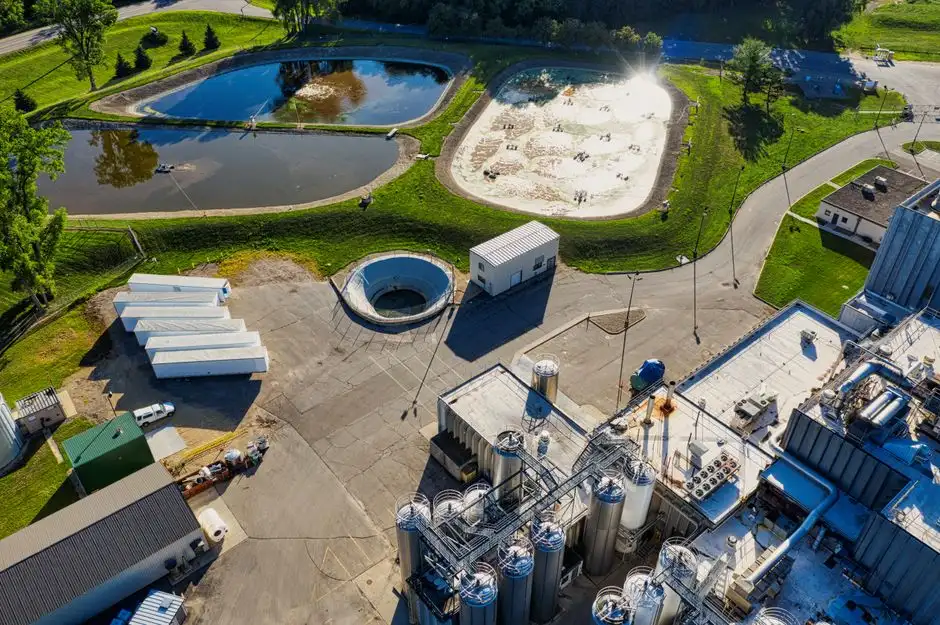
The table below condenses published vendor data and field experience into a screenshot-ready comparison for your next pretreatment meeting. Numbers are drawn from DAF Corp 2026 product data, Ecologix 2026 selection guide, and HydropureWater field installations.
| Parameter | DAF (circular FC Maximizer) | DAF (rectangular RC UniMax) | Conventional Clarifier | Lamella Clarifier |
|---|---|---|---|---|
| TSS removal | 92–98% | 85–90% | 70–90% | 80–95% |
| FOG / oil removal | Up to 95% | 85–92% | ~70% | ~75% |
| Typical effluent TSS | 20–50 mg/L (from 2,000 mg/L feed) | 50–100 mg/L | 100–300 mg/L | 50–150 mg/L |
| Flow range (per unit) | 10–11,000 gpm | 10–1,000 gpm | 50–5,000 gpm | 20–2,000 gpm |
| Footprint per 100 gpm (≈ 23 m³/h) | ~3–5 m² | ~4–6 m² | ~10–15 m² | ~1–2 m² |
| CapEx band (skid-mounted, 50–500 gpm) | $180K–$650K | $150K–$500K | $80K–$300K | $100K–$350K |
| Opex drivers | Air compressor, polymer, recycle pump | Air compressor, polymer, recycle pump | Sludge hauling, polymer | Sludge hauling, polymer |
| Best-fit stream | FOG, emulsified oils, coolants | FOG with retrofit footprint constraints | Heavy inert solids, low FOG | Space-constrained sites with settleable solids |
| Magna decision rule (FOG > 50 mg/L or emulsified coolant present) | Required | Required | Insufficient alone | Insufficient alone |
For plants with FOG above 50 mg/L or any emulsified coolant signature, the matrix collapses to DAF. The choice between circular and rectangular then comes down to available footprint, retrofit constraints, and whether a shop-assembled skid (typical of the HydropureWater dissolved air flotation system) can drop into an existing basin. For inert-solids-only streams with FOG below 30 mg/L, a HydropureWater high-efficiency lamella clarifier delivers 90% TSS at lower CapEx and a smaller concrete pour than a conventional clarifier.
Sizing a DAF or Clarifier for a Magna Plant: Flow, Load and Footprint
Single parts-washer lines at Magna plants typically discharge 20–200 gpm (5–45 m³/h); full-facility pre-treatment trains handling combined wash, coolant, and phosphate rinse flows run 200–800 gpm (45–180 m³/h). The HydropureWater DAF range covers 4–300 m³/h across 13 models, which lines up with both ends of the Magna envelope; larger plants parallel units or step up to the next frame size.
Surface loading rate is the sizing lever that drives footprint. A lamella clarifier at 20–40 m³/m²/h needs roughly 1 m² of projected plate area for a 100 gpm (~23 m³/h) stream, while a conventional clarifier at 1–3 m³/m²/h needs approximately 8–23 m² of surface area for the same flow — a 10× footprint penalty that translates directly into civil cost on a constrained Magna site.
| Stream flow | DAF hydraulic loading target | Clarifier surface loading | Lamella plate area (est.) | Conventional clarifier area (est.) |
|---|---|---|---|---|
| 20 gpm (4.5 m³/h) | 3–5 gpm/ft² (follow vendor rating curve) | 20–40 m³/m²/h | ~0.1–0.2 m² | ~1.5–4.5 m² |
| 100 gpm (23 m³/h) | 3–5 gpm/ft² | 20–40 m³/m²/h | ~0.6–1.2 m² | ~8–23 m² |
| 500 gpm (114 m³/h) | 3–5 gpm/ft² | 20–40 m³/m²/h | ~3–6 m² | ~38–114 m² |
Influent TSS for Magna parts-washer streams typically lands in the 500–2,000 mg/L range, which is exactly the design envelope for DAF Corp's FC Maximizer — that unit is rated to clarify 2,000 mg/L feed down to 50 ppm (DAF Corp 2026 product data). For hydraulic loading, follow vendor rating curves at 3–5 gpm/ft² rather than back-calculating from a generic rule of thumb, because hydraulic residence time in a DAF is only 3–5 minutes versus 1–4 hours in a clarifier. Rectangular DAF units ship fully shop-assembled (ClearStream 2026 product data) and can drop into an existing concrete basin — a useful retrofit path for Magna plants adding capacity without new civils work.
Hybrid Trains: When a DAF Should Sit Ahead of (or After) a Clarifier
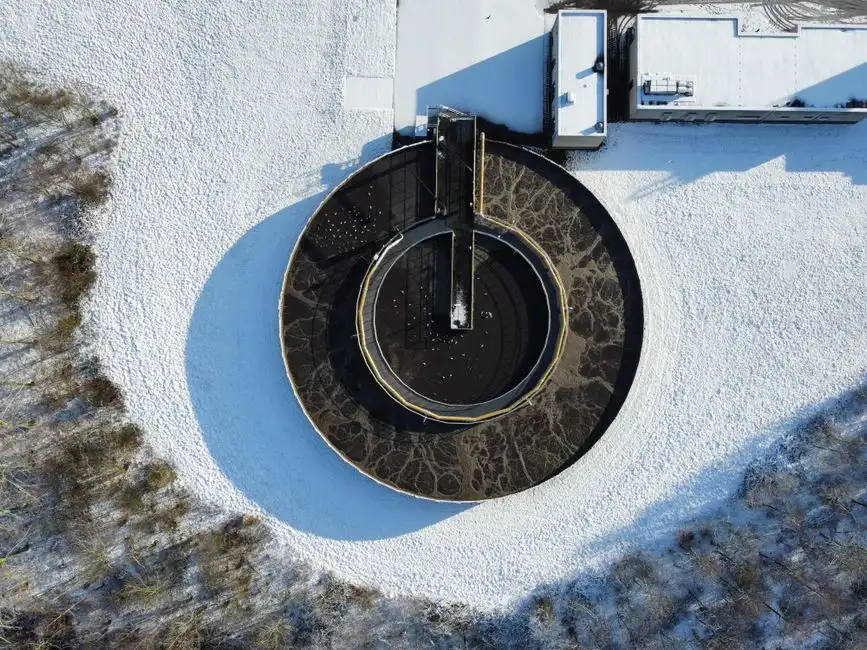
Some Magna streams carry both emulsified oil and heavy metal fines — for example, a phosphate-wash line that also sees shot-blast carry-over. A single technology underperforms on these: a DAF will strip FOG but pass fine metal solids; a clarifier will drop the fines but let oil slip through. The defensible answer is a hybrid train with DAF first, then a polishing lamella clarifier. The DAF protects the clarifier from oil fouling, and the lamella polishes residual TSS down to a level a single DAF cannot reach alone on a 2,000 mg/L feed; HydropureWater lamella field data shows sludge volume to the clarifier drops roughly 30% when DAF precedes it.
For higher-load biological streams, the train can extend further: DAF for primary FOG/TSS reduction, then an MBR for BOD and nitrification — covered in a transportation equipment pretreatment compliance guide rather than a DAF-vs-clarifier decision. ClearStream's rectangular DAF product line also packages integral coagulation and flocculation chambers inside the unit, which trims footprint on tight retrofit sites and removes one transfer stage from the train.
Add a hybrid only when one unit cannot meet the discharge limit alone. A second skimmer, a transfer pump, and dual sludge handling all add Opex and maintenance burden. For the same reason, do not stack a clarifier ahead of a DAF — the DAF will re-suspend settled light solids and erase the clarifier's work. The proven order is DAF → clarifier, never the reverse, for oily streams. Plants looking to step further into biological polishing can review the integrated MBR option separately.
2026 CapEx and Footprint Bands for Magna Buyers
For procurement, defend the spend with a band, not a single number. The 2026 indicative CapEx range below is for skid-mounted, automatic, fully-assembled units in 304L stainless or epoxy-coated carbon steel. Use it as a sanity check before requesting formal quotes.
| System | Flow range | CapEx band (USD, 2026) | Footprint band | Dominant Opex line |
|---|---|---|---|---|
| Circular DAF (FC Maximizer class) | 50–500 gpm | $220K–$650K | 10–60 m² | Air compressor power, polymer |
| Rectangular DAF (RC UniMax / shop-assembled) | 50–500 gpm | $150K–$500K | 12–70 m² | Air compressor power, polymer |
| Lamella clarifier | 50–500 gpm | $100K–$350K | 4–20 m² plate area | Sludge hauling, polymer |
| Conventional clarifier (concrete or steel) | 50–500 gpm | $80K–$300K + civil | 80–230 m² surface | Sludge hauling, polymer |
Clarifier CapEx is lower, but the concrete or steel tank and the land it occupies are real cost lines. On a land-constrained Magna site, that "cheap" clarifier can lose its Opex advantage once you add civil work, permitting, and lost production space. DAF systems trade higher electrical cost (air compressor and recycle pump) for a fraction of the footprint and tighter effluent quality on oily streams. Pair either system with a HydropureWater automatic chemical dosing skid sized to your polymer and coagulant consumption; the dosing skid is the same on both trains and is typically scoped as a line-item add-on rather than a separate design package.
Regulatory Checklist: 40 CFR Parts 403, 433 and 464 for Magna Plants
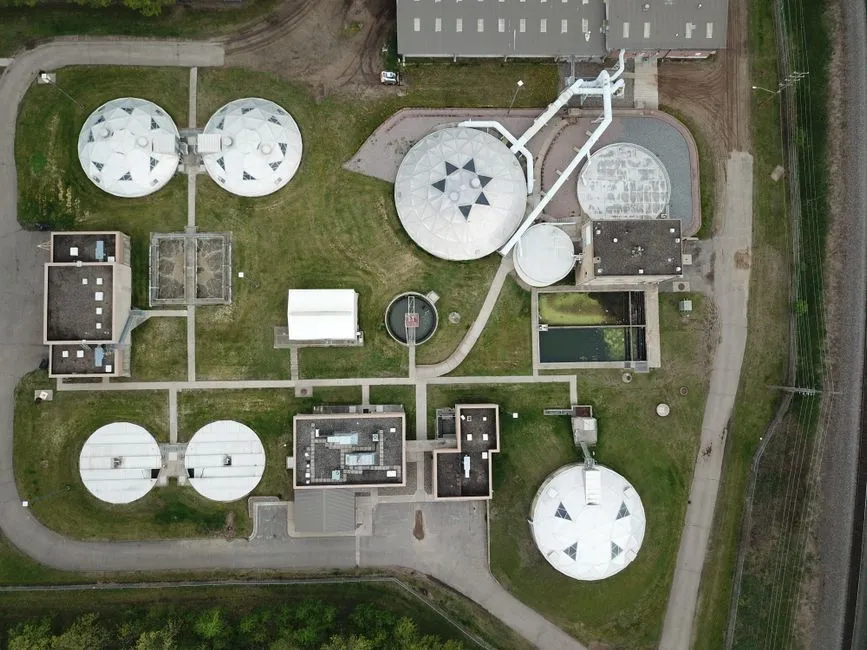
Most Magna transportation equipment plants fall under 40 CFR Part 464 (Transportation Equipment Manufacturing) as their primary categorical standard, and any on-site metal-finishing line — zinc phosphate, black oxide, electroless nickel, anodizing, hard chrome — also touches 40 CFR Part 433 (Metal Finishing). The Salt Lake City Water Reclamation District and the Magna Sewer Improvement District each issue site-specific local limits letters that set numerical ceilings for oil & grease, total metals (Cd, Cr, Cu, Ni, Pb, Zn), pH, and TSS, and these letters are the legally binding values regardless of the federal categorical numbers.
Operationally, a pretreatment unit's effluent data log should support your semi-annual Significant Industrial User (SIU) self-monitoring report with minimal manual collation — pick the unit whose controls export clean time-stamped data. Confirm categorical applicability, then confirm local limits, in that order. The EPA does not specify numeric local limits for Salt Lake County; always check the most recent letter from your POTW's pretreatment coordinator before finalizing equipment selection, because local limits drive both technology choice and the chemistry package.
Frequently Asked Questions
DAF or clarifier for a Magna transportation equipment plant with FOG?
DAF. On identical oily streams, DAF removes up to 95% of oils and greases versus roughly 70% for a clarifier (Ecologix 2026 head-to-head data). For Magna parts-washer and coolant streams that typically run 200–2,000 mg/L FOG, a clarifier alone will not hold oil & grease below most Salt Lake-area local limits.
Can DAF and a clarifier be used together?
Yes — and for streams carrying both emulsified oil and heavy metal fines it is often the defensible answer. A DAF → lamella clarifier hybrid train strips FOG first, then polishes residual TSS; the clarifier's sludge volume drops roughly 30% when DAF precedes it (HydropureWater field data, 2026). For a DAF vs clarifier for fabricated metals wastewater comparison, the same logic applies.
What is the 2026 CapEx range for a 100 gpm DAF?
Indicative $200K–$400K for a skid-mounted, automatic rectangular DAF in 304L stainless or epoxy-coated carbon steel. A circular FC Maximizer-class unit in the same flow range runs $220K–$450K. Both bands are pre-engineering, pre-tax; request a formal quote against your specific influent and local limits letter.
Does a lamella clarifier meet Magna POTW FOG limits on its own?
Rarely. A lamella clarifier achieves roughly 75% FOG removal on oily streams; most Salt Lake-area local limits require more headroom than that. FOG above 30–50 mg/L almost always needs DAF pretreatment; the lamella then polishes settleable solids and TSS, not oil.
Which regulations apply to a Magna transportation equipment plant?
40 CFR Part 403 sets the general pretreatment framework; 40 CFR Part 464 covers transportation equipment manufacturing categorical standards; and on-site metal-finishing lines also touch 40 CFR Part 433. Local limits letters from the Salt Lake City Water Reclamation District or Magna Sewer Improvement District sit on top of the federal categories and are the operative numbers. For equipment selection criteria, the DAF system specifications and selection guide walks through the same hydraulic loading, recycle, and air-to-solids ratios referenced in this article.