Why Kent chemical plants face a 2026 DAF-vs-clarifier decision
Kent, Washington chemical plants in 2026 choose between a DAF system and a clarifier based on influent characteristics and EPA 40 CFR Part 437 limits. DAF is preferred when wastewater contains oils, greases, or fine suspended solids, reaching 92–98% TSS removal on DAF Corp's FC Maximizer round configuration versus 85–90% on the rectangular RC UniMax. Clarifiers remain the lower-cost option for heavy inorganic solids, but DAF delivers the tighter effluent chemical plants need for pretreatment compliance.
The Kent–Valley industrial corridor hosts organic chemicals, plastics intermediates, specialty cleaners, and paint/coatings manufacturers whose wastewater typically carries both dissolved organics and emulsified FOG. Federal categorical standards under 40 CFR Part 437 (Organic Chemicals, Plastics, and Synthetic Fibers) set 2026 discharge ceilings on BOD₅, TSS, COD, and priority pollutants. Locally, the King County Industrial Waste Program and the Puget Sound Clean Air Agency impose preliminary acceptance limits — commonly 300 mg/L BOD₅ and 300 mg/L TSS — that a primary clarifier alone may not hit when FOG is present. Engineers reviewing the EPA Clean Water Act 2026 compliance guide will see the same convergence of federal, county, and air-permit obligations.
The September 2025 Heron Innovators shipment of a Suspended Air® Flotation (SAF®) unit to Kentucky for barge-wash oil removal is concrete evidence that air-flotation systems are the default for oil-laden industrial streams entering 2026 deployments.
How a DAF system treats chemical wastewater
DAF clarifies chemical wastewater by attaching 30–80 micron micro-bubbles to oils, polymer flocs, and low-density colloids, lifting them to the surface where a scoop skims the float layer. Pressurized recycle water is saturated with air in an air-mixing tube (AMT) and released into the contact zone; the resulting bubble–particle aggregates rise faster than they would settle, which is the key advantage over gravity separation. DAF Corp's micro-bubble generator produces consistent 20–40 micron bubbles with no coarse air, a specification that improves capture of fine emulsified oil in chemical streams (DAF Corp).
Selecting the right technology requires balancing these performance metrics against site-specific flow and chemical requirements. For chemical, petrochemical, and oily service, packaged DAF units such as the DAF system for chemicals wastewater cover 4–300 m³/h, which matches the flow range of most Kent-side batch and continuous chemical operations. Emulsified oils, low-density solvents, and polymer-flocculated colloids float readily — these are exactly the species that defeat gravity clarifiers in a chemicals plant. Most chemical influent requires upstream pH adjustment or coagulant/flocculant dosing, and an automatic chemical dosing for coagulation skid is the practical way to hold coagulant ratios stable across flow spikes.
DAF effluent typically reaches below 20 ppm of filterable solids with a thickened sludge consistency of 2–4% (DAF Corp), which reduces downstream dewatering load relative to a conventional clarifier.
How a clarifier treats chemical wastewater

A clarifier relies on gravity sedimentation in a quiescent tank fitted with inclined lamella plates or rotating rake arms; heavier particles settle as underflow sludge while clarified water overflows a peripheral launder. In chemical service, clarifiers are the right tool for high-density inorganic solids — metal hydroxide sludges, catalyst fines, lime slurries, and precipitated salts — where the particles are dense enough to overcome hydraulic carry-over.
Understanding these mechanical limitations helps engineers determine if a clarifier is sufficient for their specific solids profile. A lamella clarifier for chemical plants operates at surface loading rates of 20–40 m/h, roughly 5–10× the loading rate of a conventional rectangular basin, and reduces coagulant consumption by up to 30% by improving floc–settle contact. Hydraulic retention time is typically 2–4 hours for rectangular and circular units, which is acceptable on plants with steady flows and large equalization capacity. Clarifiers struggle with low-density emulsified oils, FOG, and fine colloids; these particles ride the hydraulic current rather than settling, and clarifier effluent on such streams can miss 40 CFR Part 437 categorical ceilings even with polymer aid.
Side-by-side comparison: DAF vs clarifier for chemical streams
The table below is the version an engineer in Kent can paste into a 2026 capital memo. Removal rates come from DAF Corp's FC Maximizer and RC UniMax product lines and from Ecologix's 2026 industrial selection guide; sludge and footprint values are typical engineering ranges, not single-source figures.
| Parameter | DAF (round / rectangular) | Lamella / conventional clarifier |
|---|---|---|
| TSS removal rate | 92–98% (FC Maximizer) / 85–90% (RC UniMax) | ~90% for heavy inorganic solids; lower for FOG/colloidal streams |
| FOG / emulsified oil removal | ~95% (food-processing benchmark) to 98% with optimized chemistry | ~70% (Ecologix 2026); poor on stable emulsions |
| Effluent TSS achievable | Below 20 ppm filterable (DAF Corp) | 30–60 ppm typical on chemical streams |
| Sludge consistency | 2–4% (thickened float) | 1–3% (bottom underflow) |
| Footprint per m³/h | Small (shallow tank, short HRT) | Larger (lamella) or much larger (conventional) |
| CAPEX (qualitative) | Moderate — higher unit cost, smaller tankage | Lower — larger civil footprint, less skidded equipment |
| OPEX drivers | Air compressor duty, saturator pump, polymer | Polymer, sludge pumping, rake torque |
| Sensitivity to flow spikes | High — hydraulic surge upsets the float blanket | Moderate — equalization helps significantly |
| Best-fit influent | TSS <2,000 mg/L + FOG >50 mg/L + low-density colloids | TSS >2,000 mg/L + low FOG + dense inorganic solids |
| Effluent target | <30 mg/L TSS to meet tight local/POTW limits | 50–100 mg/L TSS adequate where local limits allow |
Use DAF when FOG dominates the stream and effluent TSS must sit below 30 mg/L; use a clarifier when the stream is heavy, dense, and largely free of emulsified oil.
Decision framework: which to pick for your Kent chemical plant
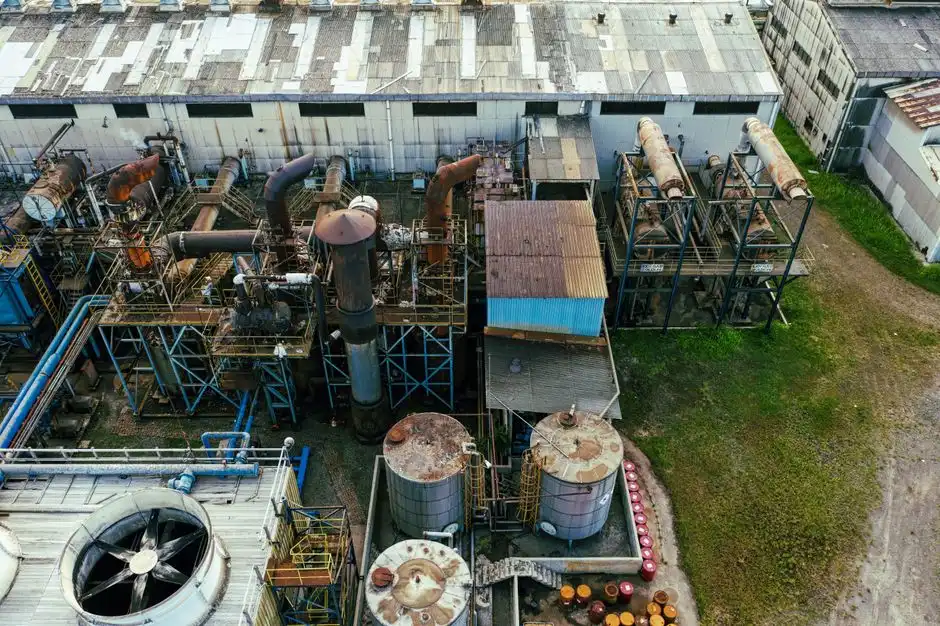
A structured evaluation process ensures that procurement managers and process engineers reach the same conclusion. Walk this checklist before signing a purchase order to tie measurements to a binary or threshold decision.
- Characterize the influent. Pull composite samples over at least one representative production week and measure TSS, FOG, COD, pH, temperature, and any heavy metals or solvents (per 40 CFR Part 437 Appendix A priority pollutant scans).
- Apply the four-question filter. (a) Is FOG >50 mg/L? (b) Is TSS <2,000 mg/L? (c) Is the required effluent TSS <30 mg/L? (d) Is the available footprint constrained by the existing building? Three or four "yes" answers point to DAF. Zero or one "yes" points to a clarifier.
- Check chemical compatibility. Standard 304L stainless tanks handle most chemical streams. Hot caustic, strong oxidizers, or halogenated solvents usually need full-stainless or FRP upgrades — a 15–25% CAPEX adder that must be priced now, not after delivery.
- Consider hybrid configurations. For plants with both oil and heavy solids, DAF upstream of a clarifier captures the floatables and lets the clarifier handle the dense fraction. For combined organics, the 2025 SSRN paper on DAF + Modified Moving Bed Biofilm Reactor (MMBBR) hybrid trains reports measurable COD reductions on synthetic oily wastewater — relevant to plants reusing process water.
- Confirm the regulatory path. Verify the 40 CFR Part 437 subcategory (e.g., 437.15 for thermoplastics, 437.25 for organic chemicals NEC) and the King County discharge permit effluent limits before freezing equipment selection. The same exercise is documented in this chemical plant 2026 pretreatment compliance guide.
For a single-unit decision in 2026, the rule of thumb is: emulsified oil, FOG, or fine colloidal TSS at moderate loading → DAF; dense inorganic sludge at high TSS with steady flow → clarifier. Anything in between, or any plant that needs both an oil step and a downstream biological step, should plan a hybrid train. Engineering specifications and CAPEX benchmarks for a packaged DAF are detailed in the DAF system engineering specs and costs 2026 reference.
Frequently Asked Questions
Which is better for a chemical plant with high FOG and moderate TSS — DAF or clarifier?
DAF. Emulsified oil and FOG are the species clarifiers handle worst, typically 70% removal (Ecologix 2026). DAF with a polymer aid routinely hits 95–98% FOG removal and 92–98% TSS removal on the FC Maximizer configuration (DAF Corp). If the local POTW limit is 30 mg/L TSS, a clarifier alone will not get there on an oily stream.
What TSS level makes a clarifier the lower-risk choice?
Clarifiers are the right call when influent TSS exceeds roughly 2,000 mg/L, the solids are dense (metal hydroxides, lime, catalyst fines), and FOG is <50 mg/L. In that envelope a lamella clarifier runs at 20–40 m/h surface loading, cuts coagulant use by up to 30%, and produces underflow sludge that pumps easily to a filter press.
Do EPA 40 CFR Part 437 limits force a specific technology choice?
No. Part 437 sets categorical effluent limits (BOD₅, TSS, COD, pH, and priority pollutants) but does not mandate DAF or clarifier. The technology choice is driven by whether the influent can meet those limits after gravity settling alone. For most chemical subcategories with FOG present, Part 437 ceilings are not achievable with a clarifier alone.
Can a DAF and a clarifier be combined on the same chemical wastewater train?
Yes. A common 2026 configuration is DAF upstream of a clarifier or DAF upstream of an MBBR/MBR. DAF captures oil and floatables, the downstream unit handles dissolved organics or residual solids. The 2025 SSRN study on DAF + MMBBR hybrids reports improved COD removal on synthetic oily wastewater, which is directly relevant to plants targeting water reuse.
What is the first step a Kent chemical plant should take before buying either unit?
Run a one-week influent characterization (TSS, FOG, COD, pH, metals) and a bench-scale jar test on both technologies with your real wastewater. Then request an on-site pilot from at least two vendors — DAF Corp, for example, runs pilot FC-60 units at 48 gpm on a 2,000 ppm loading. A two-week pilot costs far less than a mistimed capital purchase and is the single best defense in a CFO review.