Why the Cullman Enforcement Climate Matters for Any Plant Discharging to the City POTW
On December 17, 2025, WBRC reported that Cullman Police arrested the superintendent of the City of Cullman Wastewater Treatment Plant (per WBRC, 2025-12). For any Tier-1 EV or auto supplier discharging to that POTW, this event is a leading indicator. When the receiving plant's leadership is under criminal scrutiny, the control authority's posture toward industrial users tightens: re-screening of Significant Industrial Users (SIUs), unannounced sampling, and renewed attention to slug-control plans follow. The local risk for an automotive supplier in the collection system has increased, regardless of that supplier's own compliance history.
Under 40 CFR Part 403, EPA retains authority to enforce local limits even when a POTW's pretreatment program is not formally approved, a position reiterated in its 2026 pretreatment guidance (per EPA, 2026). For a Cullman-area EV/auto plant, the federal enforcement floor is active whether or not the City of Cullman WWTP is currently operating under an approved program; the plant cannot assume the absence of a local program equals the absence of risk. Every supplier should expect an SIU re-screening, an updated slug-control plan review, and tightened inspection cadence from ADEM and the control authority.
The Three-Layer Pretreatment Stack That Governs a Cullman EV/Auto Discharge
Three regulatory layers govern a single discharge to a small-municipality Alabama POTW, with the most stringent applicable layer controlling (per EPA, 2026). These layers form the foundation for compliant plant operations.
Layer 1 is the federal floor: 40 CFR Part 403 general and prohibited-discharge standards, including the definitions of pass-through at 403.3(p) and interference at 403.3(k) (per EPA, 2026). Pass-through is a discharge that exits the POTW in quantities or concentrations that, alone or with other sources, causes a violation of any requirement of the POTW's NPDES permit. Interference is a discharge that, alone or with other sources, inhibits or disrupts the POTW, its treatment processes, or its sludge processes, and is a cause of an NPDES or sewage-sludge violation.
Layer 2 is the categorical standard. For Cullman EV/auto operations, the binding subparts are 40 CFR Part 433 (metal finishing) for e-coat, electrodeposition, phosphate conversion coating, and body-in-white rinsewater; 40 CFR Part 444 for any casting-line washwater; and 40 CFR Part 419 for petroleum-derived stamping and machining lubricants. The statutory authority is Clean Water Act §307(b) for categorical standards and §402(n) for POTW pretreatment programs under NPDES.
Layer 3 is the local limit envelope developed by the control authority under 40 CFR 403.5(c), which is site-specific, often more stringent than the federal floor, and enforced at the point of connection to the collection system (per EPA, 2026). The representative envelope for a small-municipality Alabama POTW serving an EV/auto plant is pH 6–9, O&G 50–100 mg/L, TSS 200–300 mg/L, and total metals 1–3 mg/L per parameter (per EPA, 2026).
| Layer | Authority | What it controls | Cullman envelope / cite |
|---|---|---|---|
| 1 — Federal floor | 40 CFR Part 403; CWA §307(b) | Pass-through at 403.3(p); interference at 403.3(k); prohibited discharges | Definitions, no numeric limit (per EPA, 2026) |
| 2 — Categorical | 40 CFR Part 433 (metal finishing); Part 444 (foundry); Part 419 (petroleum) | E-coat, electrodeposition, phosphate, body-in-white rinsewater; casting washwater; stamping/machining lubricants | Subpart-specific daily/monthly maxima (per EPA, 2026) |
| 3 — Local limits | 40 CFR 403.5(c); CWA §402(n) | Site-specific numeric and narrative limits at the point of connection | pH 6–9; O&G 50–100 mg/L; TSS 200–300 mg/L; total metals 1–3 mg/L per parameter (per EPA, 2026) |
Cullman Stream-by-Stream Characteristics for an EV/Auto Plant
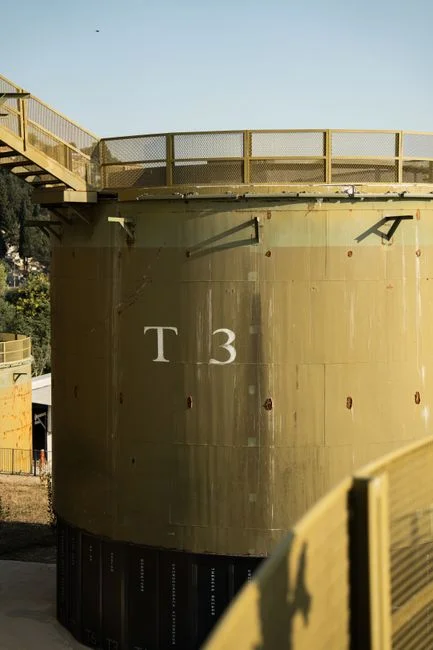
Process selection follows stream chemistry, and each wastewater stream on an EV/auto floor has a characteristic pollutant load that maps to a specific unit operation in the treatment train.
E-coat and electrodeposition rinsewater carries high pH swings, surfactant, and resin/ultrafiltrate permeate residue; pH adjustment plus a DAF system for auto plant FOG and TSS removal is the standard first move. Phosphate-conversion rinsewater is the recurring compliance problem for phosphorus removal from auto plant wastewater — typical total P runs 20–80 mg/L with dissolved iron and zinc 10–100 mg/L, and that load is the primary driver for the chemical precipitation stage (per HydropureWater, 2026). Machining and stamping streams carry emulsified oils and petroleum-derived lubricants that fall under Part 419, with free and emulsified FOG often exceeding 200 mg/L. Battery subassembly effluent — increasingly common at Cullman-area suppliers supporting the Alabama battery supply chain — must be isolated in stainless collection with a dedicated precipitation train and must never be combined with the general plant sewer; both lithium and fluoride are increasingly scrutinized in 2026 local-limit reevaluations (per HydropureWater, 2026).
| Stream | Key pollutants | Typical range | Unit operation |
|---|---|---|---|
| E-coat / electrodeposition rinsewater | pH swings; surfactant; resin carryover | pH 8–12 surge events | pH adjustment + DAF |
| Phosphate-conversion rinsewater | Total P; dissolved Fe, Zn | Total P 20–80 mg/L; Fe/Zn 10–100 mg/L (per HydropureWater, 2026) | Chemical precipitation (lime or caustic + coagulant) |
| Machining / stamping (Part 419) | Emulsified oils; petroleum lubricants | FOG often >200 mg/L | DAF (first physical separation) |
| Battery subassembly effluent | Lithium; fluoride; electrolyte residue | Site-specific; isolated stainless collection | Dedicated precipitation train; never combined sewer |
The 2026 Treatment Train: Equalization → DAF → Chemical Precipitation → Polishing
Equalization plus a written batch-release plan are the hardware and paperwork that translate the legal definitions of pass-through and interference into a defensible discharge. The equalization basin smooths hydraulic and chemical surges; the slug-control plan documents who authorizes a release, what parameter triggers a hold, and what the cutoff values are.
DAF is the right first physical separation when FOG exceeds 200 mg/L or TSS is above 300 mg/L, which covers most stamping, machining, and parts-washer streams at a Cullman EV/auto plant. A DAF system for auto plant FOG and TSS removal operating at 4–300 m³/h with micro-bubble technology and automatic skimming takes out free and emulsified oil and grease plus a large fraction of TSS in a single step.
The chemical precipitation stage uses PLC-controlled coagulant and pH dosing for metal precipitation to hit the 1–3 mg/L total metals envelope, with coagulant (typically ferric chloride or alum), polymer flocculant, and pH adjustment to the optimum band for the target metal. Polishing follows via a high-efficiency lamella clarifier with surface loading 20–40 m/h or a multimedia filter, both of which protect downstream operations and tighten the TSS margin against the local limit. Sludge handling routes to a plate-and-frame filter press; treat dewatering as a parallel compliance question on cake disposal. The same train logic appears in a DAF vs clarifier selection guide for high-FOG industrial streams for neighboring small-municipality POTWs.
Designing the 20–30% Headroom Margin for the 2026 403.5(c) Reevaluation
Annual review and periodic reevaluation of local limits by the POTW under 403.5(c) means the plan must include a re-check trigger and a design-headroom margin — 20–30% above current local-limit numbers is standard practice (per HydropureWater, 2026). Sizing DAF, precipitation tanks, and clarifiers to 120–130% of today's numeric envelope keeps the capital investment serviceable when the next 403.5(c) reevaluation tightens a parameter. Embed the re-check trigger into the plant's O&M documentation so the inspector sees a defensible 2026 review path: a calendar reminder tied to the POTW's annual publication, a written procedure to requery local limits with the Cullman POTW pretreatment coordinator before any equipment purchase, and a design-margin block on the P&ID showing the 20–30% envelope. Confirm current numeric local limits and slug-load plan expectations directly with the Cullman POTW pretreatment coordinator before final equipment scoping, as the local envelope is the controlling layer and it can shift between this writing and a 2026 procurement decision. The same margin logic shows up in a parallel metals-pretreatment compliance playbook for a small-municipality POTW.
Frequently Asked Questions
What is the controlling regulatory layer for a Cullman EV/auto plant discharging to the City of Cullman WWTP?
The most stringent applicable layer among 40 CFR Part 403 general requirements, 40 CFR Part 433 (metal finishing) categorical standards, and the POTW's local limits developed under 40 CFR 403.5(c) controls (per EPA, 2026). For a typical Cullman-area body-in-white or e-coat plant, the local limit envelope of pH 6–9, O&G 50–100 mg/L, TSS 200–300 mg/L, and total metals 1–3 mg/L per parameter is usually the tightest layer.
What unit operations belong in a 2026 pretreatment train for an auto body shop?
Equalization, DAF for FOG and TSS, PLC-controlled chemical precipitation for metals and phosphorus, and a lamella clarifier or multimedia filter for polishing, with sludge dewatered on a plate-and-frame filter press. DAF is the first physical separation when FOG exceeds 200 mg/L or TSS is above 300 mg/L (per HydropureWater, 2026).
Why does the December 17, 2025 Cullman WWTP superintendent arrest matter for my plant?
High-profile enforcement action at the receiving POTW is a leading indicator of tighter industrial-user inspections, SIU re-screenings, and renewed slug-control plan review. EPA retains authority to enforce local limits even when a POTW's pretreatment program is not formally approved, so the federal floor is active regardless of the City's program status (per EPA, 2026).
How do I handle battery-electrolyte wastewater at a Cullman-area EV plant?
Route it to isolated stainless collection with a dedicated precipitation train, never into the combined plant sewer. Confirm that the treated effluent does not push lithium or fluoride past the receiving POTW's local limits — both parameters are increasingly scrutinized in 2026 local-limit reevaluations (per HydropureWater, 2026).