Why Wire Drawing Wastewater Is Its Own Ion Exchange Problem
Wire-drawing rinse water carries sodium stearate, fatty-acid soaps, drawing-compound emulsions, and free oil at 50–2,000 mg/L, and the metal envelope is a mixed Cu²⁺/Zn²⁺/Fe²⁺,³⁺/Ni²⁺ matrix, not a single-metal plating rinse. Typical inlet concentrations run Cu 5–200 mg/L from copper pre-coat or copper-sulfate pickling, Zn 10–300 mg/L from galvanized wire rinse, Fe 20–500 mg/L from pickling scale, and Ni at trace levels. Suspended solids sit at 50–500 mg/L and oil/grease at the same order of magnitude. That combination disqualifies the generic electroplating ion exchange (IX) playbook: the lubricant/surfactant envelope fouls chelating resin in weeks, and a mixed-metal matrix demands a different selectivity argument than a Watts nickel line.
The compliance targets a buyer designs to in 2026 are converging across jurisdictions: the EU Industrial Emissions Directive (IED) sets a 0.5 mg/L Ni limit for surface-treatment effluents; US EPA 40 CFR 433 (Metal Finishing) sets a 1.04 mg/L Ni daily maximum and 0.69 mg/L monthly average for direct discharges; China GB 21900-2008 sets 0.5 mg/L total Ni for electroplating discharges. Cu and Zn limits sit at a similar order of magnitude in all three regimes, and a properly sized polishing train must hold all three metals simultaneously. A 2026 review of metal-finishing enforcement confirms that combined-metal excursions, not single-metal spikes, are the typical notice-of-violation trigger on wire-drawing outfalls.
No resin can do that job on raw rinse water. The mandatory four-step pretreatment gate is: oil-skim → DAF system for drawing-lubricant and oil/grease removal → multimedia filter → pH adjust to 4.0–5.0. Without that train the chelating bed fouls within weeks and operating capacity drops 50% or more (HydropureWater field data, 2026). The pretreatment gate is the single most common reason wire-drawing IX retrofits underperform: operators inherit a resin skid from a plating line and feed it drawing rinse that has not been defatted, then watch capacity collapse.
Resin Chemistry: SAC, WAC, Chelating IDA, and Chelating AMP Compared
Four resin families are in scope for wire-drawing rinse: strong-acid cation (SAC), weak-acid cation (WAC), chelating iminodiacetate (IDA), and chelating aminomethylphosphonic (AMP). The default for a mixed Cu/Zn/Fe/Ni envelope is chelating IDA, but the decision matrix below is what an engineer should walk through before specifying.
| Resin family | Functional group | Total capacity (eq/L) | Working capacity on Cu/Zn/Fe pickling (g/L) | pH window | Selectivity vs Ca²⁺/Na⁺ | Typical grades |
|---|---|---|---|---|---|---|
| SAC (strong-acid cation) | Sulfonate | 1.8–2.0 | 8–15 (non-selective) | 0–14 | None — picks up Ca²⁺ and Na⁺ first | Amberlite IR120, Purolite C100 |
| WAC (weak-acid cation) | Carboxylate | 3.5–4.5 | 15–25 | 4–14 (inactive below pH 4) | Weak; requires pH >4 | Amberlite IRC86, Lewatit CNP 80 |
| Chelating IDA | Iminodiacetate | 1.2–1.4 | 10–20 mixed; 20–40 single-metal | 2–5 (precipitates metal hydroxide above pH 6) | 5× over Ca²⁺, 50× over Na⁺ | Lewatit TP207, Purolite S930, Amberlite IRC748 |
| Chelating AMP | Aminomethylphosphonic | 1.4–1.6 | 15–25 pickling; 25–45 single-metal | 0–5 (functional below pH 2) | 5× over Ca²⁺, 50× over Na⁺; tolerates higher Fe³⁺ | Lewatit TP260 |
SAC looks attractive on a data sheet because of its 1.8–2.0 eq/L total capacity, but it is non-selective: Ca²⁺ and Na⁺ in the rinse water load the bed first, and practical Cu/Zn breakthrough drops to 8–15 g/L. SAC is only economical when feed TDS is below 50 mg/L and competing ions are under 5 mg/L, conditions almost never met on a wire-drawing rinse train. WAC resins regenerate efficiently with mild acid (110–130% stoichiometric vs 150–200% for SAC), but they need pH above 4 to function. Wire-drawing rinse sits at pH 6–9, so WAC is workable on the bulk soap load; it then hands off to chelating polishing for the residual heavy metals. Chelating iminodiacetate resins (Lewatit TP207, Purolite S930, Amberlite IRC748) form selective five-coordinate complexes with Cu²⁺, Zn²⁺, and Ni²⁺ in the pH 2–5 window, ignoring most Na⁺ and only weakly binding Ca²⁺ until the bed is heavily loaded. The workhorse for the wire-drawing envelope, with operating capacity of 20–40 g/L single-metal and 10–20 g/L in mixed Cu/Zn/Fe pickling service (HydropureWater field data, 2026).
Chelating aminomethylphosphonic (AMP) resins (Lewatit TP260) outperform IDA below pH 2 and tolerate higher Fe³⁺ backgrounds, which matters when the pickling rinse co-mingles with the drawing rinse. AMP is typically specified 10–20% higher in loaded resin cost, which the OPEX math in a later section absorbs. A practical caution shared by all chelating grades: capacity collapses above pH 6 because metal hydroxide precipitates inside the bead and permanently blinds active sites. Feed pH adjustment to 4–5 is mandatory and the single most common cause of premature capacity loss on a wire-drawing train. Mixed-bed (cation + anion in one vessel) is not standard for metal recovery because the anion component adds no value and complicates regeneration; reserve mixed-bed for full rinse-water demineralization ahead of water reuse, not for compliance polishing.
Two-Column Lead-Lag Architecture and Resin Sizing
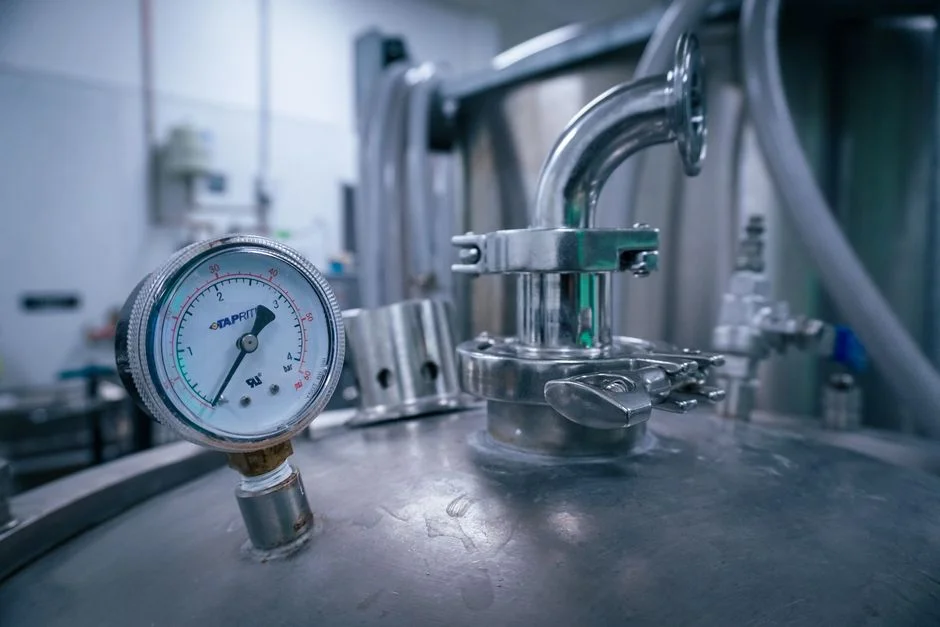
Two-column lead-lag, also called merry-go-round, is the 2026 standard for wire-drawing IX because it produces continuous compliant effluent at <0.1 mg/L total metals and allows one column to be regenerated while the other runs. A single column cannot be the compliance barrier: the moment the bed reaches exhaustion the effluent climbs from <0.1 to >50 mg/L within a few bed volumes, and a single-column train is acceptable only when RO or precipitation polishes the slipstream downstream. The lead-lag sequence is: column A runs as the lead polisher to a 1.0 mg/L breakthrough setpoint (set well below the 0.5 mg/L GB 21900-2008 and EU IED ceilings to give the lag column margin); column B runs in lag, polishing A's slipstream to <0.1 mg/L. When A reaches setpoint, the PLC swaps roles, B becomes the new lead, A goes offline for regeneration. Pneumatic multi-port valves on the lead-lag skid let one operator switch columns in under 2 minutes; full PLC systems log cumulative bed volumes and trigger switch on volume throughput rather than on online metal measurement.
Resin volume is sized from a simple mass-balance:
V = (Q × ΔC × t) / W
where Q is rinse flow (m³/h), ΔC is metal removed (kg/m³), t is cycle time (h), and W is working capacity (kg/m³). Worked example for a typical 5 m³/h wire-drawing rinse with 100 mg/L inlet metal and 12-hour cycle target at 30 g/L (≈30 kg/m³) working capacity: V = (5 × 0.1 × 12) / 30 = 0.20 m³ per column, × 2 columns = 0.40 m³ total installed resin. At a service flow of 2.5 BV/h that equals roughly 10 m³/h hydraulic capacity per m³ of resin, comfortably above the design flow for most copper and galvanized wire mills in the 1–10 m³/h range.
| Parameter | Symbol | Worked value | Notes |
|---|---|---|---|
| Rinse flow | Q | 5 m³/h | Typical wire-drawing rinse |
| Inlet total metals | Cin | 100 mg/L (0.1 kg/m³) | Cu + Zn + Fe mixed |
| Working capacity | W | 30 kg/m³ | Mixed Cu/Zn/Fe chelating IDA (HydropureWater field data, 2026) |
| Cycle time | t | 12 h | Operator-tunable |
| Resin per column | V | 0.20 m³ (200 L) | V = (5 × 0.1 × 12) / 30 |
| Total installed resin | 2V | 0.40 m³ | Lead-lag pair |
| Service flow rate | BV/h | 2.5 | ~10 m³/h hydraulic capacity per m³ resin |
| Breakthrough setpoint (lead) | — | 1.0 mg/L | Below 0.5 mg/L EU IED / GB 21900-2008 ceiling |
| Effluent target (lag) | — | <0.1 mg/L | Polished to compliance margin |
Instrumentation is straightforward: an online Cu/Zn ion-selective electrode (or a conductivity probe on the lag outlet, which is cheaper but less selective) plumbed to the PLC triggers the swap on actual breakthrough rather than on cumulative throughput. Mixed-bed demineralization is not standard for metal recovery because the anion component adds no value and complicates regeneration; it is reserved for full rinse-water reuse trains where TDS reduction back to <50 mg/L matters for closed-loop rinse. For a wider look at how IX sits inside an entire plating-line wastewater train, including upstream pickling rinse and downstream reuse, see the 2026 nickel removal engineering guide for the single-metal case the lead-lag architecture originated in.
Regeneration Chemistry: Acid, Ammonium Hydroxide, and Caustic Routes
Regeneration converts the loaded resin back to its active form and produces a metal-rich concentrate that is either returned to the process bath, sent to a crystallizer, or sold as a hydroxide cake. The choice of regenerant is dictated by what happens to the concentrate downstream.
Acid elution with 5–10% H₂SO₄ is the default for Cu/Zn recovery. The regenerate is a mixed metal sulphate solution at 30–60 g/L, which after pH and additive adjustment can be fed directly back to a sulfate-bearing pickling or plating bath. Two bed volumes of acid typically strip >95% of the loaded metal. Disadvantages: sulfate load can push chloride-free baths out of spec, and the 1–2 BV of rinse water following the acid slug adds to the wastewater load.
NH₄OH elution with 4–8% ammonium hydroxide produces a 20–40 g/L metal-ammine complex. This route is preferred when chloride-bearing baths or FRP wetted parts would corrode under acid elution. The downside is ammonia stripping required before metal recovery or discharge: an air stripper at pH >10 followed by acid neutralization adds 15–25% to OPEX (HydropureWater field data, 2026).
NaOH elution with 4–6% NaOH precipitates Cu(OH)₂/Zn(OH)₂ directly inside the resin bead; a subsequent 5% H₂SO₄ redissolution step yields the highest concentration factor at 50–80 g/L metal in the regenerate and the smallest waste volume. The trade-off is the extra redissolution step and 30–40% higher NaOH consumption per cycle than the acid-only route.
A typical rinse-to-eluent volume ratio runs 4:1 to 6:1, so a 1 m³ bed produces 4–6 m³ of concentrate per regeneration cycle. The payback illustration for a 1 m³ IDA bed at 50 g/L metal × 5 m³/cycle × 1 cycle/day × 300 days/yr is roughly 75,000 kg metal/yr theoretical, of which 40–70% is typically captured given bath make-up demand and purity constraints. At LME Cu $8–10/kg and Zn $2.5–3.5/kg seen across 2025-Q3 to 2026-Q1, that is the strongest CAPEX justification in the budget conversation. The recovery credit math parallels the one worked in the zinc removal ROI guide for 2026, but with the Cu and Zn fractions stacked because the wire-drawing envelope carries both.
Pretreatment, OPEX, and 2026 Cost Crossover vs Precipitation
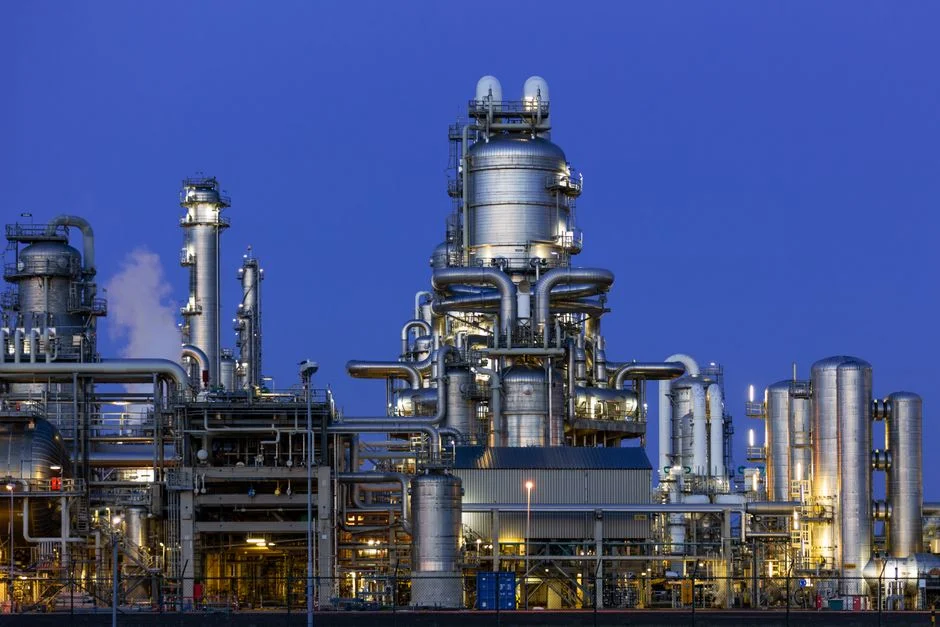
The pretreatment gate is not optional. Oil-skim → DAF → multi-media filter polishing IX feed to under 10 mg/L TSS → pH adjust to 4.0–5.0 with a PLC-controlled pH and regenerant dosing skid is the minimum. With DAF effluent in the 10–30 mg/L TSS range, the multimedia filter is the second protective barrier. Without the full gate the chelating bed fouls in weeks and operating capacity drops 50% or more (HydropureWater field data, 2026). Annual O&M budget items include a visual bed inspection, periodic acid wash to remove CaSO₄ scale from hard-water feeds, and a spare resin batch sized to one full column so a swap-out never stops the line.
| Cost line | Unit / basis | 2026 range | Notes |
|---|---|---|---|
| Turnkey two-column IX skid (1–10 m³/h) | USD per m³/h capacity | $25,000–60,000 | FRP vessels, PLC, in-line instrumentation |
| Turnkey two-column IX skid (10–50 m³/h) | USD per m³/h capacity | $60,000–120,000 | Larger vessels, higher-grade pneumatic valves dominate |
| Resin replacement cycle | years | 3–5 | Annual visual inspection; periodic acid wash |
| Chelating IDA resin (loaded) | USD per m³ installed | $8,000–15,000 | Loaded price $60–110/L |
| Chelating AMP resin premium | % above IDA | 10–20% | Higher loaded cost; better low-pH and Fe³⁺ tolerance |
| Regenerant chemicals | USD per m³ treated | $0.8–1.5 | Acid, caustic, or NH₄OH depending on route |
| Power and instrument air | USD per m³ treated | Negligible vs chemical | Dominant OPEX is regenerant |
| RO system (when reuse needed) | USD per m³/day capacity | $800–1,500 | IX as RO-concentrate polishing for brine metal recovery |
The OPEX crossover against chemical precipitation is the number to take into the budget meeting. Ion exchange OPEX beats lime/caustic precipitation when inlet metal is above 50 mg/L and a metal-recovery credit applies, because the regenerant cost scales with throughput while precipitation reagent cost scales with mass precipitated. Below 30 mg/L inlet metal, lime or caustic precipitation with sludge disposal to a licensed facility is almost always cheaper per kg metal removed. Above 50 mg/L, and especially on a mixed Cu/Zn/Fe envelope where the recovered metal has a real LME value, IX wins on OPEX and on waste-volume reduction. When TDS reduction is also needed for water reuse back to the rinse tank, RO at $800–1,500 per m³/day is the right primary, with IX deployed as RO-concentrate polishing to recover metal from the brine stream. A consistent automatic chemical dosing system on the regenerant and pH-adjustment streams is the cheapest insurance against under-dosing (early breakthrough) and over-dosing (wasted chemical).
For a parallel compliance comparison on a different heavy metal envelope, the 2026 lead removal process guide walks through the same crossover math, and the chelating resin decision logic carries across with minor selectivity adjustments.
Frequently Asked Questions
Does a properly sized IX train meet US EPA, EU IED, and China GB effluent limits for wire-drawing rinse?
Yes. A two-column lead-lag with chelating IDA resin (Lewatit TP207 or Purolite S930) at pH 4–5 consistently polishes mixed Cu/Zn/Fe/Ni rinse water to <0.1 mg/L total metals, well below the 0.5 mg/L EU IED Ni limit, the 0.5 mg/L GB 21900-2008 ceiling, and the 1.04 mg/L daily maximum / 0.69 mg/L monthly average US EPA 40 CFR 433 metal-finishing limits for direct discharges (per EPA 40 CFR 433, per GB 21900-2008).
How often does the resin need replacement on a wire-drawing IX train?
Every 3–5 years under normal service with DAF + multimedia pretreatment to <10 mg/L TSS and <5 mg/L oil/grease, plus periodic acid wash to remove CaSO₄ scale. Replacement cost is $8,000–15,000 per m³ of installed resin for chelating IDA, with AMP grades running 10–20% higher. Capacity drops 50% or more when the pretreatment gate is skipped.
When is chemical precipitation cheaper than ion exchange for wire-drawing wastewater?
Below 30 mg/L inlet metal, lime or caustic precipitation is typically cheaper per kg metal removed because IX regenerant cost scales with throughput while precipitation reagent cost scales with mass precipitated. Above 50 mg/L, especially when a Cu/Zn recovery credit applies at 2025–2026 LME pricing, IX wins on OPEX and reduces sludge volume.
What pretreatment is mandatory before the ion exchange column on a wire-drawing rinse train?
Oil-skim → DAF → multimedia filter to <10 mg/L TSS and <5 mg/L oil/grease, then pH adjust to 4.0–5.0. The sodium stearate, fatty-acid soap, and drawing-compound emulsion envelope will foul a chelating bed in weeks without this gate, dropping operating capacity by 50% or more (HydropureWater field data, 2026).