What Detroit EV and Auto Plants Actually Discharge in 2026
Detroit-area EV gigafactories, assembly plants, and tier-1 stamping/coatings suppliers discharge four streams that drive every primary-clarification decision in 2026: cationic electrodeposition (CED) paint overspray from the e-coat dip tank, water-based machining coolant from cell machining, stamping and drawing lubricant from blanking and forming presses, and lithium-ion black-mass rinse water from cathode-active material recovery. Each stream sits in a different band of FOG and total suspended solids, which determines whether a DAF or a lamella clarifier goes upstream. The Detroit Water & Sewerage Department (DWSD) industrial pretreatment program and Michigan EGLE Part 4 rules cap the envelope at the discharge point — typical 2026 Detroit POTW targets run in the FOG <100 mg/L and TSS <250 mg/L range, with site-specific metals limits applied on top.
40 CFR 433 (Metal Finishing) and 40 CFR 464 (Metal Molding & Casting) frequently apply to these streams alongside auto-specific permits, so metals such as zinc, nickel, lead, and total phosphorus drive the chemistry program as much as FOG does. Phosphorus is the wild card: CED paint sludge and black-mass rinse both carry enough phosphate to push a clarifier into a coagulant-heavy operating mode that a DAF handles more cleanly because the float carries the metal-hydroxide floc to the surface instead of settling it.
| Stream | Typical source | FOG band | TSS band | Dominant contaminant |
|---|---|---|---|---|
| CED paint overspray | E-coat dip tank, spray booth rinse | 150–500 mg/L | 200–800 mg/L | Emulsified paint + phosphate |
| Water-based machining coolant | CNC cell, parts washer blowdown | 200–1,000 mg/L | 100–500 mg/L | Emulsified oil + tramp fluid |
| Stamping/drawing lubricant | Press blanking, draw die lube | 100–400 mg/L | 300–1,500 mg/L | Free oil + metal fines |
| Li-ion black-mass rinse | Cathode recovery, electrode coating | <50 mg/L | 200–600 mg/L | Fine solids, Li/Ni/Co particulates |
Stamping and draw die lube carry the heaviest settled-solids load and the lowest FOG-to-TSS ratio of the four; that is the column that points a Detroit engineer toward a clarifier first. CED paint and coolant both run FOG-heavy; that is the column that points toward a DAF. Black-mass rinse sits in between, and that is where the hybrid train earns its place.
How a DAF Unit Actually Works in a Paint or Coolant Stream
A DAF unit generates a cloud of 30–50 micron microbubbles by recycling 20–40% of clarified effluent through a pressurized air-saturation vessel and then releasing that recycle through a pressure-relief valve at the bottom of the flotation tank (per S5). The sudden pressure drop drives dissolved air out of solution, and the resulting bubbles attach to oil droplets, grease, and pre-flocculated colloids. The bubble-particle aggregate is buoyant enough to rise in seconds; a paddle skimmer scrapes the float layer off the surface, while heavier settleable solids drop to a bottom auger and are removed as sludge.
Chemical coagulation and flocculation upstream is not optional. The floc has to be large and sticky enough that the microbubbles can attach on contact, which is why DAF skids are almost always shipped with serpentine flocculator tubes or an integral mix tank ahead of the cell (per S5). For Detroit paint and coolant duty, the DAF line from HydropureWater — a dissolved air flotation system covering 4–300 m³/h across 13 standard models — sits in the same flow class as the DAF units running on tier-1 paint lines today. Rectangular shop-assembled configurations keep the skid footprint tight enough to fit inside the typical 4–6 m equipment corridor most older Detroit plants have between the e-coat line and the sump.
Two clarifier-adjacent variants matter in this flow class. A high-profile DAF with an integrated lamella pack (the FPBC architecture) drops flow velocity to maximize separation efficiency on lower-solids coolant streams (per S5). A pre-assembled turnkey skid with chemical conditioning, sensors, and a PLC control panel is the standard answer below 66 GPM and lets the operator tune skimmer speed, polymer dose, and sludge discharge without a panel retrofit (per S5). Above that, modular two-skid systems handle the larger paint-shop flows.
How a Lamella Clarifier Works on Stamping and Paint-Sludge Streams
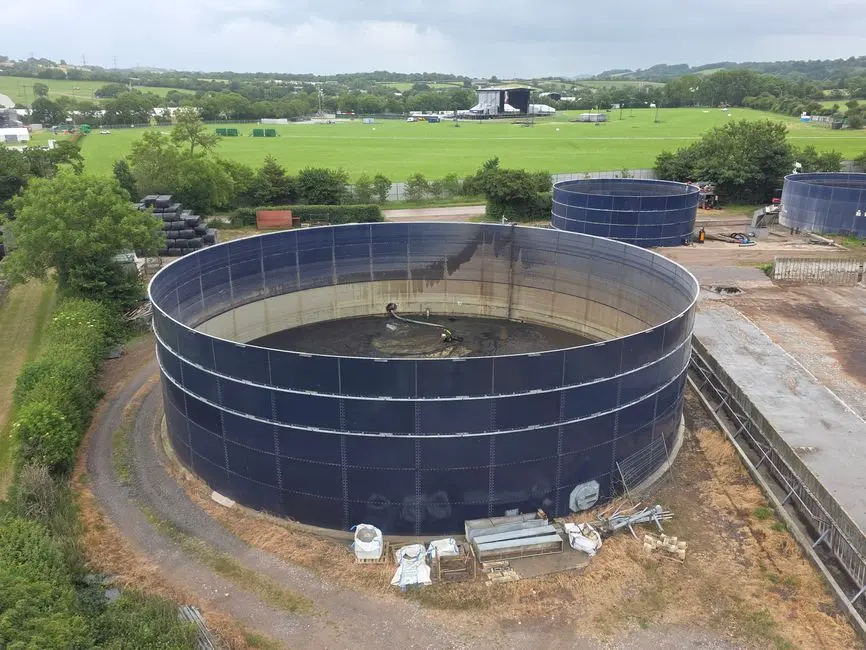
A lamella clarifier is a gravity settler with a pack of inclined plates at 55–60° inside the tank. The plate pack reduces the effective settling distance to a few centimeters, which lets the unit run at surface loadings of 20–40 m/h — roughly an order of magnitude higher than a conventional clarifier of the same footprint. Solids slide down the plate face and consolidate into a hopper at the bottom, while clarified water rises through the pack and exits over a peripheral launder.
Integrated sludge recirculation and an internal flocculation zone cut coagulant consumption by up to 30% versus a conventional clarifier, because the sludge blanket acts as a floc conditioner (HydropureWater catalog). The trade-off is mechanical, not chemical: there is no air compressor, no saturation vessel, and no recycle pump, so OPEX is dominated by polymer and sludge hauling. The HydropureWater high-efficiency sedimentation tank (lamella clarifier) is built for streams where the target contaminant actually settles — phosphate paint sludge, metal-hydroxide floc, metal fines from blanking scrap. It is the wrong tool for emulsified oil: the buoyancy of a 10-micron oil droplet is not enough to overcome the hydraulic upflow in a lamella pack, which is why lamella units are weak on free and emulsified FOG and strong on settleable TSS.
For a Detroit stamping plant the math usually closes on a lamella first: heavy solids, low-to-moderate FOG, and a footprint constraint that does not allow a long-residence-time settling pond. For a paint shop, it closes the other way.
DAF vs Clarifier for Detroit Auto Wastewater: Head-to-Head
On identical high-FOG wastewater, a DAF removes 95% of oil and grease versus ~70% for a clarifier (per S1). On heavy-sediment loads, the same source reports a clarifier cutting solids by ~90% at lower cost than a DAF (per S1). Those two numbers are the headline of the comparison and define the selection strategy: hybrid DAF + lamella trains are the standard 2026 answer for full EV/auto plants because no single unit wins on both axes (per S1).
| Parameter | Dissolved air flotation (DAF) | Lamella clarifier |
|---|---|---|
| Primary mechanism | Microbubble flotation (30–50 µm bubbles) | Gravity sedimentation on inclined plates |
| FOG removal on oily stream | ~95% (per S1) | ~70% (per S1) |
| TSS removal on heavy-solids stream | 60–80% | ~90% (per S1) |
| Surface loading / footprint | 5–15 m/h; ~0.4–0.6 m² per m³/h | 20–40 m/h; ~0.1–0.2 m² per m³/h |
| Best-fit Detroit stream | CED paint overspray, machining coolant, stamping lube | Phosphate paint sludge, blanking fines, metal-hydroxide floc |
| CAPEX band (planning range, 2026) | Higher per gpm (skid + compressor + saturation vessel) | Lower per gpm (tank + plate pack + sludge pump) |
| OPEX band (planning range, 2026) | Higher (compressed air, recycle pump, polymer) | Lower (no air system; polymer + sludge hauling) |
| Material of construction | 304SS standard; 316SS, polypropylene optional (per S5) | 304SS / carbon-rubber / polypropylene, stream-dependent |
For a 2026 Detroit installation, clarifier CAPEX is typically 30–50% lower per gpm than a comparable DAF skid on a like-for-like basis, but DAF pays for itself on paint and coolant streams by avoiding the emulsified-oil carry-through that a clarifier cannot break. The hybrid train — DAF for oil, lamella for settled-solids polishing and sludge thickening before biological or membrane polishing — is what tier-1 suppliers are actually installing in 2026. Engineers weighing a single-unit answer against a two-unit answer should look at total cost of compliance, not first-cost: the hybrid train reliably clears typical Detroit POTW targets on the first pass, while a single DAF often needs a polishing step anyway and a single clarifier rarely clears FOG alone.
For plants with a tight CAPEX/footprint target and a stream that is heavy on one contaminant class, the single-unit answer is still the right call. The decision is stream-specific, not plant-specific.
2026 Selection Rule for Detroit EV and Auto Plants
Use this three-branch rule for primary clarification sizing in 2026. If the stream carries FOG above 150 mg/L or is dominated by emulsified oil — CED paint overspray, machining coolant, stamping lube blowdown — specify a DAF. If settled TSS dominates and FOG runs below 100 mg/L — blanking fines, metal-hydroxide floc, black-mass rinse — specify a lamella clarifier. If both are significant, which is the typical full-plant blend at a Detroit assembly or gigafactory, run a DAF first, then a lamella clarifier as a polishing and sludge-thickening step ahead of biological or membrane polishing.
Match material of construction to the stream chemistry: 304SS is the default; 316SS for chloride-bearing machining coolant blowdown to avoid pitting; polypropylene for acidic black-mass rinse (per S5). For a paint-shop skid, factory-pre-assembled rectangular configurations with integral coagulation and flocculation chambers shorten the install window inside a running plant. The HydropureWater dissolved air flotation system covers the 4–300 m³/h flow class, and the HydropureWater lamella clarifier covers the polish/thickener slot in a hybrid train. For the broader 2026 pretreatment envelope — including the EGLE Part 4 limits and DWSD permit conditions around the corner — see the EV and auto plant 2026 pretreatment compliance guide. For a side-by-side on a related but lighter-duty stream, the fabricated metals DAF-vs-clarifier guide walks through the same decision matrix for parts-washer and machining-only flows.
Frequently Asked Questions
What is the main difference between a DAF and a lamella clarifier?
A DAF floats oil, grease, and flocculated colloids to the surface on 30–50 micron microbubbles and skims them off, while a lamella clarifier lets heavier suspended solids settle onto inclined plates under gravity. DAF wins on FOG; lamella wins on settleable TSS.
Which unit removes more oil and grease on an auto plant blowdown?
A DAF removes ~95% of F
Frequently Asked Questions
Should a Detroit auto plant use a DAF or a clarifier for paint-shop wastewater?
For modern paint-shop wastewater in Detroit, a Dissolved Air Flotation (DAF) unit is generally preferred over a traditional circular clarifier. Paint-shop effluent contains high concentrations of emulsified oils, solvents, and low-density paint solids that are prone to floating rather than settling, making the buoyancy-based separation of a DAF significantly more efficient for these specific contaminants.
While clarifiers are effective for high-density inorganic solids, they often struggle with the lightweight, sticky nature of automotive primer and clear-coat particulates. A DAF system provides superior performance in meeting local Detroit Water and Sewerage Department (DWSD) discharge limits for total suspended solids (TSS) and oil and grease (O&G) by utilizing micro-bubbles to float particles to the surface for mechanical skimming.
Can a DAF and a lamella clarifier be used together on the same wastewater stream?
Yes, a DAF and a lamella clarifier are frequently used in series as part of a multi-stage treatment train for high-load automotive wastewater. In this configuration, the lamella clarifier acts as a primary settler to remove heavy metal hydroxides and high-density sludge, while the downstream DAF acts as a polishing stage to capture residual emulsified oils and light-density solids that escape the clarifier.
This hybrid approach is highly effective for EV battery manufacturing or large-scale assembly plants where wastewater composition is volatile. By removing the bulk of the solids in the clarifier, the organic loading on the DAF is reduced, which extends the operational life of the DAF saturation system and improves overall effluent clarity to meet strict industrial pre-treatment standards.
How much oil and grease can a DAF remove compared to a clarifier?
A properly engineered DAF system can achieve oil and grease removal efficiencies of 85% to 95%, whereas a traditional clarifier typically achieves less than 40% removal for the same emulsified oil streams. Because clarifiers rely on gravity, they are largely ineffective at capturing non-settleable oil droplets smaller than 50 microns.
The DAF utilizes dissolved air to create micro-bubbles (30–50 microns) that attach to oil droplets, significantly increasing their buoyancy and forcing them to the surface. This allows the DAF to handle influent oil concentrations often seen in auto plants—ranging from 100 mg/L to over 1,000 mg/L—and consistently reduce them to levels below 20 mg/L, which is critical for meeting municipal sewer discharge permits.
What flow rate does a DAF skid handle for a typical EV plant?
For a standard EV assembly plant in the Detroit area, DAF skids are typically sized to handle flow rates ranging from 50 gallons per minute (GPM) to 300 GPM depending on the line capacity and process water recycling requirements. Larger automotive manufacturing complexes may utilize modular, parallel DAF skids to manage total plant flows exceeding 500 GPM.
System sizing is dictated by the hydraulic loading rate, which for automotive paint-shop applications is generally kept between 1.5 and 3.0 GPM per square foot of surface area. In 2026, many EV plants are moving toward modular skids to allow for easy scalability as production volumes fluctuate or as new assembly lines are integrated into existing factory footprints.
What material of construction is best for an auto-plant DAF in 2026?
For 2026 automotive installations, 316L stainless steel is the industry standard for DAF construction due to its superior resistance to the corrosive chemical environment of paint-shop wastewater. Auto-plant effluent often involves fluctuating pH levels and exposure to surfactants, polymers, and solvents that can degrade carbon steel or specialized coatings over time.
While 304 stainless steel is a lower-cost alternative, 316L is recommended for Detroit facilities to prevent pitting and crevice corrosion caused by chloride concentrations often found in process water. In high-exposure areas or when handling aggressive chemical reagents for flocculation, some facilities are opting for internal epoxy linings or high-density polyethylene (HDPE) components to further extend the equipment life cycle beyond the typical 15-year service window.