Why Selmer Petroleum Factories Are Re-evaluating Oil Removal in 2026
40 CFR Part 413 sets a 15 mg/L daily maximum oil & grease and 30 mg/L TSS for direct discharges from petroleum refining subcategory operations, and indirect dischargers face local pretreatment limits that Tennessee's POTWs routinely enforce at 100 mg/L O&G (per EPA 40 CFR Part 413, 2025). McNairy County operates under TDEC-delegated pretreatment authority, and Selmer's industrial users must meet surcharges and enforcement triggers that the local POTW applies once O&G exceeds the agreed local limit. EPA's 2024–2026 adjusted civil penalty tables cap noncompliance penalties at $64,089 per day per violation, a number that has driven a wave of 2026 capital projects at terminals, re-refineries, and lubricant blenders across West Tennessee. Smaller petroleum operators are increasingly locating in McNairy County because of cheaper land and Memphis-area logistics, which means the Selmer pretreatment load is rising in 2026. Engineers evaluating a DAF or clarifier for petroleum wastewater in Selmer today are not choosing equipment — they are buying regulatory insurance. The same logic that frames a 2026 40 CFR Part 403 pretreatment compliance playbook for chemical plants in Snyder applies to petroleum operators here: technology choice has to be defensible to TDEC, to the local POTW, and to management reviewing the capex memo.
What Makes Petroleum Wastewater Different from Food or Mining Streams
Refinery and terminal wastewater carries four physically distinct oil fractions, and the treatment train must match the fraction it can effectively remove:
- Free oil (>150 µm droplet diameter) — rises by gravity in minutes; recoverable in API separators, DAF, and lamella clarifiers.
- Emulsified oil (20–150 µm) — stabilized by surfactants, cutting oils, and shear; will not settle by gravity and requires coagulation or dissolved air flotation to break and float.
- Dissolved oil (<20 µm) — true solution including BTEX, phenols, and PAHs; not removed by primary physical separation and must be addressed with biological treatment, carbon adsorption, or advanced oxidation.
- Oily sludge — solids-bound hydrocarbons that report to the underflow as float-loss or settled solids and are handled in sludge dewatering, not in the primary oil-removal stage.
Typical Selmer-region petroleum influent runs 500–5,000 mg/L O&G, 200–1,500 mg/L TSS, and pH 6–9, with seasonal stormwater events pulling clay fines off McNairy County soils and pushing TSS above 2,500 mg/L for short windows. The 2026 Ecologix industrial wastewater guide reports that DAF systems remove 95% of O&G on identical streams where clarifiers reach 70% (per ecologixsystems.com, 2026), a performance gap that maps directly onto the free-versus-emulsified split: DAF targets both, while gravity settling only catches the free fraction. Temperature variability compounds the problem — West Tennessee swings from 0°C in January to 35°C in July, and oil viscosity changes by roughly an order of magnitude across that range, dragging winter clarifier performance to its lower bound. A 2005 Hong Kong Polytechnic thesis on pulp and paper wastewater found that chemical coagulation followed by DAF is the most suitable tertiary configuration for fibrous streams with high surface tension; the same destabilization logic applies to emulsified petroleum droplets, making DAF-plus-coagulant the workhorse combination in refinery service.
DAF vs Clarifier: Mechanism, Footprint, and Operating Cost
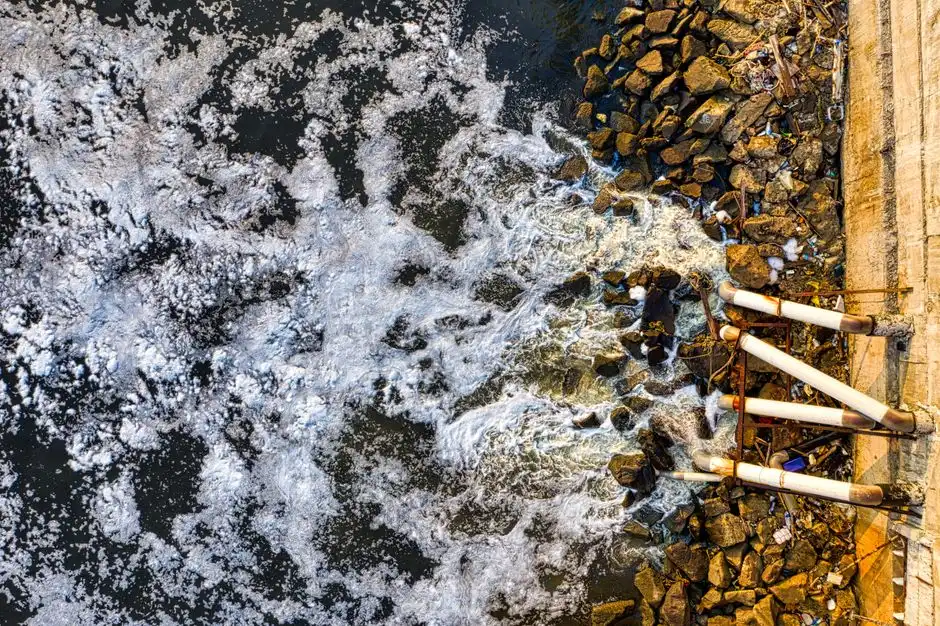
DAF saturates a side-stream with air at 4–6 bar, then releases it through needle valves to generate 10–100 µm micro-bubbles that attach to oil droplets and lift them to the surface in a 5–25 minute retention cycle. Lamella clarifiers rely on gravity settling across inclined plates at surface loading rates of 20–40 m/h versus 1–2 m/h for conventional clarifiers, with 2–4 hours of residence time and sludge scraped from the cone bottom. The mechanism gap is the primary differentiator: a DAF system removes what a clarifier physically cannot, but a HydropureWater lamella clarifier handles sediment and TSS that a DAF will pass.
| Parameter | DAF | Lamella Clarifier |
|---|---|---|
| Primary removal target | Free + emulsified oil, light TSS | Heavy TSS, sediment-bound oil |
| O&G removal efficiency | ~95% (per ecologixsystems.com, 2026) | ~70% on identical streams |
| TSS removal efficiency | 60–85% | 85–95% |
| Hydraulic retention | 5–25 minutes | 2–4 hours |
| Footprint at 50 m³/h | ~15 m² | ~25 m² |
| Sludge dry solids | 4–8% DS float | 1–3% DS underflow |
| 2026 CAPEX band (30 m³/h) | $85,000–$140,000 FOB | $45,000–$75,000 FOB |
| OPEX driver | Air compressor + polymer ($0.04–$0.12/m³) | Sludge pumping only |
| Best influent fit | O&G >200 mg/L, emulsified content | O&G <100 mg/L, TSS >2,000 mg/L |
DAF air-compressor power plus polymer dosing runs OPEX 20–40% above a stand-alone lamella clarifier, but the gap narrows once the DAF float sludge reaches a plate-and-frame filter press at 18–22% DS while clarifier underflow must first be thickened. For 2026 Selmer plants, the realistic question involves determining where in the train each unit earns its slot. A related mining-stream comparison in our DAF vs clarifier selection guide for mining streams confirms that the unit operation is secondary to the influent characterization.
When a Clarifier Beats DAF — and Why It Is Rare in Petroleum Service
A clarifier outperforms DAF in three specific scenarios that occasionally appear at Selmer petroleum sites. First, refinery stormwater with high clay and silt load and O&G below 100 mg/L settles cleanly in a lamella clarifier at surface loading around 30 m/h, where DAF would waste polymer and compressor energy on particulates that do not need to be floated. Second, cold-feed streams that cannot justify coagulant cost can run a lamella clarifier without chemical dosing, although DAF cold-climate packages with enclosed skimming now operate down to 0°C and negate most of that advantage. Third, very high flows above 300 m³/h strain DAF air-saturation capacity — the DAF line tops out near 300 m³/h per unit — and a lamella primary ahead of the DAF is the correct sequencing rather than parallel DAF trains. The mobile DAF deployed by WesTech (per westechwater.com, 2026) comes online in a single day, which addresses the "clarifier because it is simpler and faster" argument for short-term and pilot deployments. Outside these three cases, a stand-alone clarifier on a Selmer petroleum process stream is a permit risk.
The 2026 Recommended Train for Selmer Petroleum Plants: DAF → Lamella → Biological
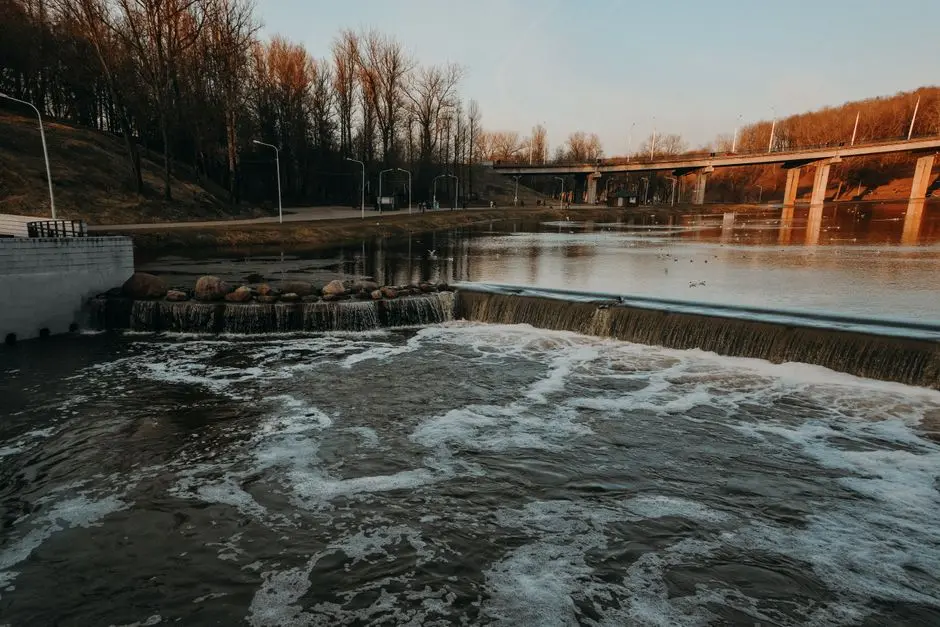
The procurement-grade answer for 2026 is a three-stage train rather than a binary choice. Stage 1 is a DAF system sized at 1.25× the peak hourly flow to absorb Selmer's stormwater surges, paired with an automatic coagulant and flocculant dosing skid tuned to the influent jar test. Stage 2 is a HydropureWater lamella clarifier running at 25 m/h surface loading to capture DAF carryover solids and any free oil the float layer missed. Stage 3 is an MBR biological stage for dissolved organics, phenols, and residual BOD, with optional RO polish if the plant is targeting water reuse for truck wash or cooling. The 2026 Ecologix FAQ states that hybrid systems can address complex wastewater streams by combining DAF's oil removal with clarifiers' sedimentation capabilities (per ecologixsystems.com, 2026). Sludge from both the DAF float and the lamella underflow routes to a plate-and-frame filter press for an 18–22% DS cake, cutting haul-off volume by roughly 70% compared to liquid sludge disposal. For operators sizing their dewatering stage, the principles in our sludge dewatering engineering guide for oily waste translate directly to petroleum float sludge.
2026 Cost and ROI Snapshot for a 30 m³/h Selmer Plant
A 30 m³/h DAF skid runs $85,000–$140,000 FOB in 2026, and the equivalent lamella clarifier $45,000–$75,000 FOB. A full three-stage train — DAF plus lamella plus MBR — installed at a Selmer terminal or small re-refinery lands in the $350,000–$650,000 range depending on tankage, instrumentation, and building scope. OPEX is dominated by polymer and coagulant at $0.04–$0.12 per cubic meter treated, plus compressed air for the DAF recycle pump. ROI is driven by avoided POTW surcharges of $0.15–$0.40 per cubic meter on O&G over the local limit, eliminated or sharply reduced liquid waste hauling, and the elimination of EPA civil penalty exposure up to $64,089 per day per violation. Plants currently trucking oily waste at Selmer-scale flow rates typically see 18–36 month payback on a DAF-first hybrid train, and the EPA penalty ceiling dwarfs any equipment cost differential on the capex memo. A defensible 2026 procurement brief cites the regulatory number first, the efficiency number second, and the equipment cost third.
Frequently Asked Questions
What oil and grease limit does 40 CFR Part 413 set for petroleum refineries in 2026?
40 CFR Part 413 sets a 15 mg/L daily maximum oil & grease and 30 mg/L TSS for direct discharges from petroleum refining subcategory operations (per EPA 40 CFR Part 413, 2025). Indirect dischargers to POTWs face local pretreatment limits, which McNairy County typically enforces near 100 mg/L O&G for industrial users.
How much oil and grease can a DAF remove versus a lamella clarifier on the same stream?
On identical petroleum streams, a DAF system typically achieves ~95% O&G removal versus ~70% for a clarifier, per the 2026 Ecologix industrial wastewater guide. The gap reflects DAF's ability to float emulsified oil that gravity settling cannot capture.
What is the 2026 CAPEX for a 30 m³/h DAF system for a Selmer petroleum plant?
A 30 m³/h DAF skid runs roughly $85,000–$140,000