DAF vs Clarifier for San Diego Food & Beverage Wastewater: The 2026 Decision
The primary-solids unit selection for a San Diego food or beverage plant in 2026 hinges on whether the wastewater carries FOG, free or emulsified oil, fiber, or low-density solids. If yes, a DAF system delivers 85% TSS removal in 3-6 minutes of hydraulic retention, with effluent TSS of 20-30 mg/L and a thickened sludge at 2-3% dry solids (per Spracell DAF technical data, 1,000+ global installations, academic literature on high-rate DAF, 2022). A conventional gravity clarifier relies on differential settling over 1-3 hours, occupies an order of magnitude more footprint, and routinely fails to capture emulsified FOG, which exits in the overflow or forms an unstable scum blanket that is hard to scrape (vendor field data, dissolved air flotation units, 2025).
Lamella clarifiers are suitable only when the stream consists mainly of settleable inorganic TSS, is low in FOG, and capital costs are the binding constraint. Lamella plates boost the effective surface loading to 20-40 m/h, and the inclined plate geometry cuts coagulant demand by up to 30% compared with a conventional basin, but the technology still depends on gravity settling and cannot float free oil.
Compliance requirements further dictate the technology selection. The City of San Diego's Industrial Wastewater Control Ordinance and the Point Loma POTW Significant Industrial User pretreatment program require food and beverage dischargers to meet categorical and local limits on FOG, TSS, and BOD before discharge. The specific numeric limits are set in the user's discharge permit and depend on flow, SIC code, and receiving sewer, but the framework is mandatory for any brewery, dairy, seafood processor, fruit/veg packer, or meat operation that discharges to the public sewer. In a coastal county where industrial land routinely runs above $80/sqft and above-grade, low-headroom installations are the structural norm, a DAF loading of under 150 lb/sqft (academic literature, 2022) and a small rectangular footprint offer a significant siting advantage.
Side-by-Side Comparison: DAF vs Gravity/Lamella Clarifier
The following matrix condenses the decision into a single scannable table. Values reflect vendor specifications, academic high-rate DAF data, and the EPA's documented plant case histories for food-processing cold-climate facilities (EPA-600/2-78-188, 1978).
| Parameter | Dissolved Air Flotation (DAF) | Gravity / Lamella Clarifier |
|---|---|---|
| Separation mechanism | Microbubbles (20-80 μm) attach to conditioned solids and float them | Gravity settling; lamella uses inclined plates to multiply effective area |
| Hydraulic retention time | 3-6 minutes (academic literature, 2022) | 1-3 hours (gravity); lamella equivalent 20-40 m/h surface loading |
| Surface loading / overflow rate | 4-5 GPM/sqft specific clarification capacity | ~400 gpd/ft² (19.5 m³/day/m²) typical for secondary clarifier downstream of flotation (EPA, 1978) |
| TSS removal | Up to 85%; effluent 20-30 mg/L | 60-80% as primary; downstream secondary clarifier effluent ~75 mg/L SS in a DAF-protected food plant (EPA, 1978) |
| FOG / emulsified oil removal | High — free and emulsified oil attach to bubbles | Poor — oil passes through or forms unstable scum |
| Footprint | Compact, above-grade, <150 lb/sqft floor load | Large basin; usually below-grade concrete |
| Sludge dryness | 2-3% DS float, no further thickening typically needed | 0.5-1.5% DS underflow; usually needs thickening |
| Polymer / coagulant demand | Coagulant + flocculant standard; jar-test driven | Lamella cuts chemical use up to 30% vs. conventional; still requires coagulant for colloids |
| CAPEX band (qualitative) | Lower than comparable-performance systems (academic literature, 2022); modular skid pricing | Lowest absolute equipment cost, but civil/earthwork dominates installed cost |
| OPEX drivers | Polymer, saturator air, power for recycle pump, sludge haul-off | Sludge pumping/hauling, larger basin maintenance, lower chemical use |
| Mobile / retrofit option | Yes — 50-1,000 gpm trailer/skid, single-day commissioning, 47'-6" or 51'-7" trailer lengths (vendor field data, mobile DAF, 2025) | No meaningful trailer option; retrofit requires basin modification |
DAF is the only technology in this comparison that removes FOG as a primary function, not a side effect. A lamella clarifier wins on capex and chemical efficiency for settleable, low-FOG streams, but it cannot match DAF performance for brewery, dairy, or seafood lines.
Why San Diego Food & Beverage Streams Push the Answer Toward DAF
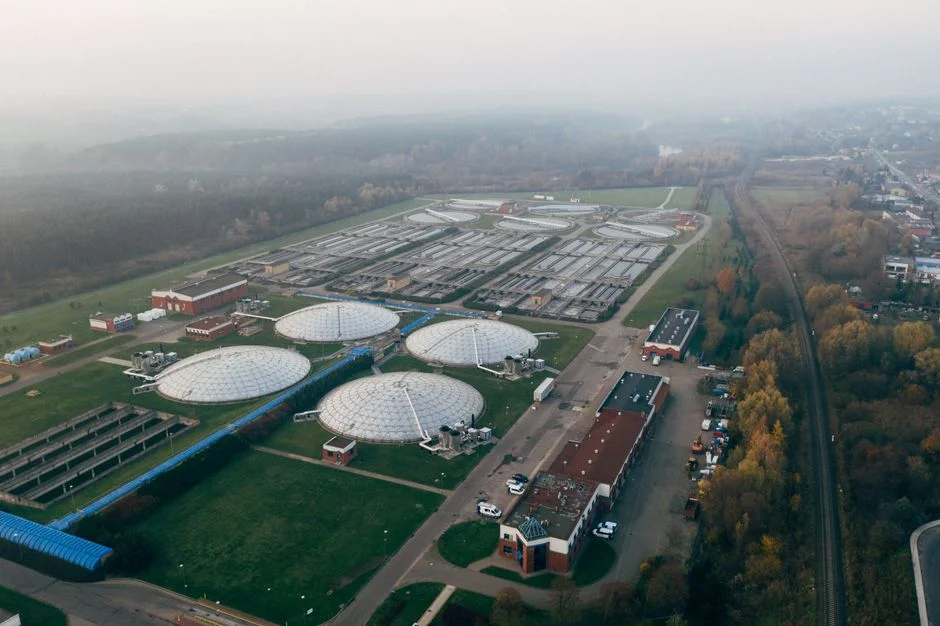
San Diego County's food and beverage base produces wastewater that is consistently FOG-positive, high in suspended solids, and seasonally spiky. Slaughterhouse and meat-packing effluents in this region carry the same character: emulsified fat, blood protein, paunch manure, and fine suspended solids that resist gravity settling.
DAF is effective for FOG because free and emulsified oil attach to micro-bubbles in the saturator recycle and float with the float layer. In a clarifier, the same oil either exits with the overflow or rises to form a thick scum blanket that is difficult to scrape without carryover (vendor field data, dissolved air flotation units, 2025). For high-solids streams, published DAF case data shows influent TSS of 98 mg/L dropping to 15 mg/L across a single stage—a removal efficiency that translates directly to food-process streams of comparable solids load (academic literature, 2022).
San Diego's climate introduces further considerations. Warm summer wastewater—influent temperatures routinely in the 25-32°C range at plants without equalization—strips dissolved oxygen from a gravity basin, worsens odor in uncovered clarifiers, and accelerates FOG separation problems at the air-water interface. DAF is a sealed, short-residence process that remains less sensitive to influent temperature swings. The City of San Diego Industrial Wastewater Control Ordinance and the Point Loma POTW Significant Industrial User program provide the compliance scaffolding; any plant discharging food or beverage process wastewater must demonstrate that its pretreatment train consistently meets its permit limits on FOG, TSS, and BOD, and a DAF-protected headworks remains the lowest-risk approach.
For a brewery or dairy considering a sister-industry reference, the design logic also appears in our slaughterhouse wastewater treatment design guide, where DAF precedes biological treatment for identical FOG-removal requirements.
Decision Framework: When to Pick DAF, When to Pick a Clarifier, When to Combine
Use the influent character to determine the optimal configuration for your facility.
- FOG, oil, fiber, or low-density solids dominant → DAF. This covers breweries, dairies, seafood, prepared foods, tortilla, and any rendering or cooking line. Confirm average and peak flow (gpm or m³/h), influent FOG envelope (mg/L), peak-to-average ratio, and discharge destination (POTW vs. on-site reuse). The DAF family covers 4-300 m³/h across 13 standard models, and larger duties are met by paralleling units (vendor field data, dissolved air flotation units, 2025).
- Mainly settleable inorganic TSS, low FOG, tightest capex → lamella clarifier. This is appropriate for fruit-and-veg wash water with grit and soil load but minimal oil. Confirm surface-loading target (20-40 m/h), plate spacing, and sludge-handling route. The lamella clarifier option is the right answer here, with up to 30% lower chemical consumption than a conventional basin.
- High FOG AND high total solids, or an existing aeration basin needing protection → DAF as primary + clarifier as secondary. This is the layout documented for a Canadian poultry plant that ran air flotation upstream of extended-aeration basins and a secondary clarifier, achieving secondary clarifier effluent of less than 30 mg/L BOD and 75 mg/L SS (EPA, 1978). The same architecture protects a San Diego plant's biological step from FOG shock loading and biomass washout.
Jar-test the actual San Diego influent before sizing any equipment. Both vendor field data (dissolved air flotation units, 2025) and mobile DAF literature (mobile DAF clarifier, 2025) identify jar testing as the largest determinant of real-world DAF performance—it sets the coagulant, the flocculant, and the dose, which drives permit compliance. Pair the jar test with an automated polymer and coagulant dosing skid to ensure the dose remains stable regardless of flow fluctuations. If you are weighing DAF against a clarifier in a non-food sector, refer to our DAF vs clarifier for fabricated metals wastewater guide and the DAF vs clarifier for semiconductor wastewater guide.
Frequently Asked Questions
Is DAF better than a clarifier for food and beverage wastewater?
For FOG-positive streams—including brewery, dairy, seafood, tortilla, prepared foods, and meat processing—DAF is the preferred primary unit. High-rate DAF achieves up to 85% TSS removal in 3-6 minutes, with effluent TSS of 20-30 mg/L, and it removes free and emulsified oil that a gravity clarifier typically allows to pass (academic literature, 2022; vendor field data, 2025).
Can a DAF and a clarifier be used together?
Yes. The standard architecture for high-FOG, high-solids food streams is DAF as the primary FOG/TSS step, followed by a secondary clarifier after biological treatment. The EPA-documented poultry case used air flotation upstream of extended-aeration basins and a secondary clarifier, achieving secondary clarifier effluent under 30 mg/L BOD and 75 mg/L SS (EPA-600/2-78-188, 1978).
Can DAF be deployed temporarily during a plant upgrade in San Diego?
Yes. Mobile DAF units cover 50-1,000 gpm in trailer or skid configuration and can be delivered and brought online within a single day, on trailers measuring 47'-6" or 51'-7" long. Mobile DAF is a practical tool for phased upgrades, peak-load events, or compliance bridging during shutdowns (mobile DAF clarifier, 2025).
What surface loading rate does a lamella clarifier handle?
A lamella clarifier typically operates at 20-40 m/h equivalent surface loading, and the inclined-plate geometry cuts coagulant consumption by up to 30% versus a conventional settling basin. The trade-off is that lamella still depends on gravity settling and does not remove emulsified FOG.
What discharge limits apply to a San Diego food and beverage plant?
Limits are set in the individual discharge permit under the City of San Diego's Industrial Wastewater Control Ordinance and the Point Loma POTW Significant Industrial User pretreatment program, and