Why Enzyme Manufacturing Wastewater Fits Anaerobic Digestion
An anaerobic digester is the standard high-rate biological treatment for enzyme manufacturing wastewater, which typically carries 10,000–40,000 mg/L COD from residual sugars, proteins, amino acids, and fermentation solvents. A properly sized UASB, EGSB, or CSTR running at 18–25 day HRT and 35–37 °C mesophilic conditions can achieve 60–85% COD removal while producing 50–75% methane biogas, with magnetite dosing reducing the microbial lag phase from roughly 9 days to 3 days. Effluent still requires aerobic polishing to meet discharge standards.
Spent fermentation broth is the dominant stream. It carries residual glucose and maltose from incomplete substrate conversion, intact proteins and free amino acids from lysed cells and unharvested enzyme product, and extractive solvents (typically isopropanol or ethanol at 0.1–1.0% v/v in the broth). Process wash water and CIP rinses dilute the composite but add spikes of caustic and nitric acid. COD from these streams consistently lands in the 10,000–40,000 mg/L range; the 18,770 mg/L figure reported for a sugar-refinery analog in the DUT 2025 thesis is a useful high-end reference for design margin (DUT 2025).
Two intrinsic properties make this effluent a strong match for mesophilic AD. First, the COD:BOD5 ratio is typically above 2:1, meaning a large fraction of the organics is already in a slowly-biodegradable but digestible form — proteins, polysaccharides, and short-chain solvents — rather than refractory. Second, the broth leaves the fermenter at 30–40 °C, eliminating the heat-up penalty that municipal digesters pay to reach the 35–37 °C optimum (DUT 2025). The economic case is then set by EPA AgSTAR's framing: AD "produces two valuable outputs, biogas and digestate" (EPA AgSTAR, 2026), so the CFO sees both a treatment asset and an energy asset. The dominant process risk is ammonia released during protein hydrolysis, which behaves very differently in enzyme effluent than in a low-N sugar stream where toxicity is a secondary concern.
Enzyme Effluent Characterization Targets the Digester Must Hit
A defensible design starts with a characterization envelope. The table below summarizes the parameter ranges a vendor's design basis should hit, derived from typical enzyme-fermentation mass balances and the DUT 2025 analog data.
| Parameter | Influent range (enzyme effluent) | Target after AD | Notes |
|---|---|---|---|
| pH | 6.5–8.5 | 7.0–7.5 | CIP spikes can drive influent above 9; equalization is mandatory. |
| COD | 10,000–40,000 mg/L | 2,000–8,000 mg/L | Anchored to 18,770 mg/L sugar-refinery analog (DUT 2025). |
| BOD5 | 5,000–20,000 mg/L | 500–3,000 mg/L | BOD:COD > 2:1 indicates good digestibility. |
| TSS | 500–3,000 mg/L | 200–800 mg/L | Mycelial biomass drives the upper end; pre-DAF recommended. |
| Total nitrogen | 200–1,500 mg/L as N | 200–1,500 mg/L as N | AD does not remove N — it converts organic N to NH3-N. |
| Total phosphorus | 20–100 mg/L | 20–100 mg/L | Mostly conservative through AD; ends in digestate. |
| Temperature | 30–40 °C | 35–37 °C | Mesophilic optimum; minimal heating required. |
| Sulfate | < 500 mg/L | < 200 mg/L | Higher SO4²⁻ drives SRB competition and H2S toxicity. |
| FOG | < 300 mg/L unless co-digesting | LCFA accumulation is the main failure mode | Per DUT 2025, LCFA accumulation at high OLR drops COD removal > 40%. |
The DUT 2025 study crystallized the central trade-off: increasing influent COD from 4,320 mg/L to 18,770 mg/L raised biogas output by 30%, but COD removal fell by more than 40% because long-chain fatty acid (LCFA) accumulation lowered pH and inhibited methanogens (DUT 2025). The same mechanism applies in enzyme plants where residual lipids and lysis byproducts exceed the 300 mg/L FOG threshold. Free ammonia is the second hard limit: at pH 7.5, free NH3-N above roughly 1.1 g/L is inhibitory to methanogens, and the LCFA pathway compounds this by further depressing pH (DUT 2025). Watch-items unique to enzyme production include residual antibiotics from fermentation, solvent carryover from extraction, and CIP chemicals (caustic, nitric acid) that shock biomass if not neutralized in equalization.
Reactor Type Comparison: UASB vs CSTR vs EGSB vs IC for Enzyme Plants
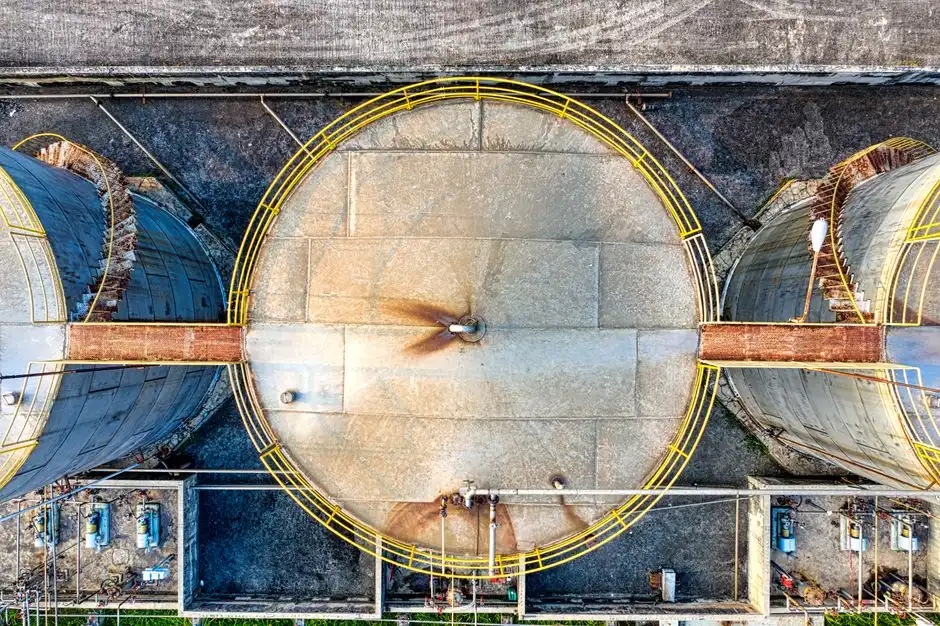
Reactor selection hinges on influent COD, flow variability, and the plant's tolerance for mechanical complexity. The matrix below is tuned to enzyme-plant COD ranges; for the upstream design detail behind these numbers, see the UASB reactor design and buyer's guide for high-COD streams.
| Reactor | HRT | OLR (kg COD/m³·d) | COD removal | Mixing | Best-fit condition |
|---|---|---|---|---|---|
| UASB | 12–24 h | 10–15 | 60–80% | None (upflow + biogas) | Steady flow, > 10,000 mg/L COD, low FOG. |
| EGSB | 6–12 h | 15–30 | 70–85% | Recirculation, expanded bed | High OLR, taller reactor, space-constrained sites. |
| IC (internal circulation) | 8–14 h | 20–40 | 75–90% | Internal gas-lift | Very high strength, > 20,000 mg/L COD, large flow. |
| CSTR | 20–40 d | 2–5 | 50–70% | Full mechanical | Co-digestion with FOG, variable shock loads, batch fermenter drain. |
For most enzyme plants at > 10,000 mg/L COD with steady, continuous flow, UASB or EGSB is the default. The biological case is strong: methanogenic aggregates in upflow reactors are electrically conductive, with conductivities of 6.1–7.2 µS/cm measured in brewery-wastewater UASB granules (mBio 2011). That conductivity is consistent with direct interspecies electron transfer (DIET) through conductive Geobacter pili and OmcS cytochromes, which raises the methanogenesis rate versus hydrogen- or formate-shuttled consortia. The practical implication is that granule-based reactors self-organize for faster electron flux, which translates into higher OLR tolerance than the textbook equilibrium would predict.
CSTR is the right call when the plant co-digesters enzyme sludge with fats, oils, and grease (FOG), or when fermenter discharges are batchy and need long HRT to buffer shock. Full mechanical mixing prevents scum buildup and LCFA stratification. Below 5,000 mg/L COD — typical of dilute wash streams — AD becomes uneconomic; route those to DAF pre-treatment for FOG and suspended solids and the aerobic train instead.
Process Flow: From Influent Equalization to Biogas Utilization
A working enzyme-plant AD train runs through six stages. (1) Equalization with pH adjustment neutralizes CIP spikes and dampens COD swings to within ±20%. (2) Screening and grit removal protect downstream pumps and the granular sludge bed. (3) Dissolved air flotation or a lamella plate removes FOG and a fraction of TSS — see the DAF pre-treatment for FOG and suspended solids upstream of the anaerobic reactor. (4) The anaerobic reactor captures biogas at 50–75% CH4 per EPA AgSTAR's baseline; with sensor-controlled operation the DUT 2025 system reached 90% CH4 enrichment. Biogas can be flared, fired in a boiler, or upgraded to RNG for pipeline injection. (5) The anaerobic effluent still carries 2,000–8,000 mg/L COD, because at high-COD loading the DUT 2025 work showed > 40% drop in COD removal; an MBR or SBR polish is mandatory to meet discharge limits. (a) MBR polishing step downstream of the anaerobic digester is the standard pairing. (6) Digestate is split: liquid to irrigation or nutrient recovery, solids to sludge dewatering for digestate solids before land application.
Enhancement Strategies: Magnetite, Trace Metals, and Co-Digestion
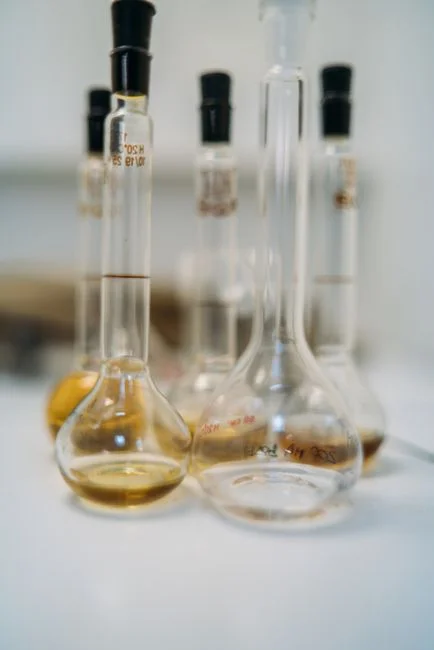
The gap between a 2015 generic digester spec and a 2026 design is enhancement. Magnetite dosing is the single most documented lever. At 0.4–0.6 g/L, magnetite cut the lag phase from 9 days to 3 days and held biogas output at 20–23 mL/d during peak production (DUT 2025). The mechanism is DIET: magnetite provides a conductive surface that supplements biological pili and cytochromes, lowering the activation barrier for electron transfer between syntrophs and methanogens — the same mechanism later characterized in UASB aggregates at 6.1–7.2 µS/cm conductivity (mBio 2011). Above 0.8 g/L, magnetite over-loads the system and biogas collapses to 2 mL/d (DUT 2025). The dosing window is narrow, so 0.42 g/L is a defensible mid-range target.
Trace-element dosing (Fe, Co, Ni, Se at 0.1–1 mg/L each) supports methanogen cofactor synthesis, which becomes limiting when the feed is protein-dominant and sulfide precipitation strips dissolved metals. Co-digestion with FOG or food waste lifts methane yield per m³ of reactor — EPA AgSTAR notes that co-digestion "increases biogas production from low-yielding or difficult-to-digest organic waste" (EPA AgSTAR, 2026). At enzyme plants this typically means pulling in floating FOG from the DAF scum or food waste from adjacent operations, with CSTR geometry preferred to keep FOG emulsified.
Instrumentation and Operating Controls for Steady-State Methane
The difference between a research digester and a 2026 industrial digester is the sensor stack. Minimum coverage is inline pH, ORP, temperature, gas flow, gas composition (CH4/CO2/H2S), and conductivity. The DUT 2025 up-scaled 50 L reactor with this sensor package reached 90% methane content in the biogas, well above the 50–75% baseline reported by EPA AgSTAR for un-instrumented reactors (DUT 2025; EPA AgSTAR, 2026). The optimum operating point identified by RSM was 21-day HRT, pH 7.01, and 0.42 g/L magnetite with desirability 0.99 — a useful transfer point for any enzyme plant commissioning a new reactor (DUT 2025).
Alarm setpoints should be tuned to enzyme-effluent risk: pH below 6.5 indicates souring from LCFA overload; pH above 8.0 flags ammonia inhibition; H2S above 2,000 ppm signals both corrosion risk to the gas train and sulfur toxicity to methanogens. Conductivity trending is a cheap early-warning proxy for DIET-active granule health in UASB and EGSB systems.
Capital and Payback Reality Check
The DUT 2025 cost-benefit analysis is sobering at small scale. The benefit-cost ratio scales with reactor size: 0.05 at 1 L, 0.12 at 5 L, 0.13 at 10 L, and 0.4 at 50 L. Cumulative cash flow analysis gave payback periods of 24.8 years (1 L), 21.9 years (5 L), 25.3 years (10 L), and 19.03 years (50 L) (DUT 2025). The 50 L NPV was -R121,016, and the operating costs exceeded annual revenue, confirming that pilot- and demonstration-scale digesters are not standalone economic projects. The scaling rule is unambiguous: the B/C ratio improves with reactor volume, and enzyme plants should target the largest practical single reactor — or a modular train sized above the 50 L threshold — before the project shows positive NPV (DUT 2025).
As a planning estimate for 2026 turnkey projects, industrial UASB CAPEX runs roughly $1,500–$3,500 per m³ of reactor volume; EGSB and IC reactors land in the $3,000–$6,000 per m³ range due to taller vessels, recirculation pumps, and more complex internals. These figures should be treated as planning estimates, not vendor quotes. Revenue lines to stack against CAPEX are biogas displacing natural gas purchase, avoided municipal surcharges, digestate fertilizer value (per EPA AgSTAR, 2026), and voluntary carbon credit revenue. Do not promise a single global payback number in capital review; anchor to the 19.03-year small-scale figure and the B/C scaling rule, then let reactor size carry the case to positive NPV.
Frequently Asked Questions
What COD removal can an anaerobic digester achieve on enzyme manufacturing wastewater?
A properly sized mesophilic UASB, EGSB, or CSTR typically achieves 60–85% COD removal on enzyme effluent in the 10,000–40,000 mg/L COD range, with effluent still carrying 2,000–8,000 mg/L COD that requires aerobic polishing (DUT 2025; EPA AgSTAR, 2026).
At what ammonia concentration does an anaerobic digester become inhibited?
Free NH3-N above roughly 1.1 g/L at pH 7.5 inhibits methanogens, and the risk is elevated in enzyme effluent because protein hydrolysis releases ammonia that the digester cannot remove — it can only dilute it via hydraulic design (DUT 2025).
Should an enzyme plant choose UASB or CSTR?
UASB or EGSB is the default for steady, continuous flow above 10,000 mg/L COD; CSTR is preferred when co-digesting FOG or buffering batch fermenter discharges (DUT 2025).
Does anaerobic digestion alone meet discharge standards for enzyme wastewater?
No. Anaerobic effluent must be polished by an MBR or SBR to remove residual COD and ammonia to permitted levels (DUT 2025).
What is a realistic payback for an anaerobic digester at an enzyme plant?
Small-scale systems are uneconomic: the DUT 2025 thesis reported 19.03-year payback at 50 L and a benefit-cost ratio that only reaches 0.4 at that scale, so projects should target the largest practical reactor or modular train to drive B/C above 1.0 (DUT 2025).