Why Jeffersonville Petroleum Plants Sit Under 40 CFR 403 Pretreatment Rules
Petroleum refineries, re-refineries, and bulk-fuel terminals near Jeffersonville, Indiana are industrial users (IUs) under 40 CFR 403.3(j) and discharge to a publicly owned treatment works (POTW), which pulls them under the federal pretreatment program whether or not the local utility has issued them a permit. The framework that governs a refinery sewer tie-in sits on three layers: the national categorical prohibitions in 40 CFR 403.5, the site-specific local limits set by the receiving POTW under 40 CFR 403.5(c), and the refinery's own control mechanism. For a Jeffersonville operation that path runs from the plant's pretreatment train into the Jeffersonville Sewage Board collection system, which conveys flow to the Louisville MSD regional POTW, so the local limits enforced at the connection point are the MSD's, not a Jeffersonville-only set.
40 CFR 403.5(b)(6) is the line item a refinery process engineer most often quotes into a CAPEX memo: it specifically prohibits "petroleum oil, nonbiodegradable cutting oil, or products of mineral oil origin in amounts that will cause interference or pass through." That language sits on top of two general prohibitions in 40 CFR 403.5(a). Pass-through, per 40 CFR 403.3(p), is a discharge that exits the POTW into waters of the United States in quantities or concentrations that, alone or in conjunction with other sources, cause a violation of the POTW's NPDES permit. Interference, per 40 CFR 403.3(k), is a discharge that, alone or in conjunction with other sources, both inhibits or disrupts the POTW, its treatment processes, or its sludge processes, and is a cause of an NPDES or sludge-management violation. A refinery does not have to be named in a category to be subject to those tests; the prohibitions are national standards that apply to every nondomestic discharger to a POTW (per EPA pretreatment standards and requirements).
For 2026, three compliance mechanics drive day-to-day decisions. First, 40 CFR 403.12(p) requires 30 days' advance notice of any new or significantly changed discharge, which is the timing trigger for a process change or a new sewer tie-in. Second, the local limits are numeric, narrative, or BMP-based depending on the receiving utility, so a Jeffersonville plant should not assume a single TPH number is enforceable until it pulls the MSD's current sewer-use ordinance. Third, Indiana Department of Environmental Management (IDEM) holds approval authority for the program, and any local-limit revision has to be defended against pass-through and interference at the headworks — not just at the IU's outfall. The article's working assumption throughout is that a refinery near Jeffersonville will be held to local limits in the 100 mg/L TPH range and 50–300 mg/L O&G range unless the receiving utility's ordinance says otherwise.
The Refinery-Specific Pollutants That Drive Local Limits
Refinery wastewater is not a single stream, and treating it as one is the most common reason a plant misses its local limits. The sidestreams that actually trigger a violation are: desalter brine, sour water stripper bottoms, API/CPI separator skimmings, oil-water tank drawdown (including slop oil), hydrotest water, and truck-rack and process-area runoff. Each one has a parameter that hits a local limit first, and the survey of roughly 50 U.S. POTW sewer-use ordinances cited in the Hazen and Sawyer SCWWA local-limits review shows how that maps to numeric caps.
The pattern is consistent enough to plan around. Desalter brine and tank drawdown drive TPH and oil & grease; the survey found numeric O&G local limits ranged from 100 to 600 mg/L across the responding utilities. Sour water stripper bottoms drive sulfides, ammonia, and phenol. Hydrotest water drives TSS, often in the hundreds of mg/L range before settling. Caustic wash and spent-caustic streams drive pH excursions outside the typical 6.0–9.0 S.U. POTW band. Truck-rack runoff behaves like a slug — TPH, O&G, and TSS all spike together when a load is offloaded. That slug profile is what determines equalization tank volume, not the daily average.
| Sidestream | Parameter that hits the local limit first | Typical local-limit band (per 50-utility survey, 2026) | Number of utilities using a narrative standard |
|---|---|---|---|
| Desalter brine, tank drawdown | TPH, O&G | TPH ≈ 100 mg/L; O&G 50–300 mg/L | 17 of 50 for TPH; 25 of 50 for FOG |
| Sour water stripper bottoms | Sulfides, ammonia, phenol | Sulfides typically ≤ 1–10 mg/L; ammonia site-specific | Varies |
| Hydrotest water | TSS | Site-specific; commonly 200–400 mg/L headworks | Varies |
| Caustic wash, spent caustic | pH (outside 6.0–9.0 S.U.) | 6.0–9.0 S.U. | Most utilities numeric |
| Truck-rack runoff | TPH, O&G, TSS (slug) | Same TPH/O&G bands as above | 17 of 50 for TPH; 25 of 50 for FOG |
The 50-utility survey also found that 17 of 50 utilities used narrative criteria for TPH, which means a Jeffersonville refinery may have to argue BMP compliance and demonstrate no pass-through rather than hit a single number. The same caveat applies to FOG, with 25 of 50 utilities using narrative criteria. When the local limit is narrative, the operator's best defense is a written BMP plan, calibrated in-line instrumentation, and a continuous DMR-quality record at the control manhole. The Hazen and Sawyer review documents this survey methodology in detail and is a defensible citation for a CAPEX memo because it pulls from peer-reviewed literature and a multi-region sample of approved pretreatment programs. A Jeffersonville-area engineer writing a local-limits justification should expect to be compared to a comparable Midwestern POTW, not the FOG/laundry framing used in the existing top SERP results, and the numbers in the table above are the comparison set to anchor against.
What a Jeffersonville Refinery Pretreatment Train Looks Like in 2026
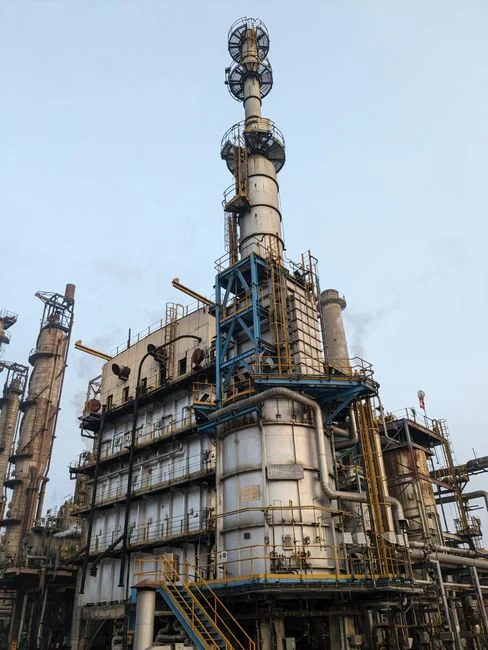
The 2026 refinery pretreatment train that consistently delivers < 100 mg/L TPH and < 50 mg/L O&G to a sewer connection is a six- or seven-stage flow. From upstream to downstream: lift station with grinder, rotary mechanical bar screen for rags and gross solids, corrugated plate interceptor (CPI) for free oil, equalization basin with pH and temperature trim, dissolved air flotation (DAF), multimedia filtration, optional granular activated carbon (GAC) polish, and finally a flow-metering and sampling manhole. Each step hits a specific number on the way to compliance.
The CPI is the workhorse for free oil. Properly sized CPI packs remove free oil down to roughly 50–100 mg/L O&G before any chemistry is added. The equalization basin that follows is not optional: it is what keeps a tank-drawdown slug from shocking the DAF, and it is what holds pH in the 6.0–9.0 S.U. band and temperature at or below 40°C (104°F) so the discharge does not trigger the 40 CFR 403.5(b)(5) heat prohibition at the POTW. DAF then takes emulsified oil and TPH down to roughly < 30–50 mg/L when operated with a polymer dose in the 1–10 mg/L range and an air-to-solids ratio of 0.005–0.015 by weight. A multimedia filter (sand/anthracite/garnet) drops suspended solids to < 10 mg/L. A GAC polish is added when the local limit covers dissolved TPH, BTEX, or phenols that DAF cannot remove.
| Stage | Primary target | Typical influent → effluent | Key operating parameter |
|---|---|---|---|
| CPI (corrugated plate interceptor) | Free oil | 500–2,000 mg/L O&G → 50–100 mg/L | Plate spacing 12–25 mm; residence 30–60 min |
| Equalization basin | Slug, pH, temperature | Variable → 6.0–9.0 S.U.; ≤ 40°C | Retention 8–24 h; mechanical mixing |
| DAF (dissolved air flotation) | Emulsified oil, TPH, TSS | 50–100 mg/L → < 30–50 mg/L TPH | Hydraulic loading 4–300 m³/h; A/S 0.005–0.015; polymer 1–10 mg/L |
| Multimedia filter | TSS, residual O&G | 30–50 mg/L TSS → < 10 mg/L | Filtration rate 10–20 m/h; backwash cycle |
| GAC polish (optional) | Dissolved TPH, BTEX, phenols | 5–10 mg/L → < 1 mg/L | EBCT 10–30 min; steam-regen cycle |
| Control manhole + flow meter | Sampling, DMR reporting | Final effluent | 24-h composite for BOD/TSS/TPH; grab for pH/temperature |
Flashpoint screening at the source is the cheapest way to keep a refinery out of a 40 CFR 403.5(b)(1) violation. The closed-cup flashpoint floor is 140°F (60°C) per 40 CFR 261.21, and any sidestream that comes in below that line — typically a slop-oil transfer or a low-flash condensate — has to be routed to a recovery system, not the sewer. Chemical dosing is normally PLC-controlled: caustic for pH trim, polymer and coagulant upstream of DAF for emulsion break, and occasionally a sulfide-scavenging agent on sour water. The rotary mechanical bar screen for refinery headworks handles rags and gross solids before the CPI so plates do not foul, and the petrochemical-rated dissolved air flotation system is the DAF stage in this train. Equalization and chemical dosing are required to be "maintained continuously in satisfactory and effective operation by the owner at his or her own expense" — that is the Tipp City §54.10(G) wording that most Indiana sewer-use ordinances carry, and it is what a CAPEX memo should cite when justifying standby pumps and redundant mixers.
How DAF Reaches the 100 mg/L TPH Target at Refinery Loads
DAF is the workhorse for free and emulsified oil removal in petrochemical applications because it generates fine micro-bubbles that attach to oil droplets and float them to the surface as a skimmable layer. For a refinery, the relevant design envelope is the petrochemical-rated DAF, which is typically supplied in 13 standard models covering a hydraulic loading range of 4–300 m³/h and is built with oil-rated wetted parts. When sized against the CPI effluent of 50–100 mg/L O&G, a properly operated DAF with polymer conditioning will routinely reach < 30–50 mg/L TPH, which is what makes the 100 mg/L TPH local limit defensible with margin.
The operating window a refinery should design around is narrow enough to be testable. Air-to-solids ratio sits in the 0.005–0.015 range by weight; below that, you lose float, above that, you waste recycle pump energy and re-dissolve too much air. Polymer dose for oil-in-water emulsions is normally 1–10 mg/L, with the actual number set by jar testing on the CPI effluent. Hydraulic loading on the flotation cell is typically 5–25 m/h depending on the model, and recycle rate is 20–50% of forward flow. Pressure on the saturator runs 4–6 bar. Those numbers are not magic — they are the range over which the equipment vendor will warrant a < 30–50 mg/L TPH effluent on a refinery feed, and they are the numbers a control room operator should be able to recite during an IDEM inspection.
DAF will not solve every problem on the table. It will not remove dissolved TPH, sulfides, BTEX, or phenols — those need downstream biological treatment, an air-stripper, or GAC. It is also not robust against slug loading; a tank-drawdown slug of 5,000 mg/L O&G arriving at the DAF will blow through the cell, and the effluent will exceed 100 mg/L TPH for hours. The fix is upstream: equalization basin sized for at least one full drawdown event, and CPI that has already pulled free oil off before the emulsion gets to the DAF. The DAF in this train is paired with PLC-controlled chemical dosing for pH and coagulant control so the polymer and pH trim are tied to influent flow and do not drift on shift change. Treat DAF as a polishing step that is fed a stable influent, not as a front-line defense against a refinery feed — that is how the 100 mg/L TPH number holds at the control manhole.
Sampling, Monitoring, and the Control Manhole Requirement
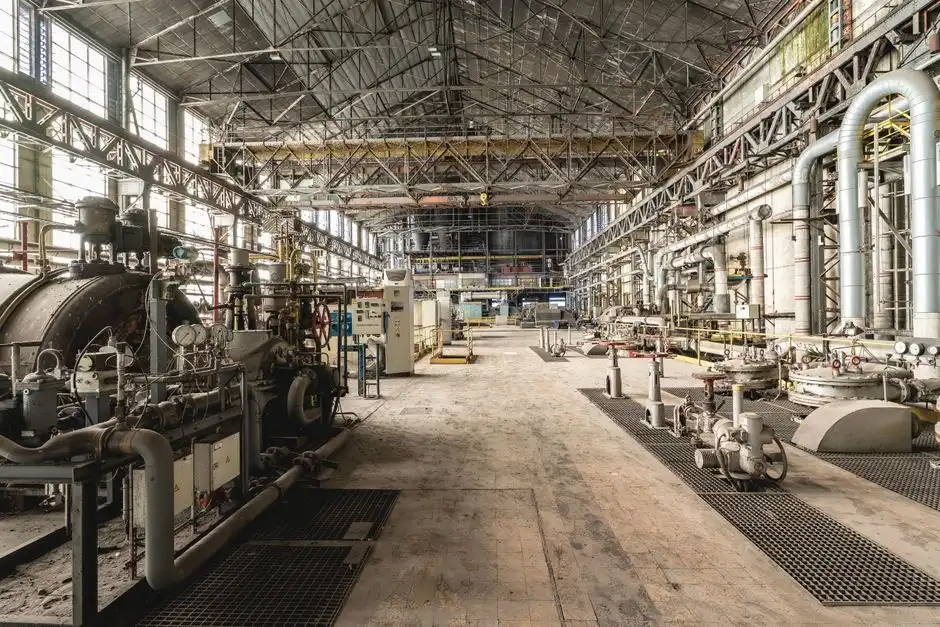
The control manhole is the legal boundary of an IU's compliance, and it has to be in place before the POTW will accept a permit application. Under the Tipp City §54.10(H) language carried in most Indiana sewer-use ordinances, the IU installs the manhole at its own expense, locates it for safe access, and maintains it in safe and accessible condition at all times. The same ordinance requires flow-equalization facilities to be "maintained continuously in satisfactory and effective operation by the owner at his or her own expense." A Jeffersonville plant should treat those two clauses as the contract for who pays for the sampling station and who pays for the redundant pumps.
Sampling protocol follows 40 CFR Part 136. For oil & grease, EPA Method 1664 (the HEM/SGT method) is the federal reference. TPH is run by the appropriate GC/FID method; sulfides by the distillation/iodometric or methylene blue methods, depending on matrix. 24-hour composites are taken for BOD, TSS, and TPH, and grab samples are used for pH and temperature because those parameters shift on a slug event and a 24-hour composite would mask the excursion. Flow measurement is continuous at the manhole with a calibrated mag meter or Parshall flume, and totalized flow feeds the surcharge calculation.
The first piece of paper a Jeffersonville plant files is the 30-day advance notice under 40 CFR 403.12(p) — that is the trigger for a new discharge or any significant change to an existing one. The second is the permit application itself, which includes the control-manhole location, the proposed monitoring schedule, and the categorical-standards checklist (refineries do not have a 40 CFR Part 419 category that applies to most wastewater streams, so the local limits are the operative ceiling). The third is the baseline monitoring report if the IU is a categorical user. Annual reports and DMRs follow. A plant that skips the 30-day notice and starts discharging the new stream will be looking at a consent order rather than a permit, and that is the difference between a CAPEX line item and a fine.
Frequently Asked Questions
What is the receiving POTW pathway for a refinery near Jeffersonville, Indiana?
Refinery wastewater discharged to a Jeffersonville sewer flows through the Jeffersonville Sewage Board collection system to the Louisville MSD regional POTW. Local limits are the MSD's approved local limits under 40 CFR 403.5(c), and IDEM is the approval authority. The IU permit, control manhole, and DMR are all issued in the MSD's name regardless of whether the refinery sits inside Jeffersonville city limits or on a tributary line.
What is the typical TPH and O&G local limit a Jeffersonville refinery has to meet?
Most U.S. POTWs surveyed cap TPH at approximately 100 mg/L and numeric O&G between 50 and 300 mg/L, per a 50-utility survey cited in the Hazen and Sawyer SCWWA local-limits review. 17 of 50 utilities used narrative criteria for TPH, so the actual applicable number must be pulled from the MSD's current sewer-use ordinance and confirmed before any CAPEX sizing.
What pH and temperature limits apply at the sewer connection?
40 CFR 403.5(b)(5) caps heat at 40°C (104°F) at the POTW treatment plant, and most local ordinances mirror 40 CFR 403.5(b)(2) by holding pH to 6.0–9.0 S.U. Anything outside that band is a specific-prohibition violation regardless of TPH. Equalization with PLC-controlled caustic dosing is the standard fix.
What equipment actually hits 100 mg/L TPH at refinery loads?
A CPI followed by DAF, with equalization upstream and optional multimedia filtration and GAC polish, is the standard 2026 train. A CPI takes free oil to 50–100 mg/L O&G; DAF with a 1–10 mg/L polymer dose and an A/S ratio of 0.005–0.015 takes emulsified oil and TPH to < 30–50 mg/L; multimedia drops TSS to < 10 mg/L; GAC handles dissolved TPH, BTEX, and phenols. See DAF unit engineering specs and removal efficiency for the design envelope.
How far in advance does a refinery have to notify the POTW of a new discharge?
40 CFR 403.12(p) requires 30 days' advance notice of any new discharge or significant change in character, quality, or volume. That notice is the trigger for the permit process and should be filed before any process change, tank addition, or new sewer tie-in at a Jeffersonville facility.