Why Enzyme Manufacturing Wastewater Needs a Decanter Centrifuge
A horizontal decanter centrifuge for enzyme manufacturing wastewater separates fermentation broth into clarified centrate and dewatered mycelial cake by spinning slurry at 1,000–4,000× gravity inside a horizontal bowl with an internal scroll. Enzyme fermentation generates a particularly aggressive stream: residual mycelia, unconverted starch or sucrose substrate, lysed cells, and extracellular protein carry over after product recovery, leaving wastewater with 15–90 g/L carbohydrate and 1.25–1.40 g/L nitrogen in side streams parallel to those documented for starch plant effluent (Waste Biomass Valorization, 2018, doi:10.1007/s12649-018-0265-2). That loading sits well above what gravity settlers or dissolved air flotation (DAF) can polish, because mycelial flocs are compressible, and the residual COD after primary clarification is still measured in the tens of thousands of mg/L.
The benchmark that justifies centrifuge-based mycelial biomass separation is the 92% initial COD removal reported for filamentous-fungi treatment of comparable starch/enzyme-type wastewater, originally documented in a 1999 study and cited in Waste Biomass Valorization (2018). The same work records 12 g/L dry biomass recovery at roughly 35% w/w protein content — proof that the suspended solids in this stream are not waste, but a saleable protein byproduct. A horizontal decanter centrifuge captures both halves of that equation: the centrate is sent to a downstream biological stage for compliance discharge, and the cake is either landfilled as dewatered solids or sold as feed-grade protein.
How a Decanter Centrifuge Separates Enzyme Broth Residuals
The bowl of a decanter is a horizontal cylinder, typically 3–8 feet long, rotating at 2,500–4,000 RPM. Slurry enters through a feed pipe that accelerates it to bowl speed; denser mycelial solids are thrown outward against the bowl wall by 1,000–4,000× g, while clarified centrate migrates inward and exits through ports at one end (diamondtservices.com). The separation that would take hours in a settling tank completes in seconds because the effective gravitational constant is multiplied by three orders of magnitude.
Inside the bowl, a concentric scroll (also called an auger) rotates at a slightly different speed — the scroll differential speed — relative to the bowl, conveying the thickened cake toward the conical discharge end without re-mixing it with the centrate. The differential is the primary control handle: a higher differential moves cake faster and produces a wetter cake, while a lower differential holds cake in the drying beach longer and yields drier solids at the cost of lower solids throughput. The mechanism is identical to the Alfa Laval NX-class decanters documented at 3,100 G or higher (dolphincentrifuge.com).
For fermentation broth clarification in an enzyme plant, the horizontal decanter is preferred over a vertical or disc-stack geometry for three reasons. First, enzyme broth routinely arrives at 2–10% feed solids with fibrous mycelia; the disc-stack is optimized for low-solids (typically <1%) polishing or oil removal, and vertical designs cannot tolerate the abrasive biomass load. Second, only a 2-phase (liquid/solid) configuration is needed because enzyme broth is essentially a single aqueous phase with suspended biomass — the 3-phase (liquid/liquid/solid) variant is reserved for oily wastewater applications. Third, the horizontal scroll's open conveying path tolerates the compressible, stringy flocs that would plug a disc-stack nozzle.
Matching Decanter Size to Enzyme Plant Flow Rates
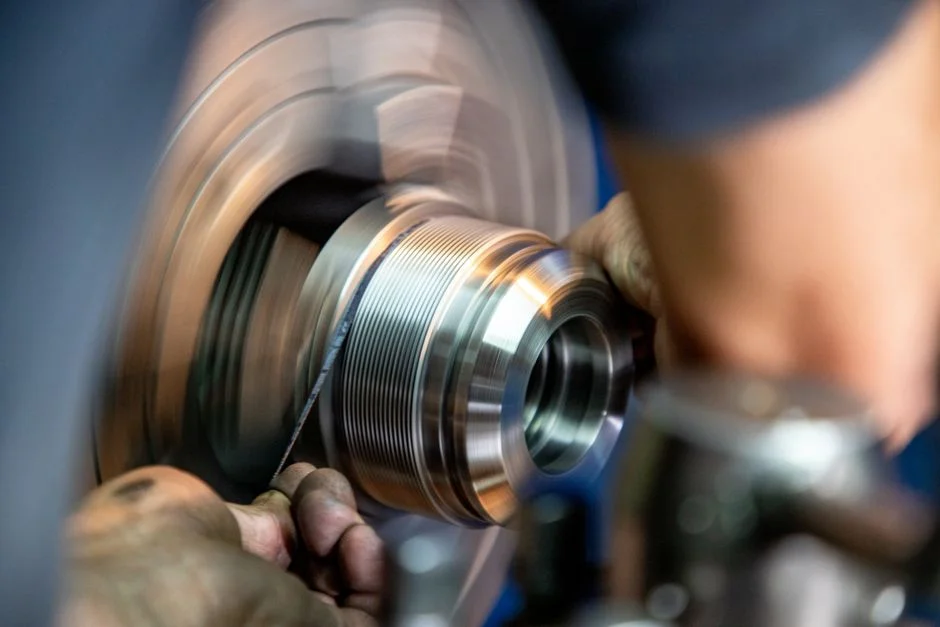
Process engineers at enzyme plants select the right machine class by mapping feed flow rate (GPM or m³/h) and expected feed-solids range to documented Alfa Laval-style capacity benchmarks. The table below covers the operating envelope most enzyme facilities will encounter.
| Machine Class | Bowl Diameter (in) | Capacity (GPM) | Feed Solids Range | Typical Enzyme Plant Fit |
|---|---|---|---|---|
| Alfa Laval NX-314 | ~14 | up to 40 GPM at 5% solids | 2–10% | Small-to-mid protease/amylase lines, 3×8×4 ft envelope (dolphincentrifuge.com) |
| Alfa Laval NX-414 | ~16 | up to 110 GPM on water-sludge thickening | 2–8% | Mid-to-large plants above ~50 m³/h effluent (dolphincentrifuge.com) |
| Alfa Laval NX-416 / NX-418 | ~16–18 | 110–150+ GPM | 2–6% | Large multi-line facilities, or thickener duty upstream of MBR |
| High-solids industrial duty | varies | varies | up to ~50% | Only for concentrated side-streams; residence time shortens and cake dryness drops at the upper end (dolphincentrifuge.com) |
The 50% upper-bound feed-solids limit is rarely useful in enzyme plants. Mycelial cake is more often the limiting factor on machine capacity than raw feed solids, because the cake conveyance rate through the scroll sets the throughput ceiling. Wetted parts in 316L stainless steel or duplex stainless are standard for enzyme service to survive low-pH fermentation offloads and CIP chemicals (typically 1–3% NaOH followed by nitric or phosphoric acid wash).
Key Operating Parameters and Performance Targets
The control engineer adjusts three setpoints on the P&ID: bowl speed, scroll differential, and polymer dose. Industrial decanters run the bowl at 2,500–4,000 RPM; the exact setpoint is tuned to the particle cut size and feed viscosity, as finer mycelial fragments require higher g-force. Scroll differential is held at 5–40 RPM relative to the bowl and is controlled automatically via a VFD back-drive on the scroll motor: increasing the differential pushes cake out faster (drier throughput but lower centrate clarity), while decreasing it does the opposite.
Polymer flocculant dosing (typically anionic polyacrylamide) is required for fine mycelial flocs that would otherwise escape with the centrate. Exact dose is feed-specific and must be jar-tested on a representative broth sample. The downstream MBR or activated-sludge polishing stage sets the centrate TSS target — see the broader sludge dewatering system design criteria for 2026 for typical polishing-stage influent specs.
Realistic performance targets for an optimized system include 92% COD reduction (per the 1999 filamentous-fungi study cited in Waste Biomass Valorization, 2018), 20–30% cake dry solids percent at the discharge port, and centrate TSS low enough — typically <1,500 mg/L for fine mycelia with polymer — to feed a downstream MBR without overwhelming it. Polymer-conditioned sludge dewatering is the standard mode for fine biological solids; unconditioned operation usually gives 15–22% cake dryness and higher centrate TSS.
Decanter vs. Screw Press and Filter Press for Enzyme Sludge
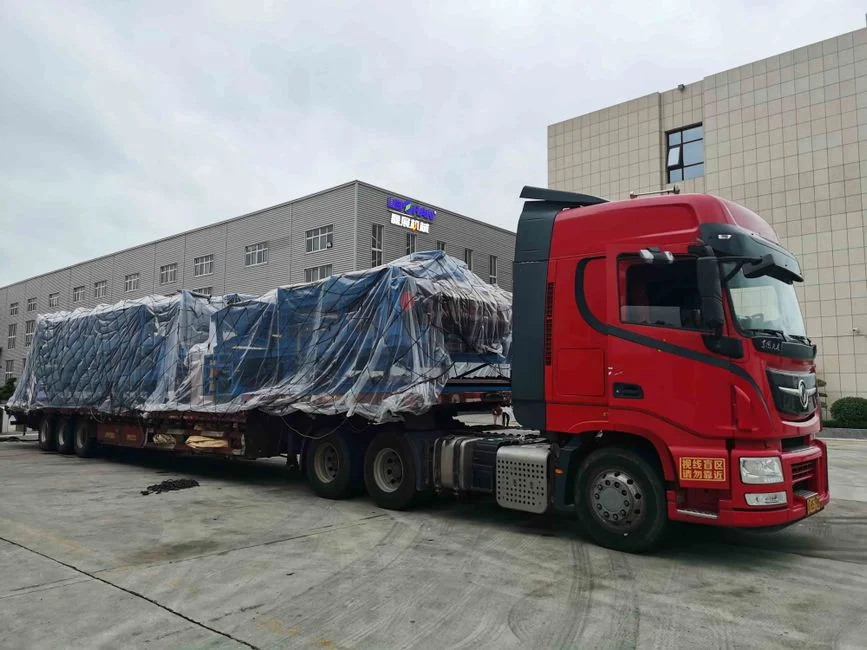
Procurement teams weighing alternative dewatering technologies can use the comparison below to map operating trade-offs against the enzyme-stream profile.
| Criterion | Horizontal Decanter Centrifuge | Screw Press | Plate & Frame Filter Press |
|---|---|---|---|
| Operating mode | Continuous, 24/7 | Continuous, lower throughput | Batch, labor-intensive |
| Cake dryness (mycelial sludge) | 20–30% | 18–25% | 30–40% (driest) |
| Footprint | Small (e.g. 3×8 ft for NX-314) | Medium | Large |
| Filter media required | No | Screens only | Yes — recurring replacement cost |
| Tolerance for fine mycelial solids | High with polymer | Low (screens blind) | Moderate |
| CAPEX class | High | Low–medium (see screw press for citric acid wastewater) | Medium–high |
| Wetted-parts material | 316L SS / duplex standard | Often carbon steel | Cast iron / PP typical |
The decanter excels in continuous operation, footprint, and corrosion resistance. The screw press has lower CAPEX but struggles with fine mycelial flocs that blind the screen. The plate and frame filter press delivers the driest cake but is batch-mode — incompatible with continuous fermentation operations unless used as a downstream polish on dewatered cake where haulage cost is the dominant driver, as detailed in the plate-and-frame filter press product spec. Choose a decanter when feed solids are 2–10% and continuous throughput is required; reserve filter presses for haulage-cost-driven polishing duty.
Selection Framework: Compliance-Driven vs. Valorization-Driven
The choice between a compliance-driven and a valorization-driven configuration is the primary CAPEX question for procurement managers at enzyme plants. Both utilize 2-phase decanters, but the operating window is tuned differently for each goal.
The compliance-driven case sizes the decanter to polish centrate down to a TSS level the downstream MBR polishing stage downstream of the centrifuge can handle, avoiding municipal POTW surcharge fees. The cake is dewatered enough to pass a paint-filter test and hauled offsite. Cake dryness around 20–25% is acceptable; the savings come from reduced disposal volume rather than byproduct sale. Decanter-based dewatering can cut sludge transport and disposal costs by up to 50% versus wet sludge discharge (dolphincentrifuge.com).
The valorization-driven case tunes the same machine for maximum cake dryness and protein preservation to monetize the 12 g/L biomass stream at ~35% w/w protein content (Waste Biomass Valorization, 2018). Cake solids are pushed toward 30%, and the recovered biomass is sold as feed-grade protein to the starch and biofuel industries. Polymer dose is set tighter, scroll differential is held lower, and the upstream screen is finer to protect protein integrity.
Supporting equipment remains the same: an automatic polymer dosing skid for flocculant preparation sized to the peak broth flow, and a rotary fine bar screen for headworks protection upstream to keep rags and fibrous debris out of the decanter bowl. These two items determine whether the centrifuge runs eight hours between CIP cycles or eight days.
Frequently Asked Questions
What flow rate can a single decanter centrifuge handle in an enzyme plant?
Small-to-mid plants map to the Alfa Laval NX-314 class at up to 40 GPM at 5% feed solids in a 3×8×4 ft envelope. Mid-to-large facilities above ~50 m³/h effluent typically step up to the NX-414, rated at 110 GPM on water-sludge thickening duty (dolphincentrifuge.com).
How much COD removal can a decanter centrifuge achieve on enzyme broth?
A well-tuned decanter ahead of a downstream biological stage can reach 92% initial COD removal, as documented for filamentous-fungi treatment of comparable starch/enzyme-type wastewater (Waste Biomass Valorization, 2018, citing the 1999 study). The decanter itself removes the bulk of suspended COD; the MBR or activated-sludge stage that follows typically takes total COD removal to >99%.
What cake dryness should be specified for enzyme mycelial biomass?
20–30% cake dry solids percent is the realistic operating range for a 2-phase decanter on polymer-conditioned mycelial sludge. Pushing beyond 30% requires slower scroll differential, lower throughput, and tighter upstream screening.
What material of construction is required for enzyme wastewater service?
316L stainless steel wetted parts are standard; duplex stainless (e.g. 2205) is specified where chloride-induced pitting is a concern from CIP chemicals. Carbon