

Why Textile Plants Are Specifying RO Desalination in 2026
An industrial RO system for the textile industry uses semi-permeable membranes to remove reactive dyes, salts, and COD from segregated dyewash wastewater, producing reuse-quality permeate for dyeing and rinsing. Pilot studies report RO fluxes of 26–27 LMH and >90% total hardness removal, versus 75% for nanofiltration, making RO the right choice when the permeate must re-enter dye baths rather than only feed rinsing (per Koyuncu et al., 2012 pilot work in Çorlu, Turkey).
Three forces are driving the 2026 capex wave in textile hubs. Freshwater tariffs in Tirupur, Izmir, Faisalabad, and Hanoi have climbed 12–18% per year since 2023, and discharge norms are tightening in parallel — Indian textile CETPs are now required to operate toward zero liquid discharge (ZLD) on new clusters, and China's GB 4287-2012 amendments (effective 2025) push reuse above 80% for dyeing effluent. The math is straightforward: a 1000 m³/d dyewash stream that can be turned into 700 m³/d of reuse-quality permeate replaces roughly the same volume of purchased freshwater and eliminates the discharge line item. RO converts segregated dyewash wastewater into colorless, low-conductivity permeate reusable in dye baths; conventional physico-chemical plus biological treatment cannot reach reuse quality (Koyuncu 2012). That single sentence is usually enough to justify the capex conversation internally.
RO is one part of a train, not a standalone fix. The membrane only performs as well as the upstream equipment feeding it, and a textile plant that buys an RO skid without the right pretreatment is buying a six-month operating problem. The sections below cover feed chemistry, membrane class, pretreatment recipe, full-scale design translation, concentrate handling, and a 2026 procurement framework.
What Makes Textile Dyewash Wastewater Hard to Desalinate
Reactive dyewash effluent is a nine-bath cascade — two cold washes, hot wash, waiting, and rinses — and the first two baths carry the bulk of COD, color, and TDS load. Conductivity, pH, COD, and color all decrease from bath 1 to bath 9, but the operating envelope is still wide: COD can range from >2000 mg/L in bath 1 to <300 mg/L by bath 9, and pH stays alkaline (typically 9–12) throughout (per Koyuncu 2012 on-site measurements).
The dominant foulants are reactive dyes (high-MW organics that adsorb and stain membranes), NaCl and Glauber's salt (Na₂SO₄) used to drive dye fixation onto cotton, soaps and surfactants from scouring, and residual alkali. This combination accelerates both membrane fouling — dye molecules blocking surface pores — and scaling — calcium and sulfate precipitating as feed water is concentrated. A generic municipal RO design derated for textile feed will foul inside 30 days; the pretreatment train in the next section exists specifically to keep the membrane surface clean.
| Bath position | COD (mg/L, light/dark fabric) | Conductivity (µS/cm) | pH | Color character |
|---|---|---|---|---|
| Bath 1–2 (cold wash) | 1500–2200 / 2000–3000 | 8000–18000 | 10–12 | Strong, residual reactive dye |
| Bath 3–4 (hot wash) | 600–1000 / 800–1400 | 4000–9000 | 9–11 | Moderate, hydrolyzed dye |
| Bath 5–6 (waiting) | 300–500 | 2000–5000 | 9–10 | Faint |
| Bath 7–9 (rinse) | <200 | <2500 | 8–9 | Trace |
Source ranges adapted from Koyuncu 2012 pilot data, Çorlu, Turkey, on segregated reactive-dye dyewash streams.
NF vs RO: Which Membrane Fits Which Reuse End-Use
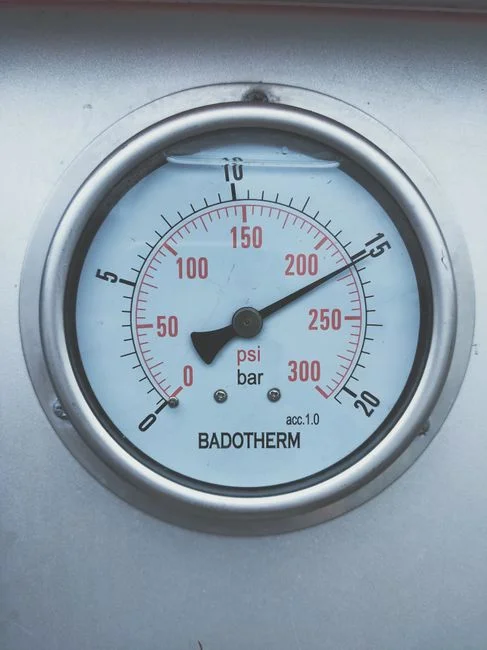
NF permeate is suitable for rinsing; RO permeate is suitable for dyeing. That single rule, attributed to Sojka-Ledakowicz et al. and Marcucci et al. (both referenced in Koyuncu 2012), is the fastest way to pick the right membrane class. If the buyer only needs permeate for wash and rinse baths, NF wins on flux and energy. If the permeate must re-enter the dye bath, the boiler feed loop, or any process step sensitive to residual hardness or conductivity, RO is the only safe choice.
On the Koyuncu pilot in continuous (no-recycle) mode, NF-270 averaged 42 ± 6 LMH versus RO-XLE at 26 ± 3 LMH — NF runs roughly 1.6× the flux. Total hardness removal averaged 75% for NF and >90% for RO (Marcucci et al., as cited in Koyuncu 2012). NF operates at lower pressure (typically 6–10 bar) and lower energy; RO needs 10–15 bar for brackish textile streams and up to 18–25 bar for high-recovery configurations, with specific energy consumption typically 0.7–1.2 kWh/m³ permeate. The decision rule is: if permeate is going only to rinsing, choose NF; if it must re-enter dye baths or feed a boiler, choose RO. The two are sometimes paired in series, with NF ahead of RO to drop COD and color before the tight RO membrane. For broader design context, the RO desalination system design criteria for 2026 covers the full element-level spec.
| Parameter | NF-270 (pilot, continuous) | RO-XLE (pilot, continuous) |
|---|---|---|
| Average flux | 42 ± 6 LMH | 26 ± 3 LMH |
| Operating pressure | 6–10 bar | 10–15 bar (up to 25 bar high-recovery) |
| Total hardness rejection | ~75% | >90% |
| Reactive dye removal | High | High |
| Permeate end-use | Rinsing | Dye bath, boiler feed |
| Activation energy (pure water) | 3.87 ± 0.24 kJ/mol | 6.51 ± 0.53 kJ/mol |
Source: Koyuncu et al. 2012 pilot study, 4-inch elements, segregated dyewash feed, Çorlu, Turkey.
Pretreatment Train That Protects the RO Membrane
The pretreatment sequence is: equalization → DAF or lamella clarifier → multimedia filter (SDI < 3) → cartridge filter → high-pressure RO. Each step has a measurable target. Equalization dampens the 9-bath flow and load swing, and a properly sized DAF removes suspended dyes, surfactants, and oils before they blind the downstream multi-media filter protecting the RO membranes. A DAF unit for textile effluent pretreatment typically pulls 60–85% of residual color and 50–70% of colloidal COD at hydraulic retention times of 20–30 minutes.
Multimedia filtration (sand + anthracite + garnet) should deliver SDI < 3 and turbidity < 1 NTU to the RO feed — the standard design basis for brackish RO elements. A 5-micron cartridge filter is the last line of defense against media carryover. When plot area is tight, an MBR alternative to clarifier + multimedia filter collapses clarification and solids separation into one skidded unit, though at higher capex and stricter aeration demands.
CIP frequency is manageable if the pretreatment is doing its job. The Koyuncu pilot ran on a daily permeate flush plus weekly alkaline CIP, with no irreversible fouling across the 4-week campaign. A plant that skips DAF or under-sizes the multimedia filter typically sees CIP intervals drop from weekly to every 2–3 days within the first quarter, and that is the symptom of an under-spec'd front end, not a bad membrane.
Pilot Data to Full-Scale RO Design Translation
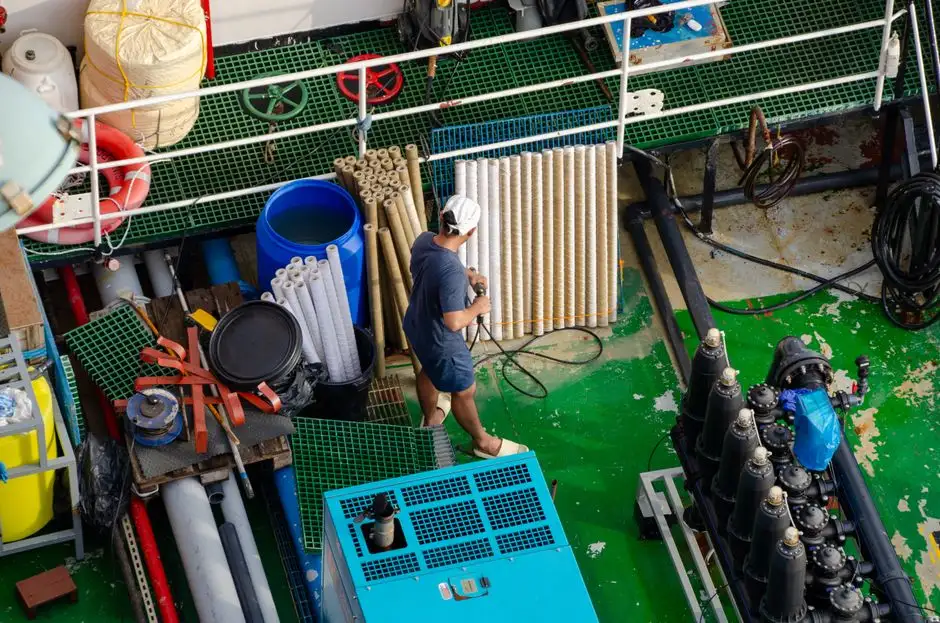
Pilot flux of 26–27 LMH on 4-inch elements does not translate 1:1 to a full-scale 8-inch element skid. Standard derating practice puts full-scale brackish RO flux at 18–22 LMH at 70–75% recovery, with a flux of 14–18 LMH for high-recovery or higher-TDS configurations. The 25–35% derating accounts for feed variability, end-element concentration polarization, and the conservative operating envelope an OEM will guarantee for warranty purposes. An industrial RO system sized from pilot numbers without this derating will be undersized for peak load and will run hot at the tail element.
Recovery rate is a scaling trade-off. Pushing from 75% to 85% recovery raises osmotic pressure at the tail element and risks CaSO₄ and silica scaling; the rule of thumb is to keep concentrate TDS below the membrane manufacturer's saturation limit — typically 70–80% of the gypsum saturation index. Brackish textile RO runs 10–15 bar; high-recovery configurations 18–25 bar, translating to 0.7–1.2 kWh/m³ permeate at 75% recovery. Temperature correction matters: the activation energy of pure water permeation is 6.51 ± 0.53 kJ/mol for RO-XLE versus 3.87 ± 0.24 kJ/mol for NF-270 (Koyuncu 2012), which means cold-feed sites (Tirupur winter, Hanoi January) lose roughly 15–20% flux per 5°C drop and need either larger membrane area or feed warming to hit design recovery.
| Design parameter | Pilot (4-inch, continuous) | Full-scale (8-inch) — typical 2026 design |
|---|---|---|
| Design flux (RO-XLE class) | 26 ± 3 LMH | 18–22 LMH |
| Recovery | 60–70% in pilot batch | 70–80% (single pass), 80–85% (two-stage) |
| Operating pressure | 10–12 bar | 12–18 bar (up to 25 bar high-recovery) |
| Specific energy consumption | 0.5–0.8 kWh/m³ | 0.7–1.2 kWh/m³ permeate |
| Feed SDI target | < 3 | < 3 |
| Feed temperature range | 20–30°C (Çorlu summer) | 15–35°C (site-specific derating) |
Pilot values from Koyuncu 2012; full-scale values reflect standard 2026 derating for brackish RO elements.
Concentrate Management: Recovery Rate, Brine, and ZLD Tie-In
A 75% recovery RO rejects 20–30% of the feed as concentrate, with a 4–6× concentration factor for salts and residual dye compared to feed. This stream is the second-most-asked question after the permeate spec, and the answer is site-specific. Three concentrate paths exist: (1) sewer discharge if TDS, color, and heavy-metal limits permit — increasingly rare in Indian and Chinese clusters; (2) evaporation pond for inland sites with land area and low rainfall, sized at roughly 0.5–1.0 ha per 1000 m³/d concentrate; (3) brine concentrator plus crystallizer for full ZLD, which adds roughly 1.5–2.5× the RO capex but eliminates liquid discharge entirely.
The sludge side of the concentrate train also needs equipment. A lamella clarifier for concentrate handling captures coagulated solids before they reach the evaporator, and a plate-and-frame filter press dewaters the resulting sludge to 25–35% dry solids for off-site disposal or thermal recovery. Textile plants in Tamil Nadu, Gujarat, and Jiangsu are increasingly mandated toward ZLD, which makes concentrate handling a design constraint from day one rather than an afterthought. The textile dyeing effluent treatment plant design guide covers the broader capex/opex framing for the full ZLD train.
How to Choose a RO Supplier for a Textile Plant: 2026 Decision Framework
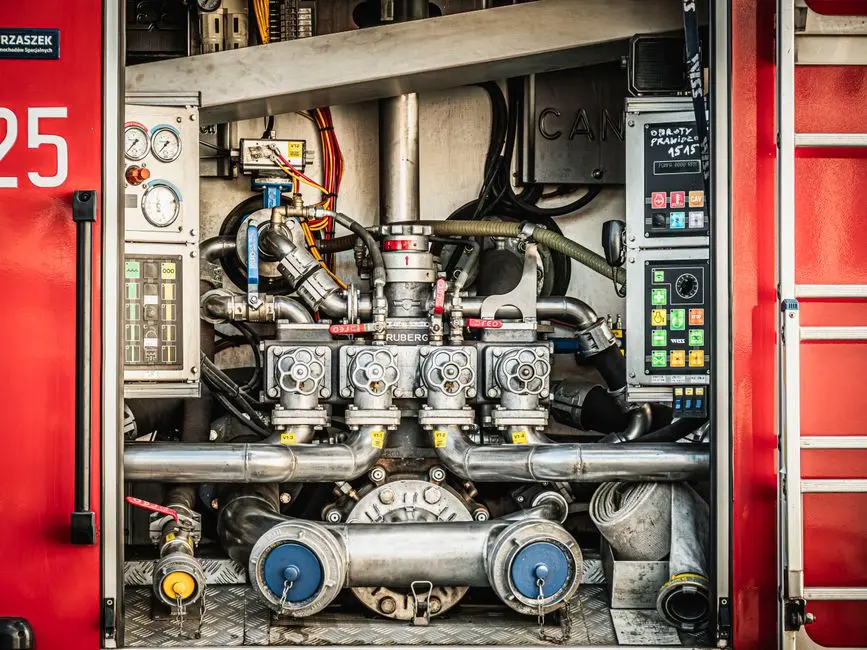
Five checks separate a credible textile RO supplier from a generic water-treatment vendor. (1) Pilot data on real dyewash, not synthetic; bench data without on-site pilot is not enough because textile feed variability kills designs that work on clean water. (2) Recovery rate guarantee written into the contract, not just quoted — a vendor that will not commit to ≥75% recovery on segregated dyewash is either pricing the wrong membrane or has not run textile feed. (3) Documented CIP protocol with expected cleaning interval and chemical consumption; alkaline CIP at pH 11–12 plus weekly permeate flush is the baseline. (4) Concentrate handling in scope, with mass balance, TDS projection, and ZLD tie-in if the site is regulated that way. (5) Automation level — PLC with HMI is the 2026 minimum; full SCADA with remote monitoring is the default for any plant above 500 m³/d feed.
Red flags: vendors quoting RO without pilot, vendors refusing to guarantee < 75% recovery, no mention of pretreatment integration, or a proposal that names the membrane but not the element model. A buyer evaluating the industrial RO system alongside DAF, multi-media filtration, and sludge handling from the same vendor reduces integration risk and gives a single throat to choke on warranty. Match the equipment list against the feed envelope from the pilot and the recovery guarantee from the contract — that is the shortest path to a defensible spec.
| Evaluation criterion | What to ask for | Red flag |
|---|---|---|
| Pilot data | On-site, real dyewash, ≥4 weeks | Synthetic feed only or no pilot |
| Recovery guarantee | ≥75% in writing, with feed envelope | "Typical 65–70%" with no recourse |
| Membrane model | Named 8-inch element, e.g. RO-XLE class | "Industrial RO membrane" generic |
| Pretreatment integration | DAF + MMF + cartridge, sized to feed | RO only, "you handle pretreatment" |
| Concentrate handling | Mass balance, ZLD tie-in if required | Not addressed in proposal |
| Automation | PLC + HMI minimum, SCADA above 500 m³/d | Manual valves and relays only |
Frequently Asked Questions
What flux should I size a textile RO skid at in 2026?
18–22 LMH on 8-inch brackish RO elements at 70–75% recovery, derated from the 26–27 LMH pilot flux reported by Koyuncu 2012 on 4-inch elements. Use the lower end of the range for high-recovery or high-TDS configurations. Recommendation: spec the membrane area to the upper end (22 LMH) so the skid can absorb feed variability without operator intervention.
NF or RO for a textile reuse plant — which one?
NF if the permeate only feeds rinsing (75% total hardness removal is sufficient); RO if the permeate must re-enter dye baths or boiler feed (>90% hardness removal and lower conductivity required). Recommendation: pair NF ahead of RO in a two-stage train when permeate demand is split between rinsing and process water.
What SDI and turbidity do I need at the RO feed?
SDI < 3 and turbidity < 1 NTU entering the cartridge filter — the standard design basis for brackish RO elements and the target that protects CIP intervals. Recommendation: verify SDI on-site with a 15-minute test, not the supplier's lab number, and add a 5-micron cartridge filter as the last line of defense.
How do I handle the concentrate from a 75% recovery textile RO?
Three paths: sewer discharge if local TDS limits permit, evaporation pond for inland sites with land, or brine concentrator plus crystallizer for full ZLD. The concentrate volume is 20–30% of feed with a 4–6× salt concentration factor. Recommendation: design concentrate handling into the RO skid scope from day one, especially in India and China where ZLD is increasingly mandated.