Why Generic Benchmarks Fail for Industrial Digester Design
Anaerobic digester capacity sizing starts from measured COD, flow, and temperature. Designers set HRT with a 1.2–1.5 safety factor, cap OLR by reactor type, and verify SRT against methanogen doubling time. A commercial BCR of 1.0 or higher typically needs about 5,000 m³ digester volume; 50 L pilots often show BCR near 0.4.
Successful designs move past volumetric rules of thumb because pilot data rarely map one-to-one onto commercial plants. Research indicates a 50 L pilot can show a BCR of only 0.4. Commercial viability typically needs 5,000 m³ or greater to reach a BCR of 1.0 or higher (source: Ngema, 2025). Sugar refinery streams can show COD near 18,770 mg/L and volatile solids near 0.026 g/mL, while industrial sewage may sit near 4,320 mg/L COD (source: Ngema, 2025). HRT alone ignores the OLR–biomass interaction and drives undersizing or excess CAPEX.
A practical three-step check—HRT from degradability, OLR by technology, then SRT verification—is what most plants we size for use when defending CAPEX. Seasonal peak flows during processing cycles still overwhelm average-day designs, so buffer volume belongs in the same calculation package.
Anaerobic Digester Capacity Sizing: Three Calculation Steps
The calculation order stays fixed on industrial feeds. Characterize the wastewater, set volume from Q × HRT with a safety factor, then confirm the vessel can hold the chosen OLR without washing out granules or suspended biomass.
How do you calculate digester volume from HRT?
Digester volume follows V = Q × HRT, then multiplies theoretical HRT by a safety factor of 1.2 to 1.5 to cover short-circuiting and influent swings. Laboratory-optimized HRTs for high-strength sugar refinery wastewater may hover around 18–22 days (source: Ngema, 2025), but full-scale work must raise HRT for the recalcitrant COD fraction. For a 500 m³/day refinery stream at 18,770 mg/L COD with only 62.8% removal, a 22-day design HRT times a 1.3 safety factor yields about 14,300 m³.
Operating temperature should stay at 30–35°C. Dropping below 20°C typically needs 30–50% more HRT to keep methanogens active (source: Ngema, 2025). Heavy metals or high salinity can push retention longer than simple biodegradation models predict.
| Wastewater Source | Typical COD (mg/L) | Biodegradability (% Removal) | Recommended HRT (Days) |
|---|---|---|---|
| Sugar Refinery | 18,770 | 62.8% | 22–29 |
| Industrial Sewage | 4,320 | >85% | 12–18 |
| Oil Refinery | Low | Variable | 15–20 |
Set Organic Loading Rate by Digester Type — UASB vs CSTR vs EGSB
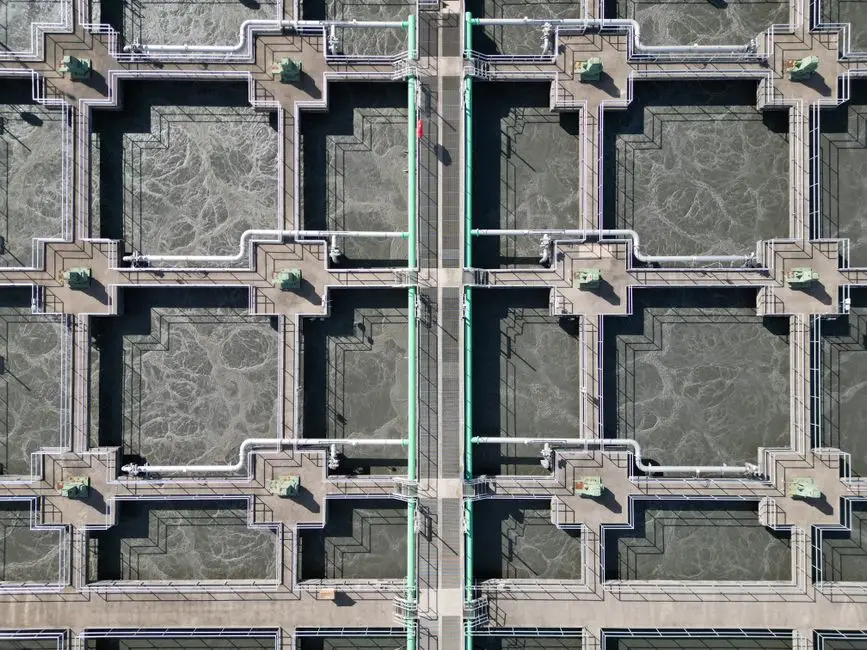
Organic loading rate limits set the plant footprint. Upflow Anaerobic Sludge Blanket (UASB) units typically run at 5–15 kg COD/m³·d and can reach about 85% COD removal in food processing applications (source: Novita et al., 2018). Continuous Stirred-Tank Reactors (CSTR) usually sit at 2–5 kg COD/m³·d, so the same pollutant mass needs a larger vessel. Expanded Granular Sludge Bed (EGSB) reactors can handle 10–20 kg COD/m³·d on high-strength chemical or pharmaceutical streams because higher upflow velocity improves granule contact.
Magnetite dosing at 0.4–0.6 g/L can raise allowable OLR by 20–30% through direct interspecies electron transfer (DIET), as discussed alongside other high-strength trains in the anaerobic-aerobic process for pulp mill effluent guide. Falling biogas yield relative to OLR is often the first toxicity or mixing alarm on plants we commission.
| Reactor Type | OLR (kg COD/m³·d) | Primary Application | Key Limitation |
|---|---|---|---|
| UASB | 5–15 | Food & Beverage | Granule sensitivity to FOG |
| CSTR | 2–5 | Low-strength/Municipal | Large footprint |
| EGSB | 10–20 | Chemical/Pharma | Complex flow control |
Verify Solids Retention Time and Biomass Concentration
Solids retention time must stay above the minimum doubling time of the dominant methanogens, especially Methanosaeta species that often make up >90% of active biomass in granular systems (source: mBio, 2012). UASB granules commonly hold 20–40 g/L volatile suspended solids (VSS); CSTRs more often run at 5–10 g/L. The VSS loading check (Q × CODin × removal%) / (V × SRT) is the last washout screen before freezing vessel diameter.
Biogas yield—about 148 mL/gTDS for sugar-rich waste versus 76 mL/gTDS for sewage—sizes gas handling and storage for the design load (source: Ngema, 2025). Regular sludge volume index (SVI) checks keep granule settleability in range and protect long-term activity.
Aerobic vs anaerobic digester: which to choose?
Aerobic digesters suit lower-strength municipal or polishing duties where oxygen supply is acceptable and methane recovery is not the goal; anaerobic digesters suit high-COD industrial feeds where energy recovery and smaller aeration OPEX matter. Anaerobic trains need stable mesophilic heat (30–35°C), FOG control, and longer startup, but they cut sludge mass and can offset power cost with biogas. Most plants we size for food, sugar, or chemical COD above several thousand mg/L start anaerobic and polish aerobically only if nitrogen or residual COD limits demand it.
Choose aerobic when influent COD is modest, land and blower power are cheap, and discharge limits focus on nitrification without biogas value. Choose anaerobic when COD is high, heat is available, and the site can host gas handling plus DAF or dosing upstream. Hybrid anaerobic–aerobic trains are common when TN must fall below 10 mg/L after the digester.
Economic Viability Thresholds: The Scale Cliff No Pilot Study Tells You
Economic viability for anaerobic digestion is non-linear. BCR stays below 0.5 for small systems from 1 L to 50 L (source: Ngema, 2025). Reaching BCR ≥1.0 usually means scaling near 5,000 m³ of digester volume, where tanks, heating, and sensors amortize against energy recovery and waste reduction. Sensor integration has been shown to raise methane content to 90% in optimized systems (source: Ngema, 2025).
CAPEX tracks ancillary gear as much as the digester shell: DAF pre-treatment for FOG removal before anaerobic digestion, MBR post-treatment for anaerobic effluent polishing, and a filter press for digestate dewatering. Total cost of ownership should also include renewable energy credits or carbon offsets when they shorten payback.
| Scale (L) | Benefit-Cost Ratio (BCR) | Economic Status |
|---|---|---|
| 1 L | 0.05 | Non-viable |
| 50 L | 0.40 | Non-viable |
| 5,000+ m³ | ≥ 1.00 | Viable |
Integration Checklist: Pre-Treatment, Post-Treatment, and Sludge Handling
Digester volume is inseparable from the process train. Fats, oils, and grease (FOG) coat granules and cut performance, so high-FOG industrial flows need DAF upstream. pH and nutrient dosing control for anaerobic digesters limits long-chain fatty acid buildup that can drive pH below 6.0. Nitrogen polishing to discharge limits < 10 mg/L TN often needs MBR after the digester. Digestate handling should assume a plate-and-frame filter press can reach 15–25% dry solids (DS) and cut haul cost.
Selection checklist before freezing CAPEX:
- Confirm peak and average flow, COD, FOG, and temperature for at least one production cycle.
- Set HRT from degradability, then apply a 1.2–1.5 hydraulic safety factor.
- Match OLR to UASB (5–15), CSTR (2–5), or EGSB (10–20) kg COD/m³·d limits.
- Verify SRT and granule or VSS inventory against methanogen doubling time.
- Size DAF, dosing, gas handling, and dewatering with the digester, not after.
- Run BCR at commercial volume; treat sub-50 L pilots as process proof only.
- Plan PLC/SCADA for COD-driven HRT and optional magnetite dosing control.
Automated heat-exchanger cleaning cycles limit bio-fouling so mesophilic or thermophilic heat duty stays on target. PLC and SCADA integration is mandatory when magnetite dosing and HRT setpoints must track real-time COD swings.
Who This Is For / Next Step
This guide is for plant engineers, EPC contractors, and procurement teams sizing industrial anaerobic reactors on high-COD feeds. Look elsewhere if the duty is purely aerobic municipal nitrification with no methane recovery case. When flows, COD, and FOG data are ready, request a sized train and ancillary list through our anaerobic digester capacity inquiry so vessel volume, OLR, and pre-treatment can be checked against your peak-day load.
Frequently Asked Questions
What is the difference between HRT and SRT in anaerobic digesters?
HRT is the average time liquid stays in the reactor, often 18–22 days on industrial feeds. SRT is the average time biomass stays retained. In UASB systems, granules decouple SRT from HRT, so biomass concentration can stay high even when liquid residence time is shorter. That decoupling is why high-rate reactors remain stable at elevated hydraulic throughput.
How long does it take for a UASB digester to achieve steady-state startup?
Startup time depends mainly on seed sludge quality and whether magnetite dosing is used. With magnetite at 0.4–0.6 g/L, lag phase can fall from 9 days to 3 days, but full steady-state colonization and granulation still take weeks to months (source: Ngema, 2025). Overloading before biomass is acclimated remains a common cause of early failure.
Why is magnetite dosing recommended for high-COD industrial wastewater?
Magnetite at 0.4–0.6 g/L acts as a conductive bridge that promotes DIET between syntrophic bacteria and methanogens. That path bypasses slower hydrogen transfer and can support up to 30% higher OLR without the same volatile fatty acid spike risk (source: Ngema, 2025). Plants raising throughput on existing vessels often evaluate this dose range first.
Aerobic vs anaerobic digester — which costs less to own?
Ownership cost depends on COD strength, power price, and whether biogas has value on site. Anaerobic systems usually win on high-COD industrial wastewater because aeration energy drops and methane can offset utilities, provided heat, FOG control, and gas safety are funded. Aerobic digestion can be cheaper on low-strength flows where digester volume, gas handling, and long startup dominate CAPEX.
What digester volume supports a BCR of 1.0 or higher?
Commercial viability with BCR ≥1.0 typically appears near 5,000 m³ digester volume or larger, while 1 L and 50 L systems show BCR about 0.05 and 0.40 (source: Ngema, 2025). Fixed costs for tanks, heating, and sensors amortize only after energy recovery and waste reduction scale. Use pilot data for kinetics, not for final CAPEX approval.