
Taiwan 2026 Pharmaceutical Wastewater Regulations: What Changed
Taiwan's 2026 pharmaceutical wastewater regulations, codified under the 2024 amendment to the Water Pollution Control Act (Article 7), mandate strict Category C effluent limits that force an industry-wide transition toward advanced treatment. Effective January 2026, these standards require facilities to achieve chemical oxygen demand (COD) levels below 100 mg/L, biochemical oxygen demand (BOD) below 30 mg/L, suspended solids (SS) below 30 mg/L, ammonia nitrogen (NH3-N) below 10 mg/L, and total phosphorus (TP) below 3 mg/L, with total residual chlorine capped at 2 mg/L.
Beyond these primary discharge limits, EPA Announcement No. 1130045678 mandates quarterly monitoring of 12 indicator pharmaceuticals, including specific antibiotics, analgesics, and hormones, with a reporting threshold of 0.1 μg/L. While these indicators are currently for data collection, they serve as the precursor to future enforceable toxicity limits. Science park operators have implemented localized, more stringent requirements to ensure CETP (Centralized Effluent Treatment Plant) compliance. Existing facilities must submit their upgraded treatment plans by Q3 2026, with full construction and commissioning required by Q4 2027.
| Parameter | National Category C Limit | Hsinchu/Central Science Park (Typical) |
|---|---|---|
| COD (mg/L) | 100 | 60–80 |
| NH3-N (mg/L) | 10 | 5–10 |
| TP (mg/L) | 3 | 1 |
| Monitoring | 12 Indicator APIs (0.1 μg/L) | Real-time Telemetry (COD/pH) |
Pharmaceutical Wastewater Characterization in Taiwan: API vs Formulation vs Biotech
The influent profile for pharmaceutical wastewater in Taiwan varies significantly by production type, dictating the necessity for either high-strength anaerobic pretreatment or direct aerobic polishing. API synthesis facilities generate high-strength, saline streams with COD values ranging from 8,000 to 15,000 mg/L and high concentrations of refractory organics like DMF and DMSO, requiring specialized biological degradation. In contrast, formulation facilities typically produce lower-strength wastewater (COD 2,000–5,000 mg/L) dominated by surfactants and cleaning agents from CIP (Clean-in-Place) cycles, which present high variability in pH (4–11).
Biotech and fermentation processes contribute high nitrogen loads (NH3-N 200–800 mg/L) and sulfate levels (500–2,000 mg/L), necessitating robust nitrogen management strategies. According to 2023 MOEA survey data, approximately 68% of Taiwan's pharmaceutical sites operate as formulation or CMO units, 22% as API synthesis, and 10% as biotech. For plant design, the COD:N:P ratio is the primary equipment sizing driver; API streams often require nutrient dosing to correct 100:2:0.5 ratios, whereas biotech streams require carbon source balancing to manage nitrogen removal.
| Source Type | COD (mg/L) | BOD/COD Ratio | Key Characteristic |
|---|---|---|---|
| API Synthesis | 8,000–15,000 | 0.2–0.3 | High salinity (2-5% NaCl), refractory organics |
| Formulation | 2,000–5,000 | 0.4–0.6 | Surfactants, fluctuating pH (4–11) |
| Biotech/Fermentation | 5,000–12,000 | 0.5–0.7 | High NH3-N, high sulfate |
Process Train Comparison for Taiwan Sites: UASB-MBR-AOP vs A/O-MBR-RO vs SBR-MBR
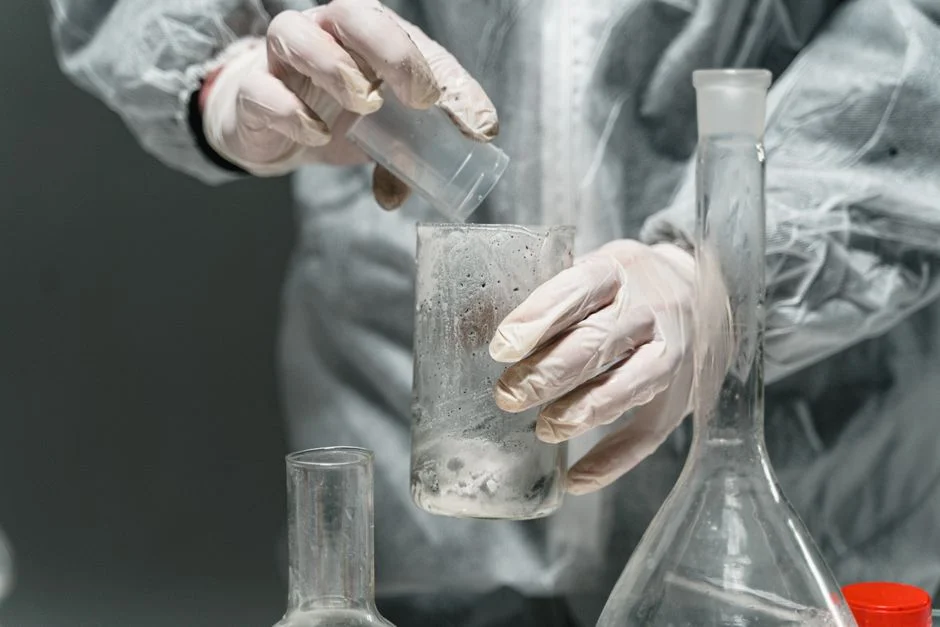
Selecting a process train for space-constrained sites in Taiwan requires balancing land footprint against the recalcitrance of the influent. For API synthesis with COD >6,000 mg/L or salinity >1.5%, a UASB + MBR + AOP train is the technical standard. This configuration utilizes an upflow anaerobic sludge blanket (UASB) for 75% COD removal, followed by an integrated MBR system for pharmaceutical wastewater to achieve stable permeate COD <50 mg/L, and finally AOP (Ozone/H2O2) to degrade residual antibiotics. The footprint for this train is approximately 0.8 m²/m³/day.
Facilities requiring water reuse or facing strict park-mandated RO requirements should deploy an A/O + MBR + RO train. This configuration utilizes an anoxic/oxic process to manage TN <15 mg/L, followed by membrane filtration and reverse osmosis, yielding a footprint of 1.2 m²/m³/day. For low-strength formulation plants with available land, an SBR + MBR configuration is the lowest CAPEX option (38–45M TWD) but results in higher sludge yields (0.5 kg VSS/kg COD) and increased operational disposal costs. Pretreatment via DAF for pharmaceutical wastewater pretreatment is recommended if influent TSS exceeds 200 mg/L to protect downstream membranes.
| Train Type | Best For | Footprint (m²/m³/d) | CAPEX (100 m³/d) |
|---|---|---|---|
| UASB-MBR-AOP | High-strength API/Saline | 0.8 | TWD 55–65M |
| A/O-MBR-RO | Formulation/Water Reuse | 1.2 | TWD 45–52M |
| SBR-MBR | Low-strength/Space-abundant | 1.5 | TWD 38–45M |
Equipment Sizing & Cost Benchmarks for 2026 Taiwan Projects
Operational expenditure in Taiwan is driven primarily by electricity rates and sludge disposal fees, currently at 3,500 TWD/ton. For a 100 m³/day plant, MBR sizing requires approximately 1,500 m² of membrane area, typically configured using PVDF flat sheet membrane modules (0.1 μm). With Taipower industrial rates at 3.2 TWD/kWh, energy consumption for MBR permeate production is estimated at 35,000 to 52,000 TWD/month. UASB reactors constructed in 316L stainless steel provide the necessary chloride resistance for API streams, with biogas recovery potentially offsetting energy costs by up to 350 kWh/day.
Advanced oxidation systems typically require an ozone dose of 15 mg/L; on-site oxygen generation or liquid oxygen supply costs contribute approximately 1.1M TWD annually. Sludge management remains a significant cost driver, with a filter press for pharmaceutical sludge dewatering requiring 20 m² of plate area to handle the 100 m³/day throughput. Total OPEX for the high-performance UASB-MBR-AOP train is estimated at 1.5M to 1.8M TWD/year, while the SBR-MBR train approaches 2.3M TWD/year due to higher sludge disposal volumes.
| Equipment/Service | Metric | Estimated Cost (TWD) |
|---|---|---|
| Electricity (Taipower) | 0.35 kWh/m³ | ~3.2/kWh |
| Sludge Disposal | 3,500/ton | 1.8M–4.2M/year |
| Chemical Dosing | PLC-controlled chemical dosing for pH/nutrient/coagulant | ~0.5M/year |
| Disinfection | on-site ClO₂ generation for residual disinfection | ~0.3M/year |
Taiwan-Specific Implementation Risks: Park CETP Interface, Typhoon Resilience, Labor Constraints
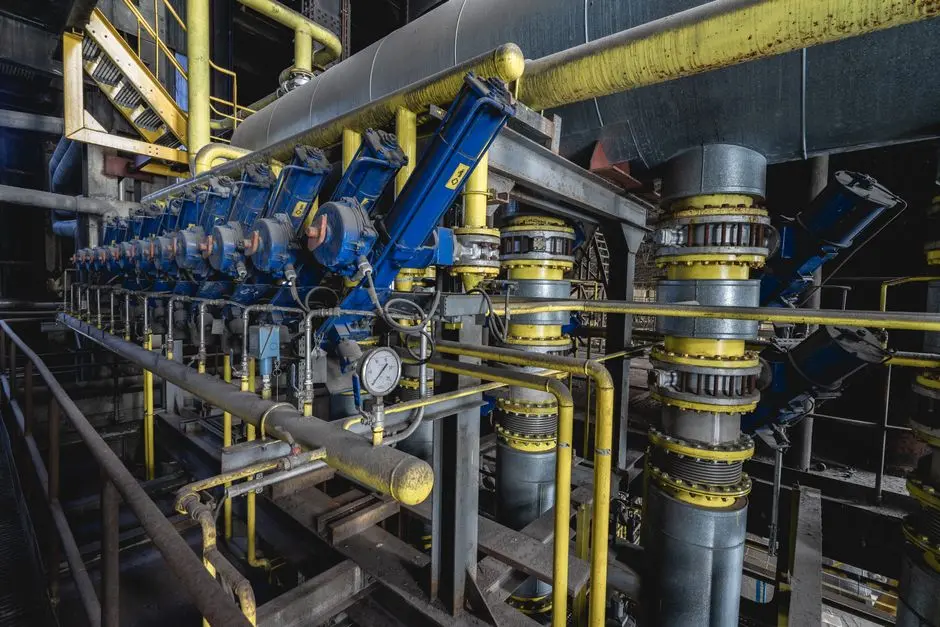
Engineering projects in Taiwan must account for rigorous local interface requirements and environmental stressors. Science park CETPs (e.g., Hsinchu) require real-time telemetry integration with park SCADA systems using Modbus TCP protocols; non-compliance fines can reach 500k TWD/day. For guidance on implementing remote management, see our SCADA/remote monitoring for pharma wastewater best practices. Typhoon resilience is a mandatory design parameter, requiring outdoor equipment to meet CNS 15520 structural standards for wind loading and elevating critical electrical components 1.5 meters above the 200-year flood line.
Labor shortages in the operations sector, with vacancy rates near 22% as of 2026, necessitate high levels of automation. Systems should target an operator workload of <0.5 FTE per 100 m³/day through integrated PLC control. Chemical logistics require a minimum of 14 days of on-site storage capacity, as supply chains for coagulants and pH adjusters are centralized in Kaohsiung, creating potential delivery delays to northern industrial parks.
Frequently Asked Questions
What are the 2026 Taiwan EPA discharge limits specifically for pharmaceutical wastewater?
The 2026 standards require COD <100 mg/L, NH3-N <10 mg/L, TP <3 mg/L, and TSS <30 mg/L. Additionally, facilities must initiate quarterly monitoring for 12 indicator pharmaceuticals at a 0.1 μg/L reporting threshold.
Is MBR mandatory for new pharmaceutical plants in Taiwan?
While not explicitly mandated by national law, MBR is the de facto requirement for new permits in Hsinchu, Taichung, and Tainan Science Parks because conventional secondary treatment fails to meet the stricter TN and TP standards consistently.
How much does a 100 m³/day pharmaceutical wastewater plant cost in Taiwan?
CAPEX ranges from 38M to 65M TWD depending on the process train complexity. OPEX ranges from 1.5M to 2.3M TWD annually, heavily influenced by the 3,500 TWD/ton sludge disposal fee.
Can I discharge RO brine to Taiwan science park CETP?
Hsinchu permits RO brine discharge if TDS is below 15,000 mg/L; however, Taichung generally prohibits it, requiring on-site evaporation. Tainan evaluates discharge on a case-by-case basis. Always secure written approval prior to finalizing the process train.
What anaerobic technology handles high-salinity API wastewater best?
EGSB (Expanded Granular Sludge Bed) reactors are preferred over standard UASB designs for salinity levels up to 3% NaCl. For salinity exceeding 3%, anaerobic MBR (AnMBR) technology using salt-acclimated granules is recommended to maintain biological stability.