

Know Your Subcategory: The 40 CFR 430 Starting Point
Pulp and paper mills must identify their specific subcategory under 40 CFR 430 to determine the applicable federal pretreatment standards for pentachlorophenol (PCP) and trichlorophenol (TCP). The industry is divided into three segments: Integrated (mills producing pulp and paper on-site), Secondary Fibers (mills utilizing recycled pulp), and Nonintegrated (mills purchasing market pulp). Because 24 of the 25 defined subcategories are subject to categorical limits for these chlorophenolics, precise mapping is required; only Subpart W (wastepaper molded products) is exempt from these specific categorical standards (source: EPA 40 CFR 430 guidance, 2021-07).
| Mill Type | Primary Subpart Mapping |
|---|---|
| Deinking facilities | Subpart Q |
| Nonintegrated fine papers | Subpart R |
| Paperboard from wastepaper | Subpart E |
| Market bleached kraft | Subpart G |
New industrial users are required to request a category determination from the permitting authority prior to commencing discharge if their subcategory is not clearly defined in their existing permit. Failure to correctly identify the subcategory can lead to the application of improper mass-based or concentration-based limits, resulting in non-compliance during biannual reporting cycles.
NBCUA Local Limits & Permitting Workflow for Glen Rock Dischargers
The Northwest Bergen County Utilities Authority (NBCUA) enforces local limits that supplement federal categorical standards to protect the integrity of municipal biological treatment processes. Industrial users in the Glen Rock area must adhere to discharge thresholds typically set at BOD ≤300 mg/L, TSS ≤300 mg/L, and pH between 6.0 and 9.0 (source: NBCUA Industrial Pretreatment Program standards). Facilities must complete an Industrial Waste Survey, obtain a valid Wastewater Discharge Permit, and submit a Baseline Monitoring Report (BMR) within 180 days of the effective date of their categorical standard.
| Requirement | Timeline/Frequency |
|---|---|
| Baseline Monitoring Report (BMR) | Within 180 days of standard effective date |
| Biannual Compliance Report | Every June and December |
| Combined Wastestream Formula (CWF) | As-needed for alternative mass-based limits |
For mills with complex internal piping, the Combined Wastestream Formula (CWF) allows for the calculation of alternative discharge limits when regulated process wastewater is diluted by non-regulated streams. This requires a formal agreement between the facility and the NBCUA to ensure that the adjusted limits remain protective of the POTW's headworks and sludge quality.
Pollutant Profile: What Your Effluent Actually Contains
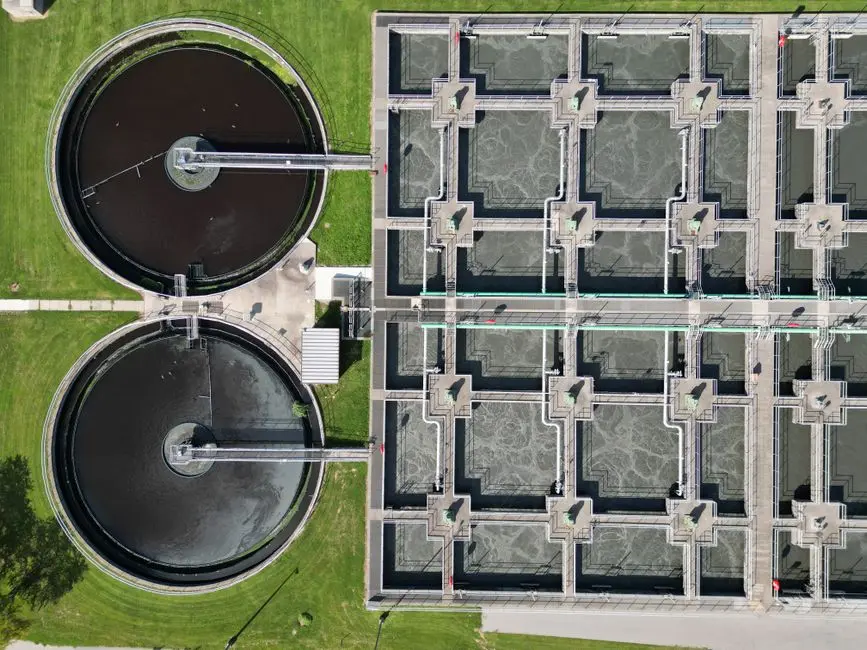
Pulp and paper mill effluent contains high organic loads and variable chemical constituents that depend on the pulping process and bleaching chemistry. Chemical pulping processes often generate effluent where more than 40% of the organic matter consists of poorly biodegradable compounds (source: bioresources.cnr.ncsu.edu, 2026), necessitating a multi-stage treatment approach to meet discharge limits. Facilities utilizing chlorophenolic biocides must specifically monitor for PCP and TCP, as these are subject to federal categorical limits regardless of the mill's BOD or TSS performance.
| Parameter | Typical Raw Effluent Range |
|---|---|
| BOD | 200–2,000 mg/L |
| COD | 500–5,000 mg/L |
| TSS | 200–1,500 mg/L |
| AOX | 1–50 mg/L |
Primary treatment using a rotary mechanical bar screen is essential to remove large debris and fibers that would otherwise interfere with downstream chemical dosing or biological treatment stages. Proper characterization of the BOD/COD ratio is critical, as a low ratio indicates high concentrations of recalcitrant organics that require advanced oxidation or specialized biological treatment rather than standard activated sludge.
Pretreatment Train Selection: Three Proven Configurations
Selecting the correct technology train depends on the mill's hydraulic flow, footprint constraints, and water reuse objectives. A DAF system for pulp & paper primary treatment achieves 92–97% TSS removal and 85–95% FOG removal, providing a stable influent for biological processes. For facilities requiring a smaller footprint, an integrated MBR system for compact biological treatment utilizes 0.1 μm PVDF membranes to deliver effluent with BOD <5 mg/L and TSS <1 mg/L.
| Configuration | Best For | Footprint (50 m³/h) |
|---|---|---|
| Conventional (DAF + Activated Sludge) | High flow, land availability | ~1,200 m² |
| Compact (DAF + MBR) | Space constraints, reuse | ~480 m² |
| Recycle (Anaerobic + MBR + RO) | Water-fit-for-use closure | Variable |
The implementation of PLC-controlled chemical dosing for coagulant and pH control is necessary to optimize the DAF performance and ensure consistent removal of PCP/TCP. By automating the coagulant-to-polymer ratio, mills can minimize chemical waste while maximizing TSS capture rates.
CapEx/OpEx Comparison: 50 m³/h Design Basis
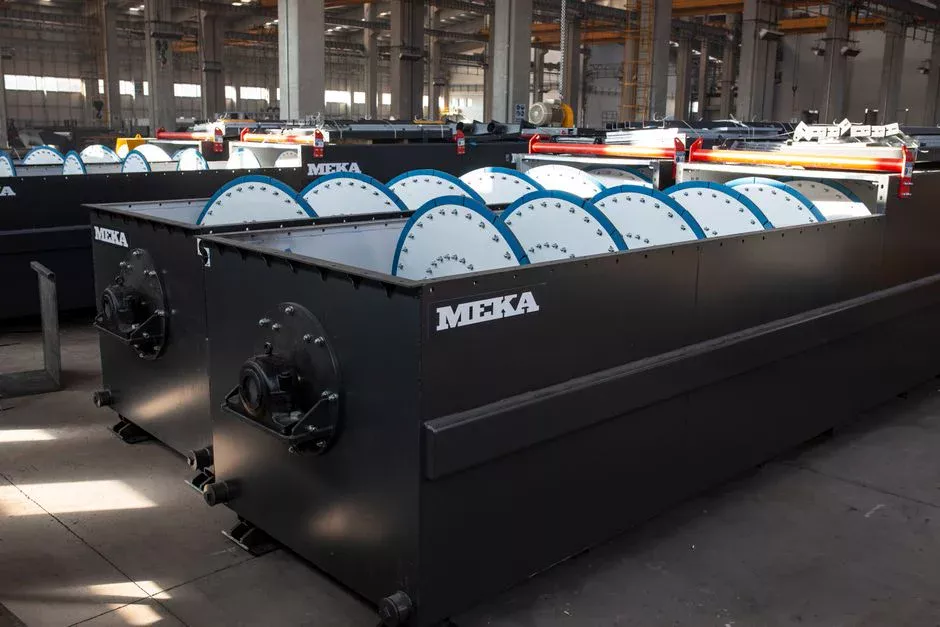
Capital and operating expenditures vary significantly based on the level of treatment and the potential for water reuse. Conventional systems typically involve lower initial CapEx but higher sludge disposal costs due to less efficient dewatering. MBR-based systems require higher initial investment for membrane modules and aeration, but significantly reduce the volume of sludge for disposal through higher solids retention times.
| System | Estimated CapEx | OpEx per m³ |
|---|---|---|
| Conventional | $1.2M–$1.5M | ~$0.45 |
| MBR | $2.2M–$2.8M | ~$0.65 |
| Anaerobic + MBR + RO | $4.5M–$6M | ~$0.90 |
Sludge dewatering is a major cost driver for all configurations; utilizing a plate and frame filter press can reduce haul-away volumes by 80–90% compared to wet sludge management. Chemical dosing costs for DAF systems typically range from $0.15 to $0.30/m³ depending on the effectiveness of the coagulant (e.g., alum or PAC) and flocculant selection.
90-Day Compliance Checklist: From Permit to Proven Performance
- Day 1–30: Finalize subcategory determination and request current local limits from the NBCUA. Establish a baseline by collecting 30-day composite effluent samples.
- Day 30–60: Select the pretreatment configuration based on hydraulic and organic loading data. Initiate procurement for long-lead items such as DAF saturator tanks or membrane cassettes.
- Day 60–90: Install equipment and perform on-site commissioning. Conduct jar testing to calibrate the PLC-controlled chemical dosing for coagulant and pH control.
- Performance Testing: Execute a 14-day performance test to confirm that the pretreatment train consistently meets NBCUA and categorical limits.
- Reporting: Compile all data into the BMR and submit to the NBCUA within 180 days of the categorical standard effective date.
Frequently Asked Questions
How do I confirm which 40 CFR 430 subcategory applies to my facility?
You must review your manufacturing process against the 25 subcategories defined in 40 CFR 430. If your mill's operations—such as deinking or nonintegrated fine paper production—are not explicitly covered in your current NPDES permit, you must submit a formal request for category determination to the NBCUA or state authority prior to starting discharge.
What is the most effective way to remove chlorophenolics like PCP and TCP?
PCP and TCP removal is primarily achieved through a combination of source control (avoiding chlorophenolic biocides) and optimized physical-chemical pretreatment. A DAF system paired with precise chemical dosing and coagulation is the standard for reducing these pollutants before they reach biological treatment stages, ensuring compliance with categorical pretreatment standards.
Why is DAF preferred over traditional primary clarifiers in modern pulp and paper upgrades?
DAF systems offer significantly higher TSS and FOG removal efficiencies (92–97%) compared to conventional gravity clarifiers, especially for lightweight fibers common in paper mill effluent. Their smaller footprint and faster separation rates make them the preferred choice for mills looking to upgrade their pretreatment capacity within existing space constraints.