
Plastics & Rubber Wastewater Profile in Elkhart Facilities
Typical Elkhart injection molding and extrusion plant effluent exhibits flow rates between 50 and 500 m³/day, characterized by COD concentrations of 1000-3000 mg/L and TSS levels ranging from 300-1500 mg/L (HydropureWater field data, 2026). The contaminant matrix is highly specific: emulsified cutting oils account for 30-50% of the FOG load (200-800 mg/L), while sub-20 μm polymer fines—primarily polypropylene (PP), polyethylene (PE), and nylon—remain suspended due to their near-neutral buoyancy. Additionally, cleaning cycles introduce pH swings (4-10) and monomer residuals like styrene or caprolactam that resist primary mechanical separation. To satisfy IDEM Rule 327 pretreatment standards, facilities must consistently meet monthly average limits of 30 mg/L TSS and 20 mg/L FOG. Local POTW surcharges for COD typically trigger once concentrations exceed 500 mg/L. Seasonal conditions in Northern Indiana further complicate process design; with groundwater temperatures stable at 10-12°C and winter ambient air reaching -10°C, the kinetics of flotation are suppressed by increased water viscosity (approx. 30% higher than at 25°C), necessitating robust thermal management for DAF systems to maintain effective bubble-particle collision rates.
Contaminant-by-Contaminant: DAF vs Clarifier Removal Mechanisms
Dissolved Air Flotation (DAF) systems utilize microbubble generators to produce 20-50 μm bubbles that attach to hydrophobic contaminants, whereas gravity clarifiers rely strictly on Stokes' law, which is inefficient for particles with low density or small diameters (source: S1, S3). Choosing the correct primary separation technology determines the effectiveness of downstream compliance efforts. For emulsified oils (1-20 μm), DAF microbubbles achieve 85-95% removal via charge neutralization and hydrophobic attachment, while gravity clarifiers typically capture only 40-60% unless hydraulic retention time (HRT) exceeds 4 hours. Polymer fines <20 μm require sweep flocculation with PACl or polymer to create larger flocs; DAF captures 90-95% of these flocs, whereas lamella-equipped clarifiers struggle to exceed 60-70% capture efficiency at surface loading rates of 20-40 m/h. Neither technology effectively removes dissolved monomer residuals, which necessitate downstream biological or carbon adsorption treatment, though DAF pretreatment is essential to prevent FOG-induced membrane fouling in subsequent biological stages.
| Contaminant | DAF Removal Efficiency | Clarifier Removal Efficiency | Primary Mechanism |
|---|---|---|---|
| Emulsified Oils (1-20 μm) | 85-95% | 40-60% | Microbubble Attachment |
| Polymer Fines (<20 μm) | 90-95% | 60-70% (with lamella) | Sweep Flocculation |
| Free Oils (>50 μm) | 95%+ | 85-90% | Stokes' Law/Buoyancy |
| pH Swings | Controlled (inline) | Tolerant | Chemical Precipitation |
Equipment Sizing & Configuration for 200 m³/day Elkhart Case
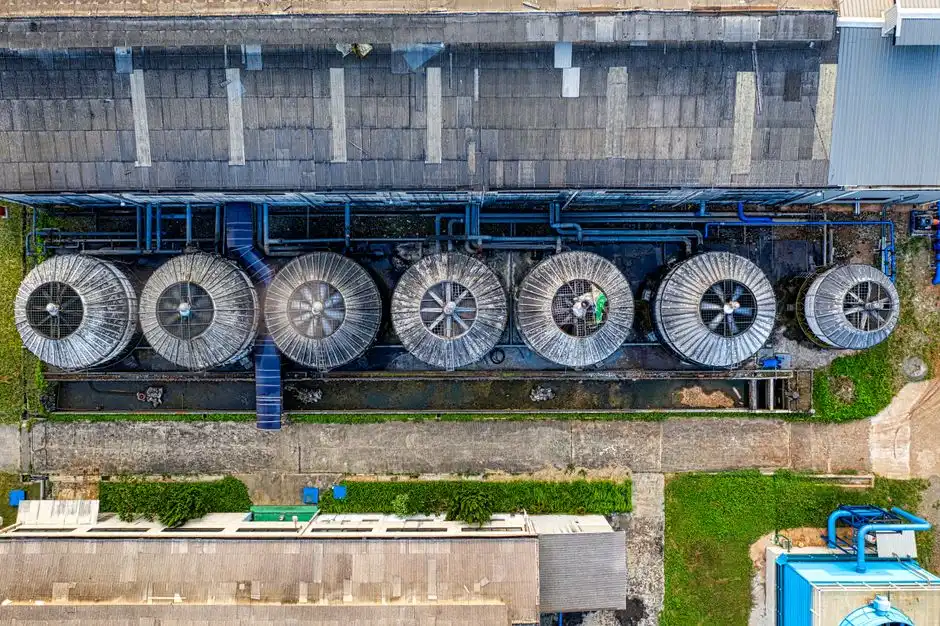
For a 200 m³/day (8.3 m³/hr) facility, a DAF system such as DAF systems (4-300 m³/h) sized for 10 m³/hr provides the necessary 20% buffer for peak flows. Proper sizing is critical to balance footprint constraints with fluctuating production volumes. This configuration typically requires a 3.5m diameter tank with a 2.5m side water depth (SWD), supported by a 0.5 kW microbubble generator and 3 kW recycle pump. In contrast, a gravity clarifier at the same flow requires 40 m² of surface area (approx. 8m x 5m footprint) to maintain a 0.5 m/h rise rate. Chemical conditioning is the linchpin for both: DAF requires 50-150 mg/L of PACl and 1-3 mg/L of polymer, ideally managed via PLC-controlled coagulant/polymer dosing skids. Winterization in Elkhart is a significant cost driver; DAF systems require insulated tanks and heat-traced recycle lines ($15-25K), while clarifiers require burial below the 4-foot frost line or insulated enclosures, often incurring $30-40K in excavation and concrete premiums.
| Parameter | DAF Configuration | Clarifier Configuration |
|---|---|---|
| Footprint (200 m³/day) | 10-15 m² | 40-50 m² |
| Chemical Requirements | PACl + Polymer | Polymer only |
| Sludge Solids Content | 2-4% | 0.5-1.5% |
| Winterization Cost | $15K-$25K | $30K-$40K |
10-Year Total Cost of Ownership Comparison
While clarifiers offer lower initial CAPEX ($280-350K installed), the higher sludge volume (3-5 m³/day) and risk of IDEM non-compliance penalties shift the 10-year TCO in favor of DAF systems ($350-450K initial investment). Evaluating long-term operational expenses reveals hidden costs associated with sludge management and regulatory risk. DAF-generated sludge reaches 2-4% solids, significantly reducing downstream handling costs, whereas clarifier sludge requires further thickening before it can be processed by filter presses (1-500 m²) for DAF sludge. Operational expenditure for DAF is higher due to electricity for the recycle pump and microbubble generation ($18-25K/yr) and chemical costs ($45-60K/yr); however, the risk-adjusted cost of compliance—factoring in a 35% probability of FOG/TSS spikes for clarifiers—adds an expected $15-25K annually in potential penalties. Over a 10-year horizon at an 8% discount rate, DAF systems typically present a more stable NPV of $1.85-2.2M, compared to $1.35-1.6M plus variable penalty risks for clarifiers.
| Metric | DAF (10-Year) | Clarifier (10-Year) |
|---|---|---|
| Total CAPEX | $350K-$450K | $280K-$350K |
| Annual OPEX | $85K-$110K | $55K-$75K |
| Compliance Risk Cost | $2K-$5K/yr | $15K-$25K/yr |
Integration with Downstream Biological Treatment
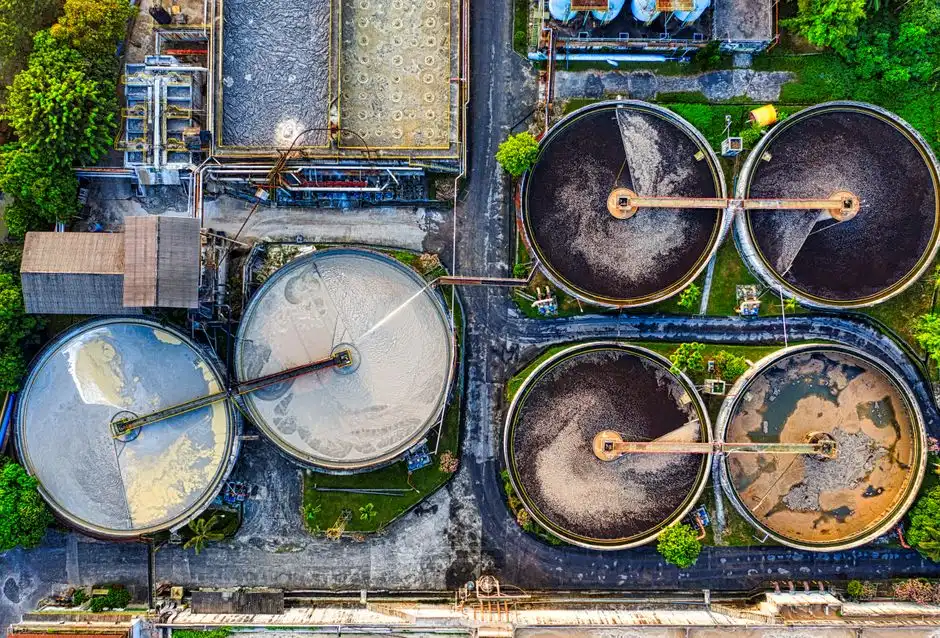
Primary treatment selection dictates the stability of secondary biological processes. DAF effluent, characterized by <20 mg/L FOG and <30 mg/L TSS, provides a consistent feed that reduces aeration demand by 15-20% and prevents lipid-induced filamentous bulking in downstream activated sludge or MBR systems. Achieving this effluent quality is essential for protecting sensitive biological components from organic overload. Conversely, clarifier effluent (30-80 mg/L FOG, 40-100 mg/L TSS) often requires additional equalization and FOG polishing to protect biological media. In facilities exceeding 200 m³/day, a common high-performance configuration involves DAF as primary treatment, followed by a biological stage, and a tertiary clarifier to capture residual biomass. For plants aiming for high-quality reuse water, MBR integration after DAF can achieve <5 mg/L TSS and <30 mg/L COD, meeting rigorous internal water quality standards.
Frequently Asked Questions
Can a clarifier handle plastics wastewater if we add lamella plates?
Lamella plates improve TSS removal to 70-80% by increasing settling surface area, but they do not address the low-density FOG and emulsified oils common in plastics processing. Consequently, FOG levels typically remain between 30-60 mg/L, which exceeds the IDEM 20 mg/L limit, necessitating upstream dissolved air flotation or chemical pretreatment.
What is the smallest DAF system for a 50 m³/day Elkhart shop?
A skid-mounted, pre-assembled DAF unit is the most efficient choice for this flow rate. These systems typically occupy a 10 ft x 20 ft footprint and can be fully integrated with automated chemical dosing skids to maintain compliance, with installed costs ranging from $80,000 to $120,000 depending on the degree of instrumentation and material choice (304L vs. 316L stainless steel).
How does winter affect DAF performance in Elkhart?
Water temperatures of 10-12°C increase viscosity, which slows the rise velocity of air-floc particles. To compensate, operators must increase the recycle ratio by approximately 15% and adjust coagulant dosages upward by 10% to ensure flocs are sufficiently buoyant. Insulated tanks and heat tracing on recycle lines are mandatory to prevent the degradation of flotation kinetics during sub-zero months.