Why ETP Is the Single Largest Hidden Liability in a Lonza-Style Acquisition
A factory acquired with a barely compliant effluent treatment plant can turn a clean balance sheet into a 6–18 month production halt the first time a solvent batch slips past biological treatment. Lonza ETP due diligence on a target with legacy wastewater liabilities should run a 7-stage workflow: permit-transfer review (Basel cantonal / EU IED / US NPDES), effluent-focused Phase II ESA, baseline 24-h influent/effluent panel against the 250/30/6.5–8.5 mg/L envelope, unit-operation audit, quantified retrofit CAPEX (typically $2–6M for a 500–2,000 m³/day API plant), SPA allocation via 5–10% escrow and specific indemnity, and a 30/60/90-day post-close upgrade. Antibiotic and hormone residues are now regulated pollutants under EU IED BAT-AEL and US EPA PFAS/PPCP frameworks, so the diligence scope must include AMR-relevant API assays even where the existing permit does not.
The 2024–2025 enforcement pattern has been unforgiving: pharma plant acquisitions in India triggered price chips of 8–15% or escrow holdbacks of $5–20M specifically tied to legacy antibiotic-residue exceedances in surrounding groundwater (per trade-press reporting, 2025). The asymmetry inside a single API plant is what makes this line item so dangerous. Inlet COD typically runs 1,000–10,000 mg/L, and synthesis lines frequently exceed 10,000 mg/L (per pharma ETP engineering data, 2025). Outlet caps in most jurisdictions sit at COD <250 mg/L, BOD <30 mg/L, pH 6.5–8.5 (per CPCB/SPCB general discharge standards, as compiled in 2025-08). A facility posting 220 mg/L COD under the seller is one solvent batch from revocation, and consent revocation routinely halts production for 6–18 months while a fresh CTO is negotiated.
AMR has moved effluent from a routine EHS file to a board-level ESG concern for European CDMOs. Veralto's $465M Cleanwater1 deal (per H2O Global News, 2025) signals that water assets and liabilities are both actively priced in 2024–2026 transactions, and the buyer who cannot quantify the ETP line item is the one who will absorb it as a post-close write-down.
Lonza Permit Exposure: Basel Cantonal, EU IED, and US NPDES Compared
Permits, not hardware, are the binding constraint on closing, and Lonza's cross-jurisdictional footprint means the deal team has to read three regulatory grammars at once. In Switzerland, the Basel cantonal Gewässerschutzbewilligung (water protection permit) is issued to a specific legal entity; a change-of-control triggers re-application typically running 90–180 days, and federal PRTR reporting must be re-baselined under the new operator. In the EU, IED 2010/75/EU BAT conclusions for waste treatment include pharma-specific AELs tightened for antibiotic residues in 2022 and still binding through 2026; any non-attainment becomes a permit deviation the day it is logged. In the US, EPA NPDES name transfers must be filed within 30–90 days, and 2024–2025 consent-decree cases show that a missed window escalates automatically to a consent order (per EPA enforcement records, 2025).
The cross-jurisdictional wrinkle for a Lonza-style buyer is that many acquired plants sit in India, where the SPCB consent-to-operate re-application runs 60–180 days — the longest window in the matrix and the highest exposure to operational interruption. The deal team should treat these four regimes as a single comparable matrix, not four separate workstreams.
| Jurisdiction | Permit / Instrument | Re-consent / transfer window | Antibiotic / AMR trigger | Operational risk if missed |
|---|---|---|---|---|
| Basel (CH) | Cantonal Gewässerschutzbewilligung + federal PRTR | 90–180 days, entity-specific | PRTR API reporting; cantonal AAL tightening | Halt discharge; production stop |
| EU IED | 2010/75/EU BAT-AEL, waste treatment chapter | Re-issue on BAT review cycle | Pharma AELs tightened 2022, in force 2026 | Permit deviation; Article 8(2) review |
| US EPA | NPDES individual / general permit | Name transfer 30–90 days | PFAS/PPCP framework, monitoring triggers | Consent order; daily penalties |
| India SPCB | CTO + hazardous-waste authorization + CETP letter | 60–180 days, entity-specific | Draft pharma norms, ng/L antibiotic limits | Closure notice; 6–18 month production halt |
Stage 1 — Permit File and Change-of-Control Trigger Review
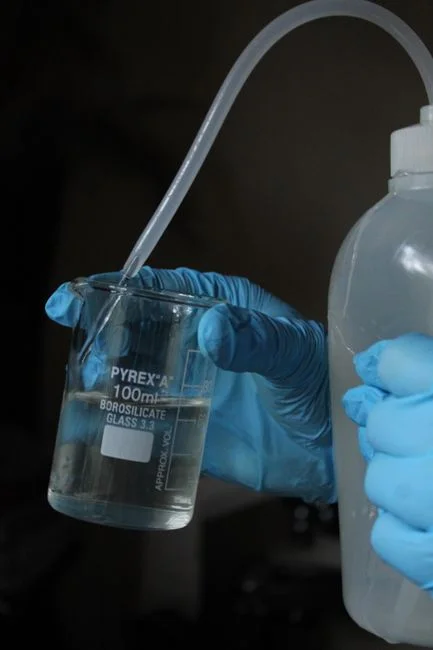
Stage 1 starts with the permit file because permits gate the closing date. The checklist is short and binary. Confirm the target holds a valid CTO/consent with no pending show-cause or closure notice. Confirm hazardous-waste authorization covers current sludge generation rates (mismatches here are a routine data-room finding). Confirm the CETP membership letter is current if the plant routes any stream to a common treatment plant. Confirm no third-party API-in-drinking-water suit is pending and no environmental damage claim is open.
Any "yes" on the last two points converts the Stage 6 liability allocation from a generic escrow to a specific dollar indemnity, because the upper bound of a third-party harm claim is not bounded by retrofit CAPEX. The data-room request list for this stage should be specific: 36 months of monthly CTO compliance returns, SPCB inspection notes with the inspector's name and date, hazardous-waste manifests cross-referenced to sludge disposal receipts, and the most recent CETP inlet analytical certificate. Vague requests ("all environmental permits") let the seller redact aggressively.
Stage 2 — Effluent-Focused Phase II Environmental Site Assessment
A generic property ESA will miss the liabilities that actually kill a CDMO deal. The effluent-focused Phase II pulls 24-h composite samples at the ETP inlet, the secondary clarifier outlet, and downstream of any polishing stage (per ASTM E2247-16 practice, as cited in 2025 EHS audit guides). Install or sample existing groundwater monitoring wells downgradient of sludge storage pads and historical API spill areas — these are the two locations where antibiotic residues persist for decades and where third-party harm claims originate.
Quantify sludge inventory by age and API load. Old sludge lagoons are the most common source of inherited liability because they pre-date modern antibiotic-residue regulation and were often disposed of under now-revoked authorizations. Layer an AMR screen on top of the standard chemistry: antibiotic, hormone, and SVHC-listed compound assays on at least three of the 5–7 sampling days. The cost of adding these assays to an existing sampling campaign is trivial; the cost of discovering them post-close is not.
Stage 3 — Baseline Influent and Effluent Characterization Panel
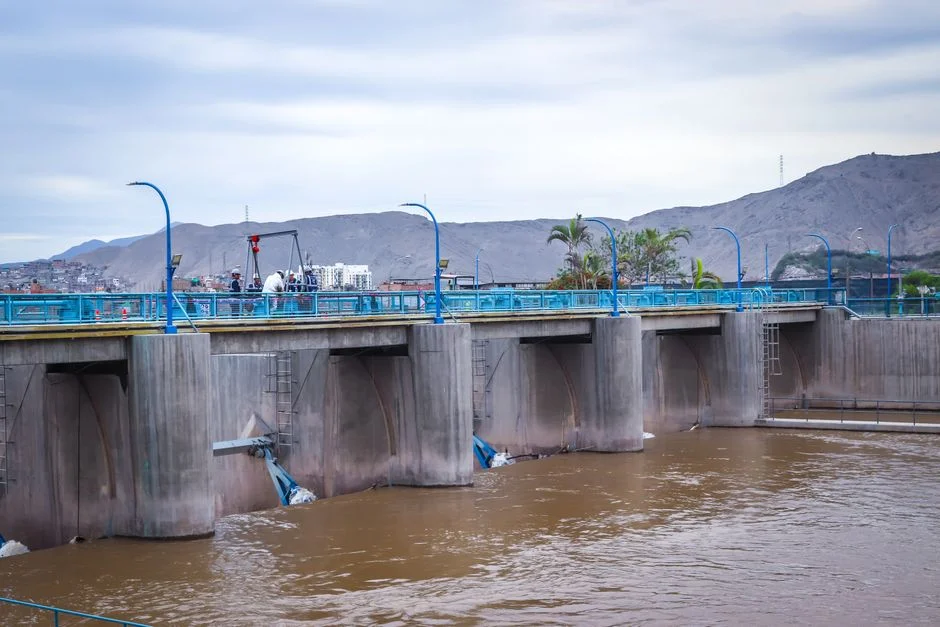
The baseline panel is what separates a "barely compliant" plant from a "known compliant" plant. The minimum parameters are COD, BOD, TSS, pH, oil & grease, total nitrogen — plus a target API list covering the site's manufacturing portfolio: solvents, antibiotics, hormones, and any SVHC-listed compounds. The deal team should require 30 days of recent operating data measured at both inlet and outlet, not annual composite samples, because a 12-month composite averages out the toxic-shock events that actually trip permits.
| Parameter | Outlet threshold | Failure reading | Likely root cause |
|---|---|---|---|
| COD | <250 mg/L (30-d rolling avg) | >250 mg/L | Biological stage overload |
| BOD | <30 mg/L | >30 mg/L | Poor biodegradation; old sludge |
| pH | 6.5–8.5 | Outside 6.5–8.5 | Washout, neutralization failure, or old sludge acidogenesis |
| TSS | Per consent (typ. <100 mg/L) | >consent | Bulking sludge, clarifier carryover |
| Oil & grease | <10 mg/L | >10 mg/L | API mix change, pre-treatment bypass |
| API residues | Permit-specific / BAT-AEL | Any detect > AEL | Tertiary stage missing or fouled |
The panel must be sized to the manufacturing mix. Mammalian-cell-culture effluent behaves very differently from small-molecule API synthesis effluent: high BOD and low toxicity versus high COD, solvent toxicity, and antibiotic residues. The retrofit train diverges accordingly, and a single panel for both will misread the plant.
Stage 4 — Unit-Operation Audit Against the Discharge Envelope
Stage 4 converts the baseline panel into a per-stage pass/fail scorecard the buyer's EPC advisor can act on. Walk each unit operation in order: screening → grit → oil & grease → equalization (HRT 6–24 h) → neutralization (typical dose 0.56 mg/L CaO per 1 mg/L acidity, jar-test verified) → coagulation/flocculation → primary clarification → biological (DO 2–4 mg/L, sludge age 5–15 days) → secondary clarification → tertiary (AC, UF/RO) → disinfection (Cl₂ residual 0.5–1.0 mg/L at the discharge weir).
High-risk failure modes repeat across pharma ETPs and each gets a one-line finding. Bulking sludge (SVI >150 mL/g) is the most common cause of secondary clarifier carryover. Foaming, often Nocardia- or Microthrix-driven, signals prolonged low F/M or oil & grease carryover that coats the biomass. Toxic-shock events from solvent or antibiotic peaks strip the biomass within hours and produce a flat DO spike. Oil & grease carryover upstream of the aeration tank suffocates floc and is the single most common root cause of poor BOD removal in older plants (per pharma ETP operations data, 2025).
| Unit operation | Pass criterion | Common failure | Typical fix |
|---|---|---|---|
| Screening | <6 mm screenings, no carryover | Damaged or bypassed bar rack | Rotary bar screen retrofit |
| Equalization | HRT 6–24 h, pH variance <1 unit | Buffer volume too small | EQ tank expansion or flow splitting |
| Neutralization | pH 6.5–8.5 with online feedback | PLC setpoint, no feedback | Online pH probe + PLC-controlled chemical dosing skid |
| Biological | DO 2–4 mg/L, SRT 5–15 d, SVI <150 mL/g | Bulking, foaming, toxic shock | MBR/MBBR upgrade; RAS control tuning |
| Tertiary | API residue < AEL; reuse-grade TSS | Fouled RO, exhausted AC | PVDF MBR + industrial RO train |
| Disinfection | Cl₂ residual 0.5–1.0 mg/L at weir | Measured at dosing pump only | Move sample point + online analyzer |
Dosing discipline needs to be verified, not assumed. Confirm pH feedback is online, not a PLC setpoint. Re-validate coagulant dose against the current API mix (mix changes can shift optimal dose by 20–40%). Measure chlorine residual at the discharge weir, not at the dosing pump. Add antibiotic and hormone residue assays to the outlet panel even where not yet permit-mandated, because EU IED 2010/75/EU BAT-AEL and US EPA PFAS/PPCP frameworks increasingly will (per EPA PFAS strategic roadmap updates, 2025). For screening reliability, audit the rotary mechanical bar screen condition; for biological polishing, verify the DF series PVDF flat-sheet MBR module flux and cleaning cycle are within design.
Stage 5 — Retrofit CAPEX Matrix Sized to Inlet Load
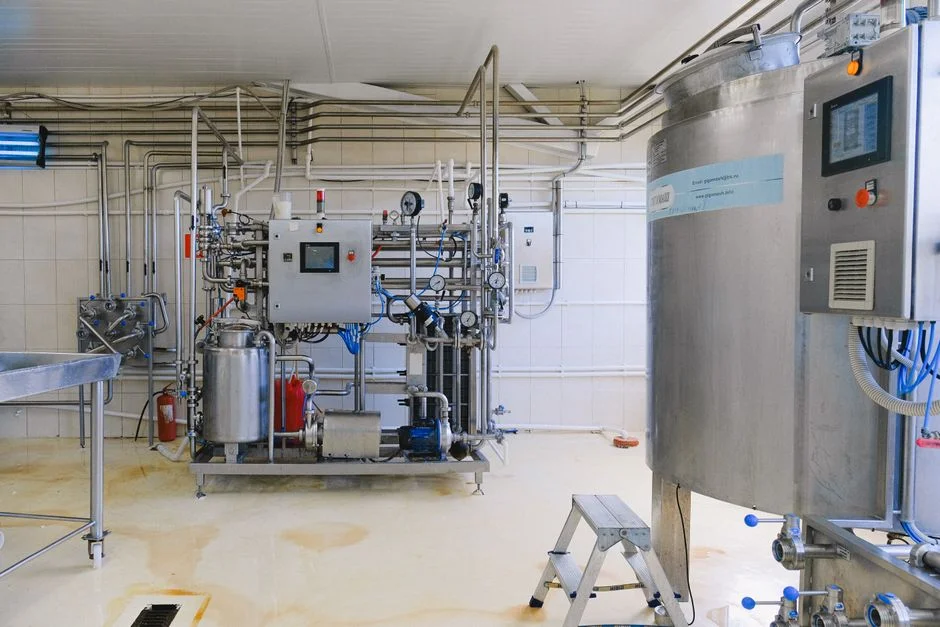
Stage 5 turns audit findings into a budget the CFO and deal team can underwrite. The matrix below is an order-of-magnitude 2026 estimate for greenfield-equivalent installed cost, sized to inlet load and discharge objective, and should be validated by an EPC advisor before being written into the SPA.
| Tier | Scope | Indicative CAPEX (2026) | Discharge outcome |
|---|---|---|---|
| Tier 1 | Consent renewal: PLC-controlled chemical dosing skid, jar-test-validated dose | <$1M | Hits existing consent envelope |
| Tier 2 | HydropureWater high-efficiency sedimentation tank (lamella clarifier) + MBBR/MBR polishing | $1–3M | Modern compliance with 250/30/6.5–8.5 envelope |
| Tier 3 | Full compliance retrofit: MBR + HydropureWater industrial RO system (recovery up to 95%) + lamella clarifier | $2–6M (500–2,000 m³/day API) | Reuse-ready polish; API residues < AEL |
| Tier 4 | ZLD / reuse-grade for cooling-tower makeup: AOP (O₃/H₂O₂ or UV/H₂O₂) + forward-osmosis pilots | $6–15M | Zero liquid discharge; cooling-tower reuse |
For a more granular biological-stage read, the DF series PVDF flat-sheet MBR module is the typical building block for Tier 2 and Tier 3 work, and a packaged MBR integrated wastewater treatment system shortens brownfield installation. The mapping rule the deal team should underwrite against: spending under $1M buys consent renewal, $1–3M buys modern compliance, and above $3M is required for ZLD or reuse-grade water.
Stage 6 — Liability Allocation: Escrow, Indemnity, Insurance, Covenants
The standard pharma ETP liability structure runs as follows. The buyer holds 5–10% of equity value in escrow for 18–36 months against ETP retrofit cost over-run, consent revocation, and any third-party API claim (per M&A insurance market practice, 2025). The seller gives a specific indemnity for known historical spills, documented non-attainment events, and any pending enforcement action disclosed in the data room. Environmental insurance — Pollution Legal Liability plus Cleanup Cost Cap — covers unknown legacy conditions up to a stated limit, typically $10–50M for mid-cap deals. A post-close compliance covenant obliges the seller to fund continued operation of the existing ETP up to closing, with daily influent and effluent logs shared via an online dashboard the buyer can read in real time.
Quantified triggers beat vague language in the SPA. "Material environmental liabilities" invites litigation. A 30-day rolling-average exceedance of 250 mg/L COD, 30 mg/L BOD, or 6.5–8.5 pH converts disputes into arithmetic. Acceptable trigger events also include any API-in-effluent exceedance against the target list, any third-party damage claim, and any show-cause or closure notice from an SPCB or EPA regional office. A well-structured indemnity and escrow package typically reduces the buyer's effective ETP retrofit cost by 30–50% versus a clean-balance-sheet assumption, because the seller retains the cost of pre-closing underperformance and the insurance layer absorbs unknown legacy conditions.
Stage 7 — 30/60/90-Day Post-Close Execution Plan
Day 0–30 is stabilization, not construction. Install online telemetry (pH, flow, COD/TOC) at the inlet and outlet; run a 30-day compliance confirmation campaign against the 250/30/6.5–8.5 envelope; lock the operator shift roster; verify PLC-controlled chemical dosing skid calibration. A reliable baseline is the only way to measure the retrofit's impact and to defend against any post-close regulator inquiry.
Day 31–60 is the priority retrofit window. Execute neutralization upgrades and jar-test-validated coagulant dose, install a HydropureWater high-efficiency sedimentation tank (lamella clarifier) retrofit where primary clarification is the bottleneck, and tune return-activated-sludge controls to a sludge age of 5–15 days with DO at 2–4 mg/L. These are the lowest-cost, highest-payback moves on the matrix.
Day 61–90 is the polish train. Install a MBR integrated wastewater treatment system with the DF series PVDF flat-sheet MBR module for secondary polishing, an HydropureWater industrial RO system (recovery up to 95%) for reuse-grade water, and an AOP skid for residual API breakdown. Commission a reuse line to the cooling tower. Experienced EPCs deliver these as skid-mounted, pre-wired, factory-tested modules so the 90-day window holds even on a brownfield site.
Walk-Away vs. Price-Chip Decision Matrix for the Deal Team
The matrix below converts the 7-stage output into a defensible go/no-go rule the corporate-development lead can take to the IC. Walk-away triggers are deal-killers regardless of price. Price-chip triggers are within the chip range a typical mid-cap deal can absorb. Holdback-only triggers are absorbable inside standard escrow. Clean-deal thresholds allow the environmental schedule to be a single representation and warranty.
| Trigger | Severity | Action | Reference |
|---|---|---|---|
| Open third-party API-in-drinking-water suit | Walk-away | Terminate; no price chip cures this exposure | Stage 1 permit file |
| Pending SPCB closure notice | Walk-away | Terminate; consent at imminent risk | Stage 1 |
| Legacy cleanup cost >12% of deal value | Walk-away | Terminate or restructure to asset-only | Stage 2 ESA |
| CTO not transferable within 180 days | Walk-away | Terminate; no path to compliant operation | Stage 1 |
| Antibiotic / hormone residue exceedance in groundwater | Price-chip 8–15% | Chip + AMR-specific indemnity + monitoring program | Stage 2 / 3 panel |
| ETP retrofit estimate $4–10M, no ZLD scope | Price-chip 8–15% | Chip + Tier 3 retrofit escrow | Stage 5 matrix |
| $1–3M modernization scope, no AMR exceedances, CTO transferable | Holdback-only | 5–10% escrow, 18–36 months, PLL insurance bindable | Stage 5 / 6 |
| <$1M consent renewal, 36 months in-spec data, no pending claims | Clean deal | Single R&W in environmental schedule | Stages 1, 3, 6 |
Comparable frameworks for adjacent CDMO buyers are documented in the Bayer plant acquisition ETP due diligence 2026 checklist and the WuXi AppTec plant acquisition ETP due diligence guide; the Lonza-specific overlay is the Basel cantonal permit re-application window and the EU IED BAT-AEL antibiotic-residue ceiling that binds through 2026.
Frequently Asked Questions
How long does a re-consent or permit transfer actually take after a Lonza acquisition closes?
Re-consent windows run 30–90 days for a US NPDES name transfer, 90–180 days for a Basel cantonal Gewässerschutzbewilligung, 60–180 days for an Indian SPCB CTO, and one full BAT review cycle for an EU IED site. Until the new entity is registered, the plant either operates under a continuation letter or halts discharge — both of which must be pre-negotiated in the SPA's environmental schedule.
What is the realistic retrofit cost band for a 500–2,000 m³/day API plant acquisition?
Order-of-magnitude 2026 estimates put a compliance retrofit (lamella clarifier, MBBR or MBR biological polishing, RO) at $2–6M; a ZLD or reuse-grade upgrade lands at $6–15M. Spending under $1M usually buys consent renewal only, $1–3M buys modern compliance with the 250/30/6.5–8.5 mg/L envelope, and above $3M is required for ZLD or reuse-grade water suitable for cooling-tower makeup (per internal engineering benchmarks, 2026).
How does AMR residue risk change the diligence scope today?
Antibiotic and hormone residues are now candidate regulated pollutants under EPA PFAS/PPCP frameworks and EU IED 2010/75/EU BAT conclusions, with India's draft pharmaceutical effluent norms tightening further. Detected exceedances in groundwater or downstream drinking-water sources have triggered 8–15% price chips and $5–20M escrow holdbacks in 2024–2025 pharma deals (per trade-press reporting, 2025). The scope must include AMR assays even where the existing permit does not require them.
How should the SPA environmental schedule be structured for ETP risk?
The schedule should reference specific trigger events rather than general compliance language. Acceptable triggers include any non-attainment of 250 mg/L COD, 30 mg/L BOD, or 6.5–8.5 pH on a 30-day rolling average; any API-in-effluent exceedance against the target list; any third-party damage claim; and any show-cause or closure notice. Pair those with a 5–10% escrow held 18–36 months, a specific seller indemnity for known historical spills, and $10–50M Pollution Legal Liability + Cleanup Cost Cap insurance.
When should the deal team bring in an EPC advisor for retrofit scoping?
Engage an EPC advisor before signing if the Stage 4 audit surfaces retrofit scope above $1M, if AMR residues are detected in groundwater, or if the CTO transfer window exceeds 120 days. A scoping study sized to inlet load and discharge objective — typically a HydropureWater high-efficiency sedimentation tank (lamella clarifier) plus the DF series PVDF flat-sheet MBR module train — converts the audit into a budget the SPA can reference, and it is the natural handoff from the diligence team to the post-close 30/60/90-day execution plan.