What an Ultrafiltration System Actually Does
Ultrafiltration (UF) is a pressure-driven membrane separation process that operates at ambient temperature without phase change or chemical dosing. Membranes carry nominal pore sizes of 1–100 nm and filtration precision in the 0.001–0.1 μm window, which is fine enough to retain suspended solids, colloids, bacteria, proteins, and most viruses while letting water, monovalent ions, and low-molecular-weight dissolved species pass through (per NEWater technical data). Divalent ions such as Ca²⁺ and Mg²⁺, salts, and small organics are not rejected by UF — that work belongs to RO, ion exchange, or EDI further downstream.
UF runs at low transmembrane pressure (typically 0.5–3 bar) compared with RO's 10–30 bar, indicating it cannot stand alone for dissolved-species removal. Feedwater quality is also critical: inlet turbidity must stay below 5 NTU to prevent rapid clogging and irreversible fouling (per Carewater regulatory guidance). A properly designed upstream train — typically a rotary bar screen for gross solids followed by a multi-media pretreatment filter for turbidity reduction — allows a UF rack to deliver its design flux.
The payoff for that pretreatment discipline is a permeate stream at 0.1 NTU or lower, which is the standard downstream RO protection spec. SDI15 below 3 is the working target for a paired RO polishing stage, and UF is the most common way to achieve this from surface, well, or secondary wastewater feeds. If you are walking a UF skid past an RO unit, the UF effluent determines whether the RO membranes will last their 3–5 year envelope or fail at month 18.
Ultrafiltration Advantages: Why Engineers Specify UF
UF membranes deliver ≥99.9% removal of suspended solids, bacteria, and most viruses with consistent permeate quality independent of normal feedwater fluctuation (per NEWater). Municipal and industrial plants prioritize UF because it is a forgiving barrier for TSS and microbial control, producing a permeate stable enough to feed a polishing step or a direct reuse loop without daily operator intervention.
Energy consumption provides a second advantage. UF runs at 0.1–0.3 kWh/m³ for most industrial wastewater feeds, significantly lower than brackish RO at 1.5–2.5 kWh/m³. The process requires no heat, phase change, or chemical reagents, making it an energy-saving and environmentally benign separation technology (per NEWater material guide). For plants with a corporate Scope 2 emissions target, this gap impacts procurement reviews.
Operationally, UF is compact, fully automatable, and skid-mountable. Hollow-fiber modules allow for backwashing, integrity testing, and CIP without disassembling the rack. Membrane lifespans of 3–5 years are realistic when feedwater stays within design turbidity and cleaning protocols are followed (per NEWater service-life data), providing a predictable replacement line item rather than an open-ended OPEX risk. Plants comparing UF against a clarifier-plus-sand-filter chain usually find UF wins on footprint, effluent consistency, and skilled-labor demand. The integrated UF skid format extends these benefits by collapsing screen, MMF, and UF into a single packaged unit for sites with limited civil works budgets.
Ultrafiltration Disadvantages: Where UF Falls Short

UF cannot remove dissolved salts, hardness ions, heavy metals, or low-MW organics. Any reuse spec calling for TDS below 500 mg/L, conductivity below a defined threshold, or removal of trace organics requires RO, ion exchange, or EDI behind the UF rack. Selecting UF for a dissolved-species target is a common specification error that often necessitates a retrofit.
Fouling is the primary operational risk. Particulate clogging, hardness scaling, biofilm growth, and organic accumulation depress flux differently, and they are not always reversible with a single CIP recipe. NEWater's fault list catalogs decreased water production from clogging and decreased water quality from seal leakage or poor inlet quality as common field failures, followed by broken hollow fibers from water hammer or overpressure. Membrane material choice compounds the problem: PAN is brittle and weak in acid/alkali, PVC has poor hydrophilicity that drives faster organic fouling, and PP is difficult to backwash to spec. Pairing the wrong polymer with an aggressive feedwater shortens membrane life by 30–50% in 2025–2026 industrial audits.
Initial CAPEX for a packaged UF skid with pretreatment is significant — typical industrial capacities (10–50 m³/h) land in the low six figures USD. Membrane replacement every 3–5 years plus CIP chemicals (NaOCl, citric acid, NaOH) add recurring OPEX. Pretreatment chemistry, including periodic chlorination for biofouling control using a chlorine dioxide generator, serves as insurance against premature replacement. Plants that skip this line item often face membrane changeouts at month 22 instead of year 4.
UF Membrane Material Comparison: PVDF vs PAN vs PVC vs PS vs PP
Material selection drives 70% of UF lifecycle cost. The five commercial polymers cover the operating envelope, each with a distinct cost–performance profile.
| Property | PVDF | PAN | PVC | PS | PP |
|---|---|---|---|---|---|
| Mechanical strength / elongation | High; tough, not brittle | Low; brittle | Good | Good | High tensile, low precision |
| Acid / alkali resistance | Strong | Weak | Strong | Strong | Good |
| Chlorine tolerance | High (residual Cl₂ OK) | Poor | Limited | Limited | Poor |
| Hydrophilicity / fouling resistance | High (modified grades) | High | Poor | Moderate | Poor |
| Cost tier | High | Low | Low | Very high | Low |
| Best-fit application | Industrial wastewater, MBR pretreatment, RO feed | Low-load potable, short-life service | General water filtration, industrial water treatment | Specialty separations, high temperature | Water filtration, sewage (precision-limited) |
PVDF is the industrial workhorse: high elongation, strong acid/alkali resistance, tolerance of high-concentration residual chlorine, and the broadest chemical cleaning window (per NEWater material guide). PAN costs less but its brittleness and weak acid/alkali resistance make it a poor fit for most industrial wastewater. PVC is strong and cheap but suffers from poor hydrophilicity, which drives faster organic fouling. PS handles high temperatures and tight MWCOs but its raw-material cost prices it out of commodity duty. PP is inexpensive and tough, but its low filtration precision and difficult backwash recovery confine it to water and sewage applications where tight specifications are not required. For 2026 industrial wastewater specs, default to PVDF unless feedwater compatibility data documents a cheaper alternative.
Ultrafiltration vs Reverse Osmosis: When Each Wins
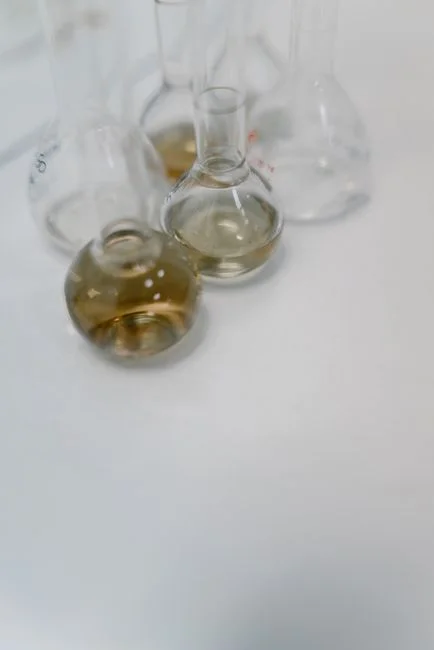
UF and RO are distinct tools for different rejection targets. The matrix below frames the engineering decision.
| Parameter | Ultrafiltration (UF) | Reverse Osmosis (RO) |
|---|---|---|
| Pore size | 0.001–0.1 μm (1–100 nm) | <0.001 μm (non-porous, solution-diffusion) |
| Target contaminants | TSS, colloids, bacteria, most viruses, proteins | Dissolved salts, heavy metals, low-MW organics, TDS |
| Operating pressure | 0.5–3 bar | 10–30 bar (brackish), 60–80 bar (seawater) |
| Energy use | 0.1–0.3 kWh/m³ | 1.5–2.5 kWh/m³ (brackish); 3–6 kWh/m³ (seawater) |
| Effluent quality | 0.1 NTU; SDI < 3 | < 500 mg/L TDS (configurable) |
| Brine / concentrate | Minimal backwash waste; no brine | 15–25% feed as brine (BWRO); 40–60% (SWRO) |
| CAPEX tier | Low–moderate | Moderate–high (high-pressure pumps, ERDs) |
| OPEX tier | Low (CIP chemicals, membrane replacement) | High (energy, membrane replacement, brine disposal) |
UF alone is the right call when the discharge or reuse spec targets suspended solids, turbidity, and microbial control. RO alone is mandatory when dissolved salts, heavy metals, or tight TDS limits drive the spec. The most common industrial pairing is UF as pretreatment for RO, where UF drops the SDI to a level that protects RO membranes from rapid fouling and extends their service life by 30–50% (per Carewater). For a complete train, a paired RO polishing system downstream of UF handles the dissolved load, while the UF stage prevents the RO from fouling on particulates. For plants evaluating MBR as a biological alternative upstream of UF, this MBR vs UF comparison frames the cost-and-performance trade-off.
Maintenance, Lifespan, and Replacement Signals
UF runs to its 3–5 year envelope only when the maintenance schedule is enforced. Routine backwash 1–2 times daily and a deep CIP chemical cleaning every 1–3 months — or immediately after any significant flux drop — is the baseline protocol (per NEWater maintenance schedule). Skipping backwash is the fastest route to irreversible scaling; skipping CIP leads to biofilm colonization that backwashing cannot shift.
Five replacement signals should trigger a module changeout:
- Flux cannot be restored after a documented CIP recipe
- Permeate flow drops ≥30% from clean-water baseline
- Effluent turbidity rises sharply, signaling fiber breakage or seal failure
- Irreversible fouling, scaling, or visible physical damage (cracks, bore holes)
- Membrane age reaches 3–5 years, regardless of measured performance
The single biggest lifespan lever is pretreatment discipline. A pre-filter upstream, inlet turbidity held below 5 NTU, and PVDF where chlorination is part of the cleaning regime extend service life toward the upper end of the 3–5 year window (per NEWater lifespan guidance). Continuous transmembrane pressure monitoring catches fouling before it locks in, and an anti-corrosion flush on idle systems prevents biofilm startup. The full membrane maintenance protocol details the daily-weekly-monthly cadence. CAPEX/OPEX signal for procurement: a well-run UF skid at 90% flux retention over year 4 lands lifetime cost near the lower end of the industrial range; a poorly run skid requiring a year 2 changeout costs 40–60% more per m³ treated. Pretreatment is the most cost-effective investment for this system.
Frequently Asked Questions
What pore size does ultrafiltration use, and what does it block?
UF membranes operate at 0.001–0.1 μm (1–100 nm) pore size. They block suspended solids, colloids, bacteria, proteins, and most viruses while allowing water, monovalent ions, and small dissolved species to pass. Divalent ions and most low-MW organics are not removed.
How long do UF membranes last in industrial service?
Properly maintained UF membranes run 3–5 years before replacement. Lifespan is governed by feedwater quality, cleaning protocol adherence, and membrane material; PVDF on a pretreated industrial feed typically reaches the upper end of that range.
How often should UF membranes be cleaned?
Run a routine backwash 1–2 times daily and a deep CIP chemical cleaning every 1–3 months, or immediately after any significant flux drop. Cleaning frequency scales with feedwater solids loading and organic content.
When does UF need to be paired with RO?
UF must be paired with RO whenever the discharge or reuse spec requires removal of dissolved salts, heavy metals, or low-MW organics. UF alone covers TSS, turbidity, and microbial control but cannot hit TDS or conductivity targets on its own.
Does ultrafiltration remove viruses and bacteria?
Yes. Standard UF membranes remove ≥99.9% of bacteria and most viruses when operated within design pressure and with intact fibers. Removal efficiency is verified by pressure-decay integrity testing and permeate turbidity monitoring.