Why Lima Hotels Need a Purpose-Built Wastewater System in 2026
Lima receives under 10 mm of rainfall per year in its central and southern districts, leaving the Rímac and Chillón rivers as the only meaningful freshwater dilution sources, both already over-allocated (per SENAMHI climatological normals, 2024). A hospitality property that discharges poorly treated effluent into SEDAPAL's combined grid carries real business exposure: an OEFA finding under Law 29325 (SINEFA) can trigger administrative fines of up to 10,000 UIT and operational suspension, and a single wastewater incident in a district like Miraflores or San Bartolo reaches Tripadvisor within hours. The province hosts 30+ four- and five-star properties (per booking.com resort inventory, 2026) plus a growing secondary inventory in Cieneguilla, Alis, and the Santa Eulalia valley, all operating in coastal or near-coastal aquifers with zero assimilative capacity. Three forces are reshaping 2026 procurement decisions: binding VMA sewer ceilings, ECA Agua targets where reuse is planned, and the steady rise of in-house water reuse for landscape irrigation and toilet flushing to offset Lima's tariff-driven water cost of roughly S/ 5–8 per m³ (SEDAPAL tariff structure, 2025).
Operational and cultural accountability now sit alongside compliance as baseline expectations. A 2024 study of frontline competencies in four-star Lima hotels found that sustainability-oriented behaviors and demonstrable environmental stewardship are no longer "nice to have" soft skills — they are assessed as core hiring and training criteria (Asociația de Geografie, Turism și Sport, 2024). For a 2026 opening or upgrade, that means specifying a packaged treatment system with verifiable reuse output, not just a discharge permit.
Peru Discharge Standards Every Lima Hotel STP Must Meet in 2026
Two regulatory instruments govern a Lima hotel's effluent, and they are not interchangeable. VMA (Valores Máximos Admisibles) under DS N° 010-2019-VIVIENDA is the binding ceiling for any non-industrial wastewater discharging to a SEDAPAL collector, and it sets what the package plant must achieve at the discharge manhole. ECA Agua under DS N° 004-2017-MINAM sets receiving-water quality, and it is the binding standard when the same effluent is reused for irrigation (Category 3) or discharged to a coastal bathing water (Category 2). A property that plans reuse must therefore size its biological and disinfection stages against ECA thresholds, not just VMA.
Typical 2026 VMA ceilings applied to hotel discharges in Lima Metropolitana: BOD ≤ 500 mg/L, TSS ≤ 350 mg/L, FOG (SSEE) ≤ 150 mg/L, pH 6.0–9.0, and temperature ≤ 35 °C (per DS N° 010-2019-VIVIENDA, Annex 1). ECA Agua Category 3 irrigation thresholds are tighter: BOD ≤ 25 mg/L, TSS ≤ 35 mg/L, and thermotolerant coliforms ≤ 1,000 NMP/100 mL for unrestricted landscape irrigation (DS N° 004-2017-MINAM). Properties adjacent to the Costa Verde, San Bartolo, or Punta Hermosa bathing beaches should verify with ANA whether Category 2 (BOD ≤ 5 mg/L, enterococci ≤ 200 NMP/100 mL) applies to their outfall.
Enforcement escalated materially between 2023 and 2025: OEFA conducted 240+ wastewater-related supervisions in the Lima metropolitan area in 2024, and hotels operating without a DIGESA discharge authorization or a SEDAPAL connection letter are routinely flagged in SINEFA cross-checks (per OEFA supervisory reports, 2024).
| Parameter | VMA (Sewer Discharge) | ECA Cat. 3 (Irrigation Reuse) | ECA Cat. 2 (Coastal Bathing) |
|---|---|---|---|
| BOD₅ | ≤ 500 mg/L | ≤ 25 mg/L | ≤ 5 mg/L |
| TSS | ≤ 350 mg/L | ≤ 35 mg/L | ≤ 30 mg/L |
| FOG (SSEE) | ≤ 150 mg/L | — | — |
| pH | 6.0–9.0 | 6.5–8.5 | 6.5–8.5 |
| Thermotolerant coliforms | — | ≤ 1,000 NMP/100 mL | — |
| Enterococci | — | — | ≤ 200 NMP/100 mL |
| Temperature | ≤ 35 °C | Δ ≤ 3 °C vs. receiving water | Δ ≤ 3 °C |
Hotel Wastewater Characteristics and Load-Sizing for Lima Properties
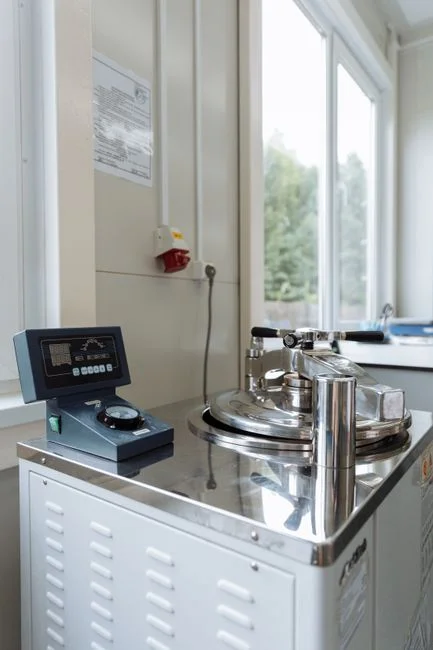
A defensible design basis for a 2026 Lima hotel starts at 150–300 L per guest-night for occupied rooms, plus 50–80 L per staff shift, with food-and-beverage venues adding 20–40 L per cover (per typical Peruvian hospitality design guidance, 2024). The midday occupancy peak driven by Lima's high tourism throughput — conference loads, day-use spa guests, and brunch service — pushes the diurnal peaking factor to 1.4–1.6 over the daily average, which is the figure a packaged plant's hydraulic capacity must be rated against, not the average flow.
Influent characteristics for a typical Lima four-star property fall into predictable bands: BOD 250–400 mg/L from bathrooms and kitchen prep, COD 500–800 mg/L, TSS 200–350 mg/L from laundry lint and food residue, FOG 50–150 mg/L concentrated in kitchen streams, and NH₃-N 20–40 mg/L. Salinity intrusion is a real concern in coastal alluvial districts (Miraflores, Chorrillos, San Bartolo) where seawater infiltration into the collection system pushes influent chloride to 250–500 mg/L, which constrains biological kinetics and demands corrosion-resistant equipment specs.
Worked example: a 200-room resort in Cieneguilla at 75% occupancy generates about 45 m³/day average and 65 m³/day peak, with weekend peaks hitting 80 m³/day. That load sits squarely in the mid-range capacity band where packaged A/O or MBR units are commercially competitive. Resorts east of Lima — Cieneguilla, Alis, the Santa Eulalia corridor — frequently lack municipal sewer coverage, so the design envelope must include on-site reuse for irrigation or trucked-sludge disposal as a fallback (per SEDAPAL service area maps, 2024).
| Parameter | Typical Lima Hotel Range | Primary Source |
|---|---|---|
| Flow per guest-night | 150–300 L | Bathrooms, laundry |
| Flow per staff shift | 50–80 L | Back-of-house, kitchen |
| Peaking factor (diurnal) | 1.4–1.6 | Conference, F&B peaks |
| BOD₅ | 250–400 mg/L | Kitchen, bathrooms |
| COD | 500–800 mg/L | Kitchen, laundry |
| TSS | 200–350 mg/L | Laundry lint, food solids |
| FOG | 50–150 mg/L | Kitchen grease traps |
| NH₃-N | 20–40 mg/L | Bathroom urea |
| Chloride (coastal districts) | 250–500 mg/L | Seawater infiltration |
Process Train Options: MBR, WSZ-A/O, and IFAS for Lima Hotels
Three packaged process trains dominate the Lima hospitality market in 2026, and the right pick is driven by flow band, reuse intent, and burial constraints rather than vendor preference.
The MBR (membrane bioreactor) route uses submerged PVDF hollow-fiber membranes at a nominal 0.1 μm pore size downstream of an anoxic/aerobic basin, producing effluent with TSS typically below 1 mg/L and BOD below 5 mg/L without a separate clarifier. An MBR skid delivers roughly 60% smaller footprint than conventional activated sludge at the same loading, and the submerged-membrane configuration draws 10–20× less energy than older external cross-flow designs (per HydropureWater MBR system data, 2026). The MBR membrane bioreactor wastewater treatment system is the most common choice for 50–200 m³/day properties targeting reuse or near-beach discharge, where ECA Cat. 2 or Cat. 3 is the binding standard.
The WSZ underground package A/O plant combines coarse screening, anoxic and aerobic contact oxidation, integrated sedimentation, and chlorination or UV in a single buried reinforced tank rated for 1–80 m³/h. It is operator-light (no daily attendance), fits below a landscaped courtyard or driveway, and is seismic-tied per NTE E.030 when specified correctly. The WSZ underground package sewage treatment plant is the workhorse for 20–100 m³/day mid-size properties where reuse is not in scope and the goal is compliant SEDAPAL discharge at the lowest installed cost.
The IFAS (Integrated Fixed-film Activated Sludge) hybrid adds moving plastic media carriers into the aerobic basin, increasing effective biomass concentration 2–3× without enlarging the tank. It is the retrofit-friendly option for larger Lima properties (300+ rooms, 200+ m³/day) where nitrification capacity is the bottleneck, and it pairs well with the process logic in this IFAS for hotel wastewater 2026 engineering guide. IFAS is less common in new-build hotel packages but increasingly specified for 2026 upgrades.
| Criterion | MBR | WSZ-A/O (Buried Package) | IFAS |
|---|---|---|---|
| Typical flow band | 10–500 m³/day | 20–200 m³/day | 100–2,000 m³/day |
| Effluent BOD₅ | ≤ 5 mg/L | ≤ 20–30 mg/L | ≤ 10–20 mg/L |
| Effluent TSS | ≤ 1 mg/L | ≤ 30 mg/L | ≤ 20 mg/L |
| Footprint vs. CAS | ~40% | ~50% | ~70% |
| Operator skill | Low–medium (membrane CIP) | Low (unattended) | Medium (media management) |
| Reuse-ready | Yes (irrigation, toilet flush) | Limited (UV polishing needed) | Yes with polishing |
| Seismic (NTE E.030) | Skid-tied, HDPE/stainless | Buried, anchored | Tank-anchored |
| Best-fit Lima case | Boutique/resort reuse | Mid-size urban, sewer discharge | Large hotel upgrades |
Decision Matrix: Choosing the Right System for a 2026 Lima Hotel
Shortlisting technology for a 2026 project comes down to three numbers on the design sheet: average flow, peak flow, and whether reuse is in scope. Below 100 m³/day average and no reuse target, WSZ-A/O wins on installed cost and burial simplicity. Between 50 and 300 m³/day with irrigation reuse or near-beach ECA Cat. 2 discharge, MBR is the safer pick because its effluent comfortably clears the tighter BOD and coliform thresholds without a tertiary polishing stage. Above 300 m³/day, particularly for existing plants being upgraded in 2026, IFAS lets the operator add nitrification capacity into the existing aeration basin without civil expansion.
Lima-specific selection rules: prefer buried units in landscaped resort zones (Cieneguilla, Alis) where visual impact matters; specify seismic-tied stainless or HDPE internals in coastal alluvial districts where NTE E.030 seismic zone 4 applies and chloride corrosion is a concern; and confirm the vendor's salt-water tolerance data if the collection system shows influent chloride above 300 mg/L.
| Selection Driver | MBR | WSZ-A/O | IFAS |
|---|---|---|---|
| Average flow < 100 m³/day, no reuse | Over-spec | Best fit | Over-spec |
| 50–300 m³/day with reuse | Best fit | Marginal | Marginal |
| > 300 m³/day upgrade | Capital-heavy | Too small | Best fit |
| ECA Cat. 2 coastal discharge | Best fit | Insufficient | Polishing needed |
| Seismic zone 4 + chloride > 300 mg/L | Specify SS/HDPE | Specify SS/HDPE | Specify SS/HDPE |
| Indicative 2026 CAPEX (installed) | USD 80K–280K | USD 35K–65K | USD 180K–280K |
2026 Cost Benchmarks and Procurement Checklist for Lima Hotel STPs
Indicative 2026 CAPEX for a packaged hotel STP, installed and commissioned in Lima Metropolitana, falls into three bands: USD 35,000–65,000 for a 20–50 m³/day WSZ-A/O unit; USD 80,000–160,000 for a 50–150 m³/day MBR skid; and USD 180,000–280,000 for a 200–500 m³/day IFAS or larger MBR. These figures exclude land, building permits, and the sewer connection fee. OPEX runs USD 0.18–0.35 per m³ for energy and consumables (membrane cleaning chemicals, UV lamps, chlorination), plus 1–2 hours per day of operator attention for WSZ and MBR units. IFAS, with its higher aeration demand, lands at the upper end of the OPEX range.
On customs: packaged STPs imported into Callao typically face 0–6% duty under Peru's FTA network, but instrumentation spares and electrical control panels may attract higher rates, so a 2026 buyer should request the vendor's HS-code breakdown before signing. For a sense of how these figures compare against another 2026 coastal-megacity hotel project, see this Casablanca hotel wastewater treatment 2026 guide; for a tropical-equivalent benchmark, the Kuala Lumpur hotel wastewater treatment 2026 system guide is a useful cross-check.
A defensible 2026 procurement workflow has seven steps:
- Influent characterization (BOD, COD, TSS, FOG, NH₃-N, chloride) over at least one full occupancy cycle.
- VMA/ECA mapping: confirm whether the project discharges to SEDAPAL, reuses for irrigation, or borders a bathing beach.
- Technology shortlist using the flow-band and reuse rules above.
- Vendor RFQ specifying seismic performance (NTE E.030), salt-corrosion materials, and ECA compliance evidence.
- Factory acceptance test (FAT) at the manufacturer's site, witnessed against the agreed performance curves.
- Commissioning protocol with seed-sludge provision and a 30-day performance test.
- OEFA/SEDAPAL approvals: discharge authorization from DIGESA and connection approval from SEDAPAL before handover.
Frequently Asked Questions
What size packaged STP does a 200-room Lima hotel need in 2026?
Plan for 45 m³/day average and 65 m³/day peak at 75% occupancy, using the 150–300 L per guest-night design basis. That load sits in the mid-capacity band where packaged MBR or WSZ-A/O units are commercially competitive for hotel discharge compliance under VMA DS N° 010-2019-VIVIENDA.
Can a Lima hotel reuse treated wastewater for landscape irrigation?
Yes, provided the effluent meets ECA Agua Category 3 thresholds under DS N° 004-2017-MINAM: BOD ≤ 25 mg/L, TSS ≤ 35 mg/L, and thermotolerant coliforms ≤ 1,000 NMP/100 mL. MBR systems routinely achieve these limits without tertiary polishing; WSZ-A/O units typically need UV or membrane polishing to clear the coliform ceiling.
Which packaged system is best for a hotel near a Lima bathing beach?
Specify an MBR with UV disinfection and confirm ECA Agua Category 2 compliance (BOD ≤ 5 mg/L, enterococci ≤ 200 NMP/100 mL) with ANA before procurement. WSZ-A/O effluent generally will not meet Cat. 2 without additional polishing, and IFAS requires a tertiary stage to hit the coliform target.
How long does OEFA/DIGESA approval take for a new hotel STP in Lima?
Plan 90–150 days for a DIGESA discharge authorization plus a separate SEDAPAL connection letter; OEFA supervises post-commissioning, so the plant must be running and sampled before the final permit is closed out (per SINEFA procedural timelines, 2024).
Do Lima hotels need a treatment plant if they connect directly to the SEDAPAL sewer?
Yes, in practice. SEDAPAL applies VMA ceilings at the connection, and a typical hotel raw influent exceeds BOD 500 mg/L and FOG 150 mg/L without pretreatment. A packaged WSZ-A/O or MBR is needed to bring the discharge under the VMA ceiling before it reaches the SEDAPAL manhole.