Lexington Mining and Metals Wastewater: What You're Actually Treating
For Lexington, KY mining and metals plants in 2026, choose DAF when streams are light-loaded, oily, or contain fine suspended solids (TSS removal up to 97%, COD 60-80%, microbubbles 30-50 microns); choose a gravity/lamella clarifier when streams are heavy on grit, slurries, and settleable metals (90% solids reduction at lower OPEX). For most mid-sized Kentucky facilities, a hybrid DAF-primary + lamella clarifier-polisher train delivers the best heavy-metal compliance under KPDES at acceptable footprint.
The four streams that show up at a Lexington plant gate are not interchangeable, and stream profile — not vendor preference — should drive the equipment decision. Aggregate wash water is the easiest of the four: TSS typically runs 1,500-5,000 mg/L with low metals, occasional hydrocarbon contamination from equipment wash-down, and a near-neutral pH. A high-efficiency lamella clarifier handles the bulk settleables; DAF is only warranted if fines carry oil. Coal preparation water combines high TSS with variable sulfate loading and carries acid mine drainage (AMD) risk whenever the seam contains pyrite. Sulfates in the 800-2,500 mg/L range are common, and any sudden pH drop below 5.5 signals that AMD is active. Steel cold-rolling and pickling streams are the most challenging: oily emulsions at 200-1,000 mg/L oil and grease, plus trace Fe, Cr, and Zn from pickle liquor carryover. Aluminum anodizing rinse water swings between pH 2 (etch) and pH 11 (anodic seal), with dissolved aluminum reaching 50-200 mg/L that precipitates as colloidal Al(OH)₃ when neutralized.
Kentucky's karst geology is the second design driver. Lexington sits in the Inner Bluegrass, and the Lexington-Fayette Urban County Government (LFUCG) and MSD/FSA pretreatment program enforces limits that are tighter than federal minimums because sinkholes and losing streams feed the Kentucky River watershed directly. Permit limits are issued under the Kentucky Pollutant Discharge Elimination System (KPDES), governed by 401 KAR Chapter 5, and the design drivers for the equipment you buy are TSS, oil and grease (O&G), and metals — specifically Pb, Zn, Cr, and Al. Treat the karst constraint as fixed, and let the stream table below drive everything else.
| Stream | Typical TSS (mg/L) | Key Contaminants | pH Range | Dominant Risk |
|---|---|---|---|---|
| Aggregate wash | 1,500-5,000 | Inert fines, trace hydrocarbons | 6.5-8.0 | High sludge volume, low toxicity |
| Coal preparation | 2,000-8,000 | Sulfates 800-2,500 mg/L, Fe, Mn | 4.5-8.0 (AMD swings low) | AMD, low pH, sulfate load |
| Steel cold rolling/pickling | 200-1,500 | O&G 200-1,000 mg/L, Fe, Cr, Zn | 2.0-9.0 | Oil emulsions, heavy metals |
| Aluminum anodizing | 50-500 | Dissolved Al 50-200 mg/L, fluoride traces | 2.0-11.0 | pH swing, colloidal Al |
How DAF and Clarifiers Actually Separate Contaminants
The two technologies separate by opposite physical principles, and the difference matters when the stream switches from oily to gritty between shifts. A dissolved air flotation (DAF) unit saturates a pressurized recycle stream with air at ≥5 bar, then releases that recycle into the floc-conditioned wastewater at atmospheric pressure. The dissolved air comes out of solution as a cloud of microbubbles in the 30-50 micron range, which attach to floc particles and oil droplets and lift them to the surface, where a paddle skimmer removes the float (per Clearwater/SigmaDAF). The bubbles do the work — particles don't need to be heavy, they need to be buoyant once attached.
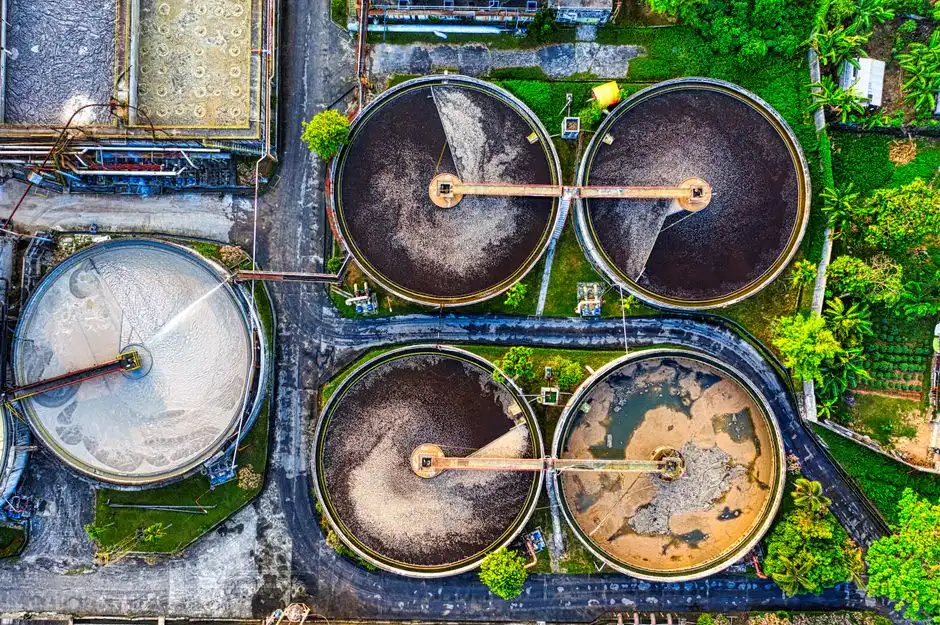
A gravity clarifier does the opposite: heavy, settleable solids fall to the bottom under their own weight and are raked to a central sludge hopper. A HydropureWater high-efficiency lamella clarifier stacks inclined plates inside the tank, multiplying the effective settling area and pushing surface loading rates to 20-40 m/h — roughly 5-10× the rate of a conventional clarifier at the same footprint. The trade-off is that lamellas only help particles that already want to sink; colloidal or oily material passes through largely untouched.
Both units are useless without upstream coagulation and flocculation, and that conditioning step is where most of the real chemistry happens. A paired automatic chemical dosing system delivers coagulant (typically ferric chloride or polyaluminum chloride at 50-150 mg/L) and polymer flocculant (1-5 mg/L) at a controlled A/S ratio before either separator. If you under-dose, DAF carries cloudy effluent and clarifier carries colloidal breakthrough; if you over-dose, you pay for chemistry you don't need and you load the sludge with extra solids.
Side-by-Side Comparison: DAF vs Clarifier for Mining and Metals
When a CFO asks "why this unit and not that one," the table below is what gets pasted into the memo. Removal numbers are drawn from the manufacturer data cited in the research; cost figures are order-of-magnitude ranges for a 20-50 m³/h mid-sized Kentucky plant, not vendor quotes.
| Parameter | DAF | Lamella Clarifier |
|---|---|---|
| Removal mechanism | Microbubble flotation (30-50 μm bubbles) | Gravity settling on inclined plates |
| Typical TSS removal | Up to 97% (Wastewater Machinery, 2026) | 70-90% on settleables; lower on colloids |
| Typical COD removal | 60-80% (Wastewater Machinery, 2026) | 30-50% on settleable organics |
| Heavy-metal performance | Strong on floc-bound metals (Pb, Zn, Cr when coagulated) | Strong on precipitate metals; weak on colloidal Al |
| Footprint (20-50 m³/h) | 8-12 m² tank + skid | 6-10 m² tank, taller profile |
| CAPEX band (skid + auxiliaries) | $120k-$250k | $70k-$160k |
| OPEX (energy + chemistry + hauling) | $0.18-$0.35/m³ | $0.08-$0.20/m³ |
| Sludge dryness | 3-6% solids (float) | 2-4% solids (underflow) |
| Sensitivity to flow swings | Moderate; tolerates ±25% with VFD recycle | High; lamella overflow at >1.5× design |
| Best-fit stream | Oily, fine, low-density solids; cold rolling; anodizing | Grit, slurry, AMD precipitate; aggregate wash |
The CAPEX and OPEX numbers above are typical bands for a packaged unit with coagulation/flocculation, sludge handling, and PLC controls — not bare tank pricing. For a deeper look at lamella economics, the lamella clarifier cost and ROI guide walks through a worked example. A regional comparison that also matters if you operate multi-site: the DAF vs clarifier for fabricated metals in Muncie article frames the same trade-off for an Indiana fabricated-metals buyer with different discharge rules.
Matching Equipment to Each Lexington Application
Pick the stream you actually produce, then read the row.
Aggregate wash. A lamella clarifier is the right primary; the solids are dense, inorganic, and settle easily, and a 20-40 m/h lamella surface loading rate handles the 1,500-5,000 mg/L TSS without drama. Add DAF only if hydrocarbon contamination is recurring — for example, wash-down water from a lube bay — because DAF will pull free oil and grease on the first pass and protect the clarifier from oil fouling.
Coal prep / AMD. A clarifier is the workhorse here. Bulk settleables drop out under gravity, and a lime neutralization stage upstream (typically raising pH to 8.5-9.0) precipitates Fe³⁺ and Mn²⁺ as hydroxides for the clarifier to capture. DAF is generally not appropriate because AMD particulates are dense iron floc, not buoyant material; you'd be paying air-saturation energy to float particles that want to sink. If sulfate is the real headache, plan for a separate biological or membrane sulfate step — neither DAF nor a clarifier will move it.
Steel cold rolling and pickling. This is the canonical DAF-primary stream. The rolling emulsion carries 200-1,000 mg/L O&G as stabilized micelles that won't break in a clarifier, and the microbubble cloud in a DAF reliably ruptures and floats the oil. A lamella clarifier downstream then polishes the Fe/Cr floc generated by pH adjustment, and a HydropureWater DAF system sized from the 3-120 m³/h model range (Wastewater Machinery DAF-003 to DAF-120) covers anything a mid-sized mill would see on a single shift.
Aluminum anodizing. DAF primary is the right call because the dissolved Al precipitates as a low-density colloidal hydroxide when you neutralize, and a clarifier alone will let much of that colloid escape. Pair the DAF with a lamella clarifier as the final TSS polish before pH adjustment and discharge. Watch for foam carryover from surfactant-bearing seal baths — the foam control in DAF systems guide covers antifoam dosing and weir geometry fixes if that becomes a problem.
Cost, Footprint, and the Hybrid DAF + Clarifier Train
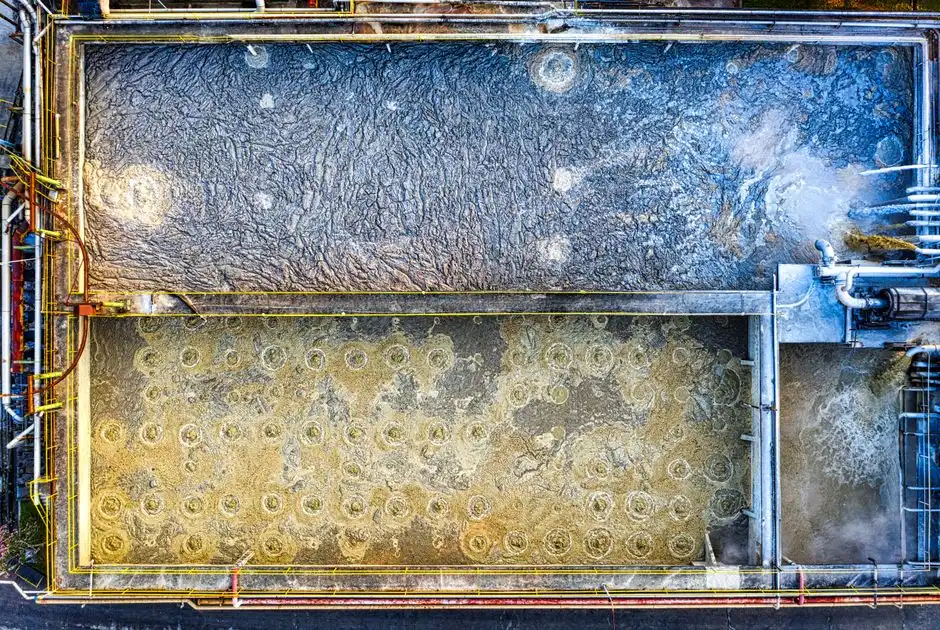
CAPEX and OPEX diverge in predictable ways, and the divergence is what makes the hybrid train attractive for most mid-sized plants. A lamella clarifier is the cheapest unit to buy and the cheapest to run, but it cannot meet the metals limits on a steel or anodizing stream without a DAF in front of it. A DAF alone is mid-priced on CAPEX and the most expensive on OPEX because of the saturated-air recycle pump and air compressor. A hybrid train — DAF as primary oil and colloid removal, lamella clarifier as polish — costs more on day one but typically delivers the lowest total cost of compliance because you meet the heavy-metal limits on the first pass instead of paying exceedance fines or running a third polishing stage.
Footprint-wise, a DAF is more compact than a clarifier of equivalent throughput, but a hybrid train fits on the same concrete pad that an oversized single clarifier would occupy. A 30 m³/h hybrid typically lands at 18-25 m² total plan area versus 30-40 m² for a single clarifier trying to do both jobs. The OPEX table below uses Lexington-area electricity at ~$0.09/kWh and assumes polymer at $3.50/kg; adjust for your actual unit costs.
| Configuration | CAPEX (USD) | OPEX ($/m³) | Metals Compliance | Best When |
|---|---|---|---|---|
| Lamella clarifier only | $70k-$160k | $0.08-$0.20 | Marginal on colloidal metals | Aggregate wash, AMD with lime stage |
| DAF only | $120k-$250k | $0.18-$0.35 | Good on floc-bound metals | Oily streams, anodizing colloid |
| Hybrid DAF + lamella | $180k-$340k | $0.20-$0.38 | Strong on Pb, Zn, Cr, Al | Steel, anodizing, mixed oily + gritty |
Ecologix's 2026 selection update explicitly confirms that hybrid DAF-plus-clarifier trains address complex wastewater streams where neither unit alone hits the discharge envelope — a position none of the competing top-three pages quantify. If your stream mixes oil with grit (a common case at steel mini-mills that also handle slag handling water), the hybrid is the only configuration that meets the metals limits without a third downstream stage.
Kentucky Compliance and Sizing Checklist for 2026
Before you sign a PO, walk this list against your actual site data. Confirm KPDES permit limits and 401 KAR Chapter 5 effluent standards for TSS (typically 30 mg/L monthly average), O&G (15 mg/L), and metals — Pb 0.69 mg/L, Zn 1.0 mg/L, Cr 0.5 mg/L, Al 1.0 mg/L are the typical KPDES daily-max benchmarks, but your permit can be tighter. Run a jar test on the actual Lexington water to confirm A/S ratio (typically 0.005-0.020 by volume) and polymer demand (1-5 mg/L) before you commit to chemistry. Size the DAF to peak hourly flow, not average, and confirm saturation pressure ≥5 bar with a VFD on the recycle pump. Finally, specify SS316 wetted parts if chlorides exceed 200 mg/L or if the stream carries low-pH pickle liquor; 304SS will pit through in 18-36 months under those conditions.
Frequently Asked Questions
Is DAF or a clarifier cheaper to operate for a Kentucky mining plant?
A lamella clarifier typically runs at $0.08-$0.20/m³ treated because its only energy load is a small sludge pump; a DAF runs $0.18-$0.35/m³ because of the saturated-air recycle pump and air compressor. For an aggregate wash stream, the clarifier is clearly cheaper. For steel or anodizing streams, DAF-only is more expensive than clarifier-only, but the hybrid train is the only configuration that consistently meets KPDES metals limits without a third polishing stage, so the total cost of compliance is usually lowest.
What flow rate range should I size a DAF for in a Lexington facility?
Size to peak hourly flow, not daily average, and use the 3-120 m³/h model band (DAF-003 through DAF-120 per Wastewater Machinery 2026 specs) as a starting point. A 30 m³/h steel cold-rolling line or a 50 m³/h anodizing rinse line falls comfortably mid-range. Confirm the recycle ratio (typically 20-30% of forward flow) and saturation pressure ≥5 bar in the spec sheet.
Can I meet Kentucky KPDES metals limits with a clarifier alone?
Only on streams where the metals are already precipitated as dense, settleable hydroxides — for example, AMD after lime neutralization to pH 8.5-9.0. On streams with colloidal metals (Al(OH)₃ from anodizing, finely divided Fe/Cr floc from pickling) or with oil emulsions that keep metals in suspension, a clarifier alone typically leaves you 2-5× over the permit limit for Pb, Zn, Cr, or Al. A DAF upstream, or a hybrid DAF + lamella train, is the standard answer for those streams.
What materials of construction hold up in Lexington mining and metals service?
Specify SS316 wetted parts (tank, saturator, piping, skimmer blades) whenever chlorides exceed 200 mg/L, pH drops below 3 at any point in the process, or free chloride is present from pickle liquor. 304SS is acceptable for neutral-pH aggregate wash and most coal prep streams. Polypropylene is a lower-cost alternative for non-pressurized clarifier shells on anodizing lines, but not for DAF saturator vessels.