Why Fab Acquisitions Need a Different ETP Diligence Framework
A 2024 mid-market chemicals platform deal closed with a 22-month consent decree, a $9M ETP retrofit, and an 18% equity writedown at month 14 — the original reserve was sized at $1.5M. That same pattern repeats in 2026, where undisclosed ETP non-compliance routinely inflates deal reserves by $2M-$18M per transaction and triggers 18-36 month remediation timelines (hydropurewater.com, 2026). When TSMC sits on the buy side, the deal team cannot price a fab target using a generic chemicals or battery-cell checklist — the effluent profile is fundamentally different.
Primary fab pollutants are tetramethylammonium hydroxide (TMAH) photoresist developer, isopropanol (IPA) rinse solvent, N-methyl-2-pyrrolidone (NMP) stripper, Cu sulfate from plating rinse, SC1 (NH4OH/H2O2) and SC2 (HCl/H2O2) cleaning chemistries, and fluoride from buffered oxide etch (BOE) and HF vapor etching. The ultrapure water (UPW) system that feeds the cleanroom typically rejects 60-80% of incoming city water as concentrate, so the ETP hydraulic load is often 2-3× the volume of "process wastewater" disclosed in the CIM. Any Phase II ESA that does not include the UPW reject stream will understate the retrofit cost by a multiple.
The acquirer's closing-day benchmark is TSMC's published RE100 water-reuse disclosures and per-chip water-intensity reduction targets — not the seller's CIM narrative. A framework adapted from the automotive-factory ETP due diligence framework must be re-engineered to fab parameters. The 2026 regulatory landscape — EU IED recast, US NPDES semiconductor category, China GB 8978-2025 (which finally includes lithium and ammonia-N for grandfather permits), India CPCB Consent-to-Operate, and Taiwan EPA effluent standards — runs in parallel and is not interchangeable across jurisdictions.
The Eight-Item Permit-Transfer Audit for a TSMC Target
A current permit is not an assignable permit. Run these eight items verbatim against the data room before issuing the LOI: (1) current permit or consent number and issuing authority; (2) expiry date and renewal status; (3) permitted daily flow versus actual operating flow for the last 12 months; (4) the parameter list versus current effluent characterization; (5) renewal history and any refused or contested renewals; (6) transferability trigger language; (7) name-change provisions for the new operating entity; and (8) any open Notice of Violation or pending administrative consent order.
For a fab target, item 4 must confirm TMAH, fluoride, isopropanol, ammonia-N, Cu, and total organic carbon (TOC) are all explicit parameters in the current consent. Older semiconductor consents in Taiwan, China, and Korea often grandfather fluoride out of the limit list because BOE and HF etching pre-dates 2010 permitting frameworks. Add two fab-specific items: item 9 — confirm the solvent-recovery still vent from the photolithography track is permitted under the local Air Pollution Control Act (Taiwan EPA, US NSPS NESHAP, EU IED Chapter IV), which is the single most-cited NOV in 2024-2025 fab enforcement actions; and item 10 — confirm the fab's existing consent explicitly covers UPW reject as "process wastewater" rather than as "cooling tower blowdown," because the latter triggers a different (lower) hydraulic and TDS limit.
| Item | Standard Check | Fab-Specific Overlay |
|---|---|---|
| Parameter list vs effluent | BOD, COD, TSS, pH | TMAH, F⁻, IPA, NH3-N, Cu, TOC explicit |
| Air permit linkage | Stack test on file | Solvent-recovery still vent under APC Act |
| Hydraulic classification | Permitted m³/day vs flowmeter | UPW reject routed as process wastewater, not CTBD |
| Transfer trigger | Pre-signing application | India CPCB 90-180 day; EU IED substantive review |
| Acquirer benchmark | Seller CIM narrative | TSMC RE100 water-reuse intensity disclosure |
Flag the 90-180 day India CPCB transfer timeline against the exclusivity period or extend the long-stop date to avoid an 18-24 month reapplication cycle. The EU IED recast (in force 2026) requires substantive permit review on operator change for IED installations, which is a new step most cross-border acquirers miss.
Fab-Specific Asset-Condition Walk-Down: Nine Questions Plus Three Overlays
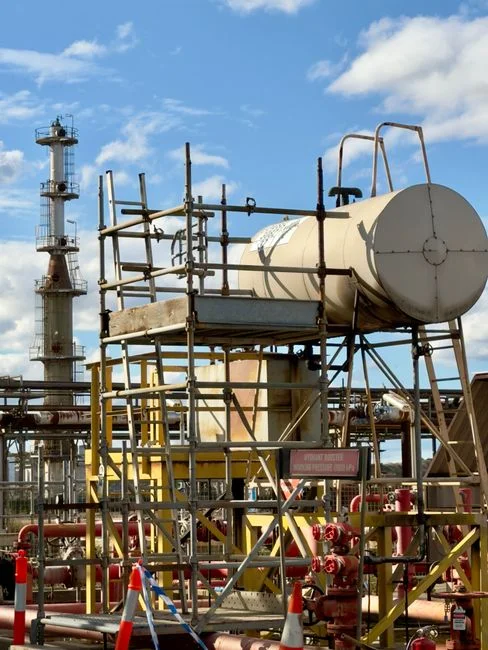
The asset-condition walk-down is where the $9M retrofit gets caught, or doesn't. Ask nine questions: (1) design versus actual hydraulic loading in m³/day; (2) design versus actual organic loading in kg BOD/day; (3) age and last refurbishment date of major units (clarifier, aeration tank, MBR cassette, RO train); (4) last membrane replacement date; (5) MBR cassette age and supplier model; (6) blower and pump operating hours versus nameplate service life; (7) structural condition of concrete tanks — cracking, rebar exposure, coating failure; (8) electrical and PLC vintage, where anything pre-2010 is functionally obsolete and unsupported; and (9) SCADA data retention period, where 90 days is unusable for trend analysis and 3+ years is the standard (hydropurewater.com, 2026).
Add three fab-specific overlays. First, HF-scrubber integrity on the wet bench exhaust — any lining failure is a Phase II trigger because airborne HF above 1 ppm triggers an immediate NOV under most jurisdictions. Second, Cu-recovery ion-exchange resin exhaustion cycle count from the plating rinse ETP; resin at end-of-life breakthrough is a hidden capex line. Third, fluorocarbon lining condition on the BOE/HF neutralization tank, which has a typical 7-10 year service life before the lining fails and the carbon-steel substrate begins to corrode.
The SCADA retention trap is the most-missed item. Absence of long-retention SCADA on a fab target is itself a Phase II trigger because the deal team cannot verify process variability, hidden excursion events, or the actual UPW reject flow. MBR membrane service life runs 5-8 years; any cassette older than 7 years is a near-term capex line. For a 1,500 m³/day fab, a single cassette replacement runs $420K-$1.8M including BOP, and an integrated MBR system retrofit on a 7-year-old cassette is the single most likely capex line at closing. PLC obsolescence is also a process-control risk for fabs because SC1/SC2 bath chemistry requires tight pH control, typically ±0.2 pH units, and an unsupported PLC can mask drift events.
Hidden Liabilities in a Fab Acquisition: Seven Standard Items Plus Three Fab Overlays
The risks that kill post-closing IRR rarely appear in the CIM. Surface seven standard items: (1) Phase I ESA availability and date, with a Phase II ESA mandated if any recognized environmental condition (REC) is identified; (2) on-site sludge lagoon volume, age, and characterization; (3) hazardous-waste manifests for the last 5 years; (4) PFAS or hexavalent chromium testing history; (5) buried tank and underground piping registry; (6) off-site disposal contractor audit trail including license verification; and (7) historic operator non-compliance records from the state pollution control board or EPA enforcement databases.
For a fab target, layer in three overlays. First, spent isopropanol and NMP manifests — NMP is RCRA U-listed under U359 and many jurisdictions treat spent IPA as a listed solvent. Second, Cu-bearing hydroxide sludge characterization from the plating rinse stream; a Cu concentration above the TCLP threshold reclassifies the sludge as hazardous and the disposal cost steps from $80/tonne to $450/tonne. Third, PFAS history from the photoresist and anti-reflective coating streams — note ASTM E1527-21 explicitly excludes PFAS from the hazardous-substance definition, so PFAS testing must be requested separately.
Hazardous sludge disposal runs $80-$450/tonne in 2026 (HydropureWater field data, 2026), and an undocumented lagoon can represent 200-2,000 tonnes of working-capital exposure. The buried piping registry is a fab-specific risk: solvent and HF double-contained piping is mandatory in most jurisdictions, but legacy fabs (pre-2005) often have single-wall acid waste piping that is now a Phase II trigger. Specify a 24-hour composite sampling protocol for COD, ammonia-N, and TOC, with grab samples for fluoride and pH to catch SC1/SC2 excursion spikes — the protocol specified in the related plate and frame filter press sizing guidance translates directly to fab lagoon characterization. A complementary parameter reference is the semiconductor ammonia-N treatment engineering specs, which sets the bar for the ammonia-N threshold that the Phase II must hit.
Fab-Specific Contract Audit: Six Standard Items Plus Three Overlays
Third-party contracts can assign hidden liability to the target the day after closing. Audit six items: (1) O&M contractor scope, liability cap, and indemnification scope; (2) sludge hauler EPA generator number and most recent audit letter; (3) chemical supplier REACH and TSCA compliance documentation, plus any indemnity language for off-spec chemicals causing permit exceedances; (4) lab and self-monitoring contract assignability and consent requirements; (5) EPC warranty status — confirm whether the typical 12-24 month warranty has expired; and (6) any in-force consent decrees, third-party environmental indemnity letters, or settlement agreements.
For a fab target, add three overlays. First, photoresist supplier take-back contract terms for spent developer and stripper; second, HF and TMAH supplier indemnity for off-spec delivery causing permit exceedances — the standard supplier contract caps this at the cost of the chemical, which is a rounding error against a $9M retrofit; third, Cu scrap-buyer byproducts contract, which can lock Cu-bearing waste into a hazardous-waste determination under RCRA even when threshold levels would otherwise exclude it.
Most O&M contracts carry 30-90 day termination clauses, and institutional knowledge in the incumbent operations team is itself a 6-12 month transition risk that should be priced into the operating model. REACH and RCRA compliance is a 2026 contract checkpoint: supplier indemnity for permit exceedances caused by off-spec product should be retained, not negotiated away, and an automatic chemical dosing system audit should confirm the target is not over- or under-dosing within supplier specifications — critical for TMAH and HF where dosing precision drives permit compliance.
Fab ETP Cost Benchmarks and the Reserve Formula
Defensible cost benchmarks let the deal team argue down seller representations or size the escrow rather than discover the retrofit cost post-closing. The table below replaces battery-cell lines with fab-specific retrofit categories and is the starting position for reserve sizing.
| Retrofit Line | Scope | 2026 Cost Band |
|---|---|---|
| Basic ETP upgrade (parameter compliance) | Civil + electromechanical, no major process change | $496/m³/day (80th percentile) |
| MBR cassette replacement | Cassette + ancillary BOP | $420K-$1.8M per 1,500 m³/day train |
| RO + evaporator/crystallizer ZLD | Site-specific; fab influent | $5M-$15M full retrofit |
| Hazardous sludge removal | Characterization + transporter class | $80-$450/tonne |
| TMAH biological oxidation skid | Developer stream pretreatment | $1.2M-$3.5M per train |
| HF neutralization system upgrade | BOE/HF etch stream | $800K-$2.2M |
| Cu-recovery ion-exchange train | Plating rinse; Cu credit offset | $600K-$1.8M; 10-25% capex offset |
| SC1/SC2 wet scrubber retrofit | Cleaning chemistry exhaust | $1.5M-$4M per scrubber |
Apply the deal reserve formula: 80th percentile of the cost range × probability of exceedance × years of historical non-compliance. For a 1,200 m³/day fab with a 4-year TMAH/COD non-compliance tail: $496/m³/day × 1,200 × 0.6 × 4 = $1.43M reserve floor, before HF-scrubber, Cu-recovery, and ZLD lines (hydropurewater.com, 2026). Insist on an ASC 410-20 asset retirement obligation study as a non-negotiable DD deliverable; the resulting liability must be booked at closing and flows through the purchase price adjustment.
Anchor a fab ZLD retrofit to the 2026 monocrystalline silicon hybrid ZLD case achieving 99.8% water recovery. Full ZLD retrofits on fabs run $5M-$15M in 2026, with Cu or fluoride recovery credits offsetting 10-25% of capex. Position hazardous sludge removal against the $80-$450/tonne range and the 200-2,000 tonne undocumented lagoon exposure, then size the on-site dewatering line with a plate and frame filter press against lagoon characterization, not the seller's nominal flow. Reserve sizing also requires the industrial RO system line item to be flagged separately because UPW reject flow drives the RO train sizing, and the RO is the most expensive single line in a fab ZLD retrofit.
SPA-Level Protections for a Fab ETP-Heavy Target

Push outside counsel on seven SPA-level items, each tied to a specific deal-phase trigger: (1) environmental representation and warranty survival of 5+ years, well beyond the standard 12-18 months; (2) a specific environmental indemnity outside the general basket, not reliance on basket-and-cap; (3) 10-15% of purchase price held in escrow for 24-36 months for ETP-heavy targets; (4) a permit-transfer cooperation covenant with seller obligations through the transfer date; (5) regulatory change cost-sharing for post-closing EU IED recast or GB 8978-2025-driven upgrades; (6) a Phase II ESA bring-down as a closing condition, not a post-closing deliverable; and (7) no Material Adverse Effect (MAE) carve-out for pre-signing environmental findings.
Add an eighth fab item: battery-specific R&W adapted to TMAH, HF, isopropanol, NMP, and Cu manifest traceability — these are the chemistries that the seller's representations will be weakest on because the disclosure track record at fab targets is thin. The 2026 trend is specific environmental indemnities displacing basket-and-cap structures for industrial targets, because basket-and-cap exposes the buyer to the seller's insurance limits and deductible erosion from non-environmental claims. For ETP-heavy industrial targets, specific indemnity structures recover 3-7× more than basket-and-cap over a 5-year survival period (hydropurewater.com, 2026) — the same gap observed in the related auto-sector M&A ETP due diligence framework.
Commission a 90-day post-signing Environmental Insurance (EIL) feasibility study; EIL is materially cheaper than escrow for ETP-heavy targets and covers the long-tail remediation risk that 5-year R&W survival may not reach, especially for legacy fab sites with pre-2005 buried piping. Close the MAE carve-out gap in the LOI, not at signing — sellers argue any pre-signing non-compliance is known and priced, buyers argue undisclosed Phase II findings are not. For fabs, this gap is widest around TMAH and PFAS, where the seller's process knowledge is deepest and the seller's disclosure incentive is weakest. The semiconductor POTW pretreatment guide provides a parallel compliance reference for fab pretreatment parameters that the SPA schedule should incorporate.
Frequently Asked Questions
Which fab-specific asset-condition item most often surfaces an unbudgeted capex line at closing?
MBR cassette age. Any cassette older than 7 years is a near-term capex line per MBR engineering guides; a 1,500 m³/day fab cassette retrofit runs $420K-$1.8M including BOP, and this figure is rarely in the seller's maintenance budget.
What reserve floor should a deal team apply to a 1,200 m³/day fab with a 4-year TMAH/COD non-compliance tail?
Apply the formula $496/m³/day × 1,200 × 0.6 × 4 = $1.43M reserve floor, before HF-scrubber, Cu-recovery, and ZLD lines. This is the 80th-percentile basic ETP upgrade figure scaled by probability and compliance tail.
Which parameters must a Phase II ESA explicitly include for a fab target, given ASTM E1527-21 exclusions?
TMAH, fluoride, isopropanol, ammonia-N, Cu, and TOC, plus PFAS requested separately because ASTM E1527-21 excludes PFAS from the hazardous-substance definition. Specify 24-hour composite sampling for COD, ammonia-N, and TOC with grab samples for fluoride and pH.
How much more does a specific environmental indemnity recover than a basket-and-cap structure on an ETP-heavy fab target?
Specific environmental indemnities recover 3-7× more than basket-and-cap structures over a 5-year survival period, which is why 2026 market practice has shifted decisively toward specific structures for ETP-heavy industrial targets.
What is the realistic permit-transfer timeline for a fab target under India CPCB, and how should it be reflected in the LOI?
India CPCB Consent-to-Operate transfer typically requires 90-180 days pre-signing plus a State Pollution Control Board site inspection; flag this against the exclusivity period or extend the long-stop date to avoid an 18-24 month reapplication cycle.