Why Retrofit an Anaerobic Digester Instead of Building New
An anaerobic digester retrofit and upgrade in 2026 typically delivers up to 3× the digester capacity and up to 3× the biogas output of the existing tank by adding recuperative thickening, high-solids mixing, a dual-membrane gas holder, and FOG/high-strength feedstock reception — without building a new vessel. Industrial wastewater retrofits should target HRT around 21 days, pH near 7.0, and methane content above 90% using sensor-based control, as validated on 50 L pilots treating streams up to 18,770 mg/L COD (Ngema, 2025).
Retrofit preserves the existing concrete and shifts the capital burden to mechanical and process equipment that delivers faster payback. The Cortland, New York WWTP illustrates the leverage: a 75-year-old digester complex was reconfigured to 50% greater hydraulic capacity, with equipment delivered between March and June to accept a new Greek-yogurt acid-whey stream (WesTech case study, S4). A new concrete digester of equivalent capacity would have required 18–36 months from PO to commissioning. The retrofit option compressed the schedule to roughly three months, which is what made the industrial tenant's siting decision possible in the first place.
Operationally, the lever is the 3× output-at-same-volume ratio: a traditional digester must have three times the volume of an upgraded digester to produce the same amount of biogas (Anaergia Omnivore brochure, S5). The retrofit is the right answer when influent COD, FOG, or hydraulic load has outgrown the 1980s/1990s design envelope but the tank shell, foundation, and site footprint are still serviceable. It is the wrong answer when the tank shows structural distress, when the diameter cannot accept a mechanical mixer, or when influent toxicity is chronic and outside the reach of mixing or thickening changes. In those cases, a greenfield vessel with a corrected design envelope is the only defensible path.
Industrial Wastewater Realities Most Retrofit Guides Skip
Municipal retrofit playbooks assume a relatively narrow COD range and a forgiving FOG profile. Industrial streams break both assumptions. The 2025 DUT characterization study measured a sugar refinery stream at 18,770 mg/L COD and an industrial sewage stream at 4,320 mg/L COD — a 4.3× spread within a single project (Ngema, 2025). Oil refinery effluent produced the lowest biogas yield at 64 mL/g TDS versus 148 mL/g TDS for sugar refinery. No municipal retrofit can absorb that variance without re-baselining operating targets and thickening capacity.
The failure mode at high COD is well documented. When COD climbed from 4,320 to 18,770 mg/L in the DUT dataset, biogas output rose about 30%, but contaminant removal dropped by more than 40% because pH depression drove long-chain fatty acid (LCFA) accumulation, which inhibits methanogens (Ngema, 2025). A retrofit that adds mixing and thickening without alkalinity supplementation and pH control will buy foaming, not capacity. Any industrial scope must therefore include chemical dosing for pH/alkalinity, high-torque reversible mixing capable of breaking scum and pumping down foam, and a sensor package tight enough to detect the pH drift before the LCFA inhibition becomes irreversible.
The methane-content ceiling is the second reality check. A stabilized digester with sensor-based control reached 90% methane content on the 50 L DUT pilot (Ngema, 2025), well above the textbook 60–65% range used in older CHP feasibility studies. That 25–30 percentage-point gap multiplies directly into usable gas for combined heat and power. Set 90% CH₄ as a contractual acceptance KPI on every industrial retrofit; if the bid cannot guarantee it, the bid is not yet designed for industrial streams.
The Eight Building Blocks of an Anaerobic Digester Retrofit
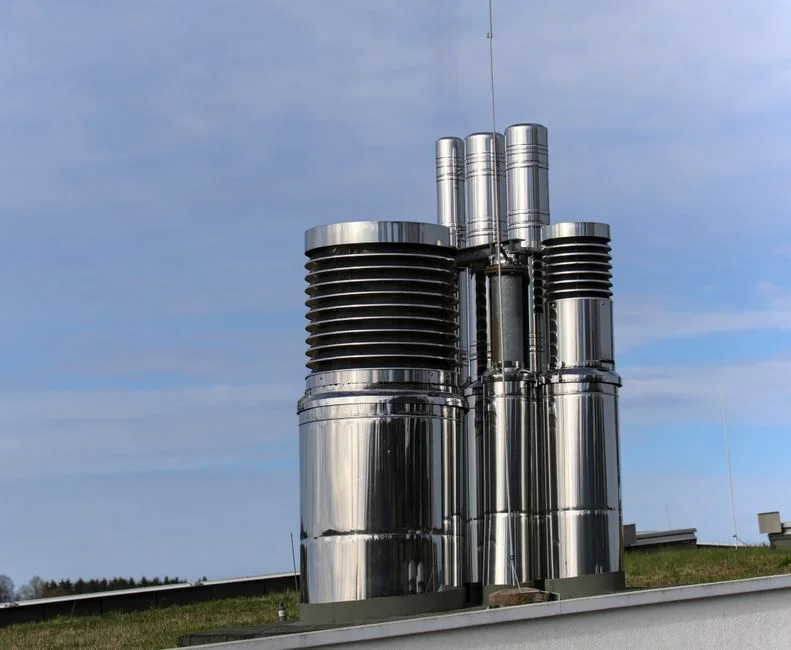
A modular retrofit scope is the only practical way to stage work around an operating digester. The eight blocks below can be specified, procured, and installed independently, so a phased delivery during low-load season is feasible rather than aspirational.
- Recuperative thickening. Separates digestate into a filtrate stream (returned to headworks) and a thickened solids stream (returned to the digester). This is the single mechanism that unlocks the 3× output claim by raising volatile-solids loading without adding tank volume (S3, S5).
- High-solids mixing. Replaces marginal gas-piston or draft-tube mixers with hydraulic or electric units rated for >8% TS. Cortland's switch to four mechanical sludge mixers (DiamondDuty class, S4) was the direct response to throughput, VSR, and gas-production shortfalls. Reversible units can pump down low-density sludge, scum, and foam.
- Dual-membrane gas-holder cover. Replaces corroded carbon-steel or fiberglass floating covers with a double-membrane holder that adds gas storage volume and raises operating pressure in preparation for CHP. Cortland's DuoSphere was installed in three weeks (S4).
- Substrate reception for FOG and high-strength waste. Rock trap, grinder, and quick-connect haulers, screened upstream by a rotary bar screen for feedstock reception pre-screening. This enables co-digestion tipping-fee revenue and is the single largest biogas-yield multiplier after thickening.
- Fixed-cover material upgrade. 304 stainless-steel covers eliminate blasting, priming, painting, and the periodic interior-coating inspection cycle that drives carbon-steel cover maintenance cost. Cortland specified two shop-welded "pie-slice" SS covers to compress field time (S4).
- Heat exchange. Tube-in-tube exchanger with glass-lined tubes to resist dairy/FOG fouling ("milk stone"). The exchanger preheats haul-in waste to keep viscosity manageable and to protect downstream pipework (S4).
- Instrumentation and sensor package. In-tank pH, ORP, temperature, and gas-flow sensors with PLC feedback to the mixing and dosing systems. This is what made the 90% methane-content result repeatable on the DUT pilot (Ngema, 2025).
- Digester reclassification. Convert an under-used secondary digester to a third primary to free primary volume for the new waste stream, as Cortland did with its existing complex (S4).
| Block | Equipment | Primary Function | Reference KPI |
|---|---|---|---|
| 1 — Recuperative thickening | Drum thickener or DAF | Raise VS loading without new tank | >6% feed TS to digester |
| 2 — High-solids mixing | Reversible mechanical mixer | VSR and foam/scum control | ≥50% VSR; foam removal on demand |
| 3 — Dual-membrane gas holder | Double-membrane cover | Gas storage + higher delivery pressure | Operating pressure ≥10 mbar |
| 4 — FOG/high-strength reception | Rock trap, grinder, QC flange | Co-digestion tipping fees | FOG addition ≤30% of VS load |
| 5 — SS fixed cover | 304 SS radial-beam cover | Eliminate coating maintenance | No interior repaint cycle |
| 6 — Heat exchange | Glass-lined tube-in-tube | Pre-heat haul-in waste | Feed temperature 35–40 °C |
| 7 — Sensors & control | pH, ORP, T, gas flow | Methane content stability | ≥90% CH₄ in gas |
| 8 — Reclassification | Piping & control changes | Free primary volume | All primaries in series |
Retrofit Design Parameters for Industrial Digesters
The 2025 DUT RSM-optimized 50 L pilot gives engineers a defensible parameter envelope for industrial retrofits. Anchor the design basis on these targets and resist the temptation to inherit municipal defaults.
- HRT 21 days, pH 7.01 ± 0.2. The RSM optimum with desirability 0.99 (Ngema, 2025). The 18–22-day window is consistent with the OFAT lag-phase and decline observations.
- Magnetite dose 0.4–0.6 g/L. Achieved 23 mL/d and 20 mL/d biogas respectively between days 9–12. Do not exceed 0.8 g/L — catalyst overloading collapsed biogas output to 2 mL/d after day 9 in the same study (Ngema, 2025).
- Methane content ≥90%. Sensor-controlled and validated on the 50 L DUT pilot; use this as a contractual acceptance KPI rather than the textbook 60–65% CH₄.
- VSR ≥50%. This is the digester-health KPI. The Cortland pre-retrofit gas mixing was unable to deliver it, which is what triggered the mechanical-mixer scope (S4).
- OLR and temperature. Mesophilic operation at 35–38 °C with OLR in the 2.0–3.5 kg VS/m³·d range for the recuperative-thickened feed.
- Foam control. Plan for it from day one. See digester foaming and scum control methods for sensor-triggered spray and surface-skim strategies; reversible mixers are a first line of defense, not a substitute for chemical control.
| Parameter | Industrial Retrofit Target | Source |
|---|---|---|
| HRT | 21 d (18–22 d acceptable) | Ngema, 2025 (DUT 50 L pilot, RSM) |
| pH | 7.01 ± 0.2 | Ngema, 2025 |
| Temperature | 35–38 °C (mesophilic) | Standard mesophilic AD |
| Magnetite dose | 0.4–0.6 g/L (cap at 0.6) | Ngema, 2025 |
| OLR | 2.0–3.5 kg VS/m³·d | High-solids AD practice |
| Methane content | ≥90% (sensor control) | Ngema, 2025 |
| VSR | ≥50% | WesTech / Cortland KPI (S4) |
| Capacity leverage | 3× output at 1× volume | Anaergia Omnivore (S5) |
Retrofit vs. Greenfield: Cost, Schedule, and Risk
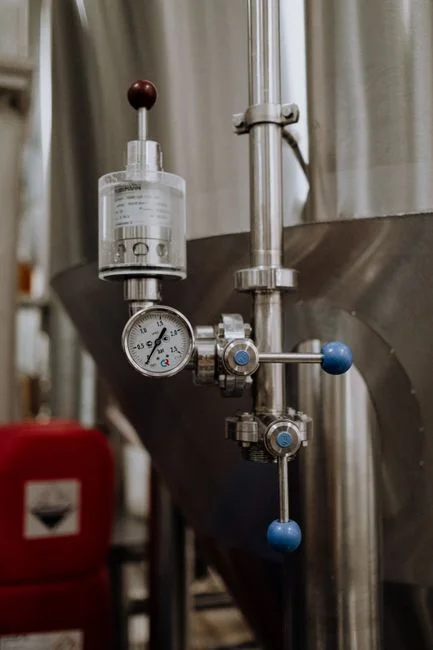
Three dimensions separate a defensible retrofit decision from a default new-build preference: schedule, capital efficiency, and downside risk.
On schedule, the Cortland benchmark is the most honest municipal data point: equipment delivered roughly three months from PO to startup, with the DuoSphere cover installed in three weeks and SS covers following in parallel (S4). A new concrete digester with the same hydraulic capacity is typically an 18–36-month program once geotechnical, permitting, and concrete-cure schedules are counted.
On capital efficiency, the Omnivore package claims 3× the biogas of a traditional digester in 1/3 the volume (S5). For a board, that translates into three digester-equivalents of output for the cost of one retrofit package plus the existing tank — a unit-cost leverage that no greenfield proposal can match unless the existing tank is structurally unusable. The DUT cost-benefit analysis shows the BCR climbing steeply with scale: 0.05 at 1 L, 0.12 at 5 L, 0.13 at 10 L, and 0.4 at 50 L (Ngema, 2025). Retrofitting an existing larger vessel is the fastest route to the high-BCR end of that curve.
On downside risk, retrofit preserves the option value of the existing asset. If a block underperforms, the operator can revert to baseline operation while the block is reworked. A greenfield failure is a total write-off plus the opportunity cost of the load that had to be trucked or stored during the failed commissioning window. The payback profile reinforces this: 1 L, 5 L, 10 L, and 50 L DUT systems returned initial investment in 24.8, 21.9, 25.3, and 19.0 years respectively at the bench scale (Ngema, 2025). Full-scale retrofits with co-digestion tipping-fee revenue compress that figure substantially.
| Dimension | Retrofit | Greenfield |
|---|---|---|
| Schedule (PO to startup) | ~3 months (Cortland, S4) | 18–36 months |
| Output leverage | 3× capacity at 1× volume (S5) | 1× at new volume |
| CapEx efficiency | No new concrete; mech. equip. only | Full tank + mixing + cover |
| Downside risk | Revert to baseline; modular rework | Total write-off if commissioning fails |
| BCR at scale (DUT) | Approaches 0.4 at 50 L pilot (S1) | Comparable only at >50 L |
Phased Implementation Roadmap for a 2026 Retrofit Project
The implementation sequence below mirrors the Cortland delivery model and the DUT pilot protocol, so the design basis is defensible before any full-scale PO is signed.
- Baseline audit (4 weeks). Run a digester mass balance: influent/effluent flows, COD, VSR, gas composition (CH₄/CO₂/H₂S), temperature profile, and a foaming-event log. Mirror the DUT influent characterization protocol so the design team has defensible numbers rather than historic design assumptions.
- Pilot confirmation. Validate HRT 21 d, pH 7.0, and 0.4–0.6 g/L magnetite on a 50 L pilot fed with the actual industrial stream (Ngema, 2025). Use PLC-controlled chemical dosing for pH and alkalinity control on the pilot to derisk the full-scale chemical scope.
- Modular procurement. Order the cover, mixers, recuperative thickener, and heat exchanger as separately installable skids. The Cortland approach — DuoSphere cover first, then SS covers and mixers in parallel — is the proven way to keep the digester in service through the build (S4).
- Install during low-load season or planned shutdown. Sequence the cover first (DuoSphere took 3 weeks at Cortland, S4) so a covered-and-mixed digester can start up early and the SS cover, mixer, and HX work can complete on the parallel unit.
- Sensor commissioning and acceptance test. Run the digester against three KPIs: ≥90% CH₄, ≥50% VSR, and 3× baseline biogas output. Failure on any KPI triggers a structured rework, not a sign-off.
Frequently Asked Questions
How much does an anaerobic digester retrofit cost?
Capital efficiency is the defining feature: a retrofit package delivers up to 3× the digester capacity and up to 3× the biogas output from the same tank volume, replacing the need for a second or third new concrete vessel (Anaergia Omnivore, S5). The unit-cost lever is therefore not dollars per cubic meter of new tank — there is no new tank — but dollars per cubic meter of additional capacity unlocked in the existing vessel.
How much more biogas will a retrofitted digester produce?
A properly designed retrofit with recuperative thickening, high-solids mixing, and FOG co-digestion can produce up to 3× the biogas of a traditional digester at the same volume (Anaergia Omnivore, S5). On a stabilized industrial digester with sensor control, methane content of 90% is achievable (Ngema, 2025), compared with the textbook 60–65% baseline — a multiplier on top of the volumetric gain.
Can industrial wastewater with high COD or FOG be treated in a retrofitted municipal-style digester?
Yes, but only with the industrial parameter envelope: HRT 21 days, pH 7.01 ± 0.2, and 0.4–0.6 g/L magnetite for interspecies-electron-transfer enhancement (Ngema, 2025). When COD rose from 4,320 to 18,770 mg/L, contaminant removal fell more than 40% due to pH depression and long-chain fatty acid accumulation, so alkalinity supplementation and pH control are non-negotiable scope items. Magnetite must be capped at 0.6 g/L — 0.8 g/L overloading collapsed biogas output to 2 mL/d after day 9 in the DUT study.
How long does an anaerobic digester retrofit take?
Three to four months from purchase order to commissioning is achievable for a municipal-scale retrofit. At Cortland, equipment was delivered between March and early June and the DuoSphere cover was installed in three weeks (S4). A new concrete digester of equivalent capacity would typically require 18–36 months including permitting and cure time.
Is retrofit or a new digester better economically?
For an in-service digester with structural life remaining, retrofit wins on both payback and downside risk. The DUT cost-benefit analysis shows benefit-cost ratio rising steeply with scale — from 0.05 at 1 L to 0.4 at 50 L pilot scale (Ngema, 2025) — and retrofit is the fastest path to that larger-volume economics. Greenfield is the right answer only when the existing tank is structurally inadequate, when the diameter cannot accept mechanical mixers, or when influent toxicity is outside the reach of any process change.
Related Equipment
- DAF pre-thickening upstream of the digester — specifications, capacity range, and technical data