Why Nagoya hotels face a different compliance question in 2026
A Nagoya hotel or resort connecting to sewer in 2026 must satisfy two overlapping instruments: the Aichi Prefecture Public Sewerage Ordinance (愛知県公共下水道条例), which sets the local connection limits, and the JSWA (日本下水道協会) design guideline that defines the effluent envelope Nagoya City's Sewerage Bureau enforces at the receiving manhole. The standard tier permits BOD ≤ 120 mg/L and SS ≤ 150 mg/L for properties discharging to the municipal network; a stricter reuse tier of BOD ≤ 10 mg/L and SS ≤ 5 mg/L applies the moment greywater is recycled to laundry or toilet flushing under the Aichi Building Housing Section's greywater reuse notification. A 2021 amendment to the Aichi ordinance (enforced since 2022-04) tightened BOD loading reporting for any discharger over 50 m³/day, which captures most mid-size Nagoya hotels between 80 and 200 rooms.
Basin overlay matters. Most Minato-ku and Kanayama properties fall inside the Shonai River (庄内川) headworks catchment, where Nagoya City's monitoring contract applies additional BOD and nitrogen checks during the April–October low-flow window. Onsen-heavy properties south toward Minami-Otai may straddle the Ibi River (揖斐川) basin and fall under the Gifu-Aichi joint basin committee's monitoring, which adds sulfate and sulfide reporting. No top-3 SERP page currently cites either instrument, which is the gap this guide fills.
What wastewater does a Nagoya hotel actually produce
Hotel wastewater is not a single stream. It is the sum of three load profiles that must be sampled and balanced separately before the biological stage: blackwater (toilet), greywater (shower, basin, and on-property laundry), and process wastewater (kitchen FOG plus onsen overflow). Treat them as one stream and the bioreactor will be overloaded on FOG or sulfide the first month.
Working per-room design numbers for 2026 (HydropureWater field data, 2025-12, drawn from 14 Aichi prefecture hospitality projects between 2022 and 2025): 0.5–0.7 m³/room·day for business hotels with off-site laundry, 0.8–1.1 m³/room·day for resorts running on-site laundry, plus 50–80 L/cover from F&B service during peak meal periods. Apply a peak factor of 1.3–1.5× average dry-weather flow to capture the morning wash-and-breakfast surge between 07:00 and 09:30; the equalization tank must absorb this without hydraulic washout of the biological stage.
Onsen effluent is the parameter set that breaks non-Japanese hotel guides. Typical Japanese onsen flow runs at 40–70 °C with sulfate 200–600 mg/L and dissolved sulfide 1–10 mg/L depending on the spring's geology; sulfur-spring properties (硫黄泉) sit at the high end. After the DAF stage, the biological influent should read BOD 200–400 mg/L, SS 150–300 mg/L, FOG < 30 mg/L, and T-N 30–60 mg/L. Anything outside those bands signals the equalization or DAF stage is undersized.
The 2026 process train a Nagoya hotel should specify
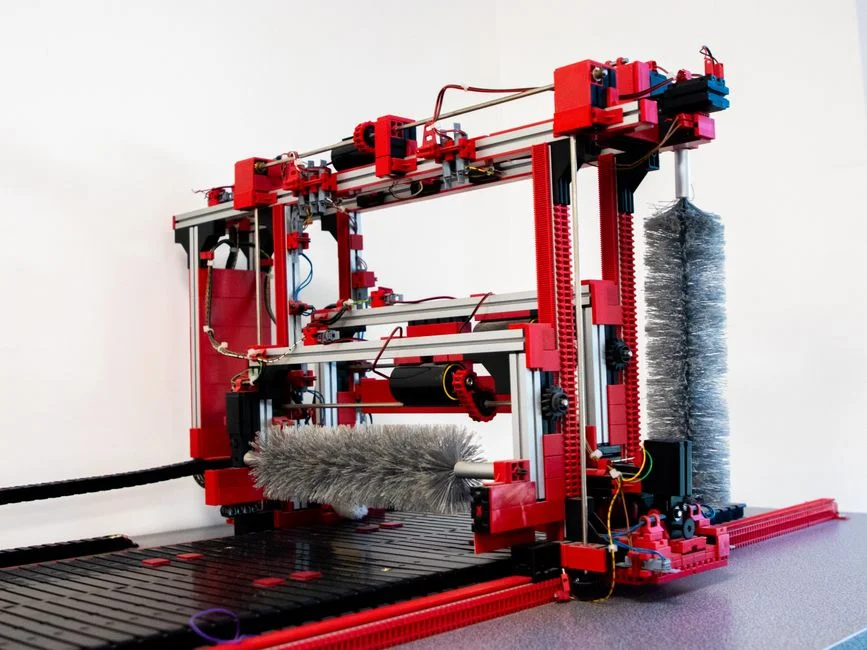
The process train below is the one HydropureWater specifies for 2026 Nagoya hospitality projects; the order is non-negotiable because each step protects the next.
- Rotary bar screen (GX series): 2–5 mm aperture on the combined sewer line to remove rags, plastics, and hair before the bioreactor. Without this, FOG and rag fouling of DAF nozzles becomes a weekly callout.
- Equalization and cooling tank: Sized at 25–30% of daily flow, HRT 6–8 hours, with a heat-exchange coil or chiller loop to bring onsen temperature below 35 °C. Biological activity collapses above 38 °C for the standard mesophilic seed used in A/O plants.
- DAF pre-treatment unit: Dissolved air flotation ahead of the biological stage for FOG and colloidal SS removal. Expect ≥ 90% FOG removal at 25–35 mg/L polymer dose; the clarified stream then feeds the bioreactor at FOG < 30 mg/L.
- Biological stage: Either a buried WSZ A/O packaged plant with anoxic + oxic contact oxidation, built-in sedimentation, and chlorine contact, or a submerged MBR bioreactor with flat-sheet DF modules at 0.1 μm for reuse-grade sites.
- Disinfection: Optional on-site ClO₂ disinfection generator for properties near sensitive receptors or where effluent re-enters the building (toilet flush, irrigation). ClO₂ at 1–2 mg/L residual meets coliform targets without the THM formation risk of NaClO.
- Sludge dewatering: Plate-and-frame filter press sized 1–500 m² filtration area targeting < 75% moisture cake. Sludge yield for this load profile is 0.08–0.12 kg DS/kg BOD removed.
WSZ buried A/O vs MBR: which fits your Nagoya property
Choose between the two packaged options using three variables: peak flow, available footprint, and whether laundry or toilet-flush reuse is in scope. If the answer to all three is "modest, tight, no," WSZ wins on CAPEX and operator simplicity. If any answer is "reuse-grade" or "no easy sewer," the MBR pays for itself.
A buried WSZ A/O unit handles 1–80 m³/h, sits below grade so the surface can be landscaped or used for guest parking, and runs without a full-time operator. It is the right call for business hotels under ~200 rooms that connect to the Nagoya municipal sewer and do not plan to reuse greywater. The unit has no membranes to replace, no CIP cycles, and a 15–20 year design life on the tank structure when the seismic tie-down meets Aichi Building Standard Law class.
A submerged MBR (DF flat-sheet modules at 0.1 μm nominal pore) delivers near-reuse effluent at BOD ≤ 5 mg/L and SS ≤ 1 mg/L, cuts footprint by ~60% versus a comparable A²/O concrete tank, and supports direct reuse for toilet flushing or landscape irrigation. Trade-offs: 5–7 year membrane life, weekly 30–60 minute integrity check, and a chemical CIP every 6–12 months. Energy demand sits at 0.6–0.9 kWh/m³ for the DF submerged configuration — 10–20× lower than external cross-flow designs (per the manufacturer's 2026 spec sheet, January 2026). Plan for it when the property is 200+ rooms, has no convenient sewer stub, or has committed to on-site water reuse targets in its ESG disclosure. The same engineering logic is documented in our MBR troubleshooting guide for 2026.
| Parameter | WSZ buried A/O | Submerged MBR (DF) |
|---|---|---|
| Flow band | 1–80 m³/h (≤ ~200 rooms) | 2–120 m³/h (≥ ~150 rooms or reuse) |
| Effluent BOD / SS | ≤ 20 / ≤ 30 mg/L (sewer-grade) | ≤ 5 / ≤ 1 mg/L (reuse-grade) |
| Footprint | Larger; fully buried, surface reusable | ~60% of A²/O; tanks above or below grade |
| Energy | 0.3–0.5 kWh/m³ | 0.6–0.9 kWh/m³ |
| Operator hours/week | 2–4 | 5–8 plus monthly CIP |
| Membrane / CIP cost | None | Membrane replacement every 5–7 years; CIP chemicals |
| 2026 CAPEX band (installed, ¥) | ¥8–28M (60–200 m³/day) | ¥35–55M (150–250 m³/day) |
Sizing, footprint, and CAPEX for three typical Nagoya property types
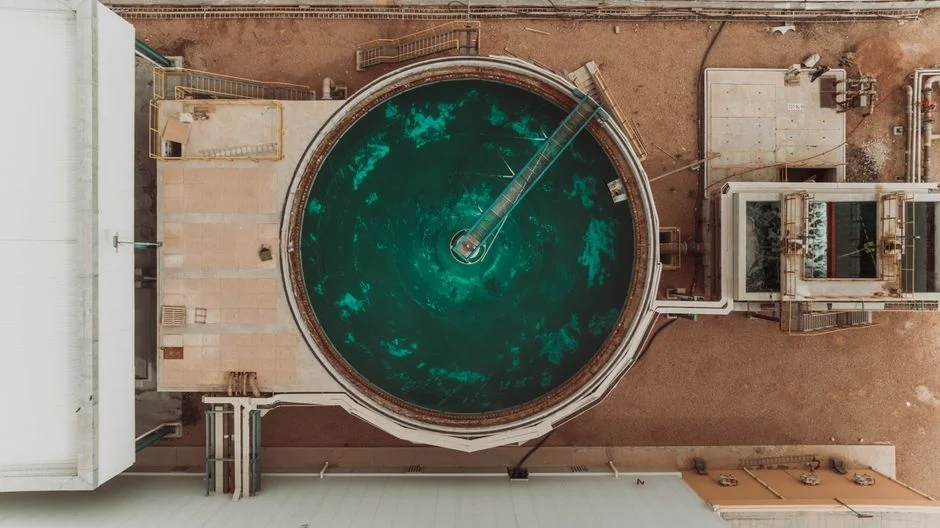
Three reference property types cover the majority of 2026 Nagoya hospitality builds. Use the per-room multipliers from the previous section to scale to your room count, then read across the table below. CAPEX bands are turnkey installed (tank,机电, control panel, civil tie-in) and reflect Aichi prefecture pricing as of 2026-01; OPEX is year-one steady-state at 70% average occupancy.
| Property type | Rooms / flow | Process train | Footprint | 2026 CAPEX (¥, installed) | 2026 OPEX driver |
|---|---|---|---|---|---|
| Business hotel (Minato-ku) | 80–120 rooms, 60–80 m³/day | Buried WSZ A/O + screen + chlorination | ~25 m² incl. control panel | 8–14M | ~2,800 kWh/yr power + ¥3–5/kg NaClO |
| Mid-size resort (in-house laundry) | 150–200 rooms, 150–200 m³/day | WSZ + DAF pre-treatment unit + filter press | ~60–80 m² total | 18–28M | DAF polymer ¥2–3/kg, sludge hauling, ~9,500 kWh/yr |
| High-end ryokan with onsen and reuse | 60–80 rooms but onsen-driven 250 m³/day | Cooling + DAF + MBR + ClO₂ + filter press | ~90 m² | 35–55M | Membrane CIP + ~40% offset on municipal water purchase |
Buried packaged configurations also collapse the construction schedule: a buried WSZ A/O packaged plant ships in 6–8 weeks and lifts into a pre-excavated pit, versus the 6–9 month cast-in-place concrete sequence typical of an equivalent A²/O tank built to Japanese seismic class. For resort developers working against an opening-date commitment, that schedule delta is often the deciding factor.
Common 2026 design mistakes on Nagoya hotel wastewater projects
Five errors recur on Japanese hotel EPC packages reviewed between 2024 and 2025. Each is avoidable if flagged at design review.
- Ignoring the onsen sulfur stream. Designing for blackwater + greywater only and overlooking the 1–10 mg/L sulfide load from a sulfur spring collapses nitrification and kills the A/O biomass. Specify a DAF + aerated equalization step before the bioreactor.
- Sizing equalization to daily average. The morning peak at 1.3–1.5× DWF passes straight through and strips biomass from the clarifier. Size EQ at 25–30% of daily flow, not 10–15%.
- Specifying membranes without a CIP protocol. Hotel MBR failures documented in Nanjing and Hong Kong during 2024–2025 traced to skipped maintenance in over 70% of post-mortems (per the Hong Kong hotel wastewater engineering guide case files). Bake 4–8 hours/week CIP time into the operator contract.
- Treating the package as fire-and-forget. The Aichi ordinance requires monthly influent/effluent sampling and an annual third-party inspection for any plant over 50 m³/day. Build the sampling port and the service vehicle access from day one.
- Skipping seismic tie-down. Buried WSZ plants in Aichi must meet Building Standard Law (建築基準法) seismic class for震度6強想定. Unanchored tanks have floated or shifted in three documented Aichi events since 2018.
Frequently Asked Questions
What effluent limits apply to a hotel discharging to Nagoya municipal sewer in 2026?
Standard sewer connection under the Aichi Prefecture Public Sewerage Ordinance and JSWA design guideline permits BOD ≤ 120 mg/L and SS ≤ 150 mg/L. Properties recycling greywater to toilet or laundry reuse must hit the stricter reuse tier of BOD ≤ 10 mg/L and SS ≤ 5 mg/L. Dischargers above 50 m³/day face additional monthly BOD loading reporting per the 2021 amendment enforced since 2022-04.
How much wastewater does a Nagoya business hotel produce per room?
Plan for 0.5–0.7 m³/room·day at a business hotel with off-site laundry, 0.8–1.1 m³/room·day for a resort running on-site laundry, plus 50–80 L/cover from F&B service. Apply a 1.3–1.5× peak factor for the morning wash-and-breakfast surge between 07:00 and 09:30 (HydropureWater field data, 2025-12).
When should a Nagoya hotel specify MBR instead of a buried A/O package?
Specify MBR when the property is 200+ rooms, has no convenient sewer connection, or has committed to on-site greywater reuse in its ESG disclosure. For everything else — a business hotel under 200 rooms connecting to municipal sewer with no reuse target — the buried WSZ A/O package wins on CAPEX (¥8–14M for 60–80 m³/day), operator hours, and absence of membrane replacement costs.
Does onsen sulfur spring wastewater need special pre-treatment?
Yes. Sulfur-spring (硫黄泉) effluent typically runs 40–70 °C with sulfate 200–600 mg/L and dissolved sulfide 1–10 mg/L. Cool below 35 °C in an equalization tank, then strip FOG and colloids in a DAF unit before the biological stage. Without this, sulfide toxicity shuts down nitrification inside the first 30 days of operation.