Why Huambo Industrial Effluent Cannot Use a Standard ETP
An effluent treatment plant in Huambo in 2026 typically combines rotary screening, dissolved air flotation, anoxic/aerobic biological treatment, and MBR polishing, often followed by chlorine dioxide disinfection. For the textile and food & beverage loads that dominate Huambo Province, expect COD reductions above 90% and conductivity drops of around 84% across coagulation plus flotation, with final effluent designed to meet Angolan discharge limits and EU Urban Waste Water Directive 91/271/EEC reuse thresholds for irrigation.
Huambo's industrial base sits along the Benguela railway corridor, anchored by textile dyehouses, breweries, and food & beverage plants that share a common water profile and a common headache: feedwater that swings harder than most off-the-shelf package plants are designed to absorb. Roughly 80% of the water used in textile processes is discharged as effluent (MDPI, 2022), so the influent stream to any ETP is essentially process water plus dye bath residuals, salt loads from reactive dyeing, and CIP surges from beverage lines. Add high-hardness borehole feedwater and seasonal turbidity spikes from roof and yard runoff, and the daily load envelope is anything but steady.
The consequence is engineering, not marketing. A single-vessel "package" ETP that performs coagulation, biological oxidation, and clarification in one tank cannot hold hardness ions, residual reactive dyes, and a brewery's intermittent BOD surge simultaneously. A staged train — physical separation, equalisation, flotation, biological, membrane polish, disinfection — is the minimum configuration that keeps the chemistry inside its operating window when the dyehouse runs a dark shade batch and the brewery starts a CIP at the same hour.
2026 Angolan Compliance Framework for an Effluent Treatment Plant in Huambo
Angola's Decree 51/04 sets the national water quality regime, and the Ministério dos Recursos Minerais e Petróleo rules layer industrial discharge ceilings on top of it for COD, BOD, TSS, pH, colour, and oils & greases. Huambo provincial authorities retain the right to add site-specific conditions on top of the national envelope, so engineers typically design to the national ceilings plus a 10–20% safety factor rather than to the bare limit.
For 2026, the practical design target sits one band above compliance: the EU Urban Waste Water Directive 91/271/EEC and the EU Water Framework Directive reuse quality band, because treated effluent from a Huambo ETP will often be reused for landscape irrigation on factory grounds or sold to nearby farms. The Wessling direct nanofiltration thesis (S1) demonstrates that membrane polishing can lift WWTP effluent to WFD-compatible quality for agricultural or indirect potable reuse, and that body of work has become the de facto design reference for Sub-Saharan ETP projects aiming beyond the local minimum.
For any reuse-to-potable scenario, the WHO Guidelines for Drinking-water Quality (4th ed.) become the cross-check, with the EU Drinking Water Directive 98/83/EC as the operational benchmark for the disinfection stage. Treat these not as alternatives to Decree 51/04 but as the upper envelope the plant is sized to hit, so the asset stays compliant even if the provincial governor tightens the local rules mid-cycle.
| Standard / Directive | Scope | Role in a 2026 Huambo ETP Design |
|---|---|---|
| Angolan Decree 51/04 | National water quality | Statutory minimum discharge ceiling |
| MRMP industrial discharge rules | Sector-specific limits | Site-specific parameter ceilings |
| EU UWWTD 91/271/EEC | Urban waste water collection & treatment | Design target for agglomeration & biological treatment |
| EU Water Framework Directive | Reuse quality band | Design target for irrigation / industrial reuse |
| EU DWD 98/83/EC + WHO GDWQ 4th ed. | Drinking water quality | Cross-check for any reuse-to-potable scenario |
The Reference Process Train for a Huambo ETP
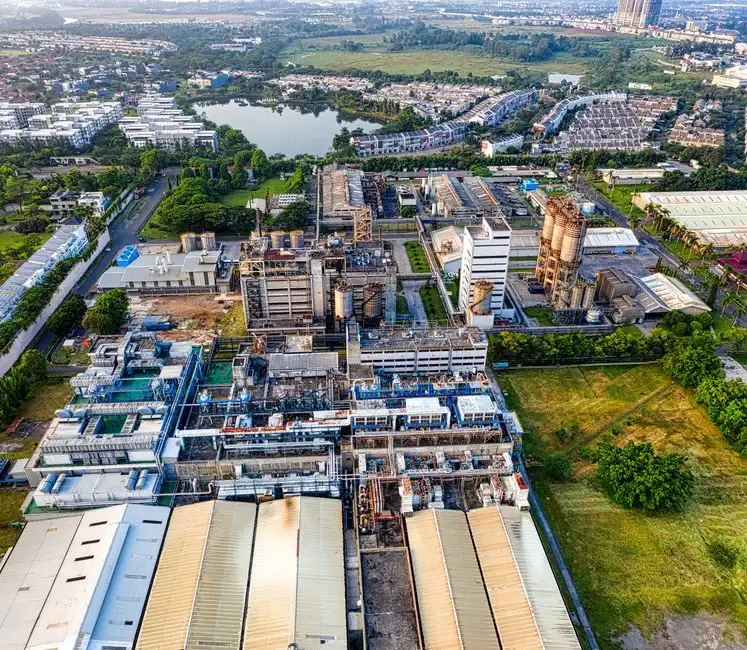
A Huambo-ready train runs in six stages, each sized to absorb a specific failure mode of the local feedwater.
- Stage 1 — Rotary mechanical bar screen. A GX rotary mechanical bar screen strips rags, plastic strapping, and fibrous debris that ride in with textile lint and brewery bottle wash. Without this stage, downstream pump impellers and DAF nozzles clog within hours.
- Stage 2 — Equalisation and pH correction. Because ~80% of textile process water exits as effluent (MDPI, 2022), a buffer tank of 8–24 hours' flow with a PLC-controlled chemical dosing skid is mandatory, not optional. It flattens the dye-bath surge and lets pH correction run on a slow, controlled dose rather than chasing spikes.
- Stage 3 — Dissolved air flotation. A dissolved air flotation system in the 5–20 m/h surface loading band and 4–300 m³/h envelope handles the suspended solids, colour bodies, and emulsified oils. On a textile feed, this stage alone can deliver roughly 83.8% conductivity reduction and 23.1% TSS reduction (MDPI, 2022), provided the upstream chemistry is correct.
- Stage 4 — A/O biological treatment. An anoxic zone denitrifies while the aerobic zone strips residual COD and BOD. With optimised coagulant chemistry, Ca²⁺/Al³⁺/Cl⁻ loads drop close to 64% across the upstream stages (MDPI, 2022), which keeps the biological reactor from being poisoned by salinity spikes.
- Stage 5 — MBR polishing. An integrated MBR membrane bioreactor with submerged PVDF flat sheet membranes at 0.1 μm pore size delivers reuse-grade TSS and turbidity, and the flat-sheet geometry consumes 10–20× less energy than cross-flow modules while shrinking the activated-sludge footprint by roughly 60% compared with conventional layouts (HydropureWater product spec, 2026).
- Stage 6 — Chlorine dioxide disinfection. A chlorine dioxide generator in the 50–20,000 g/h envelope provides microbiological control to EU DWD 98/83/EC and WHO GDWQ 4th ed. bands, with the advantage of working across a wide pH range and not forming trihalomethanes the way chlorine does.
| Stage | Equipment | Design Function | Typical Removal / Outcome |
|---|---|---|---|
| 1 | GX rotary bar screen | Solids removal | >5 mm debris capture |
| 2 | Equalisation + dosing skid | Flow & pH buffering | 8–24 h HRT, pH 6.5–7.5 |
| 3 | DAF | Flotation separation | ~84% conductivity, ~23% TSS (MDPI, 2022) |
| 4 | A/O biological | Carbon & nitrogen removal | >90% COD, denitrification |
| 5 | MBR (DF series flat sheet) | Solids & turbidity polish | TSS <5 mg/L, turbidity <1 NTU |
| 6 | ClO₂ generator | Disinfection | Compliant with EU DWD / WHO |
Huambo Influent and Effluent Targets by Industry
Three industries dominate Huambo Province's industrial ETP enquiries: textile dyehouses, breweries, and food & beverage processors. Each hits the train with a different loading profile, and each can be designed against the achievable numbers in the table below. Textile figures are anchored to the MDPI 2022 cotton dyehouse case study; brewery and food & beverage ranges are typical industry envelopes rather than single-vendor figures.
| Industry | Influent COD (mg/L) | Influent BOD (mg/L) | Influent TSS (mg/L) | Influent Conductivity (µS/cm) | Effluent COD (mg/L) | Effluent TSS (mg/L) |
|---|---|---|---|---|---|---|
| Textile dyehouse (MDPI, 2022) | 1,200–2,500 | 400–800 | 200–600 | 6,000–12,000 | <250 | <30 |
| Brewery | 2,000–6,000 | 1,200–3,500 | 500–1,500 | 1,500–3,000 | <125 | <30 |
| Food & beverage | 1,500–4,000 | 800–2,000 | 400–1,000 | 1,000–2,500 | <125 | <30 |
Two counterintuitive behaviours matter for Huambo. First, treatment can lift turbidity by up to 137% and hardness by up to 562% compared with untreated effluent if coagulant chemistry is wrong (MDPI, 2022) — a real risk when feedwater already carries high calcium. Second, conductivity is the parameter that tells you whether the upstream coagulation actually worked: a 1,000 µS/cm drop in the DAF stage is your on-site audit. Target the final polishing band to the EU WFD reuse thresholds from the Wessling nanofiltration thesis (S1), then back-fit the Angolan Decree 51/04 ceiling underneath it.
Sizing, CAPEX and the Skid Decision for Huambo
Three sizing bands cover the Huambo industrial market, and the procurement decision usually turns on which band a plant falls into.
- 10–50 m³/day: small facilities, often single-shift operations. A buried WSZ underground integrated package style unit covers the load with minimal civil work.
- 50–500 m³/day: the realistic Huambo factory range. Containerised MBR + DAF skids dominate this band because the DF series flat sheet MBR modules trim ~60% off the conventional activated-sludge footprint and the flat-sheet geometry runs at 10–20× lower energy than cross-flow (HydropureWater product spec, 2026).
- Above 500 m³/day: civil build with packaged process islands. Economies of scale kick in, but lead time and on-site integration cost rise sharply in central Angola.
For 2026 CAPEX, treat the landed-cost picture as a band rather than a number: containerised Chinese skid packages typically land in the lower-to-mid band for 50–500 m³/day because the equipment is factory-built and pre-commissioned, but the Angolan import duty band of roughly 7–20% on industrial capital equipment, plus inland transport from Lobito to Huambo on the Benguela railway corridor, shifts the final figure by a quarter or more. Operationally, the staged train pays back within 2–4 years on most Huambo loads — Chicago's hybrid wastewater case (S3) cut energy by more than 30% on a similar process philosophy, and that order of saving is achievable on Huambo dyehouse and brewery duties once the DAF is correctly sized.
| Sizing Band | Configuration | Civil Work | Lead Time (Lobito → Site) | Best-Fit Huambo Sector |
|---|---|---|---|---|
| 10–50 m³/day | WSZ underground package | Excavation only | 6–10 weeks | Small food processors, abattoirs |
| 50–500 m³/day | Containerised MBR + DAF skid | Concrete pad | 10–14 weeks | Textile dyehouses, mid-size breweries |
| >500 m³/day | Civil build, packaged skids | Full civil + structural | 20–30 weeks | Large breweries, agro-processing clusters |
Supplier Shortlist Checklist for a Huambo ETP Project
Before requesting a quote, run each candidate supplier through the same shortlist. Skids that pass six or more of these criteria are worth a site visit; those that pass fewer are not worth the freight quote.
| Criterion | Why It Matters in Huambo | How to Verify |
|---|---|---|
| Documented Sub-Saharan reference plants | Proves the train works in similar feedwater | Ask for contactable references |
| Containerised skid experience | Reduces on-site civil cost & risk | Factory audit or video walkthrough |
| In-house MBR module manufacturing | Avoids multi-vendor warranty gaps | Request membrane origin documentation |
| On-site commissioning for Angola | Logistics from Lobito to Huambo are non-trivial | Ask for Angola-specific CVs |
| English & Portuguese documentation | Operator training and regulatory filing | Sample O&M chapter |
| After-sales spares logistics | Huambo is 600+ km from port | Confirm spares kit and ETA |
| ISO 9001 / CE certification | Angolan customs & insurance expectations | Copy of certificate |
| Integrated ClO₂ + DAF + MBR supply | Single point of accountability during commissioning | One PO, one warranty |
A supplier that builds the chlorine dioxide generator, DAF, and MBR in-house removes a layer of finger-pointing during Lobito port clearance and the overland leg to Huambo. The natural next step is to request a tailored process design and itemised quote sized to the actual influent characterisation from your own site sampling, rather than a generic catalogue line.
Frequently Asked Questions
What drives CAPEX and OPEX for a 100 m³/day Huambo ETP?
CAPEX is dominated by the membrane modules, the DAF skids, and the containerised packaging, while OPEX is driven by chemical dosing (coagulant, polymer, ClO₂ precursor), membrane-cleaning cycles, and the borehole-feedwater pump energy. A 100 m³/day plant on the DAF + A/O + MBR train typically lands in the mid-band of industrial B2B pricing, with OPEX tracking influent loading and the cost of imported spares from Lobito. The largest single OPEX lever on a Huambo dyehouse duty is getting the upstream chemistry right, because bad chemistry lifts hardness and turbidity rather than lowering them (MDPI, 2022) and forces the MBR to clean more often.
Which industries in Huambo Province benefit most from the DAF + MBR train?
Textile dyehouses gain the most because the DAF strips colour bodies and the MBR holds the residual reactive dyes below reuse limits. Breweries and food & beverage plants benefit from the buffer volume and biological stage absorbing CIP surges without bleeding solids past the MBR. Agro-processing clusters with mixed loads use the same train as a one-size-fits-all polish.
How long does containerised equipment take to clear Lobito and reach a Huambo site?
Sea freight to Lobito typically runs 4–6 weeks from major Chinese ports, followed by 2–3 weeks for customs clearance under the Angolan duty band of roughly 7–20% on industrial capital equipment, and another 1–2 weeks on the Benguela railway corridor to Huambo. Add 1–2 weeks for on-site commissioning and the realistic door-to-running window is 10–14 weeks for a 50–500 m³/day skid (see the sizing table above).
Can treated effluent be reused for irrigation under Angolan rules and the EU WFD?
Yes, provided the final effluent hits the EU WFD reuse quality band that the Wessling nanofiltration thesis (S1) used as the design benchmark. In practice this means COD <125 mg/L, TSS <30 mg/L, turbidity <2 NTU, and a disinfection stage validated against EU DWD 98/83/EC and WHO GDWQ 4th ed. for any scenario where workers handle the irrigation water. The MBR + ClO₂ combination in the reference train is sized to meet that envelope on textile, brewery, and food & beverage feeds.
How is MBR membrane fouling prevented when feedwater hardness is high?
The DAF stage upstream is the primary defence: it strips the calcium-aluminium-chloride complexes that would otherwise scale the membrane surface, and the MBR troubleshooting guide covers the CIP protocols for residual scaling. Foam control during the backwash cycles is handled with the chemistry described in the foam control in wastewater treatment guide, and the flat-sheet module geometry avoids the air-scour dead zones that cross-flow modules suffer from. With these measures, a Huambo plant on the reference train runs routine CIP intervals of 4–8 weeks rather than the 1–2 weeks of a poorly pretreated system.