Why Abidjan's Ébrié Lagoon Changes the Equation for Hotel Wastewater
The Ébrié Lagoon is the single factor that turns a routine hotel sewage specification into a regulatory and reputational problem. The 200-tonne floating platform known as L'île Flottante — built by French entrepreneur Eric Becker from roughly 700,000 pieces of recovered plastic — was widely celebrated as a symbol of green tourism, but the same press coverage noted that "sewage created on L'île Flottante is presently released into the lagoon" (BrightVibes). Wonderlust's profile of the same property confirmed that "drinking water has to be piped in from the mainland as the lagoon is too polluted." The underlying message for any formal hotel operator in Abidjan is blunt: if even a celebrated eco-resort is discharging raw sewage into the same water body your guests are being photographed in front of, the regulatory and brand risk of under-specifying a treatment train is now concrete, not theoretical.
Two regulators matter in 2026. The Agence Nationale de l'Environnement (ANDE) administers Côte d'Ivoire's national discharge framework and requires an environmental impact assessment, a discharge authorization, and an annual effluent monitoring report for any commercial property discharging more than 10 m³/day. On top of that, the Ministry of Environment's 2024–2026 lagoon-protection push — driven by Abidjan's broader single-use-plastic waste load, which accounts for up to 12% of the city's municipal waste (Wonderlust) — has tightened enforcement at lagoon-facing properties. For a hotel developer, this means lagoon discharge is no longer a "drain and forget" decision; it is a permitting decision with measurable compliance milestones.
Hotel & Resort Influent Characteristics in Abidjan
Hotel sewage in tropical West Africa is not domestic sewage with a few extra towels. The hydraulic and organic loadings are dominated by guest turnover, kitchen operations, laundry cycles, and pool backwash, and they vary by an order of magnitude between 07:00 and 22:00. Any packaged plant that is sized on a flat per-room average will either undersize the equalization tank or oversize the biological stage to the point of economic waste.
Raw influent from a typical Abidjan property — pre-grit, pre-FOG — runs 700–1,200 mg/L COD, 300–600 mg/L BOD, 200–400 mg/L TSS, and 20–50 mg/L oil and grease. FOG load is driven primarily by the on-site restaurant; L'île Flottante illustrates the per-cover contribution, with roughly 100 guests per week generating kitchen and dishwater flow into a lagoon with no treatment at all (BrightVibes). A 150-cover hotel restaurant typically adds 2–4 mg/L of grease to the daily composite even with basic trap pre-treatment, and 8–15 mg/L if grease handling is poor. Laundry surfactants, pool backwash (typically 0.5–2% of pool volume per backwash cycle), and housekeeping chemical inputs are auxiliary streams that the equalization tank must absorb without shocking the biology.
Two climatic factors simplify one part of the design and complicate another. The 26–32 °C ambient range accelerates biological kinetics — moving the design MLVSS/MLSS loadings closer to a tropical coefficient (roughly 1.4–1.6× the temperate default) — but the same warmth drives rapid septicity in holding lines during low-occupancy weekdays, when BOD can concentrate and turn anaerobic inside the collection network. Both effects argue for an aerated equalization tank with at least 8 hours of retention.
| Parameter | Typical Abidjan hotel raw influent | Notes for design |
|---|---|---|
| COD | 700–1,200 mg/L | Restaurant and laundry streams drive the upper end |
| BOD₅ | 300–600 mg/L | BOD/COD ratio typically 0.4–0.5 |
| TSS | 200–400 mg/L | Rags and fibrous debris from housekeeping |
| Oil & grease | 20–50 mg/L pre-FOG | <20 mg/L target post-DAF before bio stage |
| Temperature | 26–32 °C | Tropical kinetics; septicity risk in holding lines |
| Peak factor | 2.0–2.5× | Event nights, weekend occupancy, pool backwash |
Recommended 2026 Treatment Train for Abidjan Hotels & Resorts
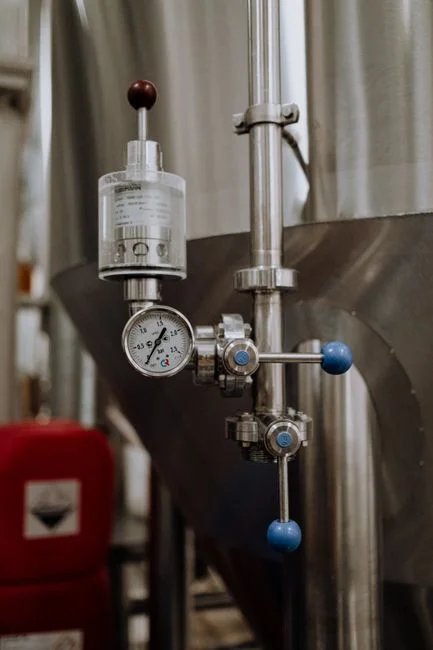
For a 30–250-room property discharging into the Ébrié Lagoon watershed in 2026, the defensible treatment train is a six-step packaged biological system. Each step has a measurable effluent target, and the design should be documented in the ANDE submission as a single integrated envelope rather than as discrete unit purchases.
- Rotary bar screen (3–6 mm aperture) — a rotary mechanical bar screen at the head of the plant removes rags, plastics, and fibrous debris that otherwise foul downstream pumps and MBR modules. Given the lagoon-adjacent catchment and the high proportion of plastic waste documented in Abidjan's waste stream (Wonderlust), 3 mm is the practical lower bound before blinding becomes an operational problem.
- DAF or grease trap for FOG reduction — a DAF system for FOG removal brings oil and grease below 20 mg/L before the biological stage, protecting biomass and preventing grease cap formation in the aeration tank.
- Aerated equalization tank — sized for 8–12 hours of peak flow with coarse-bubble aeration to prevent septicity during the weekday troughs typical of business-oriented hotels.
- A/O biological stage — either a buried WSZ underground integrated sewage treatment plant using A/O contact oxidation, or a skid-mounted MBR membrane bioreactor system for sites with tighter footprints or higher reuse targets.
- Disinfection — a chlorine dioxide disinfection generator targeting residual <200 fecal coliforms per 100 mL for lagoon or canal discharge, with lower targets for irrigation reuse.
- Optional polishing — sand filtration or ultrafiltration polishing if the resort reuses effluent for landscape irrigation, toilet flushing, or pool makeup.
The two biological options in step 4 are not equivalent. The WSZ package is buried, fully automatic, and tolerates a non-specialist operator; the MBR delivers a near-reuse effluent with <30 mg/L BOD/COD and <10 mg/L TN, but requires membrane maintenance and a more skilled operator. Section 4 compares them head-to-head.
MBR vs. WSZ Package Plant: Which Fits Your Abidjan Property?
The procurement decision between an MBR package plant and a WSZ underground A/O plant is the single most consequential choice on the bill of materials. Both are valid for lagoon discharge in 2026; the right pick depends on room count, land area, and whether reuse is part of the developer's plan.
The WSZ package is built for 1–80 m³/h capacities and is buried with landscaping above-grade, so it leaves no visible footprint and needs no dedicated operator. It is the right answer for a 20–80-room lodge or boutique property with adequate land and a manager who is not a wastewater specialist. Effluent quality runs at BOD <60 mg/L, TSS <30 mg/L, with TN in the 20–40 mg/L range — well within the ANDE discharge envelope but not reuse-ready without polishing.
The MBR package covers 10–2,000 m³/day and occupies roughly 60% of the equivalent WSZ footprint because the membranes replace the clarifier and most of the tertiary stage. It is the right answer for 80–250-room city hotels, lagoon-front resorts with constrained land, or any property that wants to reuse effluent for irrigation or toilet flushing. Effluent quality is reuse-grade out of the bioreactor, with BOD and COD both under 30 mg/L and TN under 10 mg/L. A well-sized MBR membrane module backflush cycle is the main maintenance event the operator must schedule.
| Criterion | WSZ underground package | MBR package plant |
|---|---|---|
| Capacity range | 1–80 m³/h | 10–2,000 m³/day |
| Footprint | Buried, landscaping above | ~60% of WSZ equivalent |
| BOD effluent | <60 mg/L | <30 mg/L |
| TSS effluent | <30 mg/L | ≤1 μm nominal (membrane) |
| Total nitrogen | 20–40 mg/L | <10 mg/L |
| CAPEX (installed, ex. civil) | US$300–500 per m³/day | US$700–1,200 per m³/day |
| Operator skill | Non-specialist, automatic | Membrane maintenance required |
| Best fit | 20–80 rooms, adequate land, no reuse | 80–250 rooms, constrained site, reuse intent |
Decision rule: if room count × occupancy × per-guest flow pushes the design past ~70 m³/day, or if the property will reuse more than 20% of its effluent, the MBR's CAPEX premium pays back in water savings and lagoon-discharge margin within 3–5 years (HydropureWater field data, 2026). Below that threshold, the WSZ is the lower-risk choice.
Sizing a Hotel Sewage Plant in Abidjan: Capacity & Peaking Factors
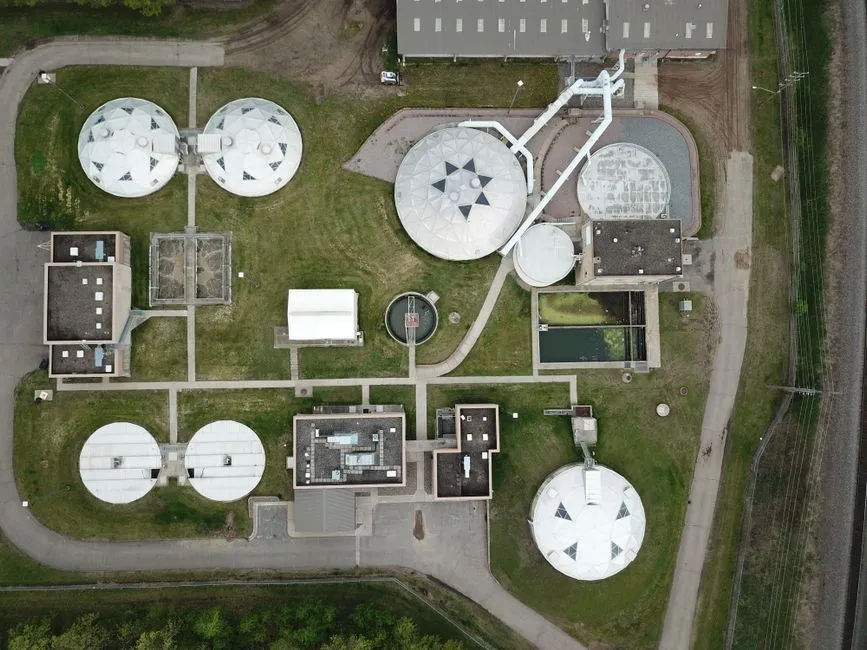
Sizing starts at 250–400 L per guest per day for tropical resort properties, which is the working envelope for properties where guests also generate laundry, pool, and restaurant flow on-site. Multiply by a 2.0–2.5× peaking factor to capture event nights, weekend occupancy spikes, restaurant surges, and pool backwash events that tend to coincide rather than disperse.
Worked example for a 100-room resort at 80% occupancy: 100 × 0.8 × 350 L × 2.2 = 61.6 m³/day design flow. Add 10–15% to that envelope for staff quarters, in-house laundry, and pool backwash, which brings the design flow to roughly 70 m³/day. That figure then maps cleanly onto either a WSZ 70 m³/day unit or an MBR 70 m³/day skid. A 200-room lagoon-front property at 75% occupancy with on-site laundry and a 200-cover restaurant runs closer to 130–150 m³/day, which is firmly in MBR territory once the equalization tank and reuse loop are added.
One Abidjan-specific point that engineers regularly miss: the biological stage should be sized on the peak hourly flow with the equalization tank providing only flow attenuation, not load averaging. If the equalization tank is used to flatten BOD as well, the aeration demand spikes and the biological stage carries a chronic over-design that no one notices until the OPEX review three years in.
Costs, Compliance, and Reuse Economics in 2026
Indicative CAPEX for a 50 m³/day packaged hotel plant in Abidjan runs US$40,000–80,000 for a WSZ envelope and US$60,000–110,000 for an MBR envelope, excluding civil works, building, and ANDE permitting fees. Civil works typically add 30–60% of equipment CAPEX on Abidjan sites, depending on soil and groundwater. OPEX is dominated by power — 0.2–0.4 kWh/m³ for a WSZ and 0.4–0.8 kWh/m³ for an MBR — plus the consumable cost of chlorine dioxide generated on-site by a chlorine dioxide generator.
Reuse is where the lagoon-discharge case turns into a positive business case. In Abidjan's Plateau and Cocody districts — where SODECI main water tariffs have risen consistently through 2024 and 2025 — landscape irrigation and toilet-flushing reuse can offset 20–35% of municipal water costs, with payback periods of 3–5 years for the MBR premium over a WSZ (HydropureWater field data, 2026). The compliance pathway under ANDE is a three-step process: an environmental impact assessment, a discharge authorization, and an annual effluent monitoring report. For lagoon-discharge sites, expect the ANDE review to require explicit nitrogen and phosphorus targets, not just BOD and TSS, since the 2024–2026 lagoon-protection push has shifted the regulator's focus toward eutrophication risk.
For developers and consultants comparing this brief against other tropical city benchmarks, the Hong Kong hotel wastewater treatment guide covers a denser urban context, while the Budapest hotel wastewater engineering guide covers a colder-climate envelope. For MBR-specific operational issues — air-scour imbalance, transmembrane pressure creep, seasonal MLSS loss — the MBR troubleshooting guide is the supporting reference.
Frequently Asked Questions
What wastewater treatment system does a hotel or resort in Abidjan need in 2026?
A packaged biological treatment train — typically a WSZ underground A/O plant for properties under 80 rooms or a skid-mounted MBR for larger or reuse-oriented properties — sized at 250–400 L per guest per day, with rotary bar screening, DAF for FOG removal, aerated equalization, biological treatment, and chlorine dioxide disinfection before discharge into the Ébrié Lagoon.
What are the Ébrié Lagoon discharge limits and can treated effluent be reused?
ANDE discharge limits for lagoon-facing sites typically require BOD <60 mg/L, TSS <30 mg/L, oil and grease <20 mg/L, and fecal coliforms <200 per 100 mL, with stricter targets expected under the Ministry of Environment's 2024–2026 lagoon-protection push. Treated effluent can be reused for landscape irrigation and toilet flushing once the biological stage consistently delivers BOD and TSS under 30 mg/L — which is the operating envelope of an MBR with UF polishing.
Do Abidjan hotels need a dedicated wastewater operator?
A WSZ underground package plant runs fully automatic and is sized for a non-specialist hotel engineering team carrying out weekly visual checks. An MBR plant requires a trained operator or a service contract for membrane backflushing, transmembrane pressure logging, and periodic chemical cleaning — typically 2–4 hours per week for a 50 m³/day unit.
What is the ANDE permit and compliance pathway for an Abidjan hotel?
The standard pathway is an environmental impact assessment, a discharge authorization naming the receiving water body and the effluent quality targets, and an annual effluent monitoring report submitted to ANDE. Lagoon-discharge applications in 2026 are also being cross-referenced with the Ministry of Environment's lagoon-protection checklist, so the EIA should explicitly address nitrogen and phosphorus loads, not just carbonaceous BOD.