Why Residential Wastewater Treatment in Algeria Is a 2026 Priority
Residential wastewater treatment in Algeria must be designed for hyper-arid conditions where per-capita freshwater supply is below 500 m³/year — less than one-third of the 1,700 m³ water-stress threshold — and only 60% of the population is connected to treatment infrastructure. A 2025 Springer review of Algeria's WWTP sector reports national coverage at 60%, a modernization rate of just 30% (versus 70% in Tunisia and 50% in Morocco), and a reuse rate under 15%, while 40% of plants fail national technical standards. The World Meteorological Organization projects that hyper-arid countries like Algeria should expect a 40–50% rise in water demand by 2030, driven by population growth and agricultural/industrial expansion.
The residential implication is direct: with 46+ million people and only 11.3 km³ of renewable freshwater, decentralized residential systems are the fastest lever for adding treatment capacity. The Algiers WWTP itself is planning a 70% increase in industrial-effluent treatment capacity, which is pushing utilities to require housing developers to deliver on-site or cluster treatment rather than rely on overstretched municipal infrastructure. For a developer or EPC contractor, that makes residential wastewater treatment in Algeria a 2026 baseline requirement, not an optional extra.
Residential Wastewater Loads and Discharge Standards in Algeria
Standard North African residential design flow sits between 150 and 200 L/capita/day, with per-capita pollutant loadings of BOD 40–60 g/day, TSS 40–55 g/day, and NH₃-N 6–10 g/day — values to be cross-checked against the local ONA/ADE (Algérienne des Eaux) guidance for the specific wilaya. Executive Decree discharge standards are the binding national limits; the Springer 2025 review reports that roughly 40% of Algerian WWTPs currently miss those limits, most often on BOD, TSS, total nitrogen, and fecal coliforms. For housing projects near farmland, the Blida 2020 Ministry of Water Resources study sets the reuse bar: irrigating with reused water produced a +20% agricultural yield and a −30% water-supply cost versus potable irrigation.
Urban housing typically designs at 200 L/capita/day with mixed sewerage, while rural clusters often sit at 80–120 L/capita/day with high infiltration — a range that directly affects preliminary and primary design, especially grit chamber and primary settler sizing.
| Parameter | Per-capita design value | Executive Decree limit (typical) | Reuse target (irrigation) |
|---|---|---|---|
| Flow | 150–200 L/c/d (urban); 80–120 L/c/d (rural) | — | Project-specific |
| BOD | 40–60 g/c/d | ≤30 mg/L (typical national) | ≤10 mg/L |
| TSS | 40–55 g/c/d | ≤30 mg/L (typical national) | ≤10 mg/L |
| NH₃-N | 6–10 g/c/d | ≤10 mg/L | ≤5 mg/L |
| Fecal coliforms | — | Site-specific (national) | ≤200 CFU/100 mL (irrigation) |
Three-Stage Process Train Used in Algerian Residential Plants
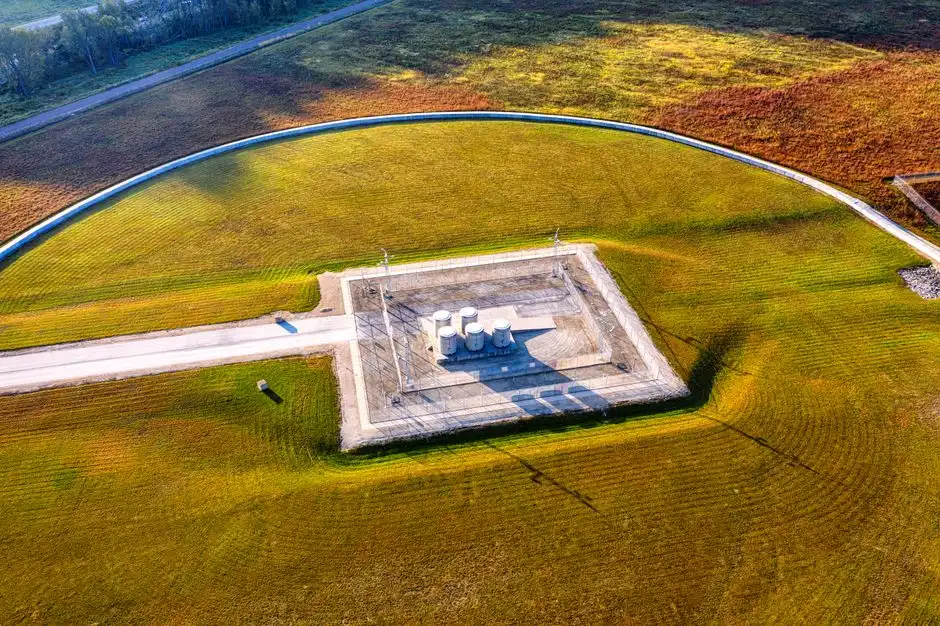
The residential train used across Algeria runs primary → secondary → tertiary, with sludge handling at the end. Primary treatment combines rotary bar screening, grit removal, and primary settling; the Springer 2025 review reports that primary treatment alone cuts suspended solids by nearly 50% in some northern Algerian plants, which sets a useful floor for the rest of the train. The secondary stage is where technology choice happens: an A/O biological contact oxidation package train, conventional activated sludge, or a fixed-film rotating biological contactor (RBC). For projects chasing near-reuse effluent, an MBR membrane bioreactor produces <1 μm filtrate, and Algeria already operates a 100,000 m³/day MBR plant and a 200,000 m³/day activated-sludge plant with tertiary sand filtration.
Tertiary treatment typically pairs sand filtration or MBR membranes with a chlorine dioxide disinfection generator for fecal-coliform control, since ClO₂ is more stable than chlorine at the higher ambient temperatures seen across northern Algerian sites. Springer data puts Algeria's overall BOD removal at 85% versus 97% at Tunisia's Choutrana plant — the gap is exactly what a properly sized tertiary stage closes. Sludge handling finishes the train: a plate-and-frame sludge filter press in the 1–500 m² plate-area range is the dewatering workhorse for small residential plants, because poor sludge management is one of the documented causes of plant non-compliance.
| Stage | Typical equipment | Design target / key parameter | Algerian context |
|---|---|---|---|
| Primary | Rotary bar screen, grit chamber, primary settler | ~50% TSS removal | Springer 2025: confirmed on northern plants |
| Secondary | A/O contact oxidation, activated sludge, MBR, or RBC | BOD ≤30 mg/L (discharge); ≤10 mg/L (reuse) | 100,000 m³/day MBR plant operating; 200,000 m³/day AS+filtration |
| Tertiary | Sand filter or MBR; ClO₂ disinfection | Fecal coliforms to reuse target | ClO₂ preferred for warm climate stability |
| Sludge | Plate-and-frame filter press | ~0.3 kg DS per kg BOD removed | Essential for compliance on small sites |
For buried residential applications, a buried A/O package sewage treatment plant handles the primary-plus-secondary block; an MBR membrane bioreactor system covers the high-end secondary/tertiary block; a chlorine dioxide disinfection generator finishes the train; sludge is dewatered with a plate-and-frame sludge filter press; and screening upstream is handled by a rotary mechanical bar screen.
Package Plant vs MBR vs Fixed-Film: Which Fits a 2026 Algerian Housing Project?
The three realistic options for a residential project in 2026 are a buried A/O package plant, an MBR membrane bioreactor, and a fixed-film rotating biological contactor. A buried A/O package sewage treatment plant in the 1–80 m³/h range delivers the lowest CAPEX, runs without a dedicated operator, and fits under landscaping — the right answer for 50–500-home clusters and hotels where discharge (not reuse) is the goal. An MBR membrane bioreactor system in the 10–2,000 m³/day range gives a 60% smaller footprint and near-reuse effluent, with flat-sheet modules (see the DF-series MBR module) that simplify cassette replacement; this option is justified when irrigation reuse is a project requirement, since the Blida 2020 Ministry study tied reuse to a 20% yield uplift. Fixed-film RBC technology — the class used at Ain El Beida for a 600 m³/day decentralized plant — is robust under variable loading, low-energy, and operator-friendly, and is the proven decentralized choice for remote or rural sites up to roughly 20,000 people.
| Criterion | Buried A/O package | MBR | Fixed-film RBC |
|---|---|---|---|
| Flow range | 1–80 m³/h | 10–2,000 m³/day | Up to ~20,000 people |
| Effluent quality | Discharge-grade | Reuse-grade (<1 μm) | Discharge-grade (reusable with tertiary) |
| Footprint | Smallest (buried) | ~60% smaller than CAS | Moderate |
| CAPEX vs OPEX | Lowest CAPEX; OPEX modest | ~1.5–2× package CAPEX; lower reuse cost | Low CAPEX; lowest energy |
| Best fit | CAPEX-sensitive, low-skill O&M | Reuse-mandatory, footprint-constrained | Remote, variable load, low energy |
Sizing a Residential Plant: A Worked Example for a 500-Home Estate
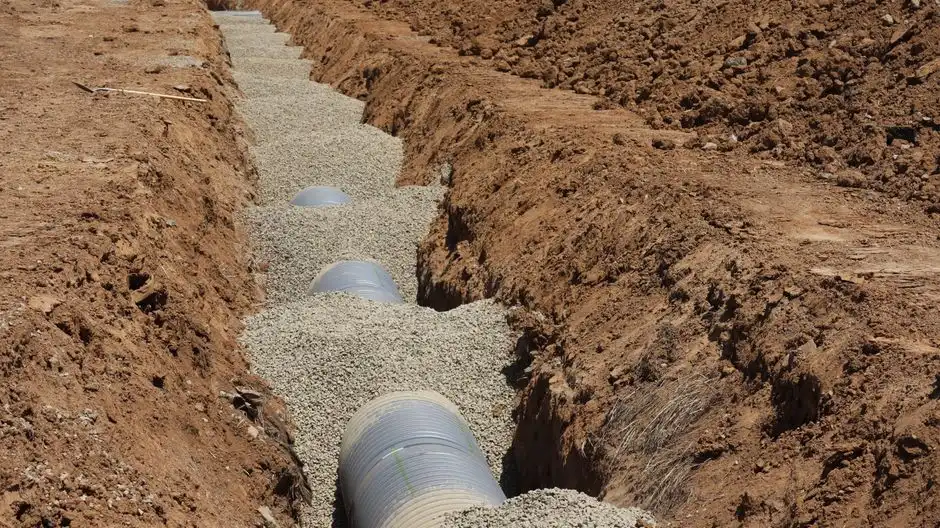
A practical residential sizing starts with people, not flow. For a 500-home estate at five residents per home, the population is 2,500; at 180 L/capita/day the design flow is 450 m³/day (≈19 m³/h), and a peaking factor of 2.5 pushes hydraulic capacity to about 47.5 m³/h. Daily BOD load is 2,500 × 50 g = 125 kg/day, and the secondary stage must hit ≤30 mg/L for discharge or ≤10 mg/L if the client wants agricultural reuse. A buried A/O package sewage treatment plant sized in the lower flow range covers primary-plus-secondary; for reuse, a polishing MBR or sand filter plus a chlorine dioxide generator finishes the train. Sludge production is roughly 0.3 kg dry solids per kg BOD removed, so about 35 kg DS/day — easily handled by a small plate-and-frame sludge filter press.
Costs, Reuse Economics, and Compliance in 2026
Indicative CAPEX bands sit in the low-tens-of-thousands of USD per m³/day for small package plants, with MBR roughly 1.5–2× the package-plant CAPEX but with a reuse offset that the Blida 2020 Ministry study quantified: +20% agricultural yield and −30% water-supply cost versus potable irrigation. Translated to a typical Algerian housing project, that reuse offset supports a payback in the 8–12-year range when treated effluent is sold or used in place of freshwater for landscape and crop irrigation. Compliance is the binding risk: 40% of Algerian WWTPs miss technical standards because of poor O&M, so any residential spec should include an automatic chemical dosing system for disinfection and coagulation, AI-assisted process control (Springer 2025 cites a 15–20% efficiency gain from AI at the Algiers plant), and trained operators. For MBR-based designs, low-maintenance flat-sheet modules (the DF-series MBR module) reduce cassette-change frequency. For broader context, the Residential Wastewater Treatment in Morocco 2026: Engineering Guide and the Residential Wastewater Treatment in Egypt 2026: Engineering Guide, Costs & Compliance apply the same playbook to neighboring markets, while the MBR Common Problems and Solutions: 2026 Engineering Troubleshooting Guide and the Municipal Sewage Wastewater Treatment Solution: 2026 Engineering Guide cover the operational side.
| Option | CAPEX (USD per m³/day) | OPEX drivers | Reuse value (Blida 2020) | Compliance risk |
|---|---|---|---|---|
| Buried A/O package | Low (tens of thousands) | Sludge haulage, intermittent ClO₂ | Limited (discharge-grade) | Low if sized correctly |
| MBR | 1.5–2× package | Membrane replacement, aeration energy | +20% yield, −30% water cost | Lowest effluent risk |
| Fixed-film RBC | Low to moderate | Lowest energy, periodic media inspection | Reuse with tertiary add-on | Robust under variable load |
Frequently Asked Questions
What per-capita flow should an Algerian residential WWTP be sized to?
Design to 150–200 L/capita/day for urban housing and 80–120 L/capita/day for rural clusters, then apply a peaking factor of 2.0–2.5 (ONA/ADE design practice).
Which Executive Decree limits apply to residential discharge in Algeria?
National Executive Decree discharge standards set the binding limits for BOD, COD, TSS, total nitrogen, and fecal coliforms; Springer 2025 reports that ~40% of Algerian WWTPs currently miss these technical standards.
Is a buried package plant or an MBR better for a 2026 housing estate?
Choose a buried A/O package plant (1–80 m³/h) for CAPEX-sensitive, low-O&M projects; choose an MBR (10–2,000 m³/day) when reuse-grade effluent and small footprint are mandatory (Blida 2020: +20% yield, −30% water cost).
How much treated effluent does Algeria currently reuse?
Less than 15% nationally, versus ~60% in Tunisia and ~92% reuse coverage (Springer 2025); the Algiers plant alone is targeting a 70% increase in industrial-effluent treatment capacity.
What is the most common reason Algerian WWTPs fail compliance?
Poor O&M and inadequate sludge handling drive the 40% non-compliance rate (Springer 2025); AI-assisted process control at the Algiers plant improved efficiency by 15–20%, showing where the headroom sits.