
The Sebring Pretreatment Stack: Federal, State, and Local Limits
Chemical plants near Sebring, Florida meet sewer pretreatment limits by satisfying a three-layer regulatory stack: 40 CFR Part 403 general and specific prohibitions, the applicable categorical subpart (most commonly 40 CFR Part 414 for organic chemicals or Part 415 for inorganic chemicals), and Highlands County / City of Sebring POTW local limits developed under 40 CFR 403.5(c) and FDEP Chapter 62-625. The strictest applicable number in the stack controls the design — and the local limit is almost always the binding constraint for a Sebring-area chemical plant (per hydropurewater, 2026).
Layer 1 is the qualitative floor. 40 CFR 403.5(a) prohibits any discharge that causes pass-through (40 CFR 403.3(p)) or interference (40 CFR 403.3(k)); 40 CFR 403.5(b) bans specific pollutants — ignitable, corrosive, and certain toxic gases — regardless of numeric concentration. These prohibitions apply to every nondomestic Industrial User (IU) whether or not a permit has issued (per EPA, 2026).
Layer 2 is the federal categorical standard. EPA sets numeric effluent limits for industry subcategories in 40 CFR Parts 405–471. A Sebring chemical plant almost always triggers 40 CFR Part 414 (organic chemicals, plastics, and synthetic fibers) or Part 415 (inorganic chemicals), with Part 419 adjacent for facilities that also handle petroleum (per hydropurewater, 2026).
Layer 3 is the local limit, developed by the Sebring-area POTW's Control Authority under 40 CFR 403.5(c) using EPA's maximum-allowable-headworks-loading methodology. Local limits are site-specific and typically tighter than the federal floor when the receiving POTW's hydraulic or biological capacity is constrained (per EPA, 2026).
Florida adds its own overlay. FDEP Chapter 62-625 (Industrial Wastewater Facilities) implements the NPDES pretreatment program in Florida and requires state pretreatment program approval for POTWs. A Sebring-area plant must verify both the federal and state citations are satisfied, because FDEP can enforce independently of the local Control Authority. The end-of-pipe application point — the connection to the POTW's collection system, not the chemical plant's process discharge — is what drives equalization and neutralization sizing for the train.
Significant Industrial User (SIU) Status and the Compliance Documentation Set
An Industrial User is any nondomestic discharger to a POTW; a Significant Industrial User is the subset held to a heavier monitoring and reporting bar. 40 CFR 403.3(v) sets three independent triggers: (1) subject to categorical pretreatment standards; (2) discharges ≥25,000 gpd of process wastewater; (3) process waste stream ≥5% of the POTW's average dry-weather hydraulic or organic capacity (per EPA, 2026).
Chemical plants near Sebring almost always trip trigger (1) through 40 CFR Part 414 or Part 415, which automatically pulls them into the SIU compliance regime. The moment categorical applicability is established, the documentation load is fixed regardless of plant size.
SIU compliance documentation includes a Baseline Monitoring Report (BMR) at the point of categorical standard promulgation or new-discharge startup; 90-day compliance reports on a defined schedule; a written control mechanism (the wastewater discharge permit) issued by the Sebring-area POTW; and routine POTW inspections and sampling under 40 CFR 403.12. The BMR establishes the baseline pollutant envelope the rest of the program measures against (per hydropurewater, 2026).
For batch operators, a slug load control plan is also typically required under 40 CFR 403.8(f). The plan combines equalization capacity, flow and pH monitoring, and written operating procedures for batch releases — the same unit operations that handle pH and flow swings in the physical train do double duty as the documented slug-load controls.
Non-SIU industrial users are not off the hook. They remain bound by the 40 CFR 403.5(a) and (b) prohibitions and must still hold a control mechanism from the POTW, but they generally avoid the 90-day compliance reporting cadence and the BMR trigger.
The Six-Unit-Operation Train a Sebring Chemical Plant Typically Builds
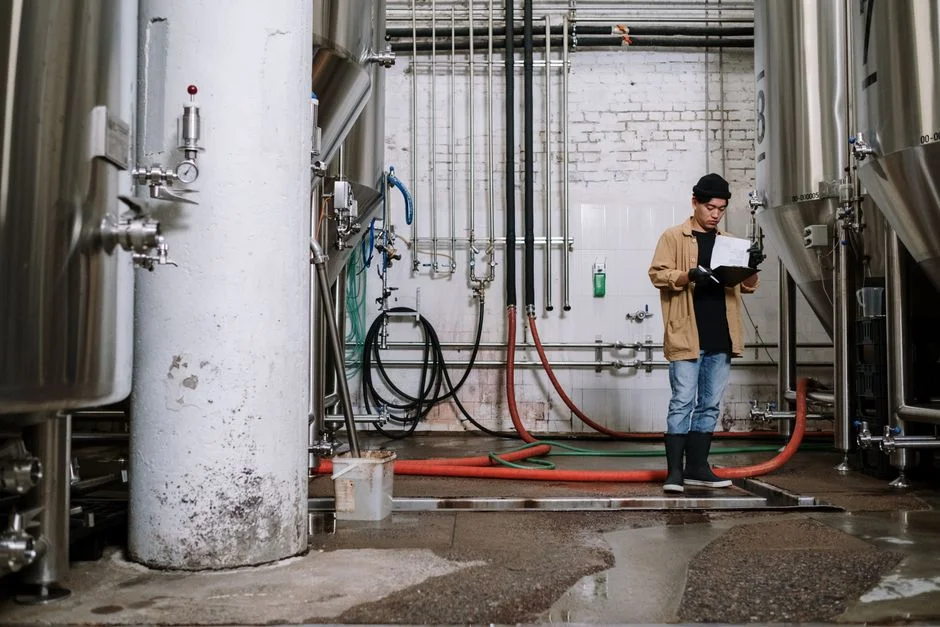
Six unit operations, deployed in roughly the same order, handle the vast majority of chemical plant wastewater streams sent to a Sebring-area POTW. Not every plant needs all six; the controlling pollutant determines the subset.
Unit 1 — Equalization basin. Dampens batch pH, flow, and concentration swings before downstream operations see them. Continuous operations typically run 4–8 hours of retention; batch operators with shared collection systems need hours to days. The capital cost of an over-sized basin is small compared with a single pass-through excursion (per hydropurewater, 2026).
Unit 2 — pH neutralization with PLC-controlled dosing. Brings pH into the 6–9 local-limit window using acid or caustic injection tied to in-line pH probes. A PLC-controlled pH and coagulant dosing skid is the standard hardware package for this stage.
Unit 3 — Dissolved Air Flotation (DAF). Removes free and emulsified oils, FOG, and suspended solids. Standard DAFs handle 4–300 m³/h using micro-bubble technology with automatic skimming; a DAF for chemical plant pretreatment is the typical 2026 specification.
Unit 4 — Chemical precipitation + lamella clarifier. Targets dissolved metals (Cd, Cr, Cu, Ni, Pb, Zn) using hydroxide or sulfide precipitation followed by a high-rate sedimentation stage. Lamella clarifiers achieve 20–40 m/h surface loading and cut coagulant consumption by up to 30% versus conventional clarifiers; a lamella clarifier for dissolved metals precipitation is the standard hardware selection.
Unit 5 — Biological polishing. Activated sludge (conventional) is the discharge-only default. An integrated MBR system for biological polishing (PVDF submerged membrane, <1 μm pore) is the right choice when reuse-quality effluent is the goal and gives roughly 60% smaller footprint than conventional activated sludge.
Unit 6 — Multimedia / carbon filtration. Polishing step tied to local limits on residual organics or to reuse-quality targets.
The slug load control plan under 40 CFR 403.8(f) is documented for SIU batch operators using the same equalization, flow/pH monitoring, and written batch-release procedures that already exist in the physical train. Decision logic is straightforward: oils and TSS push to DAF; dissolved metals push to precipitation plus lamella; high COD/BOD pushes to biological; pH swings push to equalization plus PLC dosing. Most Sebring plants hit two or three of these simultaneously, which is why the full train is the common case (per hydropurewater, 2026).
| Unit Operation | Influent Problem Solved | Parameter Controlled | Regulatory Driver |
|---|---|---|---|
| Equalization basin | Batch swings in pH, flow, temperature, concentration | Hydraulic and concentration variability | 40 CFR 403.5(a) pass-through/interference; 40 CFR 403.8(f) slug load control |
| pH neutralization (PLC) | Strong acid or caustic batches | pH (typically 6–9 local limit) | 40 CFR 403.5(b) specific prohibitions; local limit |
| Dissolved Air Flotation (DAF) | Free/emulsified oils, FOG, TSS | Oil & grease, TSS | 40 CFR 403.5(a) pass-through; categorical standard; local limit |
| Chemical precipitation + lamella | Dissolved metals (Cd, Cr, Cu, Ni, Pb, Zn) | Total metals | Categorical standard (e.g., 40 CFR Part 433 for metal finishing); local limit |
| Biological polishing (activated sludge / MBR) | High COD/BOD | BOD, COD | Categorical standard; local limit on BOD/COD to POTW |
| Multimedia / carbon filtration | Residual organics, color | COD, TOC, color | Local limit; reuse-quality targets if applicable |
Sizing the Train for Sebring-Specific Influent Characteristics
Florida's subtropical rainfall pattern drives significant inflow and infiltration (I&I) into the receiving POTW's collection system, which tightens local limits on BOD, COD, and TSS at the IU's end-of-pipe connection. A Sebring chemical plant should design for a tighter local envelope than the federal categorical floor, because the receiving POTW's hydraulic capacity shrinks whenever I&I spikes after a summer storm.
The high water table in the Sebring / Highlands County area pushes engineers toward above-grade equalization tanks or sealed buried designs with double-wall construction. Standard below-grade concrete equalization is a permitting headache when the seasonal water table sits within a meter of grade.
The influent envelope to design around for a typical Sebring-area chemical plant: batch pH 2–12, COD 500–5,000 mg/L, TSS 200–1,500 mg/L, oil & grease up to several hundred mg/L, dissolved metals (Cu, Ni, Zn, Cr) at single-to-low double-digit mg/L. The 25,000 gpd figure is the SIU trigger; design the equalization and biological stages for at least 1.5× the average daily flow to absorb peak batch discharges (per hydropurewater, 2026).
MBR flux of 10–20 LMH is the typical 2026 design envelope for chemical plant mixed liquor; 80–225 m² flat-sheet modules produce 32–135 m³/day per cassette. If the plant is targeting reuse, the MBR-plus-RO path replaces discharge-only activated sludge; RO recovery up to 95% is achievable on MBR permeate. Sizing references for the MBR stage are available in the MBR membrane module specification and the RO skid specification.
Discharge-only plants can stop at activated sludge plus multimedia polish; reuse-ready plants add RO downstream of the MBR and typically target 30–50% freshwater offset over a 5–7 year payback horizon.
Discharge-Only vs Reuse-Ready: Choosing the Right Train for a Sebring Plant

For a Sebring chemical plant, the procurement decision between a discharge-only train and an MBR+RO reuse train turns on four axes: water reuse intent, flow pattern, OPEX exposure to sewer fees, and CAPEX appetite. The MBR+RO path is the right call when the plant is moving toward reuse; the activated sludge path is the right call when sewer discharge is the terminal step.
The discharge-only train — equalization → neutralization → DAF → precipitation/lamella → activated sludge → multimedia polish — has lower CAPEX but higher ongoing sewer discharge fees and freshwater purchase costs. The reuse-ready train replaces activated sludge with an MBR and adds RO polishing, raises CAPEX, but cuts the footprint by roughly 60% and produces near-reuse-quality effluent suitable for cooling tower make-up, boiler feed pretreatment, or non-contact process rinse. Frame it as a 5–7 year payback decision — typical for MBR+RO retrofits at SIU chemical plants targeting 30–50% freshwater offset (per MBR cost, compliance, and ROI guide for US plants).
OPEX levers that cut compliance risk: PLC-controlled chemical dosing and skid-mounted pre-wired systems reduce installation labor and operator error, both of which drive 40 CFR 403.5(a) exposure. The wastewater power consumption optimization playbook walks through where the kilowatt-hours go in a typical MBR+RO skid and where the biggest savings are available. A comparable treatment-train walkthrough for a different subcategory is in the petroleum plant pretreatment near Wilmerding guide.
| Decision Axis | Discharge-Only (Activated Sludge) | Reuse-Ready (MBR + RO) |
|---|---|---|
| CAPEX | Lower (no membranes, no RO) | Higher (MBR cassettes, RO skids, high-pressure piping) |
| Footprint | Larger (conventional aeration basin + clarifier) | ~60% smaller (submerged MBR replaces clarifier) |
| Effluent quality | BOD/TSS compliant for sewer discharge | Reuse-quality (suitable for cooling tower make-up, boiler feed pretreatment) |
| OPEX exposure | Higher sewer fees + freshwater purchase | Lower sewer fees, 30–50% freshwater offset, membrane CIP costs |
| Typical payback | n/a (baseline) | 5–7 years for plants targeting reuse |
| Best fit | Continuous flow, sewer discharge, no reuse plans | Batch or continuous, reuse intent, freshwater cost pressure |
Frequently Asked Questions
What is the difference between a categorical pretreatment standard and a local limit?
Categorical pretreatment standards are federal numeric limits EPA issues for specific industry categories in 40 CFR Parts 405–471. Local limits are site-specific numeric limits the POTW's Control Authority sets and publishes in its approved pretreatment program, and they may be more stringent than the federal categorical standard when the receiving plant's hydraulic or biological capacity is constrained (per EPA, 2026).
How does a chemical plant know if it is a Significant Industrial User (SIU)?
An SIU is defined at 40 CFR 403.3(v) and trips any one of three independent triggers: (1) subject to categorical pretreatment standards; (2) discharges ≥25,000 gpd of process wastewater; or (3) process waste stream ≥5% of the POTW's average dry-weather hydraulic or organic capacity. Chemical plants almost always trigger (1) through 40 CFR Part 414 or Part 415.
What is a slug load control plan and when is it required?
A slug load is any non-routine pollutant release or hydraulic surge that can cause pass-through or interference at the POTW. SIUs are typically required to develop and implement a slug load control plan under 40 CFR 403.8(f), which combines equalization capacity, flow and pH monitoring, and written operating procedures for batch releases.
How does FDEP Chapter 62-625 change pretreatment compliance in Florida?
FDEP Chapter 62-625 (Industrial Wastewater Facilities) implements the NPDES pretreatment program in Florida and requires state pretreatment program approval for POTWs. A Sebring-area chemical plant must verify both federal citations (40 CFR Part 403, applicable subpart) and the FDEP state overlay are satisfied, because FDEP can enforce independently of the local Control Authority.
What design flux should be used for an MBR at a chemical plant?
10–20 LMH is the typical 2026 design envelope for chemical plant mixed liquor; 80–225 m² flat-sheet modules produce 32–135 m³/day per cassette. Design the MBR stage for at least 1.5× the average daily flow to absorb peak batch discharges.