Why Belo Horizonte Hotels Need a Dedicated Treatment Train in 2026
A 200-room full-service hotel in Savassi operating at 70% occupancy generates roughly 42 m³/day of base wastewater with peaks around 50 m³/day, and that single project must satisfy three overlapping regulators: CONAMA Resolution 430/2011 for effluent quality, CONAMA 357/2005 for the receiving water body, and Copasa's municipal trade-waste discharge contract when the hotel connects to the public sewer. Engineering the system to the strictest of the three is the only defensible 2026 approach, because Copasa applies a surcharge on BOD above 150 mg/L in the discharge contract and FEAM licensing in Minas Gerais will not approve a plant that cannot meet the sensitive-receiving-water column of CONAMA 430.
The 2026 water context reinforces the case. Belo Horizonte sits in a tropical savanna (Aw) climate and draws from the Cantareira and São Francisco inter-basin transfer system, both of which entered the 2025/2026 dry season with storage 18–22% below the 10-year mean (per ANA bulletin, 2025-11). A packaged plant that can produce reuse-quality permeate directly reduces the hotel's exposure to municipal water rationing, which is no longer a hypothetical risk. A closer look at how comparable hospitality projects approach the same regulatory and climate trade-offs is documented in the Algiers hotel selection guide, which uses an identical compliance-first framework for a similar 200-room full-service property.
Typical 2026 design loading for a Belo Horizonte full-service hotel runs 0.20–0.30 m³ per guest-night, which translates to 150–200 L per bed-day, with peak hourly flows reaching 2–3× the daily average during breakfast and check-out windows. Restaurant, laundry, and pool backwash streams dominate the organic and FOG load, and a packaged plant that ignores those sources will fail the oil-and-grease limit on the first busy weekend.
Brazilian Effluent Standards Hotels Must Hit in 2026
CONAMA Resolution 430/2011 sets the federal effluent envelope; CONAMA 357/2005 sets the receiving-water envelope; and Copasa's trade-waste contract layers on a surcharge and additional NH₃/total-phosphorus tightening for any discharge entering the Arrudas or Onça basins that drain Belo Horizonte. The table below consolidates the numerical limits an engineer must paste into a 2026 design basis memo.
| Parameter | CONAMA 430/2011 standard limit | CONAMA 430/2011 sensitive-water limit | Copasa surcharge trigger (Arrudas/Onça basins) |
|---|---|---|---|
| pH | 5–9 | 5–9 | Outside 6–8.5 |
| BOD₅ | ≤120 mg/L | ≤60 mg/L | >150 mg/L |
| COD | ≤200 mg/L | ≤120 mg/L | >300 mg/L |
| TSS | ≤150 mg/L | ≤100 mg/L | >200 mg/L |
| Oils & greases | ≤50 mg/L | ≤30 mg/L | >50 mg/L |
| Total ammonia (NH₃) | ≤20 mg/L | ≤10 mg/L | >15 mg/L |
| Total phosphorus | 1–5 mg/L (per receiving body) | ≤1 mg/L | >3 mg/L |
Three 2026-specific notes belong in any compliance submission. First, the federal review of CONAMA 430 thresholds is under stakeholder consultation as of 2025-12, so designs should target the sensitive-water column to remain defensible if the standard tightens. Second, reuse for landscape irrigation in Minas Gerais is governed by the WHO 2006 Guidelines for Safe Use of Wastewater, which require fecal coliforms <1,000 CFU/100 mL and BOD <10 mg/L after disinfection — both of which are reachable only with an MBR plus a final ClO₂ polishing step. Third, the OPEX impact of those design choices is material; a worked 2026 OPEX breakdown for municipal-scale plants shows that disinfection and sludge handling typically represent 22–28% of the annualized cost of a packaged biological plant, so compliance decisions made at design stage flow directly into operating budget.
How to Characterize Hotel Wastewater: BOD, FOG and Laundry Loads
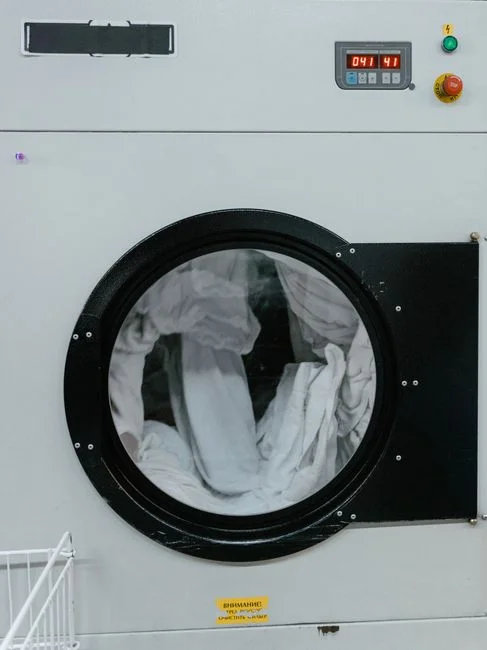
Generic municipal influent data underestimates the FOG and surfactant load from hotel kitchens and on-site laundries, and the biological stage will underperform if the basis of design uses 200 mg/L BOD across the board. The table below segments influent quality by source so the engineer can build a flow-weighted composite that reflects the actual hotel operation.
| Source | Flow share (full-service hotel) | BOD (mg/L) | COD (mg/L) | TSS (mg/L) | FOG (mg/L) | Notes |
|---|---|---|---|---|---|---|
| Guest-room bathrooms | 55–65% | 200–300 | 400–500 | 200 | 20–40 | Stable diurnal pattern; surfactant from amenity products |
| Restaurant / kitchen | 15–20% | 800–1,500 | 1,500–2,500 | 300–500 | 200–500 | Must be pretreated; FOG spikes on weekends |
| Laundry (on-site) | 10–15% | 400–700 | 800–1,200 | 150–250 | 50–100 | High pH (9–11), high surfactant, hot (40–60 °C) |
| Pool backwash | 5–10% | 20–40 | 50–100 | 300–800 | <10 | Low BOD, high TSS, intermittent discharge |
Flow-weighted into a typical 2026 Belo Horizonte design composite, the plant sees combined influent of BOD 250–400 mg/L, COD 500–700 mg/L, TSS 200–300 mg/L, and FOG 80–150 mg/L, with a year-round temperature band of 25–32 °C. FOG must come down before the biological stage: a DAF for FOG and restaurant load sized to remove ≥90% of oil and grease protects the downstream biomass and, where membranes are used, prevents irreversible fouling. A rotary mechanical bar screen upstream of the DAF removes fibrous solids from laundry lint and kitchen prep waste that would otherwise blind the DAF. Two local pretreatment realities must also be engineered in: the harder Minas Gerais water (CaCO₃ ~50–80 mg/L per Copasa 2025 quality report) requires pH adjustment on the laundry line before it enters the biological stage, and Copasa's pretreatment standard requires grit removal on the combined influent to protect the buried pump chambers.
Three 2026 Technology Trains Compared: MBR vs WSZ-A/O vs Anaerobic MBBR
Three packaged trains are credible for a 2026 Belo Horizonte hotel: an MBR with submerged PVDF flat-sheet or hollow-fiber modules; a buried WSZ-A/O packaged plant; and an anaerobic MBBR followed by a polishing stage, the last being most common at resort scale where on-site irrigation is planned. The matrix below is the decision artifact an engineer should bring to a client meeting or a Copasa pre-design review.
| Axis | MBR (submerged PVDF) | WSZ-A/O (buried) | Anaerobic MBBR + polishing |
|---|---|---|---|
| Effluent BOD / COD | <10 / <30 mg/L | 20–30 / 60–90 mg/L | 20–40 / 60–100 mg/L |
| Effluent TSS | <1 mg/L (physical barrier) | 10–20 mg/L (settled) | 15–25 mg/L (polished) |
| Footprint (relative to CAS) | ~40% of CAS | ~55% of CAS (buried) | ~60% of CAS |
| CAPEX (per m³/day, 2026 BR) | USD 1,400–2,200 | USD 800–1,400 | USD 1,000–1,600 |
| OPEX drivers | Aeration + membrane replacement every 5–7 yr | Low energy; sludge hauling | Lowest energy; polishing-stage chemicals |
| Reuse readiness | Direct to irrigation after ClO₂ | Tertiary filtration + disinfection required | Polishing + disinfection required |
| Climate fit (25–32 °C MG) | Strong; stable flux at <25 LMH | Strong; conventional A/O kinetics | Strongest; >25 °C ideal for anaerobic biofilm |
| FOG/spike handling | Sensitive; DAF pretreatment mandatory | Tolerant; equalization built in | Tolerant; biofilm sheds FOG |
| Automation / operator needs | PLC + daily membrane integrity check | PLC + weekly inspection; no on-site operator | PLC + quarterly biofilm carrier check |
| Visual / landscape impact | Above-grade skid or equipment room | Fully buried, landscaping on top | Partially buried, tank visible |
MBR's edge is the near-reuse effluent and a 60% smaller footprint than conventional activated sludge, at roughly 1.5–2× the CAPEX of WSZ; an integrated MBR membrane bioreactor system with DF-series flat-sheet modules is the typical 2026 selection for a 4- or 5-star hotel that needs to defend reuse water quality. WSZ's edge is 30–40% lower CAPEX, full burial below a parking lot or landscape, and a 1–80 m³/h capacity range that suits the 50–120 m³/day band most Belo Horizonte hotels fall into; a buried WSZ-A/O packaged plant is the right pick when the project is cost-driven and reuse is not in scope. Anaerobic MBBR's edge is the lowest energy and sludge yield, which matters for a resort on a long, thin site where operating labor is expensive, but it still needs a polishing stage to meet the sensitive-water CONAMA 430 column or any reuse target.
Sizing a 2026 Belo Horizonte Hotel System: A Worked Example
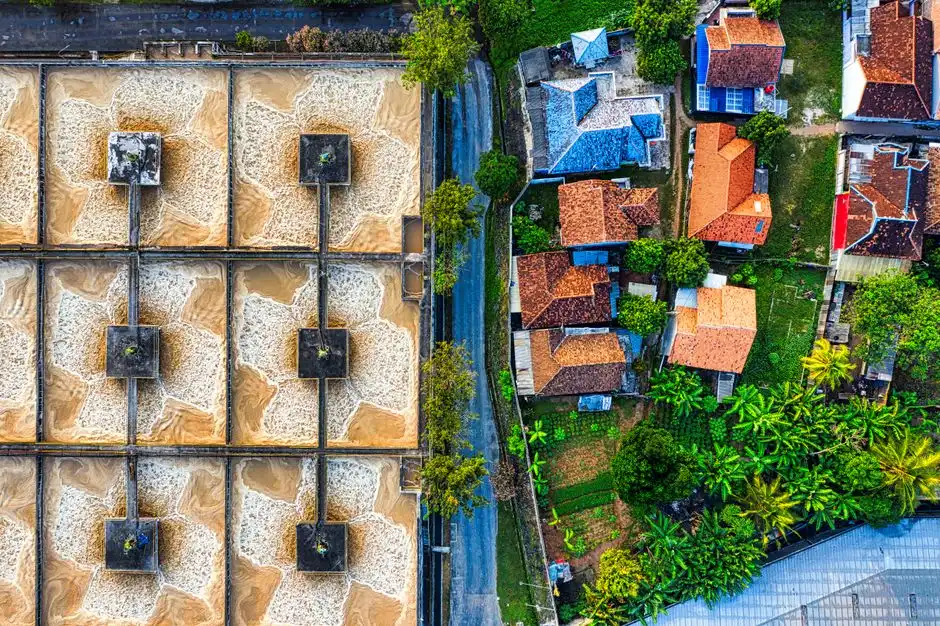
The 200-room, 70% occupancy Savassi scenario from the opening section sizes as follows. Design average daily flow = 200 rooms × 1.6 guests/room × 0.25 m³/guest-night = 80 m³/day. Applying the 1.4 peak factor that Copasa's 2025 trade-waste guideline uses for hotel occupancies above 65% gives a peak daily flow of 112 m³/day, or 4.7 m³/h average hourly with peaks around 14 m³/h during the breakfast and check-out windows. A 5-star hotel that cannot tolerate downtime should be sized with a 2-train (duty/standby) configuration, so each train is sized for ~56 m³/day peak.
For the MBR option, each train runs at HRT 8–10 h, MLSS 8,000–10,000 mg/L, and membrane flux 15–20 L/m²·h, which gives a membrane area of roughly 120–140 m² per train when sized against the 14 m³/h peak; a 2-train integrated MBR membrane bioreactor system is the natural fit. For the WSZ option, a single buried skid rated 1–80 m³/h handles the full flow with anoxic and aerobic zones, integrated sedimentation, and a chlorine contact chamber, and the entire unit sits below the parking lot with landscaping on top. The sizing math confirms why a 2026 design cannot stop at the standard CONAMA 430 column: Copasa's surcharge triggers at BOD >150 mg/L, which is 30 mg/L above the standard CONAMA 430 limit, so the only way to avoid the surcharge is to design for the sensitive-water column (BOD ≤60 mg/L) — exactly the operating envelope an MBR delivers by default and a WSZ reaches only with a tertiary polishing step.
Reuse, Sludge and Compliance Documentation for 2026 Operations
Reuse economics drive the MBR selection in most 4- and 5-star Belo Horizonte hotels. MBR permeate dosed with ClO₂ for landscape irrigation during the May–September dry season offsets 20–35% of municipal water use in a 200-room resort, paying back the MBR CAPEX premium in 4–6 years at 2026 Copasa tariff rates of roughly BRL 12–15/m³. Disinfection is the linchpin: an on-site ClO₂ generator is preferred over chlorine gas in dense Savassi and Lourdes neighborhoods where gas storage is restricted under municipal fire codes, and ClO₂ also controls Legionella in hotel hot-water loops, a documented risk in Brazilian hospitality retrofits (per ANVISA 2025 hospitality guidance).
Sludge handling follows standard Brazilian municipal practice: waste activated sludge is dewatered to ~22–25% dry solids on a plate-and-frame filter press and hauled to a licensed Minas Gerais solids facility. The 2026 Copasa/FEAM submission set is well defined: a treatment-flow diagram, mass balance against the CONAMA 430 limits, sludge management plan, operator training records, and a 12-month commissioning report demonstrating compliance at the 95th-percentile loading condition. FEAM licensing adds a quarterly self-monitoring report on BOD, COD, TSS, FOG, and NH₃ for the first two years of operation, which is one of the reasons automation and data logging are non-negotiable in the 2026 packaged-plant specification.
Frequently Asked Questions
What is the typical flow per hotel room in Belo Horizonte?
0.20–0.30 m³ per guest-night for full-service properties, which translates to 150–200 L per bed-day, with hourly peaks of 2–3× the daily average during breakfast and check-out windows.
Does a Belo Horizonte hotel need CONAMA 430 or just Copasa trade-waste rules?
Both. The Copasa sewer-discharge contract overlays CONAMA 430 with a surcharge schedule and basin-specific NH₃ and total-phosphorus tightening; any direct discharge to a water body must additionally meet CONAMA 357/2005 receiving-water standards. The 2026 design envelope is the sensitive-water column of CONAMA 430.
MBR or WSZ for a 100-room hotel?
MBR is the right call when landscape irrigation reuse is in scope, when the footprint is constrained (dense Savassi infill), or when the client is targeting 5-star classification. WSZ is the right call for a cost-driven project with no reuse target and flows above 200 m³/day, where the 30–40% CAPEX saving outweighs the need for a tertiary polishing step.
Can treated hotel wastewater be reused for landscape irrigation in Minas Gerais?
Yes, with MBR permeate plus ClO₂ disinfection meeting the WHO 2006 reuse guidelines (fecal coliforms <1,000 CFU/100 mL, BOD <10 mg/L). The dry-season economics typically offset 20–35% of municipal water use in a 200-room resort, with a 4–6 year payback at 2026 Copasa tariff rates.
What is the 2026 CAPEX range for a packaged hotel wastewater plant in Brazil?
Roughly USD 800–1,400 per m³/day of capacity for a buried WSZ unit and USD 1,400–2,200 per m³/day for an MBR, including civil works, 2026 Brazilian installation labor, and the first year of commissioning consumables. The same selection framework applied to other Brazilian and African hospitality markets is documented in the Brisbane hotel wastewater selection guide and the Luanda hotel and resort treatment guide.