Why BYD's Mexico Plant Is a Wastewater Story, Not Just a Trade Story
BYD's Mexico decision is anchored in a 27.5% US tariff on China-assembled vehicles versus a 2.5% MFN duty for Mexican-made cars — a 25-point swing that pulls a full assembly-and-battery line onshore (WardsAuto, 2024). Jorge Vallejo, BYD's general director in Mexico, framed the 2024 volume at 50,000 vehicles and a 2025 target of roughly 150,000 EVs, with a "lot of states" under active review and a battery production facility plus the Vision Center BEV innovation lab co-located at the site (WardsAuto, 2024). The headline number is cars; the engineering number is water. Battery cell coating, electrode rinsing, and electrolyte preparation consume 1.5–3.0 m³ per kWh of cell capacity (industry estimate, hydropurewater.com 2026), so a 35 GWh/yr-class cell line fixes the hydraulic envelope before the first vehicle rolls off the line. Final assembly's paint shop, degreasing, and worker sanitary load add to that envelope but do not define it — the cell line does. That is why the wastewater question must be answered in cubic metres per day per kWh, not vehicles per year, and why the ETP scope for a BYD-class plant in Mexico looks fundamentally different from a knock-down assembly shop.
The Mexican Compliance Stack: Four Federal Instruments and One State Overlay
A BYD-class site in Mexico must clear four federal instruments and one state overlay before any discharge is lawful. The discharge standard is NOM-001-SEMARNAT-2021, a concentration-based regulation that sets daily, monthly, and instantaneous limits for BOD₅, TSS, COD, oils and grease, total nitrogen, total phosphorus, and heavy metals — explicitly including Ni, Co, and Li — with parameter ceilings differentiated by receiving body (river, reservoir, coastal, municipal sewer) (hydropurewater.com 2026). Sanitary discharges to municipal sewer are governed by NOM-002-SEMARNAT-1996 (or its current successor), which caps fecal coliforms and prohibits substances that interfere with downstream biological treatment. The umbrella law is LGEEPA (Ley General del Equilibrio Ecológico y la Protección al Ambiente), which requires a Manifestación de Impacto Ambiental (MIA) for any new industrial facility above defined thresholds and a SEMARNAT-issued Licencia de Funcionamiento for the operating life of the site. The water withdrawal side sits under CONAGUA's Título de Concesión, issued under the Ley de Aguas Nacionales, which now also includes a 2024–2025 reuse-stream registration requirement for any plant that reuses treated wastewater. On top of this federal stack, the host state's Comisión Estatal del Agua (CEA) — Nuevo León, Jalisco, San Luis Potosí, or Aguascalientes — applies site-specific basin limits and drought triggers that can be more restrictive than the federal floor.
| Layer | Instrument | Binding parameters / obligation |
|---|---|---|
| Federal — discharge | NOM-001-SEMARNAT-2021 | BOD₅, TSS, COD, FOG, TN, TP, Ni, Co, Li; limits vary by receiving body |
| Federal — sanitary | NOM-002-SEMARNAT-1996 (or successor) | Fecal coliforms; prohibited interfering substances |
| Federal — environmental | LGEEPA | Manifestación de Impacto Ambiental; Licencia de Funcionamiento |
| Federal — water | CONAGUA Título de Concesión (Ley de Aguas Nacionales) | Withdrawal volume; 2024–2025 reuse-stream registration |
| Federal — federal waters | LPTA | Separate review if discharge crosses federal waters |
| State overlay | CEA (host state) | Basin-specific limits; drought triggers; monitoring frequency |
For the suspended-solids envelope that drives Stage 2 and Stage 3 sizing, the Mexico suspended solids discharge limit guide breaks down the receiving-body matrix the engineer needs at the datasheet stage.
The Four Wastewater Streams a BYD-Class Plant Generates
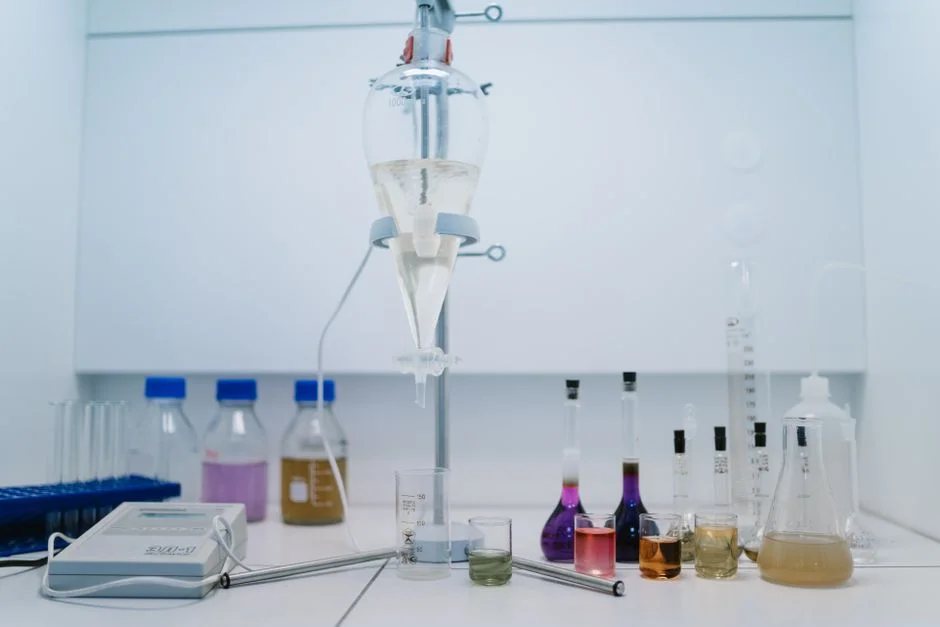
Every cell-and-assembly plant generates four distinct wastewater streams, and the unit-operation sequence is dictated by their chemistry, not by their volume. Stream 1 — NMP solvent condensate from cathode and anode coating carries N-methyl-2-pyrrolidone, a high-BOD, poorly biodegradable solvent that must be routed to dedicated vacuum distillation or evaporative recovery before any biological stage; an NMP spike passing through an MBR will kill the biomass (hydropurewater.com 2026). Stream 2 — electrode-making rinse and DI water carries LiPF₆ electrolyte residues and trace Ni/Co/Li; it is low-volume but high-specificity, and it is the stream that drives the metals limits in NOM-001. Stream 3 — paint-shop and general-assembly wash water is variable in FOG and TSS, with overspray media, surfactants, and fillers; this is the stream that makes Stage 2 DAF or lamella clarification non-negotiable. Stream 4 — sanitary sewage from a 5,000–6,000-strong workforce peaks at shift change, and it is the hydraulic peak — not the daily average — that sizes the equalisation basin. The hard rule: never co-mingle NMP-bearing condensate with sanitary flow upstream of biology. Recovery first, biology second, polish third.
| Stream | Source | Key contaminants | Routing rule |
|---|---|---|---|
| 1 — NMP condensate | Cathode/anode coating | NMP (high BOD, poorly biodegradable) | Dedicated vacuum distillation / evaporative recovery upstream of biology |
| 2 — Electrode rinse + DI | Electrolyte prep, cell assembly | LiPF₆ residues; trace Ni, Co, Li | Low volume, high specificity; sets metals envelope |
| 3 — Paint-shop + assembly wash | Body shop, paint, general assembly | FOG, TSS, surfactants, overspray | Requires DAF or lamella clarification |
| 4 — Sanitary sewage | 5,000–6,000 workers | Fecal coliforms, BOD | Hydraulic peak at shift change sets equalisation volume |
Stage-by-Stage Treatment Train: From Headworks to Reuse or ZLD
The defensible unit-operation sequence for a Mexican BYD-class plant runs in four stages. Stage 1 headworks: a GX-series rotary mechanical bar screen at 3–6 mm aperture to remove rags, foil trims, packaging film, and overspray media before they reach pumps or fine screens. Stage 2 primary clarification: a DAF system for high-FOG paint-shop wastewater with HRT 20–40 min and surface loading 10–25 m³/m²·h, or a lamella clarifier where footprint is constrained and the influent is mostly inorganic suspended solids — the trade-off is laid out in our 2026 DAF vs clarifier for transportation equipment wastewater comparison. Stage 3 biology: an integrated MBR system with 0.1 µm PVDF submerged flat-sheet membranes at MLSS 8,000–12,000 mg/L and a denitrification/nitrification split to hit Mexico's total-nitrogen envelope — the MBR is preferred over MBBR when downstream reuse needs low-turbidity effluent, with the full design logic in the MBR installation and commissioning guide. Stage 4 decision: (a) UV polish to municipal sewer under NOM-002, (b) an industrial RO system polish at 60–75% recovery for cooling-tower make-up and toilet flush, or (c) full ZLD with evaporation/crystallisation if the receiving basin is water-stressed. The sludge line routes DAF float and MBR waste activated sludge to a plate-and-frame filter press with a dry-cake target ≥22% DS to control off-site disposal cost.
| Stage | Unit operation | Design parameter | Function |
|---|---|---|---|
| 1 — Headworks | Rotary mechanical bar screen (GX) | 3–6 mm aperture | Remove rags, foil, overspray media |
| 2 — Primary clarification | DAF or lamella clarifier | HRT 20–40 min; surface loading 10–25 m³/m²·h | FOG and TSS removal |
| 3 — Biology | MBR (0.1 µm PVDF flat sheet) | MLSS 8,000–12,000 mg/L; denitrification split | COD/BOD/TN removal; reusable effluent |
| 4 — Polish / discharge | UV (sewer) / RO (reuse) / ZLD (zero discharge) | RO recovery 60–75%; UV ≥40 mJ/cm² | Permit-driven endpoint |
| Sludge line | Plate-and-frame filter press | Dry cake ≥22% DS | Off-site disposal cost control |
CONAGUA Reuse-Stream Registration: The 2024–2025 Rule That Bites
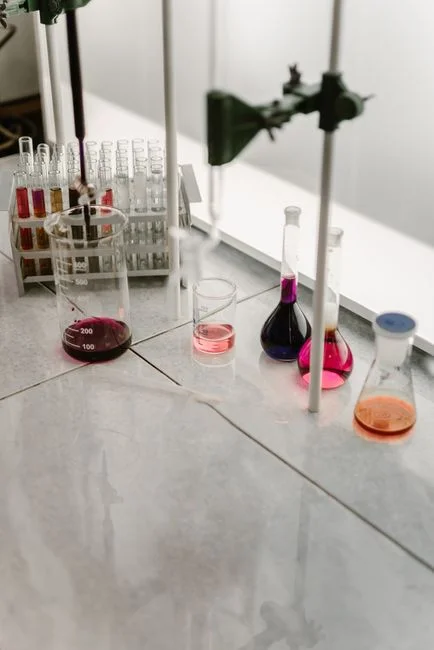
Under the 2024–2025 reform of the Ley de Aguas Nacionales, any plant that reuses treated wastewater must register the reuse stream with CONAGUA before the claim is operationally valid (hydropurewater.com 2026). The registration captures volume, quality, and end-use — cooling-tower make-up, irrigation, or toilet flush — and each registered value must match what the plant actually discharges. A BYD plant that promises "treated wastewater only" without CONAGUA registration is non-compliant even if every NOM-001 limit is met on the lab bench. If the discharge route crosses federal waters, the Ley de Protección y Aprovechamiento del Patrimonio Acuático (LPTA) adds a separate federal review on top of the CONAGUA filing. The practical implication for a Santa Catarina–class site in Nuevo León, or any of the four candidate states, is that the reuse stream must be pre-registered with its end-use split defined before the MIA is filed, because the CONAGUA Título de Concesión and the MIA are interdependent. Treated-wastewater-only is a legal status, not a marketing line, and the 2024–2025 reform is what makes that status enforceable.
Sizing the Plant: Hydraulic Envelope and Daily Flow
Industry estimates place cell-manufacturing water demand in the 1.5–3.0 m³/kWh range (hydropurewater.com 2026), and that benchmark is the load-calculation anchor the buyer should put into the ETP datasheet. For a 35 GWh/yr-class cell line, the process envelope sits at 5,000–9,000 m³/day, with paint-shop and sanitary flows adding another 1,000–2,000 m³/day. The sanitary side peaks at 1.5–2.0× daily average during shift change, and the equalisation basin must be sized for the combined peak, not the average, to keep Stage 3 biology on a stable influent. A useful smaller-volume analogue is the Texas Robstown lithium refinery, capped by TCEQ at 231,000 gal/day (≈875 m³/day) for cooling-tower blowdown, water-treatment wastes, and boiler blowdown (Inside Climate News, 2026-03); that figure is the order-of-magnitude bound for the lithium-refinery stream only, not the full battery plant. The reuse split target for a Mexican site is 60–75% RO recovery feeding cooling-tower make-up and toilet flush, with the remainder either ZLD-evaporated or discharged under NOM-001 if the receiving body and the CONAGUA registration permit it.
Procurement Checklist: Six Items to Hit Before Groundbreaking
- Lock the host state and its CEA overlay before sizing equalisation. Nuevo León, Jalisco, San Luis Potosí, and Aguascalientes all have different basin rules; the basin choice sets the local limit tighter than the NOM-001 federal floor.
- Confirm NOM-001 receiving-body classification (river, reservoir, coastal, sewer) at the proposed outfall — this sets the concentration limits in the datasheet.
- File the MIA under LGEEPA and the CONAGUA Título de Concesión in parallel; the two are interdependent and serial filing adds months.
- Pre-register the intended reuse stream with CONAGUA with end-use split (cooling-tower make-up vs. toilet flush vs. irrigation) before the MIA is finalised.
- Pre-select Stage 4 — UV/RO/ZLD — before the MIA is filed, because the Stage 4 decision drives the discharge route and the CONAGUA reuse-registration values.
- Budget for ≥22% DS plate-and-frame dewatering and a dry-cake off-site disposal contract from day one, with chemical conditioning supported by an automatic chemical dosing system and a chlorine dioxide generator for the disinfection polish.
| # | Item | Why it has to come first |
|---|---|---|
| 1 | Host state + CEA overlay | Sets local limit tighter than NOM-001 floor |
| 2 | Receiving-body classification | Drives NOM-001 concentration limits |
| 3 | MIA + Título de Concesión (parallel) | Interdependent; serial filing adds months |
| 4 | CONAGUA reuse-stream registration | Legal status of "treated wastewater only" |
| 5 | Stage 4 selection (UV/RO/ZLD) | Drives discharge route and registration values |
| 6 | Sludge dewatering + off-site disposal | ≥22% DS dry-cake target from day one |
Frequently Asked Questions
What federal permits does a BYD-class plant in Mexico need before any discharge?
A BYD-class site must hold a NOM-001-SEMARNAT-2021 compliance record, an LGEEPA Manifestación de Impacto Ambiental plus Licencia de Funcionamiento from SEMARNAT, and a CONAGUA Título de Concesión under the Ley de Aguas Nacionales — four federal instruments in total, with the host state CEA overlay on top (hydropurewater.com 2026).
How much water does a 35 GWh/yr battery cell line actually consume per day?
Industry estimates place cell-manufacturing water demand at 1.5–3.0 m³/kWh (hydropurewater.com 2026), which puts a 35 GWh/yr-class plant at 5,000–9,000 m³/day of process flow plus 1,000–2,000 m³/day of sanitary flow, with a 1.5–2.0× peak factor on the sanitary side at shift change.
Does NOM-001 set separate limits for lithium, cobalt, and nickel?
Yes — NOM-001-SEMARNAT-2021 is concentration-based and its parameter table includes Ni, Co, and Li alongside BOD₅, TSS, COD, oils and grease, total nitrogen, and total phosphorus, with limits differentiated by receiving body (river, reservoir, coastal, municipal sewer) (hydropurewater.com 2026).
What is the 2.5% MFN versus 27.5% China tariff doing to the water envelope?
The 27.5% US tariff on China-assembled vehicles versus a 2.5% MFN duty for Mexico-made cars is the economic trigger that pulls a full battery cell line into Mexico rather than only final assembly (WardsAuto, 2024) — and because cell manufacturing consumes 1.5–3.0 m³/kWh versus a small fraction of that for knock-down assembly, the tariff decision multiplies the wastewater envelope by the same factor.
Related Equipment
- DF-series flat-sheet membrane modules — specifications, capacity range, and technical data