What Is the Suspended Solids Discharge Limit in Mexico?
Under Mexico's NOM-001-SEMARNAT-2021, the suspended solids (TSS) discharge limit is 30 mg/L for discharges to rivers used for public water supply, 40 mg/L for other rivers and reservoirs, and 60 mg/L for coastal and estuarine waters. Limits tighten further (down to 20 mg/L) when monthly average flows exceed specified thresholds. Compliance is enforced by PROFEPA under LGEEPA, with non-compliance fines up to MXN 4 million.
NOM-001-SEMARNAT-2021 was published in the Diario Oficial de la Federación (DOF) on 7 December 2021 and entered into force in 2022 as the binding federal standard for污染物 discharge from industrial and municipal sources to receiving water bodies (per DOF, 2021-12). The TSS threshold is set as an instantaneous maximum: 30 mg/L for discharges to rivers designated for drinking-water abstraction (Río class), 40 mg/L for other inland surface waters including reservoirs and lakes, and 60 mg/L for coastal and estuarine waters. The instantaneous ceiling is the number a single grab or composite sample must not exceed during a PROFEPA inspection.
The standard layers a second limit on top of the instantaneous ceiling. When the monthly average flow exceeds the threshold defined in Table 1 of NOM-001-SEMARNAT-2021 (typically tied to facility size and receiving-body assimilative capacity), the TSS limit tightens to 20 mg/L for the public-supply river class. Practically, that means a food plant discharging 2,500 m³/day to a drinking-water tributary must design for 20 mg/L, not 30 mg/L, even though the instantaneous number on the permit reads 30. Engineers often miss this and discover it in the first PROFEPA audit.
TSS itself is defined per NMX-AA-034-SCFI-2015, the official Mexican mirror of Standard Methods 2540D: the residue retained on a 1.5 μm glass-fiber filter dried at 103-105 °C to constant weight, expressed in mg/L. It is not the same as total dissolved solids (TDS, dried at 180 °C) or total solids (TS, the sum of both). A compliance argument built on TDS values will fail on the first lab cross-check, because PROFEPA-accredited CILA labs measure TSS by filtration, not evaporation.
NOM-001-SEMARNAT-2021 vs NOM-001-SEMARNAT-1996: What Changed
The 2021 update tightened TSS ceilings by roughly 50% for river discharges and added a new coastal water-body class. Plants still operating under a 1996-era permit often quote 60/60/150 mg/L — those numbers are no longer valid for new or renewed concessions.
Beyond the TSS reduction, NOM-001-SEMARNAT-2021 introduced parameters the 1996 version did not regulate at all. Total nitrogen is now capped at 15-40 mg/L depending on receiving-body class; total phosphorus at 5-20 mg/L. Metals ceilings tightened: lead dropped to 0.2-1.0 mg/L (down from 1.0-1.5 mg/L under the 1996 standard), cadmium to 0.05-0.2 mg/L. The new parameter set effectively forces facilities to add biological nutrient removal and metals precipitation stages that older DAF-only trains were never designed to provide.
Sampling cadence also increased. The 2021 standard requires a minimum of 12 composite samples per year, double the older requirement of 6, and makes self-monitoring by a CILA-accredited lab mandatory for any facility discharging above 100 m³/day. Permit holders were given a 5-year transition window — ending in 2026 — for full compliance with the new ceilings, which is the reason most compliance officers are racing to retrofit treatment trains this year.
| Parameter | NOM-001-SEMARNAT-1996 | NOM-001-SEMARNAT-2021 | Change |
|---|---|---|---|
| TSS — river (public supply) | 60 mg/L | 30 mg/L (20 mg/L at high flow) | −50% to −67% |
| TSS — river/other inland | 60 mg/L | 40 mg/L | −33% |
| TSS — coastal/estuarine | 150 mg/L (combined SS) | 60 mg/L | −60% |
| Total nitrogen | not regulated | 15-40 mg/L by class | new parameter |
| Total phosphorus | not regulated | 5-20 mg/L by class | new parameter |
| Lead (Pb) | 1.0-1.5 mg/L | 0.2-1.0 mg/L | tighter |
| Cadmium (Cd) | 0.1-0.4 mg/L | 0.05-0.2 mg/L | tighter |
| Minimum composite samples/yr | 6 | 12 | +100% |
| CILA-accredited self-monitoring | recommended | mandatory >100 m³/day | mandatory |
Full NOM-001-SEMARNAT-2021 Parameter Table by Receiving Water Body
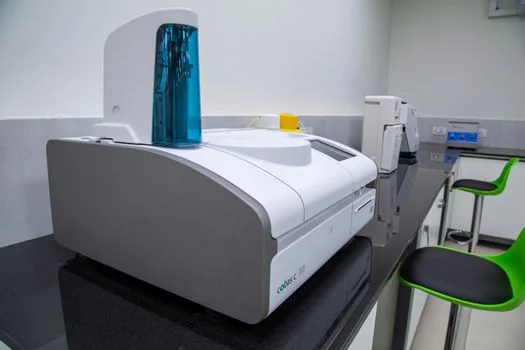
The table below consolidates the published instantaneous maximum permissible limits (límites máximos permisibles, LMP) for the three receiving water-body classes defined in NOM-001-SEMARNAT-2021. Use it as a working reference for permit review, bid specifications, and PROFEPA inspection prep. Values are mg/L unless otherwise noted; metals are total recoverable.
| Parameter | Río (public supply) | Río (other) / Embalse | Costero / Estuario | Method reference |
|---|---|---|---|---|
| TSS (sólidos suspendidos totales) | 30 (20 at high flow) | 40 | 60 | NMX-AA-034-SCFI-2015 |
| BOD₅ | 50 | 75 | 100 | NMX-AA-028-SCFI-2001 |
| COD | 150 | 200 | 200 | NMX-AA-030/2-SCFI-2011 |
| Total nitrogen (N) | 15 | 25 | 40 | NMX-AA-026-SCFI-2010 |
| Total phosphorus (P) | 5 | 10 | 20 | NMX-AA-029-SCFI-2001 |
| Fats & oils (grasas y aceites) | 10 | 15 | 15 | NMX-AA-005-SCFI-2013 |
| Settleable solids (sedimentables) | 1.0 mL/L | 1.0 mL/L | 1.0 mL/L | NMX-AA-006-SCFI-2010 |
| Lead (Pb) | 0.2 | 0.5 | 1.0 | NMX-AA-051-SCFI-2015 |
| Cadmium (Cd) | 0.05 | 0.1 | 0.2 | NMX-AA-051-SCFI-2015 |
| Total chromium (Cr) | 0.5 | 1.0 | 1.5 | NMX-AA-051-SCFI-2015 |
| Mercury (Hg) | 0.005 | 0.01 | 0.02 | NMX-AA-051-SCFI-2015 |
| Arsenic (As) | 0.1 | 0.2 | 0.5 | NMX-AA-051-SCFI-2015 |
| pH (range) | 5.5-10.0 | 5.5-10.0 | 5.5-10.0 | NMX-AA-008-SCFI-2016 |
| Temperature | ≤40 °C, +3 °C above ambient | ≤40 °C, +3 °C above ambient | ≤40 °C, +3 °C above ambient | NMX-AA-007-SCFI-2013 |
| Total coliforms (NMP/100 mL, where listed) | 240 | 1,000 | 1,000 | NMX-AA-042-SCFI-2015 |
One common conflation worth flagging: NOM-002-SEMARNAT-1996 governs the handling, stabilization, and disposal of sewage sludge — it does not set the liquid discharge TSS limit. Mixing the two during a PROFEPA inspection is one of the most common audit findings. For the liquid effluent, NOM-001-SEMARNAT-2021 is the controlling standard; for biosolids and chemical sludge, NOM-002 applies.
Who Enforces the Limit and What Happens on Non-Compliance
PROFEPA (Procuraduría Federal de Protección al Ambiente), the enforcement arm of SEMARNAT, conducts both announced and unannounced inspections at industrial facilities. Inspectors are empowered under LGEEPA (Ley General del Equilibrio Ecológico y la Protección al Ambiente) to enter the plant, take split samples at the discharge point defined in the CONAGUA concession title, and compare the results against the LMP values from NOM-001-SEMARNAT-2021 within 30 days. Self-monitoring data submitted to CONAGUA through the SINA (Sistema Nacional de Información del Agua) system is cross-checked against the official inspection sample — a mismatch is treated as falsification, not a procedural error.
The penalty framework sits in LGEEPA Articles 171 and 172. Fines range from MXN 30,000 to MXN 4,000,000, with the maximum adjusted annually by UMA (Unidad de Medida y Actualización) multipliers — the 2025 UMA-based update places the ceiling near MXN 4 million for a single TSS exceedance event. PROFEPA can additionally order partial or total temporary closure of the discharging process, and the facility remains non-compliant until a resampling cycle (typically 3 consecutive months below the LMP) demonstrates corrective action.
Repeat offenders face definitive (permanent) closure plus criminal referral under the Federal Criminal Code, which carries prison sentences of 1-9 years for environmental offences resulting in ecosystem damage. CILA-accredited lab data submitted to SINA and later proven falsified carries separate criminal exposure for the signing technician and the responsible corporate officer. The 2026 PROFEPA inspection cycle, per field guidance, will specifically audit chain-of-custody signatures on submitted CILA reports — labs that pre-date the 2021 update are no longer accredited for NOM-001 parameters.
Treatment Technologies That Consistently Hit the Mexican TSS Limit
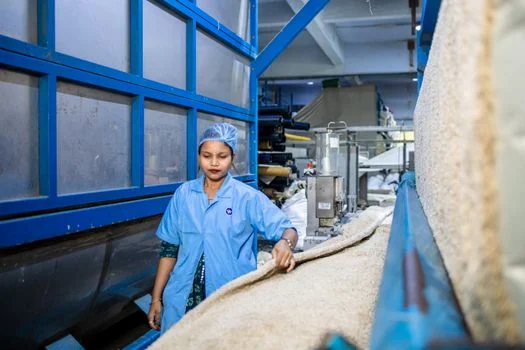
A DAF-only train is no longer enough to guarantee <30 mg/L at industrial flows; the 2021 standard forces a staged design that combines physical-chemical removal, biological reduction, and a final barrier.
Dissolved Air Flotation (DAF) is the workhorse for suspended solids, free oil, and colloidal matter. A well-designed dissolved air flotation system running at 4-300 m³/h across 13 standard models typically delivers 80-95% TSS removal with an effluent of 20-50 mg/L on its own — enough to meet the 60 mg/L coastal class but not the 30 mg/L river class without a downstream step. DAF is the correct first stage for food (FOG, proteins), textile (fiber and dye fines), and metal finishing (hydroxide floc) influents, but it cannot be the final stage for a public-supply river discharge.
High-efficiency lamella clarifiers fill the mid-strength gap. A high-efficiency lamella sedimentation tank operates at surface loading rates of 20-40 m³/m²·h with up to 30% lower polymer consumption than conventional clarifiers, and is commonly used as a DAF-polish step or as a standalone primary clarifier for medium-strength influent. Lamellas are the right choice when the design point is the 40 mg/L inland class and biological treatment is not required.
For the 30 mg/L river class and the 20 mg/L high-flow tightening, the only robust single-step solution is an MBR membrane bioreactor. The integrated MBR membrane bioreactor system runs PVDF hollow-fiber membranes at 0.1 μm nominal pore, providing <1 μm physical filtration; effluent TSS is typically <5 mg/L and BOD₅ <5 mg/L, both well under the 2021 ceilings. The MBR also removes the total nitrogen load through the nitrification-denitrification cycle, addressing the new 15-40 mg/L parameter in the same tank. Daily throughput ranges from 10 m³/day (small food processors) to 2,000 m³/day (textile and chemical plants) in packaged skid form.
The process train that consistently hits the Mexican limit at industrial scale: Screening → flow equalization → DAF (or primary clarifier) → biological stage (SBR / conventional activated sludge / MBBR) → MBR polish → disinfection. A PLC-controlled automatic chemical dosing skid handles coagulant (PAC 50-200 mg/L) and polymer (0.5-3 mg/L) feed ahead of the DAF, with dosing tied to influent flow via a magnetic flow meter — manual dosing will not hold a TSS coefficient of variation below the 15% PROFEPA expects to see on CILA reports.
| Technology | TSS effluent (typical) | Best fit NOM-001 class | Flow range | Polymer demand |
|---|---|---|---|---|
| DAF only | 20-50 mg/L | Costero (60 mg/L) | 4-300 m³/h | 0.5-3 mg/L |
| Lamella clarifier | 30-60 mg/L | Río other / Embalse (40 mg/L) | 10-500 m³/h | 1-5 mg/L |
| MBR (PVDF 0.1 μm) | <5 mg/L | Río public supply (30/20 mg/L) | 10-2,000 m³/day | negligible |
| DAF + MBR combined | <5 mg/L, FOG <10 mg/L | All classes, FOG & colloidal | scalable | 0.5-3 mg/L to DAF |
Sampling, Lab Methods, and How PROFEPA Tests Your Discharge
TSS sampling under NOM-001-SEMARNAT-2021 follows NMX-AA-034-SCFI-2015 to the letter. A 24-hour composite sample is collected at the discharge point, preserved at 4 °C, and held for a maximum of 7 days before analysis. The sampling location must be downstream of the last process unit and upstream of any mixing with non-contact cooling water — the exact point defined in the CONAGUA concession title and the Cofepris operating permit. PROFEPA inspectors will use the permit-defined coordinates, not the operator's preferred sampling tap.
All compliance samples must be analyzed by a CILA-accredited lab (accredited by CONACYT/entidad mexicana de acreditación) for the specific parameter. The 2026 PROFEPA audit cycle, per field guidance, is cross-checking chain-of-custody signatures against the lab's CONACYT scope of accreditation — a lab accredited for BOD but not for TSS cannot issue a valid CILA report for the 2021 standard, and any data it produced in 2025 is being treated as non-conforming during the current inspection window.
Online TSS meters (optical infrared absorption at 880 nm, or ultrasonic attenuation) are increasingly deployed as an early-warning system upstream of the official sampling point. They do not replace CILA sampling for compliance, but they flag upset conditions 2-4 hours before a 24-hour composite would close, giving operators time to adjust coagulant dose or equalize a slug load. For technology selection and accuracy benchmarks, see the TSS sensor supplier selection guide.
Frequently Asked Questions
What is the maximum TSS allowed in industrial wastewater discharged to a river in Mexico? 30 mg/L instantaneous under NOM-001-SEMARNAT-2021, tightening to 20 mg/L as a monthly average when flows exceed the threshold for rivers designated for public water supply (per DOF, 2021-12).
What is the TSS limit for discharges to coastal waters in Mexico? 60 mg/L instantaneous, with the same monthly-average tightening mechanism defined in NOM-001-SEMARNAT-2021 Table 1.
How much is the PROFEPA fine for exceeding the NOM-001 TSS limit? Between MXN 30,000 and MXN 4,000,000 per infraction under LGEEPA Articles 171-172, plus potential temporary or permanent closure (2025 UMA-adjusted figures).
What is the difference between NOM-001-SEMARNAT-2021 and NOM-001-SEMARNAT-1996? The 2021 update tightened TSS by ~50% for rivers, added a 60 mg/L coastal class, introduced total nitrogen (15-40 mg/L) and total phosphorus (5-20 mg/L) ceilings, lowered lead and cadmium limits, and doubled the minimum sampling cadence to 12 composite samples per year.
Which treatment technology reliably hits <30 mg/L TSS at industrial flows? An MBR membrane bioreactor alone delivers <5 mg/L; the most common compliant train for variable industrial influent is DAF followed by MBR, achieving <5 mg/L TSS and <5 mg/L BOD₅ simultaneously. For a deeper breakdown of equipment selection and 2026 cost benchmarks, see the Mexico City industrial wastewater treatment guide for 2026.
Does NOM-001 regulate metals as well as TSS? Yes — the 2021 standard sets total recoverable limits for lead (0.2-1.0 mg/L), cadmium (0.05-0.2 mg/L), total chromium (0.5-1.5 mg/L), mercury (0.005-0.02 mg/L), and arsenic (0.1-0.5 mg/L), which is why hydroxide precipitation or ion exchange is often added ahead of the biological stage for metal-finishing discharges.