
Why Houma Transportation Equipment Plants Cannot Rely on Federal Categorical Standards Alone
Under EPA's 40 CFR Part 403 framework, the controlling authority for an indirect discharger is not EPA itself but the local POTW, and the binding numbers are site-specific local limits, not the categorical pretreatment standards in 40 CFR subchapters N–S. EPA's pretreatment program makes each POTW responsible for evaluating its own treatment capability, sludge handling, and receiving-water capacity, then deriving numeric or narrative limits that prevent pass-through and interference (per EPA, "Pretreatment Standards and Requirements-Local Limits," 2026-01). 40 CFR 403.5(c) is the rule that obliges a POTW with a POTW-wide pretreatment program to develop and enforce those limits.
Pass-through, defined at 40 CFR 403.3(p), is a discharge that exits the POTW into waters of the United States in quantities or concentrations that, alone or in conjunction with other sources, cause a violation of any requirement of the POTW's NPDES permit, including an increase in the magnitude or duration of a violation. Interference, defined at 40 CFR 403.3(k), is a discharge that, alone or with others, both inhibits or disrupts the POTW, its treatment processes, or its sludge processes, use, or disposal, and is therefore a cause of an NPDES or sludge-disposal violation. Both are failure modes an industrial user can trigger without ever violating a federal categorical standard.
The POTW that serves Houma is Terrebonne Parish Consolidated Government Pollution Control, operating out of 2000 St. Louis Canal Road, Houma, LA 70364, with a 24/7 emergency line at (985) 873-6537 (per tpcg.org, 2026). Because limits are imposed "at the end-of-pipe discharge from an industrial user — at the point of connection to the POTW's collection system" (per EPA, 2026-01), compliance is measured at the manhole, not at the plant fence line. Most transportation-equipment plants in the Houma area — truck body fabricators, trailer manufacturers, marine vessel shops, off-highway equipment assemblers — fall under general industrial-user status with site-specific limits rather than categorical standards, so the local limit letter from Pollution Control is the document that drives design.
The Wastewater Profile of a Transportation Equipment Plant
A typical transportation-equipment plant in the Houma area generates six to ten discrete waste streams that converge on the pretreatment system, and each stream contributes a different pollutant family. The dominant streams and their characteristic loadings are summarized below; ranges are industry-typical and should be confirmed by site sampling before sizing equipment.
| Waste stream | Source operation | Primary pollutants | Typical concentration band |
|---|---|---|---|
| Cutting and machining fluid | CNC mills, lathes, saws | Free and emulsified oil, TSS, COD | O&G 500–5,000 mg/L; COD 5,000–30,000 mg/L |
| Parts-washer rinse | Aqueous parts washers | Surfactants, emulsified oil, trace metals | O&G 200–2,000 mg/L; TSS 100–800 mg/L |
| Phosphate conversion-coating rinse | Pre-paint conversion coating | Total phosphate, zinc, nickel, TSS, low pH | PO₄ 20–200 mg/L; Zn 5–50 mg/L; pH 3–6 |
| E-coat and paint overspray | Electrodeposition tanks, spray booths | Resin-bound solids, pigments, solvents | TSS 200–1,500 mg/L; COD 1,000–8,000 mg/L |
| Quench water | Heat treat | Free oil, dissolved metals, temperature spikes | O&G 100–1,000 mg/L; temp up to 60–80 °C |
| Compressor condensate and boiler blowdown | Utilities | Trace oil, dissolved solids, iron | O&G 10–100 mg/L; TDS 200–1,000 mg/L |
Heavy-equipment and marine fabrication near Houma skew toward higher metals loading and FOG than light automotive assembly because of thicker steel sections, more welding and grinding dust, larger phosphate baths, and frequent in-process oil quenching. Flow is rarely steady: a single batch of spent coolant dumped at end of shift can swing hourly influent by a factor of three to five, which is why equalization is the foundation of any reliable pretreatment train.
Even when discharge to the POTW is permitted, RCRA "cradle-to-grave" liability follows the waste from the point of generation to final disposal, including the sewer as a pathway, so any waste diverted off-site for treatment must be documented through a licensed transporter and a Uniform Hazardous Waste Manifest (EPA Form 8700-22) if it meets a hazardous characteristic (per prosservices.com, 2026). Treating a sewer discharge as a risk transfer is a misread of the liability chain.
The Standard Houma Pretreatment Process Train
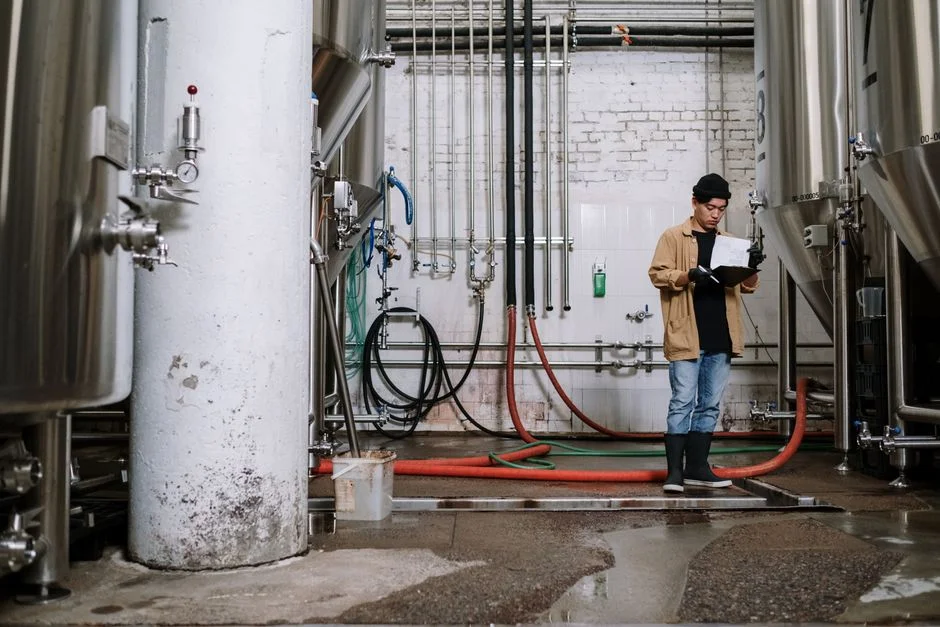
The process train that has held up across transportation-equipment sites is a five-step sequence: screen, equalize, float, dose, polish. Each step has a defensible operating window an engineer can hand to a vendor without overstating vendor-specific performance.
| Step | Unit operation | Design parameter | Typical range |
|---|---|---|---|
| 1. Screening | GX series rotary bar screen | Clear bar spacing | 3–10 mm |
| 2. Equalization / OWS | Equalization basin + API or CPI separator | HRT (shift-based dump load) | 8–24 h |
| 3. DAF | DAF system (4–300 m³/h) | Surface loading rate; air-to-solids ratio | 5–20 m/h; 0.02–0.06 lb air/lb solids |
| 4. Chemical dosing | PLC-controlled chemical dosing skid | pH window for metals precipitation | 6.0–9.0 (typical POTW) |
| 5. Polishing | Lamella clarifier | Surface loading rate | 20–40 m/h |
Step-by-step:
- Influent screening. A coarse bar screen or rotary mechanical bar screen protects downstream pumps, mixers, and DAF nozzles from ragging and gross solids. 3–10 mm clear bar spacing is the working band for industrial IU service.
- Equalization and oil/water separation. An equalization basin sized for 8–24 h of HRT absorbs shift-based dump loads, particularly the end-of-shift coolant dump. An API or coalescing-plate interceptor in the basin removes free oil before it emulsifies further; free-oil removal upstream of the DAF is the single biggest lever for keeping DAF float solids manageable.
- Dissolved air flotation. A DAF unit with a 5–20 m/h surface loading rate and an air-to-solids ratio in the 0.02–0.06 lb/lb range handles emulsified oil, FOG, and a large fraction of the TSS in one stage. The DAF system is sized for flows from 4 to 300 m³/h and is the workhorse stage for this duty.
- Chemical dosing. Coagulant (typically a cationic polymer) and pH adjustment to the 6.0–9.0 window most POTWs accept are PLC-controlled on a PLC-controlled chemical dosing skid. pH adjustment to the upper half of the band (8.0–9.0) is usually required to drop zinc, nickel, and other amphoteric metals as hydroxides before the polishing stage.
- Polishing filtration. A multi-media filter or a lamella clarifier with a 20–40 m/h surface loading rate captures residual TSS and metal-hydroxide floc. A lamella clarifier is the right call when footprint is constrained and the upstream DAF is already doing the bulk separation.
For a sense of how this train compares with a sister industry, see the petroleum plant POTW pretreatment guide, and for a head-to-head on flotation versus sedimentation, the DAF vs clarifier buyer's guide for transportation equipment walks through the same decision with different influent numbers. For an automotive-assembly parallel, the EV and auto assembly pretreatment guide covers E-coat and phosphate-rinse streams in more detail.
What Local Limits Typically Look Like for Heavy-Industrial POTWs
EPA is explicit that "local limits are site-specific and can be numeric or narrative effluent discharge limits, including BMPs" (per EPA, 2026-01), and that POTWs may impose additional constituent limits, pH, and temperature restrictions before acceptance (per prosservices.com, 2026). Houma-specific numeric limits are not in the public source set, so the table below presents industry-typical heavy-industrial POTW bands — the ranges an engineer should design against before the local limit letter is in hand. Confirm the actual numbers with Terrebonne Parish Pollution Control at (985) 873-6537 before final equipment selection.
| Parameter | Typical heavy-industrial POTW band | Driver |
|---|---|---|
| pH | 6.0–9.0 (instantaneous, grab) | Biological treatment and metals precipitation |
| Oil & grease (total) | 50–100 mg/L, daily max | Pass-through and collection-system fouling |
| TSS | 200–400 mg/L, daily max | Sludge bulking and NPDES TSS |
| Total metals (Zn, Ni, Cr, Pb, Cu) | 1–10 mg/L combined, individual limits vary | Sludge quality and NPDES metals |
| Temperature | ≤ 40 °C (≤ 104 °F) at point of connection | Biological process and pipe material |
| COD/BOD | 250–500 mg/L, daily max | Biological loading and NPDES oxygen demand |
Narrative limits matter as much as numeric ones. The POTW's local limit letter will typically require BMPs covering spill containment at chemical storage, dead-end pipe flushing, floor-cleaning practices, and a slug-control plan. A slug load — a one-shot release of low-pH rinse water or a concentrated coolant dump — is the most common way an otherwise compliant plant trips an interference violation, and it is exactly the kind of event a properly sized equalization basin and a written slug-control plan are designed to absorb.
Self-Monitoring, Sampling, and POTW Reporting
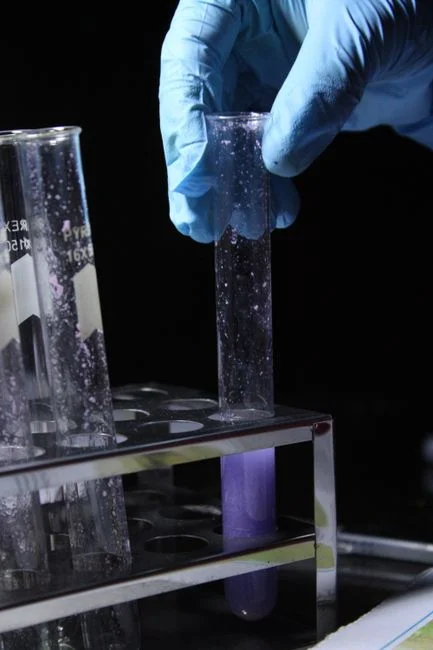
Compliance is provable only if the monitoring point, frequency, and method are documented before the first sample is collected. The monitoring point is the point of connection to the POTW's collection system (per EPA, 2026-01), which is the manhole or sampling port the POTW inspector will visit.
Use grab samples for parameters that change on the timescale of minutes — pH and temperature are the classic examples, and most local limit letters require a grab. Use 24-hour composite samples, flow-weighted where possible, for daily mass loadings of TSS, O&G, total metals, and COD. The two methods answer different questions, and the report template should keep them separate rather than collapsing both into a single daily number.
Under 40 CFR 403, significant industrial users are typically required to submit a Baseline Monitoring Report (BMR) when they first discharge a new process stream and a 90-day compliance report on a recurring cycle, plus a slug-control plan and BMP audit on the schedule the POTW imposes. Recordkeeping must be granular enough to support RCRA "cradle-to-grave" documentation if any waste stream is ever diverted off-site for treatment (per prosservices.com, 2026), which means retaining manifests, waste profiles, and analytical data for at least three years and longer if a state rule requires it.
When Sewer Discharge Is the Wrong Choice
Some streams at a transportation-equipment plant should never enter the POTW, regardless of how well the pretreatment train is running. Any liquid waste that exhibits a hazardous characteristic — ignitability, corrosivity, reactivity, or toxicity — or is listed as a specific hazardous waste under RCRA must be managed as hazardous waste from the point of generation (per prosservices.com, 2026). Common examples are spent solvents, acid or caustic cleaning solutions above the characteristic thresholds, and heavy-metal-bearing rinse waters that exceed the Toxicity Characteristic Leaching Procedure limits.
Those streams go out on a licensed hazardous-waste transporter under the EPA Uniform Hazardous Waste Manifest (EPA Form 8700-22), which tracks the waste "cradle-to-grave" and keeps the generator on the hook for downstream mishandling. The same immediate-spill-reporting logic that drives Michigan's Pollution Emergency Alert System (1-800-292-4706) applies in Louisiana through the state SPOC and the local POTW — any release, spill, or slug discharge that reaches the collection system must be reported right away to both. The right call, in plain terms, is to keep the sewer for process wastewater the plant can treat to local limits, and to haul the rest.
Frequently Asked Questions
What regulation actually controls a Houma transportation-equipment plant discharging to the sewer?
EPA's 40 CFR Part 403 framework controls the program, but the binding numbers are the site-specific local limits the POTW derives and enforces under 40 CFR 403.5(c). For Houma, the controlling POTW is Terrebonne Parish Consolidated Government Pollution Control at 2000 St. Louis Canal Road, Houma, LA 70364, reachable 24/7 at (985) 873-6537.
What is the difference between pass-through and interference under 40 CFR 403?
Pass-through, at 40 CFR 403.3(p), is a discharge that exits the POTW in quantities or concentrations that cause a violation of the POTW's NPDES permit. Interference, at 40 CFR 403.3(k), is a discharge that inhibits or disrupts the POTW, its treatment processes, or its sludge processes and is a cause of an NPDES or sludge-disposal violation. Pass-through is about the receiving water; interference is about the plant.
What is the standard process train for oily and metal-bearing wastewater from a transportation-equipment plant?
The reliable sequence is screening (3–10 mm bar spacing) → equalization (8–24 h HRT) → dissolved air flotation (5–20 m/h surface loading, 0.02–0.06 lb air/lb solids) → PLC-controlled chemical dosing to a pH window of 6.0–9.0 for metals precipitation → lamella or multi-media polishing (20–40 m/h surface loading). Each stage is sized to a specific pollutant family rather than a single "all-in-one" treatment.
When should a transportation-equipment plant haul waste instead of discharging to the POTW?
Any waste that exhibits an RCRA hazardous characteristic — ignitability, corrosivity, reactivity, or toxicity — or is listed as a specific hazardous waste must be managed off-site under a Uniform Hazardous Waste Manifest (EPA Form 8700-22) by a licensed hazardous-waste transporter. Spent solvents above characteristic thresholds and acid or caustic cleaners above the corrosivity threshold are the usual triggers; the sewer is for process wastewater the plant can treat to local limits, and a licensed hauler is for everything else.