Why On-Site Residential Treatment Is the Default in the Philippines
Only about 5% of the Philippine population is connected to a sewer network, and the remainder relies on septic tanks, often discharging untreated effluent (Corpuz, PMC, 2024). Metro Manila alone generates approximately 2 million m³ of wastewater per day, the bulk of which reaches receiving waters without treatment. The public-health cost is documented: 31% of all illnesses in the Philippines are attributed to polluted water (Hydropurewater, 2026).
For a subdivision developer, resort owner, or consulting sanitary engineer, this infrastructure gap is the operational reality. A centralized sewer is rarely available outside of Metro Manila's two concessionaire areas, so the legal and practical default is an on-site packaged plant. Republic Act 9275 (the Clean Water Act of 2004), Section 13, requires every establishment generating wastewater to install on-site treatment or connect to a centralized sewer; when sewer is unavailable, packaged plants are the compliant path. The Department of Environment and Natural Resources (DENR), through its Environmental Management Bureau (EMB), issues the Environmental Compliance Certificate (ECC) and the Wastewater Discharge Permit. Local Government Units (LGUs) add local requirements for septage haulers, setbacks, and design review.
For a 50–2,000 dwelling project, the design question is not whether to treat on-site but which unit process fits the site, the budget, and the receiving water body. That selection question is the focus of the rest of this guide.
The 2026 Regulatory Baseline: RA 9275 and DAO 2016-08
Republic Act 9275 (Clean Water Act of 2004) is the foundational law, administered by DENR-EMB, that mandates effluent treatment for all wastewater-generating establishments. DENR Administrative Order 2016-08 sets the general effluent limits applied to most discharges, including residential subdivisions, condominiums, and resorts not governed by a sector-specific rule.
Facilities discharging to a municipal sewer must pre-treat to septic-tank effluent quality, typically BOD ≤100 mg/L, before connection; facilities discharging to surface water or for reuse must meet the stricter general limits in the table below. Penalties under Section 27 of RA 9275 reach ₱100,000 (~US$1,800) per day per violation, plus possible ECC suspension or revocation, and criminal liability in cases of gross negligence. Monthly self-monitoring through a DENR-accredited laboratory is mandatory; non-compliance triggers EMB inspections and citizen-complaint follow-up. The full parameter set, including sector-specific variances, is detailed in the DAO 2016-08 effluent standards compliance checklist.
| Parameter | General limit (DAO 2016-08) | Pre-treatment to sewer | Notes for residential plants |
|---|---|---|---|
| BOD5 | ≤ 30 mg/L | ≤ 100 mg/L | Drives biological reactor sizing |
| COD | ≤ 100 mg/L | ≤ 200 mg/L (typical) | Check ratio to BOD for biodegradability |
| TSS | ≤ 30 mg/L | ≤ 100 mg/L | Drives clarifier and membrane selection |
| pH | 6.0–9.0 | 6.0–9.0 | Continuous inline probe recommended |
| Oil & grease | ≤ 15 mg/L | ≤ 50 mg/L (typical) | Install grease trap upstream for resort kitchens |
| Fecal coliform | ≤ 200 MPN/100 mL (for Class C water reuse) | Site-specific | Drives disinfection selection (ClO₂ or UV) |
Choosing the Right Treatment Train: Septic, A/O, MBR, or Constructed Wetland
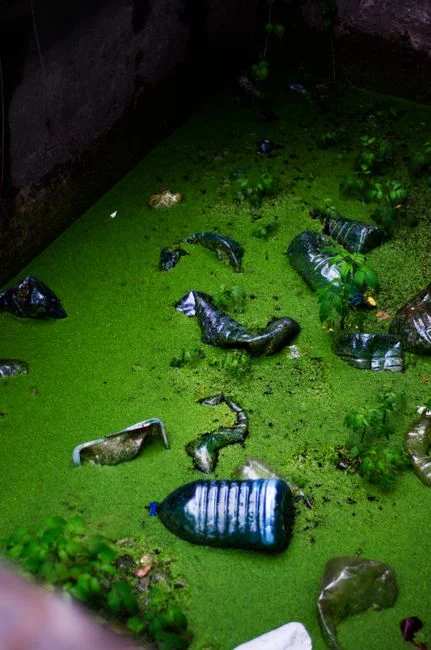
Selection is driven by dwelling count, footprint, soil percolation, receiving water body, typhoon exposure, and LGU preference. A conventional septic tank is acceptable only when paired with a soil absorption system or as a pre-treatment step to a sewer connection under DAO 2016-08; raw septic effluent typically runs BOD 100–200 mg/L and will not meet the general 30 mg/L standard on its own.
For most subdivisions, condominiums, and resorts, the choice narrows to a packaged A/O (anoxic/oxic) plant or an MBR (membrane bioreactor). The A/O process, configured as an underground packaged unit such as the underground packaged A/O sewage treatment plant, achieves greater than 85% BOD removal and reliably delivers effluent below 30 mg/L (Hydropurewater, 2026). MBR uses a submerged PVDF membrane at sub-1 μm pore size to deliver near-reuse-quality effluent with roughly 60% smaller footprint than conventional activated sludge, which makes it the preferred option for high-density condos, resorts pursuing water reuse, and sites with tight footprints. For rural subdivisions, eco-resorts, and island barangays with land available and limited operating budgets, constructed wetlands are a low-cost, low-OPEX nature-based option recommended in the PMC 2024 commentary. The trade-off between MBR and sequencing-batch alternatives is laid out in the MBR vs SBR comparison guide; for projects where MBR fits the footprint and reuse targets, the MBR membrane bioreactor for residential projects is the engineering reference point.
| Unit process | Typical capacity | Effluent BOD | Footprint | Best fit in the Philippines |
|---|---|---|---|---|
| Conventional septic + soil absorption | Single dwelling to ~20 homes | 100–200 mg/L (pre-treatment only) | Large drainfield required | Low-density rural, no sewer access |
| Packaged A/O (WSZ-type, underground) | 1–80 m³/h (≈25–1,900 m³/d) | < 30 mg/L | Buried; small surface footprint | Subdivisions, mid-rise condos, resorts |
| MBR (submerged membrane) | 5–500 m³/h | < 5 mg/L (reuse-grade) | ~60% of conventional AS | High-density, water-reuse, tight sites |
| Constructed wetland (NbS) | Project-specific | 15–30 mg/L | Very large (≥ 5 m² per PE) | Eco-resorts, island barangays, rural subdivisions |
How to Size a Residential STP in the Philippines
The Philippine design per-capita flow for residential developments is 150–200 L/capita/day, and an hourly peaking factor of 1.5–2.5 must be applied to the average daily flow. BOD loading is 40–55 g/capita/day, with raw domestic influent BOD typically in the 200–400 mg/L range.
Worked example. A 200-house subdivision at 5 persons per household produces 200 × 5 × 180 L = 180,000 L/day, or 180 m³/day. Apply a peaking factor of 2.0 for hourly peak: 180 × 2.0 / 24 = 15 m³/h hydraulic capacity. That flow sits comfortably inside the 1–80 m³/h envelope of a packaged A/O unit, with a hydraulic retention time of 8–12 hours for A/O and 6–8 hours for MBR. Sludge retention time (SRT) is set to 15–25 days for A/O and 20–40 days for MBR to maintain stable nitrification. The biological mechanism behind these retention windows is laid out in the A/O process engineering guide.
For sizing influent screening on a plant of this scale, a rotary mechanical bar screen for headworks at 6–10 mm aperture is typical to protect downstream blowers and membranes.
2026 CAPEX and OPEX Benchmarks for Philippine Residential STPs
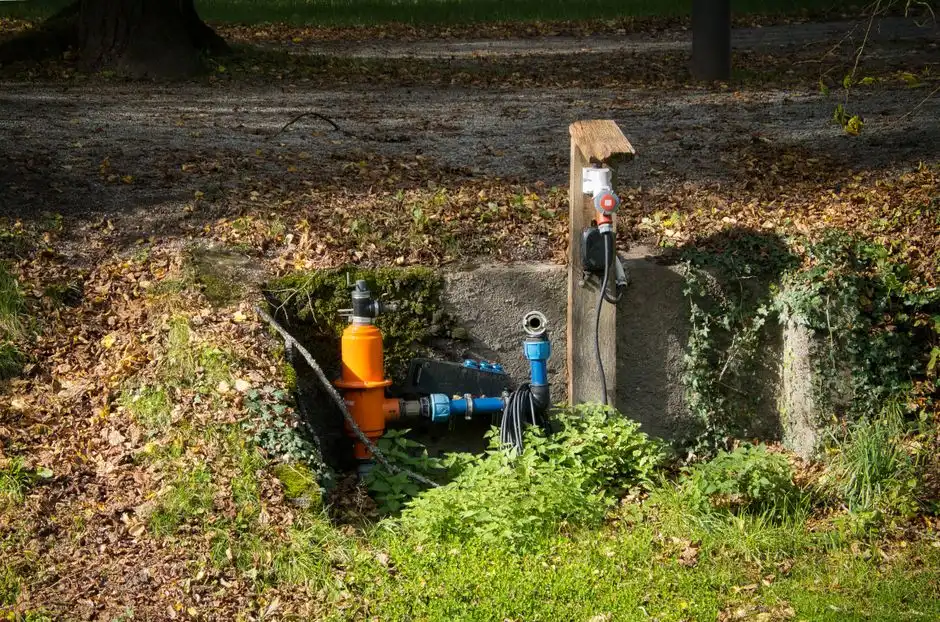
For budgeting before approaching suppliers, a packaged A/O plant in the Philippines runs ₱45,000–₱80,000 per m³/day of capacity (≈US$800–US$1,500 per m³/day), including tankage, blowers, and control panel. An MBR plant runs ₱90,000–₱120,000 per m³/day (≈US$1,600–US$2,200 per m³/day) once membrane modules and the membrane-replacement schedule are priced in. Electricity consumption is 0.8–1.5 kWh per m³ treated for A/O and 1.8–2.5 kWh/m³ for MBR; sludge hauling runs 2–5% of CAPEX annually. ECC and permitting add ₱50,000–₱200,000 depending on LGU and project class. Treat these as planning-class numbers, not vendor quotes. For a 200 m³/day development, A/O CAPEX lands at roughly ₱9M–₱16M and MBR at ₱18M–₱24M, before land and connection works. Chemical dosing for pH correction or nutrient polishing is typically handled by an automatic chemical dosing system sized to the design flow.
| Cost line | Packaged A/O | MBR | Notes |
|---|---|---|---|
| CAPEX (per m³/d) | ₱45,000–₱80,000 | ₱90,000–₱120,000 | Includes tankage, blowers, control panel, membranes |
| OPEX — electricity | 0.8–1.5 kWh/m³ | 1.8–2.5 kWh/m³ | MBR dominated by permeate pumps and air scour |
| OPEX — sludge hauling | 2–5% of CAPEX/yr | 2–5% of CAPEX/yr | Lower if plate press on site |
| Membrane replacement | N/A | Every 5–8 years | Plan ₱3,000–₱6,000 per m² of membrane area |
| Permitting / ECC | ₱50,000–₱200,000 | ₱50,000–₱200,000 | Class-driven; higher for > 500 m³/d |
| 200 m³/d total CAPEX (example) | ₱9M–₱16M | ₱18M–₱24M | Excludes land, interconnection, power upgrade |
Designing for Typhoons, Flooding, and Climate Resilience
After Typhoon Haiyan, 44% of collected water samples were contaminated three weeks post-disaster, and 65% tested positive for E. coli ten months later; contamination reached 70% of water sources, 67% of storage facilities, and 57% of distribution systems (Corpuz, PMC, 2024). The PMC commentary explicitly flags the need for resilient wastewater infrastructure in typhoon-exposed regions, and that requirement belongs in the engineering specification, not as an afterthought.
Specify the tank top of any buried or semi-buried packaged unit at or above the 100-year flood elevation for the site. Submersible or dry-pit pumps with IP68 rating survive inundation better than surface-mounted panels. Standby power must cover 4–8 hours for ordinary sites and 24+ hours for typhoon-prone coastal zones, with the generator sized for the blowers, permeate pumps, and control system. For effluent disinfection, integrate a chlorine dioxide disinfection system sized for the design flow; ClO₂ provides a measurable residual that survives intermittent distribution to the receiving water body, which is the operational condition during and after a storm.
Operation, Maintenance, and DENR-EMB Compliance Checklist
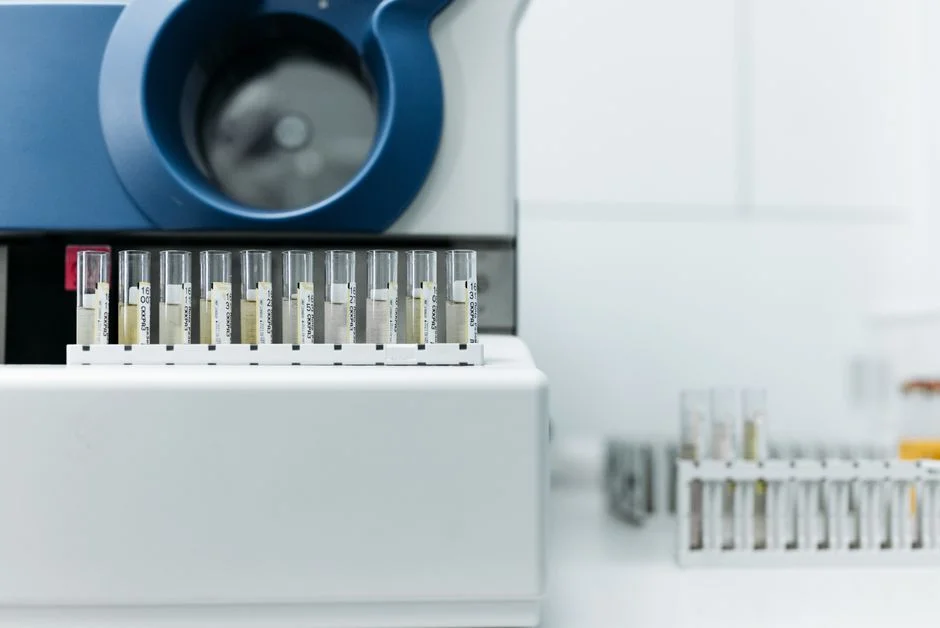
Monthly sampling by a DENR-accredited laboratory for BOD, COD, TSS, pH, FOG, and fecal coliform is mandatory; results are compiled in the Discharge Monitoring Report (DMR) and filed with the regional EMB office. Quarterly EMB inspection readiness means the operator must keep a logbook of influent flow, runtime hours, power consumption, sludge yield, and chemical dosing on site, signed and dated. For plants above 100 m³/day, on-site sludge dewatering via a plate-and-frame filter press reduces sludge volume by 75–85% before haul-off, which directly cuts OPEX. Plants above 190 m³/day must staff at least one DENR-accredited operator per shift under the DAO 2003-30 series. Day-to-day headworks and DAF maintenance follows a fixed protocol; the 12-step routine is documented in the DAF maintenance protocol.
Frequently Asked Questions
What effluent limits apply to a residential subdivision in the Philippines?
Under DAO 2016-08, residential developments discharging to surface water or for reuse must meet BOD ≤30 mg/L, COD ≤100 mg/L, TSS ≤30 mg/L, pH 6.0–9.0, and oil & grease ≤15 mg/L. Pre-treatment to a sewer requires only septic-tank effluent quality, typically BOD ≤100 mg/L.
How much does a packaged sewage treatment plant cost per cubic meter in the Philippines?
Planning-class 2026 benchmarks: ₱45,000–₱80,000 per m³/day for a packaged A/O plant (≈US$800–US$1,500) and ₱90,000–₱120,000 per m³/day for an MBR plant (≈US$1,600–US$2,200), excluding land, power upgrade, and permitting of ₱50,000–₱200,000.
How do you size a residential STP for a 200-house subdivision?
Apply 150–200 L per capita per day with a peaking factor of 1.5–2.5. For 200 houses at 5 persons each and 180 L/capita/day, average flow is 180 m³/day; at a 2.0 peaking factor, hydraulic capacity is 15 m³/h, which fits a packaged A/O unit with 8–12 hours HRT.
Is typhoon resilience a design requirement for Philippine STPs?
Yes. Post-Haiyan monitoring showed 44% water-source contamination three weeks after landfall and 65% E. coli positivity ten months later (Corpuz, PMC, 2024). Set the tank top above the 100-year flood elevation, specify IP68 pumps, and size standby power for 24+ hours in typhoon-prone zones.