The Compliance Framework for a Bowling Green Fabricator in 2026
A fabricated-metals plant discharging to the Bowling Green sanitary sewer in 2026 is governed by three nested regulatory layers, and the city-level layer is where most enforcement actions actually originate. At the federal tier, 40 CFR Part 433 (Metal Finishing) sets categorical pretreatment standards — expressed as both daily maximum and monthly average concentrations — for total metals (Cd, Cr, Cu, Ni, Pb, Zn), total cyanide, and oil & grease for any facility that performs plating, anodizing, etching, or chemical cleaning. 40 CFR Part 438 (Metal Products & Machinery) is the parallel standard that captures job shops and OEMs whose core work is forming, machining, or assembling — many Bowling Green fabricators sit squarely in 438 even if they never run a plating line. Sitting above both is 40 CFR Part 403, the General Pretreatment rule, which defines Significant Industrial Users (SIUs), mandates self-monitoring and reporting under 40 CFR 403.12, and grants the Control Authority authority to set site-specific caps.
Kentucky Division of Water runs an NPDES-delegated program (KPDES) and can independently sample, issue notices of violation, and refer cases to EPA Region 4. On top of the federal/state stack, the Bowling Green Municipal Utilities POTW issues Industrial User Permits under its Sewer Use Ordinance, and those limits are derived from a 40 CFR 403.5 local-limits evaluation tied to the plant's own biological capacity, sludge-management pathway, and headworks loading. In 2026 those local limits typically constrain Zn, Cu, Ni, Pb, total Cr, Cd, oil & grease, pH, and TSS simultaneously — and they are routinely at least as strict as the federal categorical maxima. Federal categorical ceilings versus typical Bowling Green local-limit ranges are summarized below.
| Pollutant | 40 CFR 433 daily max (mg/L) | 40 CFR 438 daily max (mg/L) | Typical Bowling Green local limit (mg/L) |
|---|---|---|---|
| Cadmium (Cd) | 0.11 | 0.10 | 0.05–0.10 |
| Total Chromium (Cr) | 2.77 | 2.50 | 1.0–2.0 |
| Copper (Cu) | 3.38 | 3.00 | 1.0–2.0 |
| Lead (Pb) | 0.69 | 0.50 | 0.20–0.50 |
| Nickel (Ni) | 3.98 | 3.00 | 1.0–2.0 |
| Zinc (Zn) | 2.61 | 1.50 | 1.0–2.0 |
| Oil & Grease | 52 | 50 | 100–200 (daily max) |
| pH (s.u.) | — | — | 6.0–10.0 |
| TSS | — | — | 200–400 |
A useful parallel: the Summer Shade chemical-plant pretreatment guide walks through the same Part 403 logic, but at a much narrower SIC-code scope. The metals-fabrication sector faces a broader pollutant envelope, so the local-limits conversation is the binding constraint rather than the federal categorical ceiling. Build every process decision around the IU permit envelope first, then confirm federal categorical compliance as a backstop.
What Comes Out of a Fabricated Metals Plant: Contaminant Profile
Wastewater at a Bowling Green job shop or OEM is not a single stream — it is a set of batched, episodic flows that hit the sewer at different pH, temperature, and loadings. A realistic flow split typically includes spent cutting fluids and machine coolant flushes (5–15% of total volume, but the dominant FOG load), parts-washer discharge (solvent or aqueous), rinsing and dragout from plating or passivation, passivation/etch/pickling bath overflows, and metal-finishing rinsewater (per ChemREADY's metal-fabrication context, stainless steel, carbon steel, aluminum, and nickel alloys are the dominant alloys, and each one shifts the dominant metal in the wastewater — Cr/Ni from stainless, Fe from carbon steel, Al from aluminum, Ni from nickel alloys). Floor wash, blowdown from cooling towers, and periodic hauler-truck discharges add intermittent spikes that the equalization basin must absorb.
Key pollutant groups: free and emulsified oils (FOG can run 1,000–10,000 mg/L straight out of a coolant sump), total suspended solids from grinding swarf, deburring dust, and chip fines (often 200–2,000 mg/L), dissolved heavy metals from pickling and plating rinsewater (Ni, Cr, Cr(VI), Cd, Cu, Zn, Pb), pH extremes (acid pickling can drive pH below 2; alkaline cleaning can exceed pH 12), and complexing agents (EDTA, ammonia, citrate) that hold metals in solution and defeat simple hydroxide precipitation. Even a "no-discharge" shop that evaporates or hauls its spent bath will still generate periodic blowdown and floor wash that eventually reach the sanitary sewer through the monitoring point.
The 2026 Pretreatment Process Train: Unit Operations and Parameters
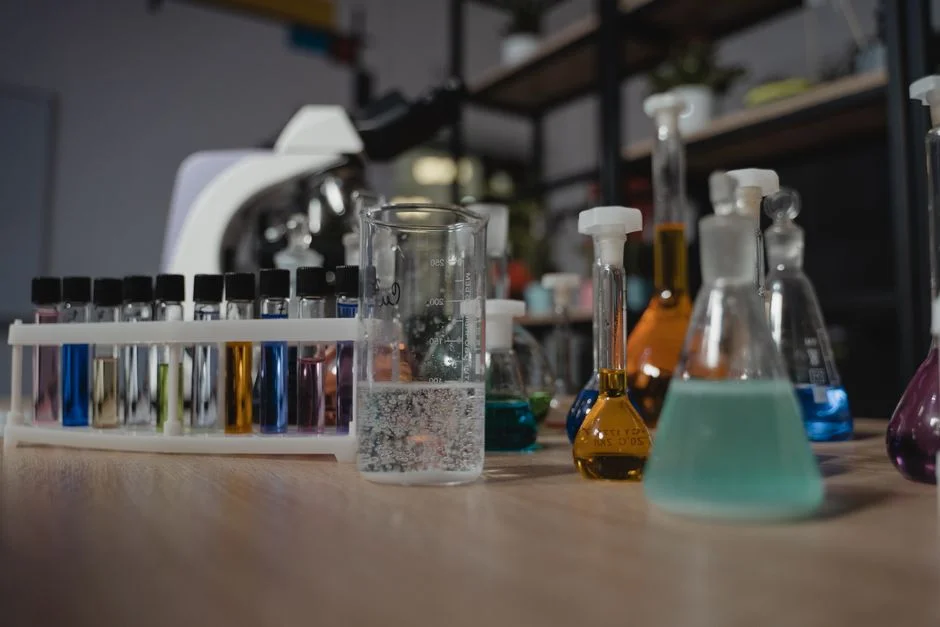
The reference process train below is what reliably brings Bowling Green fab-shop wastewater below 40 CFR 433/438 categorical maxima and inside a typical BG POTW local-limits envelope in 2026. Each stage has a defined job, a defined parameter range, and a defined target pollutant. The train is headworks → equalization → oil/water separation → metals precipitation → clarification → polishing filtration → final pH adjustment → sludge dewatering, with PLC interlocks tying chemistry to flow.
- Stage 1 — Headworks. A GX-series rotary mechanical bar screen with stainless steel rake teeth removes rags, chips, fibrous wipes, and stringy cutting-floor debris before it reaches the lift station. Spacing typically 3–6 mm, automatically raked.
- Stage 2 — Equalization. A 24–72 hour HRT equalization basin with diffused aeration mixing dampens pH, flow, and concentration swings so downstream chemistry is not chasing a moving target.
- Stage 3 — Oily water / DAF. A dissolved air flotation system rated 4–300 m³/h across 13 standard models, with micro-bubble generation (typically 30–50 μm bubbles at 4–6 bar saturation) and automatic skimming. This stage knocks out free oil, emulsified oil, and FOG, typically to <50 mg/L at the DAF outlet when feed FOG is below 5,000 mg/L.
- Stage 4 — Chemistry / metals precipitation. Two-stage pH adjustment: first stage reduction of any hexavalent chromium to Cr(III) with FeSO₄ or Na₂S₂O₅ at pH ~2 with ORP held at +250 to +300 mV; second stage precipitation with caustic to pH 9.0–9.5 to drop Ni, Cu, Zn, Cd, and Cr(III) as metal hydroxides. Sulfide (NaHS) or DTC dosing is used for tighter residual metals.
- Stage 5 — Clarification. A high-efficiency lamella clarifier at 20–40 m/h surface-loading rate with sludge recirculation (recycle ratio 3–5%) cuts coagulant demand up to 30% and produces a 2–4% dry-solids underflow.
- Stage 6 — Polishing filtration. Multi-media or sand filter to catch clarifier carryover and protect the discharge compliance point, typically rated to <30 mg/L TSS.
- Stage 7 — Final pH adjustment. A PLC-controlled automatic chemical dosing system with pH probe in the discharge header brings effluent into the 6.0–10.0 s.u. window required by the IU permit and logs setpoints for 40 CFR 403.12 reporting.
- Stage 8 — Sludge handling. Metal-hydroxide sludge from the clarifier underflow is dewatered with a plate-and-frame filter press at 1–500 m² filtration area, producing a 25–35% dry-solids cake suitable for RCRA characterization and off-site disposal.
| Stage | Unit operation | Design parameter | Target pollutant | Typical removal / outlet |
|---|---|---|---|---|
| 1 | Rotary bar screen | 3–6 mm spacing | Rags, chips, fibers | >90% debris capture |
| 2 | Equalization basin | 24–72 h HRT | Flow/pH/conc. swings | ±10% feed variation downstream |
| 3 | DAF | 4–300 m³/h; 4–6 bar sat. | Free & emulsified oil, FOG | FOG <50 mg/L from <5,000 mg/L feed |
| 4a | Cr(VI) reduction | pH 2.0–2.5; ORP +250 to +300 mV | Hexavalent chromium | Cr(VI) <0.1 mg/L |
| 4b | Metal hydroxide precipitation | pH 9.0–9.5; sulfide/DTC dosing | Ni, Cu, Zn, Cd, Cr(III), Pb | Each metal <1.0 mg/L |
| 5 | Lamella clarifier | 20–40 m/h SLR; 3–5% recycle | Metal-hydroxide floc, TSS | TSS 20–50 mg/L |
| 6 | Multi-media filter | 10–15 m/h filtration rate | Carryover TSS | TSS <30 mg/L |
| 7 | Final pH adjust | 6.0–10.0 s.u. | pH | Within POTW window |
| 8 | Plate-and-frame press | 1–500 m²; 6–15 bar | Sludge water | 25–35% DS cake |
For broader context on the back end of this train — particularly the TCLP and RCRA hazardous-waste determination that governs cake disposal — see the foundry wastewater sludge treatment guide, which covers the same metal-hydroxide cake pathway at higher iron loadings.
Local Limits and the Bowling Green POTW: Where Plants Actually Get Caught
Federal categorical compliance is the entry ticket; the Sewer Use Ordinance is the test you keep taking. The Bowling Green Municipal Utilities POTW issues Industrial User Permits with site-specific mass limits (lb/day) and concentration limits (mg/L) derived from a 40 CFR 403.5 local-limits evaluation, and those evaluations are rerun whenever the receiving plant's treatment capacity, sludge disposal pathway, or industrial customer mix changes. In practice, 2026 local limits in Bowling Green enforce Best Management Practices (BMPs) plus numeric caps on oil & grease (daily max often 100–200 mg/L), Zn, Cu, Ni, Pb, total Cr, Cd, pH, and TSS — frequently tighter than the 40 CFR 433 ceilings shown above. Most 2026 IU permits in the BG service area also include a 24-hour composite sampling requirement at the designated monitoring point (typically the last treatment unit before the sanitary sewer connection), preserved for metals analysis per 40 CFR 136, plus a self-monitoring cadence (often monthly) and a renewal cycle of 3–5 years.
What actually trips plants up in 2026 is not the heavy metals — those are well-controlled by DAF + precipitation — it is oil & grease excursions from a coolant leak upstream, pH excursions during a batch dump of spent pickle acid, and the rising expectation from the Kentucky Division of Water that fabricators characterize PFAS inputs from any PTFE-containing coolant or anti-spatter spray. Build the audit and upgrade program around these three failure modes, not the metals.
2026 Pretreatment Audit and Upgrade Checklist for Bowling Green Fabricators
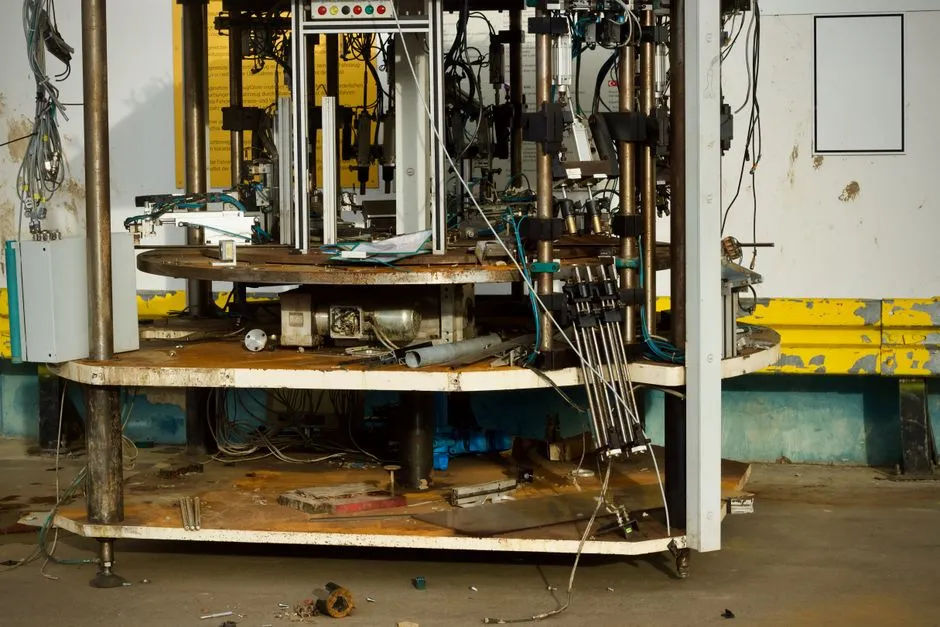
- Permit renewal. Pull the current IU permit; confirm expiration date and renewal cycle (typically 3–5 years); flag any production-chemistry change (new alloy, new coolant, new pickling acid) since the last issuance — all are reportable under 40 CFR 403.12.
- Instrumentation. Confirm pH/ORP probes, flow meters, and the DAF skimmer drive are on a documented calibration schedule with traceable standards; retain calibration logs for the 403.12 reporting file.
- Cr(VI) reduction. Walk the reduction stage: confirm the FeSO₄ or Na₂S₂O₅ dose pump is operational, that ORP is logged continuously, and that the upstream pH setpoint is held at 2.0–2.5 — not 4, not 6.
- Sludge characterization. Pull the most recent TCLP result on the filter-press cake; confirm RCRA hazardous-waste determination is current, and that the hauler manifest chain of custody is on file.
- 2026 readiness. Plan a readiness review covering PFAS source reduction (coolant reformulation, anti-spatter alternatives), rinsewater reuse with RO polishing, and a cybersecurity review of the PLC/SCADA controlling the chemical dosing system — all three are emerging audit lines in 2026 BG inspections.
Frequently Asked Questions
Which federal categorical standard applies to a fabricated metals plant in Bowling Green — 40 CFR 433 or 40 CFR 438?
If the facility performs any plating, anodizing, etching, or chemical cleaning, 40 CFR Part 433 (Metal Finishing) is the controlling standard. If the work is primarily forming, machining, welding, or assembly with no wet chemistry, 40 CFR Part 438 (Metal Products & Machinery) typically applies. Most BG job shops fall under 438; shops with even a small plating or passivation line usually trigger 433 as well.
What is the typical hydraulic capacity of a DAF unit for a small-to-mid-sized Bowling Green fabricator?
Most BG job shops generating 50–500 m³/d of wastewater fit a dissolved air flotation system in the 5–50 m³/h range, sized to handle the 3–5× peak hourly flow that batch coolant dumps and shift-end rinses create. The full DAF line spans 4–300 m³/h across 13 standard models.
How is hexavalent chromium handled in a 2026 metals-fabrication pretreatment train?
Cr(VI) must be reduced to Cr(III) before metal-hydroxide precipitation, because hydroxide precipitation alone will not remove the hexavalent form. The standard 2026 approach is FeSO₄ or Na₂S₂O₅ dosing at pH 2.0–2.5 with the ORP probe held at +250 to +300 mV, followed by a raise to pH 9.0–9.5 to drop the resulting Cr(III) as chromium hydroxide.
Does the Kentucky Division of Water set its own discharge limits, or only enforce the federal ones?
Both. Kentucky Division of Water operates an NPDES-delegated (KPDES) pretreatment program and can independently sample, issue NOV, and refer cases to EPA Region 4 — but for industrial users discharging to a POTW, the binding numeric limits come from the Bowling Green POTW's Industrial User Permit under its Sewer Use Ordinance, which is routinely tighter than the federal categorical ceiling.