London Cooling Blowdown: What Treatment a Data Centre Needs
London cooling blowdown needs a consent-led train. Typical Thames trade-effluent bands drive free chlorine below 1 mg/L (often ≤0.5 mg/L), pH 6–9, sewer temperature ≤43°C, and TDS often near 2,000 mg/L. The train cools, dechlorinates on ORP, corrects pH, filters, then discharges or reuses.
The public conversation on data-centre water is shifting from "how many litres" to "what happens to the water after use" (per Water Utility Report, 2026-04). For a London site, that reframing lands on the blowdown stream: the consent it leaves under, the temperature and chemistry caps it must hit, and the Mogden-formula tariff the utility then bills. Make-up intake matters, but the discharge envelope sizes the treatment train.
A London developer faces overlapping obligations. Building Regulations Part G sets the water-efficiency target for new build. BREEAM Wat 01 credits reward demonstrated reduction in potable demand. An Environment Agency environmental permit governs any discharge to a watercourse, with tighter temperature, metals and TDS limits than a sewer consent. Most sites discharge to the public sewer under a Thames Water trade-effluent consent. Billing follows the Mogden formula as Os + Ot × COD + 3 × Ot × SS — a tariff that punishes both volume and load (Thames Water trade-effluent charging framework).
The design driver is not the headline water figure. A 100 MW facility can use up to 2 million litres per day (IDE, 2026), but the stream that decides capex is the smaller, saltier, warmer bleed the cooling loop must purge. Loop mass balance fixes the trade-off in one line: B = E ÷ (N−1). Higher cycles cut blowdown volume sharply but raise its TDS, temperature, biocide residual and metal load. That push adds unit operations. A chemistry-aware London design reads that line backwards, picking the cycles and unit operations that hit every consent band at the lowest Mogden cost per cubic metre.
The Six Determinands That Decide a London Blowdown Treatment Train
Every consent sets numeric limits on individual determinands, and the parameter with the smallest margin governs the whole train. For London, six determinands reliably do that work: TDS, free chlorine (or bromine) residual, temperature, pH, suspended solids, and dissolved metals (Cu, Zn, Fe) from corrosion. Oxidising biocides used for Legionella control leave a residual that almost every consent caps at well below 1 mg/L. Blowdown leaves warm. Acid dosing and antiscalants push pH out of the 6–9 band. Copper, zinc and iron surfaces shed metals into the loop (per Reynolds & Bauhm, 2026).
| Determinand | Typical London / UK consent band | Closing unit operation |
|---|---|---|
| Total Dissolved Solids (TDS) | Site-specific, commonly ~2,000 mg/L cap on a Thames trade-effluent consent; tighter for watercourse discharge | Cycles-of-concentration control; side-stream membrane recovery |
| Free chlorine / bromine residual | <1 mg/L on virtually every consent (often ≤0.5 mg/L) | Flow-paced sodium bisulphite dechlorination with ORP trim |
| Temperature | ≤43°C to sewer; tight rise-above-ambient cap to watercourse (often <5°C) | Plate heat-exchanger cooling stage; dilution control |
| pH | 6–9 typical for sewer and watercourse consents | Acid / alkali dosing, pH-corrected before precipitation stages |
| Suspended solids | Consent-specific, typically 30–200 mg/L band on Thames consents | Multi-media filtration; coagulation if needed |
| Dissolved metals (Cu, Zn, Fe) | Low mg/L, determinand-specific — typically <1 mg/L on individual metals | pH control + coagulation / precipitation + media filtration |
Two of these determinands drive capital on a London site. Temperature is decisive when discharge is to a watercourse, because the rise-above-ambient cap is so tight that a cooling stage sits at the front of the train. TDS is decisive on a sewer consent. A make-up baseline of around 350 mg/L (Thames hard water) at N = 6 cycles concentrates the bleed to roughly 2,100 mg/L — over a 2,000 mg/L cap. pH correction must precede any precipitation stage, otherwise coagulant dose and metal removal both drift out of band.
A 2026 London Treatment Train, Ordered Tightest-Determinand First
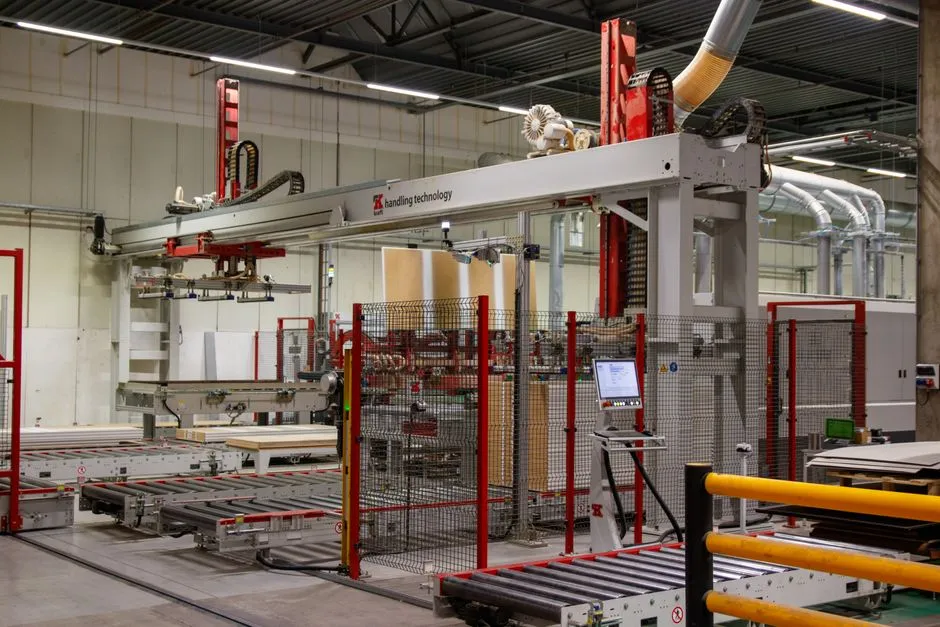
The sequence of the treatment train is determined by the order in which determinands fail to meet regulatory standards. A 2026 London blowdown train runs from sump to plate heat-exchanger cooling, then flow-paced sodium bisulphite dechlorination with ORP trim. Acid/alkali pH correction to 6–9 follows, then a multi-media filtration stage for suspended solids and metals polish, then the consented discharge point. A side-stream RO branch is added where reuse is economic. The bisulphite stage runs on ORP rather than fixed dose because free-chlorine residual varies with biocide rotation. A PLC-controlled bisulphite and pH dosing skid holds the trim.
Stoichiometry is short. Roughly 1.5 mg of sodium bisulphite quenches 1 mg of free chlorine, with a small excess to guarantee the consent limit without overdosing sulphite — itself an oxygen-demanding load if added in gross excess. The dose is flow-paced to the blowdown and trimmed on an ORP or residual-chlorine analyser (per Reynolds & Bauhm, 2026). Most plants we size for London colocation run the trim analyser on ORP first, then confirm residual chlorine on grab samples during commissioning.
Acid dosing, antiscalants and corrosion of copper, zinc and iron surfaces all push pH and metals out of band. pH correction must precede, not follow, any precipitation or coagulation stage — get the carbonate chemistry wrong and metals re-dissolve on the way to the filter. For sites where the sewer consent is tight or the watercourse route is the only option, the design moves beyond compliance and into controlled chemistry. The logic described in IDE's MAXH₂O architecture is to precipitate silica, calcium carbonate and calcium sulphate as dense solids in a fluidised bed. That step sits before the brine reaches the membranes, so the remaining concentrate is dominated by NaCl. Conventional brackish-water RO caps at 75–80% recovery on cooling-tower blowdown. A chemistry-aware train pushes towards 95% with permeate silica around 1 mg/L (IDE, 2026).
Sizing a 5 MW London Loop: Cycles, Blowdown Volume and Mogden Cost
A 5 MW evaporative loop rejects heat at roughly 7.6 m³/h of make-up lost as evaporation (per Reynolds & Bauhm, 2026). Held at N = 6 cycles, the blowdown bleed is B = 7.6 ÷ (6−1) = 1.52 m³/h. With a London make-up TDS of about 350 mg/L, the blowdown concentrates to roughly 6 × 350 = 2,100 mg/L — just over a typical 2,000 mg/L Thames consent cap. Cycles must ease back towards N ≈ 5.7, or a recovery stage is added, to comply.
| Parameter | Value at N = 6 | Value at N = 5.7 (consent-tight) |
|---|---|---|
| Evaporation, E | 7.6 m³/h | 7.6 m³/h |
| Cycles of concentration, N | 6.0 | 5.7 |
| Blowdown, B = E ÷ (N−1) | 1.52 m³/h | 1.62 m³/h |
| Make-up TDS | ~350 mg/L (Thames baseline) | ~350 mg/L |
| Blowdown TDS ≈ N × make-up | ~2,100 mg/L (over 2,000 mg/L cap) | ~2,000 mg/L (at cap) |
| Annual blowdown volume | ~13,300 m³/yr | ~14,200 m³/yr |
| NaHSO₃ dose (0.5 mg/L Cl₂ × 1.5 × 1.5) | ~1.1 g/h + small excess | ~1.2 g/h + small excess |
| Mogden charge structure | Os + Ot × COD + 3 × Ot × SS (consult current Thames Water charges) | Os + Ot × COD + 3 × Ot × SS |
The dechlorination dose is small in absolute terms. Quenching 0.5 mg/L free chlorine at 1.5 m³/h needs roughly 1.5 × 0.5 × 1.5 ≈ 1.1 g/h of sodium bisulphite, plus a modest excess verified on ORP. The Mogden line — Os + Ot × COD + 3 × Ot × SS — converts the 1.52 m³/h directly into a recurring operating cost. With the volumetric Os charge plus COD and SS loadings, a 5 MW colocation site can see the annual Mogden bill move by tens of thousands of pounds. Cycles, pretreatment and discharge consent are the usual tuning levers. Engineers should consult the current Thames Water charges before committing to a design point. Where a high-recovery RO polishing stage is added, both make-up and Mogden-billable volume drop together.
How Effective Is Data-Center Water Recycling?
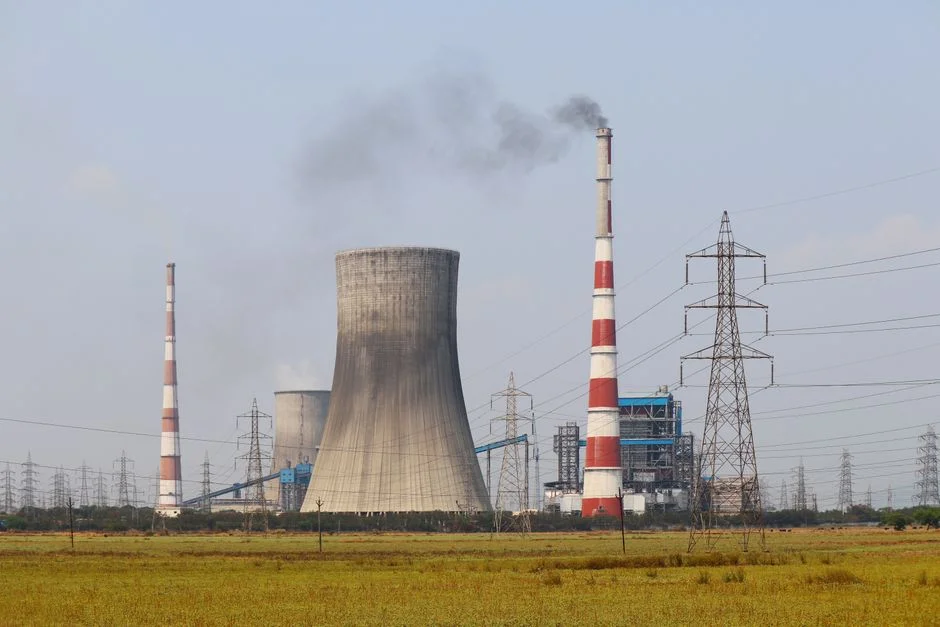
Data-center water recycling effectiveness depends on loop scale, make-up cost and the local permit, not on a stock membrane skid. Cooling-tower blowdown is 20–25% of make-up at 4–6 cycles and is already conditioned water at useful temperature (per Genesis Water Technologies, 2026) — that is the resource frame, not the disposal frame. Conventional BWRO caps at 75–80% recovery on cooling-tower blowdown before scaling becomes unmanageable. Controlled-precipitation trains reach around 95% with permeate silica around 1 mg/L (IDE, 2026). Reuse is a chemistry decision.
| Option | CAPEX band (relative) | OPEX driver | Water-stress suitability | London permit complexity |
|---|---|---|---|---|
| Dechlorinate + pH-correct + discharge | Low (dosing skid + cooling) | Mogden volume + COD + SS charge; bisulphite and acid/alkali | Poor — no net withdrawal cut | Low — single trade-effluent consent |
| Media filtration + reuse for non-critical services (toilet flush, irrigation) | Low–medium | Filter media change; reduced Mogden volume | Moderate — cuts 15–25% of make-up | Low–medium — reuse end-use must be consented |
| High-recovery RO reuse as cooling-tower make-up | High (membrane + controlled precipitation) | Membrane replacement, antiscalant, energy; very low Mogden volume | Strong — collapses the loop's net water demand | High — permeate quality, cross-connection control, EA permit review |
An on-site ClO₂ generator also belongs in this matrix where the operator wants to drop oxidising-biocide residual at source and simplify downstream dechlorination. The trade-off resolves cleanly at London scale. A hyperscale 100 MW facility can amortise high-recovery RO blowdown reuse, while a 5 MW colocation usually cannot. A tuned discharge-and-lower-cycles strategy is then the rational answer. The central-European precedent for blowdown treatment in Prague 2026 (central-European blowdown treatment precedent) points the same way. Broader 2026 industrial water-stress benchmarks (2026 industrial water-stress data and reuse benchmarks) do too. Reuse pays when loops are large and make-up is expensive, not on a 5 MW London loop with a workable sewer consent.
Where Do High-Purity Systems Fit Cooling Loops?
High-purity water systems support data-center cooling when make-up quality or reuse permeate must stay inside the loop's silica, conductivity and biocide envelope. On a London evaporative train, the high-purity step is usually the side-stream RO polish after precipitation and media filtration, not a standalone UPW plant for every megawatt. Permeate silica around 1 mg/L at about 95% recovery (IDE, 2026) is the performance band cited for chemistry-aware blowdown reuse. Conventional BWRO without that pretreatment stays at 75–80% recovery.
Closed-loop cooling towers and liquid-cooled halls change the wastewater picture. With little or no evaporative bleed, London cooling blowdown volume collapses and the consent problem shrinks to intermittent drain-downs, filter backwash and chemical dumps. Those intermittent loads still need dechlorination, pH control and solids capture before sewer entry, but they rarely justify a continuous high-recovery membrane train. Match the purity package to the heat-rejection mode first, then to the consent.
Who This Is For and Next Step
This guide is for London developers, MEP engineers and EPC contractors sizing evaporative cooling on colocation or hyperscale halls. It applies where discharge sits under Thames Water or Environment Agency rules. Teams running fully closed-loop or dry-cooled halls with negligible bleed should look elsewhere for UPW or adiabatic design notes. Before freezing cycles and skid scope, send loop duty, make-up TDS and the draft consent limits through a cooling blowdown treatment inquiry. Dosing, filtration and any RO branch can then be matched to the Mogden bill.
Frequently Asked Questions
What consent does a London data centre need to discharge cooling-tower blowdown?
A London site discharging to the public sewer needs a Thames Water trade-effluent consent billed under the Mogden formula as Os + Ot × COD + 3 × Ot × SS. Discharge to a watercourse instead requires an Environment Agency environmental permit with tighter temperature, metals and TDS limits. Most London halls use the sewer route. The consent bands, not the headline water-use figure, size dechlorination, cooling and filtration.
What wastewater does a data centre in London produce?
Cooling-tower blowdown is the dominant industrial wastewater stream on evaporative London halls, typically 70% to 90% of that volume. It carries concentrated minerals, biocides, corrosion inhibitors and scale-control agents at elevated conductivity and alkalinity. Secondary loads include equipment washdowns, mechanical-room floor drainage and sanitary waste from occupied areas. Closed-loop or dry-cooled halls shift the profile toward intermittent drains rather than continuous bleed.
How do you treat cooling tower blowdown for discharge to sewer in the UK?
Sewer discharge treatment follows the site Trade Effluent Consent, usually Thames Water in London. The common train cools the bleed, doses sodium bisulphite to quench free chlorine, corrects pH into the 6–9 band, then filters suspended solids and metals before the consented outlet. Extra coagulation or precipitation is added when Cu, Zn or Fe sit near their limits. COD, temperature and mineral caps in the consent set the final acceptance tests.
What is the TDS limit for cooling tower blowdown discharge to Thames Water?
Thames Water does not publish one universal TDS limit for every discharge point. Limits are set site-by-site from sewer capacity and the receiving works' saline load. London data-centre consents commonly sit near a 2,000 mg/L cap; negotiated bands elsewhere may run about 2,000–5,000 mg/L when dilution is proven. At ~350 mg/L Thames make-up, N = 6 already yields ~2,100 mg/L blowdown, so cycles or recovery must respond.
Can cooling tower blowdown be reused as make-up water in a data centre?
Yes, blowdown can return as cooling-tower make-up after desalting, usually with reverse osmosis and, on tight chemistry, controlled precipitation ahead of the membranes. Recovery systems can cut total water use by 50% to 80% depending on cycles. Conventional BWRO alone often tops out at 75–80% recovery on this stream. The brine still needs a consented outlet, and cross-connection controls apply. On London 5 MW loops a tuned discharge train is often cheaper than full reuse.