The Real Choice Grenada Paper Mills Face in 2026
For a Grenada pulp & paper mill in 2026, the specification question on the table is narrow: install a Dissolved Air Flotation (DAF) unit or a lamella clarifier as the primary solids-removal step ahead of any biological polishing. The influent carries degradation products of carbohydrates, lignin, and wood extractives, and in bleach-plant streams it carries chlorinated resin acids, phenols, and dioxins (per the Bioresources review of P&P wastewater practices, bioresources.cnr.ncsu.edu). On a small island the operating envelope is tighter still: typical mill flows sit between 5 and 50 m³/h, equalisation basins are small or absent, and wet-season rainfall routinely dilutes the liquor by 30–60% within hours.
That combination — high and variable TSS, no large buffer, and no public POTW to fall back on — forces a head-to-head decision rather than a textbook comparison. The two technologies treat the same wastewater through different physics. A DAF system floats floc with micro-bubbles; a lamella clarifier settles it on inclined plates. Canada's Pulp and Paper Effluent Regulations under CEPA remain the internationally accepted performance ceiling for chlorinated organics and TSS, and they set the benchmark Grenada's national environmental authority expects new equipment to meet (Bioresources review, 2026). Engineers must understand how each unit behaves on P&P liquor to defend the procurement choice.
How a DAF System Treats Pulp & Paper Liquor
A DAF unit saturates a pressurised recycle stream with air, then releases it through needle valves at near-atmospheric pressure inside the contact zone, generating 10–80 µm micro-bubbles that attach to flocculated particles and lift them to the surface in 15–30 minutes (HydropureWater DAF product data, 2026). Skimmers sweep the float layer into a sludge hopper; clarified underflow exits the bottom. Across the 13 standard DAF models, flow coverage runs from 4 m³/h to 300 m³/h, which aligns with the 5–50 m³/h envelope of a Grenadian mill.
On industrial streams carrying oil, grease, and suspended solids, continuous DAF is an effective primary separation step, with high removal of the floatable fraction reported on refinery and petrochemical wastewater (Durban University of Technology, 2026). The same mechanism translates to P&P whitewater: DAF handles fibre fines, fillers such as kaolin, calcium carbonate, and titanium dioxide, stickies, de-inking residues, and the COD associated with those particulates. A short retention time is the operational advantage for a small plant — the unit reacts to a flow change inside half an hour, not the several hours a settling tank needs to stabilise. Pairing the DAF with an automatic chemical dosing system keeps the flocculation condition stable when flow swings, which is critical when wet-season dilution hits the influent.
How a Lamella Clarifier Treats Pulp & Paper Liquor
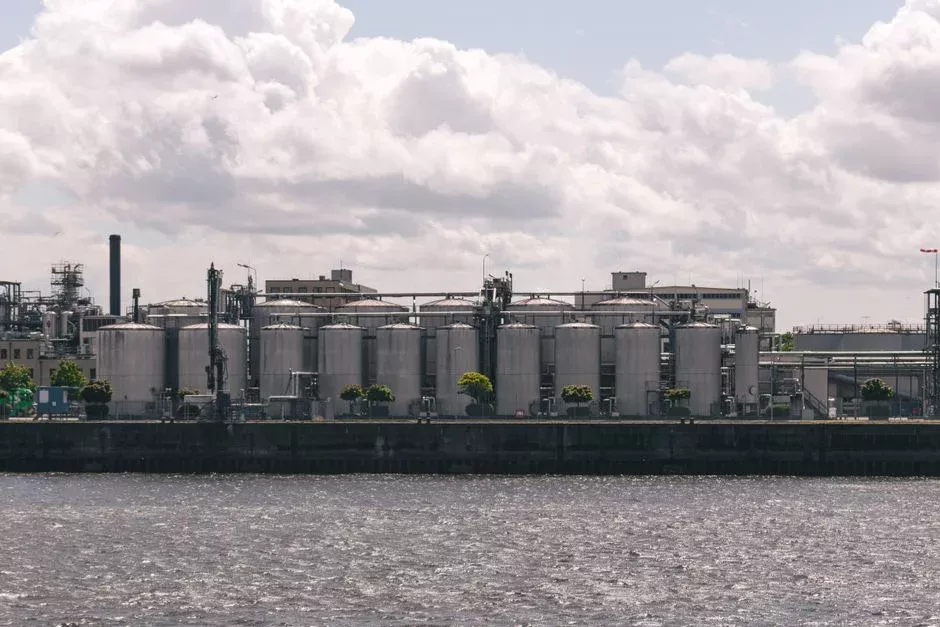
A lamella clarifier is a gravity settler fitted with a pack of inclined plates at 55–60°, which multiplies the effective settling area by 5–10× compared with a conventional clarifier of the same footprint. Sludge recirculates from the hopper back into the flocculation zone to keep the blanket in contact with incoming solids; clarified water rises through the plate pack and exits over peripheral weirs. Surface loading on packaged units typically sits between 20 and 40 m³/m²/h (HydropureWater catalog, 2026).
The lamella handles heavier settleable fibre, grit, and well-flocculated filler, and the catalog figure of 30% lower coagulant and polymer consumption versus conventional clarification is the main OPEX lever in the comparison. The trade-off is the colloidal fraction: light stickies, de-inking foam, and very fine fibre tend to drift rather than settle, escaping over the weirs. Construction is also a Caribbean-relevant point. A concrete tank can be cast on-island with local labour; the plate pack itself is normally shipped as a packaged insert, so no specialist welding crew is required at site. The lamella clarifier wins on shipped-mass-per-cubic-metre-treated when the island lacks a heavy-fabrication contractor.
DAF vs Clarifier on Pulp & Paper: 2026 Comparison Matrix
The table below consolidates the operating parameters an engineer in St. George's must defend in a CAPEX meeting. Removal numbers for P&P-specific TSS and COD vary by furnish, de-inking chemistry, and polymer dose; request jar-test data from the vendor for the mill's specific liquor.
| Parameter | DAF | Lamella Clarifier |
|---|---|---|
| Typical TSS removal on P&P whitewater | 80–95% (request vendor jar-test data) | 50–85% (request vendor jar-test data) |
| Typical COD removal on P&P whitewater | 40–70% on particulate COD; lower on dissolved | 30–55% on settleable COD; colloidal fraction escapes |
| Retention time | 15–30 min | 2–4 h |
| Footprint per 10 m³/h | ~3–5 m² (packaged skid) | ~6–10 m² (incl. plate pack and sludge zone) |
| Power draw | 0.08–0.15 kWh/m³ (recycle pump, saturator, skimmer) | 0.02–0.05 kWh/m³ (sludge recirculation, optional scraper) |
| Chemical demand (PAC + polymer) | Baseline | ~30% lower vs conventional clarifier (HydropureWater catalog, 2026) |
| CAPEX band, 10 m³/h unit, FOB Asia | USD 28,000–55,000 skid-mounted | USD 12,000–25,000 packaged insert; concrete tank adds USD 8,000–15,000 |
| OPEX band | Higher power + air system maintenance | Lower power; chemical freight and duty dominate |
| Operator skill required | Moderate — saturator pressure, recycle ratio, polymer dose | Low-to-moderate — sludge bed, polymer dose, weir cleaning |
| Sensitivity to flow surges | Tolerates ±30% swings inside 30 min | Poor — surges carry floc over the weirs |
| Suitability for 25–32 °C tropical water | Good — warm water reduces air solubility marginally; recycle compensates | Good — viscosity drops aid settling |
| Best fit for a Grenada P&P mill | Variable flow, high TSS, fibre recovery, containerised install | Steady flow, settleable solids, lowest imported-chemical OPEX |
The DAF's retention time is roughly an order of magnitude shorter, which allows the system to ride out wet-season dilution spikes that would otherwise force untreated liquor over the weir. Additionally, the lamella's 30% lower chemical dose is amplified in Grenada because every kilogram of imported PAC or polymer carries freight and import duty.
When to Pick DAF, Clarifier, or Both
The decision tree below outlines the selection process for non-technical stakeholders.
Pick a DAF system if the influent TSS is consistently above ~800 mg/L, the flow swings more than ±20% on a typical shift, the mill can sell or reuse recovered fibre and filler, the site footprint is constrained, or the equipment must arrive in a container and be craned into place. DAF also wins when the whitewater carries stickies and de-inking residues that resist settling.
Pick a lamella clarifier if the flow is steady, the solids are predominantly settleable fibre and grit, OPEX and imported-chemical costs dominate the 5-year business case, and a locally cast concrete tank is cost-effective. The lamella is the right call when the operator can manage a sludge bed and the influent lacks a heavy colloidal fraction.
Pick a hybrid (DAF → lamella) if the mill is upgrading and cannot shut down the existing clarifier, or if the influent carries both high fibre load and a stubborn colloidal carryover. The Bioresources review of P&P wastewater notes that hybrid anaerobic/aerobic polishing is the most appropriate configuration for the industry to meet environmental regulations and reduce energy costs (bioresources.cnr.ncsu.edu, 2026); this logic applies upstream as well—combine primary units when neither alone meets the full requirement.
Grenada-Specific Siting, Compliance and Cost Notes
A Caribbean SIDS specification differs from North American standards due to logistics and energy costs. Three realities dominate: containerised shipping, the lack of a large publicly owned treatment works for blending, and high energy costs which make recycle attractive. Hurricane-rated enclosures or a concrete masonry room are worth budgeting for both system types.
For compliance, the international anchor is Canada's PPER under CEPA, which controls BOD, TSS, and the chlorinated dioxin/furan fraction from bleach plants (Bioresources review, 2026). Grenada's national environmental management agency applies its own discharge and reuse guidelines, but specifying against PPER keeps the design defensible to directors and export customers. Primary clarification alone is insufficient; recalcitrant organics require biological polishing or advanced oxidation, and a packaged MBR biological polishing system is the typical next step on a small island footprint.
On cost, the lamella's 30% lower chemical use (HydropureWater catalog, 2026) compounds in Grenada due to ocean freight, customs duty, and demurrage. A 50 m³/h mill running a 50 mg/L polyacrylamide dose saves roughly 1.1 kg/h of imported polymer versus a conventional clarifier—about 9 tonnes per year—which represents a significant OPEX line. Reference benchmarks for how large operators treat the same liquor train can be found in this 2026 process guide on how International Paper treats wastewater at its paper mills, and the broader layout is covered in a DAF + biological treatment process guide for adjacent food-and-beverage plants.
Frequently Asked Questions
Which is better for high-fibre pulp & paper whitewater — DAF or clarifier?
For high-fibre whitewater above ~800 mg/L TSS with variable flow, a DAF is the stronger primary unit: micro-bubble flotation removes 80–95% of TSS in 15–30 minutes and recovers fibre for reuse. A lamella clarifier only outperforms DAF on OPEX and chemical use when the flow is steady and the solids are settleable.
Can a lamella clarifier replace a DAF on a paper mill in the Caribbean?
Yes, provided the influent is settleable, the flow is buffered, and the colloidal stickies fraction is low. A lamella clarifier at 20–40 m³/m²/h surface loading can replace a DAF on a tissue mill with consistent furnish, but will underperform on de-inking or recycle-fibre lines where stickies and light fibre dominate.
What TSS removal can a DAF realistically achieve on pulp & paper?
Optimised DAF units on industrial suspended-solids streams typically remove 80–95% of TSS, with corresponding particulate COD reductions of 40–70% (Durban University of Technology, 2026). For a specific mill, request a jar-test on the actual whitewater before committing to a final specification.
Do Grenada paper mills need biological treatment after DAF or clarifier?
Yes. Primary clarification removes settleable and floatable solids