Why Diana-Area Mining and Metals Plants Face Tight Sewer Limits in 2026
Mining and metals plants near Diana, NY meet sewer pretreatment limits in 2026 by routing process wastewater — from ore washing, flotation, and metals-bearing rinses — through equalization, pH adjustment, dissolved air flotation, lamella sedimentation, and metals precipitation under 40 CFR Part 403 and Part 440 categorical standards, then polishing with filtration and sludge dewatering before POTW discharge. The compliance stakes are real: a single excursion can flip a facility into Significant Noncompliance (SNC) status and trigger federal and state enforcement.
Although mining accounts for less than 1% of total U.S. water demand (per the OSTI 2021 mine-water study, drawing on 2015 USGS data), that usage is geographically concentrated and almost always tied to a surface-water or POTW receiving body. The same study reports the 2020 U.S. nonfuel-mineral economic impact at $82.3 billion in raw mined materials and $710 billion in finished materials — a scale that draws steady NY DEC and local POTW scrutiny. The Diana area, sitting on the western flank of the Adirondack low-grade metamorphic belt with active talc, garnet, and dimension-stone operations, fits that pattern.
A typical metals or mining site generates four process wastewater streams: ore washing (suspended fines, abrasive grit), beneficiation (froth-flotation slurries carrying residual reagents and process metals), dust-suppression runoff (typically high in TSS), and equipment rinses (oils, greases, and trace metals from plating or fabrication areas). The regulatory frame is two-layered: 40 CFR Part 403 sets the general pretreatment rules (prohibited discharges, BMRs, slug-control plans) that every indirect discharger must follow, while 40 CFR Part 440 imposes categorical limits for ore mining and dressing where those subcategories apply. Local Diana-area POTWs typically adopt ceilings within 10–25% of the EPA categorical numbers, so a plant designed to clear Part 440 generally clears the local ordinance as well.
Metals and Conventional Parameters You Must Hit Before Discharge
POTW compliance is parameter-by-parameter, not a single "permit" number, so the first engineering task is to lock down the daily-maximum and monthly-average ceilings before any pipe is sized. The table below merges representative 2026 categorical ceilings from 40 CFR Part 433 (metal finishing) and Part 440 (ore mining and dressing) with typical Diana-area POTW ordinance values; local limits usually fall within 10–25% of the federal categorical number, and the more stringent of the two always controls.
| Parameter | Daily Max (mg/L) | Monthly Avg (mg/L) | Notes |
|---|---|---|---|
| pH | 6.0–9.0 std units | 6.0–9.0 std units | Instantaneous; per Part 403.5 |
| Total Suspended Solids (TSS) | ~400 | ~200 | Local POTW often tighter (≤250/150) |
| Lead (Pb) | 0.69 | 0.32 | Part 440, subpart B |
| Copper (Cu) | 2.07 | 1.04 | Part 433, metal finishing |
| Zinc (Zn) | 2.61 | 1.48 | Part 433 |
| Nickel (Ni) | 2.38 | 1.10 | Part 433 |
| Cadmium (Cd) | 0.69 | 0.26 | Part 433 / priority pollutant |
| Total Chromium (Cr) | 2.77 | 1.50 | Hexavalent Cr tracked separately |
| Arsenic (As) | 1.05 | 0.55 | Part 440, priority pollutant |
| Mercury (Hg) | 0.10 | 0.05 | Strictest; BAT/NSPS required at higher flows |
| Total Cyanide (CN⁻) | 1.20 | 0.65 | Amenable CN tracked separately |
| Oil & Grease | 100 | 50 | Part 403 general prohibition |
| Flow | Reported (MGD) | Reported (MGD) | Continuous metering required |
Categorical monitoring under 40 CFR Part 403 requires 24-hour flow-proportional composite sampling on at least the monthly-average schedule; grab samples are only acceptable for pH, temperature, and cyanide. Two excursions in a six-month window — or any single excursion above four times the daily-max — can move a permittee into SNC and onto EPA's quarterly public list. Conventional pollutants (TSS, O&G, pH) respond to good-housekeeping BMPs; priority pollutants (Cd, Hg, Pb, As) typically demand Best Available Technology (BAT) or New Source Performance Standards (NSPS) controls, which is why a properly designed metals-precipitation stage is non-negotiable rather than optional. For a cross-jurisdictional comparison, the Gulf Coast mining pretreatment guide walks through NPDES overlap in more detail.
The Pretreatment Process Train Used by Mining and Metals Plants in 2026
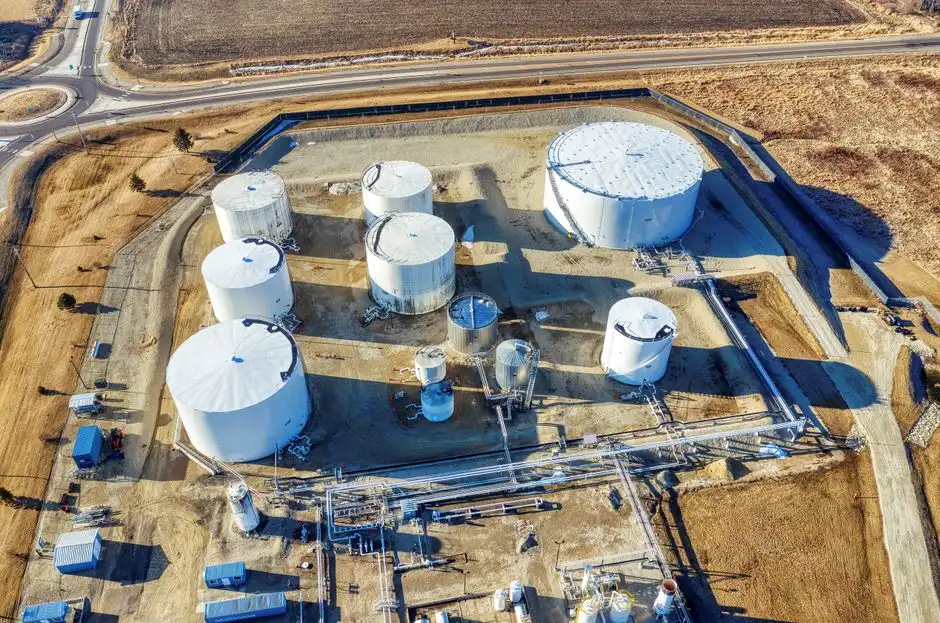
A well-designed train is six stages end-to-end, and each stage absorbs a specific failure mode so the next stage can be sized for a tight, predictable load.
Stage 1 — Flow & pH equalization. Batch flotation cells, wash-downs, and acid-cleaning rinses arrive in slugs. A 12–24 hour equalization basin with mechanical mixing damps flow swings of 3:1 or more, while inline pH probes feed a lime- or caustic-feed loop to hold the basin between pH 8.5 and 9.5 — the optimal window for most heavy-metal hydroxide precipitation.
Stage 2 — Coagulation and flocculation. A PLC-controlled chemical dosing skid meters lime, caustic, polymer, and (for mercury or arsenic polishing) a sulfide or carbamate reagent. Emulsion-break polymers at 0.5–3 mg/L are typical; coagulant demand runs 50–200 mg/L as CaCO₃ equivalent for a metals-loaded influent.
Stage 3 — Dissolved air flotation (DAF). A dissolved air flotation system removes free and emulsified oils, greases, and floatable colloidal metal-hydroxide flocs with recycle ratios of 20–35%. Hydraulic residence is short (15–25 min), so the DAF is sized to handle peak hourly flow rather than average daily flow.
Stage 4 — Lamella clarification. A lamella clarifier (HES tank) takes the DAF underflow and settled-effluent streams and provides the high-rate settling of the metal-bearing sludge. Surface loading rates of 20–40 m/h are routine, and the inclined-plate geometry cuts footprint by roughly 70% versus a conventional clarifier at the same flow.
Stage 5 — Multimedia filtration. A multi-media filter polish step brings residual TSS below 5–10 mg/L, which is the band most Diana-area POTWs require before the discharge reaches the sanitary sewer.
Stage 6 — Sludge dewatering. A plate-and-frame filter press consolidates the hydroxide cake to 25–35% dry solids, which is the right range for off-site hazardous-waste hauling or, where generator status allows, landfill disposal. A useful cross-reference is the Freeport-McMoRan copper-mine wastewater process, which uses a similar metals-precipitation-then-dewatering train at much larger scale.
Equipment Selection Matrix for a 2026 Mining Pretreatment Upgrade
When comparing bids, anchor the decision to flow, footprint, removal efficiency, automation level, and a realistic CAPEX band rather than feature lists. The matrix below is sized for a Diana-area flow range of roughly 25–500 m³/h; larger mining operations would stack multiple skids in parallel. The ArcelorMittal steel-mill wastewater process shows how this selection logic is applied at even higher flow rates and is worth reading alongside this section.
| Equipment | Flow Range | Removal / Performance | Footprint | Automation | CAPEX Band (2026) |
|---|---|---|---|---|---|
| DAF | 4–300 m³/h across 13 standard models | >90% TSS, >95% free oil/grease | Compact, packaged | PLC with VFD-driven recycle pump | USD 60K–250K |
| Lamella clarifier (HES tank) | 20–40 m/h surface loading | ~30% lower coagulant use vs. conventional clarifier | ~30% of equivalent conventional basin | Drives linked to upstream dosing skid | USD 80K–300K |
| Automatic chemical dosing skid | Modular, 2–8 reagent streams | Holds target ±5% of setpoint on coagulant/pH | Skid-mounted, indoor or shelter | PLC, factory-tested, SCADA-ready | USD 25K–120K |
| Multi-media filter | 5–200 m³/h per vessel | Effluent TSS ≤5–10 mg/L | Vertical, 1.2–3.0 m diameter | Auto backwash on DP | USD 20K–90K |
| Plate-and-frame filter press | 1–500 m² filtration area | Cake 25–35% DS; filtrate <50 mg/L TSS | Batch, larger footprint | Manual to fully automatic PLC | USD 70K–400K |
Selection rule of thumb: if oil/grease and floatable colloids drive the load, lead with the dissolved air flotation system ahead of the lamella clarifier (HES tank); if the load is mostly dissolved metals with stable pH, the lamella-first configuration with a PLC-controlled chemical dosing skid ahead of it is cheaper to operate.
CAPEX and OPEX Bands for a Diana-Sized Mining Pretreatment Skid
Plan-figure CAPEX for a complete 2026 pretreatment skid — equalization through dewatering, excluding building and land — typically lands in three bands. A small site at ≤50 m³/h runs USD 250K–650K, a mid-size 50–200 m³/h plant runs USD 650K–2.0M, and a large 200–500 m³/h operation runs USD 2.0M–5.0M. These are planning estimates only; site-specific geotechnical, electrical-service, and instrumentation costs can move the number 15–25% in either direction.
OPEX falls in a USD 0.20–0.85 per m³ treated band for a well-tuned metals-precipitation train. The dominant line items, in order, are coagulant and polymer (35–45% of OPEX), sludge hauling and disposal (20–30%), energy for mixers, recycle pumps, and filter-press hydraulics (15–20%), and labor plus routine maintenance (10–15%). Zero-liquid-discharge (ZLD) or high-recovery RO is rarely required for sewer discharge in the Diana region; those trains only pencil out when a surface-water or groundwater permit is in play or when the site is hauling brine to a deep-well injection facility. The dissolved air flotation system, lamella clarifier (HES tank), and PLC-controlled chemical dosing skid cited earlier are sized to that CAPEX/OPEX profile as a packaged train.
Compliance Checklist: From Baseline Monitoring to POTW Sign-Off
- Characterize the wastewater. Run 24-hour flow-proportional composite sampling on every process stream for seven consecutive operating days. Add grab samples for pH, temperature, and cyanide. The dataset must cover at least one full production cycle so batch slugs are captured.
- Benchmark against the local ordinance and 40 CFR Part 403. Compare each parameter against the Diana-area POTW ordinance, 40 CFR Part 440 (ore mining and dressing) where applicable, and 40 CFR Part 433 (metal finishing) if the site also runs plating. Identify which is the most stringent — that controls the design basis.
- Select the process train and size the equipment. Lock the design flow to the 85th-percentile hourly flow, not the annual average. Specify the dissolved air flotation system and lamella clarifier (HES tank) with a 20% hydraulic margin. Require a PLC/SCADA with remote alarming on every analyzer loop.
- Commission and run the acceptance test. Verify each stage against its removal target. Collect 30 days of compliance data and submit the 90-day compliance report to the POTW as required by Part 403.12.
- Move into routine self-monitoring. Operate the lab schedule at the categorical frequency, renew the POTW permit annually, and re-validate the chemical dose setpoints quarterly. A one-time commissioning pass is not a long-term compliance plan.
Frequently Asked Questions
Do mining and metals plants near Diana, NY need a 40 CFR Part 440 categorical permit, or is the local POTW ordinance enough?
Both apply. The local POTW ordinance controls day-to-day discharge limits under 40 CFR Part 403, and Part 440 categorical standards apply on top when the site falls under the ore mining and dressing subcategories. Most Diana-area plants design to the more stringent of the two, which generally means Part 440 metal ceilings, and run Part 403 baseline monitoring reports (BMRs) and 90-day compliance reports in parallel.
What is the typical removal efficiency of a DAF plus lamella clarifier train on total suspended solids and metals?
A properly sized DAF followed by a lamella clarifier routinely achieves >90% TSS removal and 80–95% removal of total recoverable lead, copper, zinc, and nickel when paired with pH adjustment to 8.5–9.5 and coagulant dosing. Mercury and arsenic usually require a sulfide or carbamate polishing step to clear their tighter Part 440 ceilings of 0.10/0.05 mg/L and 1.05/0.55 mg/L respectively.
How long does it take to bring a mining pretreatment skid from sampling to POTW sign-off?
Plan on 6–9 months for a small or mid-size site. The first 4–6 weeks are baseline sampling and BMR preparation, followed by 8–12 weeks for equipment procurement, 4–6 weeks for installation and commissioning, and a 90-day compliance-report window before final POTW sign-off. Lead times on the plate-and-frame filter press and PLC-controlled chemical dosing skid often drive the schedule.
Is zero-liquid discharge (ZLD) ever required for sewer discharge in the Diana region?
No. Sewer-discharge permits under 40 CFR Part 403 do not impose ZLD, and the Diana-area POTWs accept treated effluent within the categorical ceilings. ZLD or high-recovery RO only becomes relevant when a site also holds a NY SPDES surface-water or groundwater permit, or when brine disposal logistics force closure of the water loop.
What documentation does the POTW require before approving a new or upgraded pretreatment system?
The POTW will require a baseline monitoring report (BMR) under 40 CFR Part 403.12, a slug-control plan if the site handles any of the 13 listed chemicals, the engineering design report with hydraulic and removal justifications, the commissioning and 90-day compliance data, and a written operating-maintenance plan. Submitting that package complete, rather than piecemeal, typically cuts two to three months off the sign-off timeline.