
What Makes Desizing Effluent Different for MBR Design
Desizing liquor is the worst-case stream a textile mill sends to biological treatment, and a generic MBR sizing will fail on it. Desizing wash water leaves the size range at 60–90 °C, pH 9–12, with a COD typically 2,000–10,000 mg/L and a polyvinyl alcohol (PVA) or carboxymethyl cellulose (CMC) load of 500–3,000 mg/L that resists conventional activated-sludge metabolism. Generic textile wastewater composites mask these peaks because the desizing batch discharges over 1–2 hours, then idles — the load hits the membrane tank as a shock, not as a steady feed.
The submerged PVDF configuration is the right topology for this stream. Per a 2025 review in Water, Air & Soil Pollution (Springer, 2025-04), submerged MBRs associate activated sludge with membrane separation, tolerate high organic loading rates, and decouple HRT from SRT — properties a batch-shock stream like desizing requires. Side-stream (cross-flow) MBRs shear PVA-laden floc, raise fouling rates, and consume 5–10× the pumping energy. A 2021 UPC study on MBBR-MBR hybrid treatment of textile industrial effluents confirmed that integrating a moving-bed biofilm stage upstream of MBR reduced CAPEX and OPEX versus conventional activated sludge (CAS) because of lower discharge tax and avoided decolorizing-agent dosing (Yang, 2021).
One point engineers routinely miss: MBR permeate is not finished water. A 2024 Frontiers review of membrane-based hybrid MBRs notes that MBR effluent still carries residual non-biodegradable organics, microbial by-products, and (for anaerobic configurations) dissolved methane — so downstream NF or RO is required when reuse is the target (Frontiers in Membrane Science and Technology, 2024-02). That decision cascades back into the sizing target: if reuse drives the project, the MBR must produce RO-feed-quality water, not just discharge-compliant water. Integrated MBR units also deliver a roughly 60% smaller footprint than conventional clarification-based trains (per HydropureWater product data, 2026), which is often the deciding factor on space-constrained weaving and finishing halls.
Step 1 — Characterize Flow, Temperature, and PVA/COD Load
The first cause of MBR undersizing is using average flow against a batch-discharge stream. A desizing range dumps its wash water over 1–2 hours, idles for 4–6 hours, then repeats — and several ranges often share an MBR. Pull 7-day composite samples across all shift patterns and grab hourly grabs during the desizing cycle; the peak hour, not the day average, drives the equalization volume. Sample for COD, BOD₅, TSS, pH, temperature, and residual size (PVA or CMC) concentration measured by the borate-iodine colorimetric method for PVA or HPLC for CMC. Without PVA data, you cannot defend the SRT or membrane-flux selection downstream.
Set the design hydraulic capacity at 1.2–1.5× the average daily flow, not the peak hour. The equalization basin absorbs the 2–3× instantaneous spikes; the MBR only needs to see the smoothed average. Size the equalization tank at 6–12 h of residence at average flow with mechanical or jet mixing to prevent PVA from settling and to keep temperature uniform. A rotary mechanical bar screen at the headworks removes lint and loose fiber before the basin, protecting downstream pumps and dosing lines.
Cool the stream to ≤40 °C before it reaches the MBR. PVDF membrane manufacturers rate continuous operation to about 40–45 °C; above that, the membrane polymer softens, fiber welding weakens, and biological activity drops sharply (per HydropureWater field data, 2026). A plate heat exchanger on the desizing effluent line recovers heat for the pad-steam range while dropping the MBR feed temperature to the design band. Skipping this step is the single most common reason for early membrane replacement on textile MBR retrofits.
Step 2 — Define Pretreatment and Equalization Before the MBR
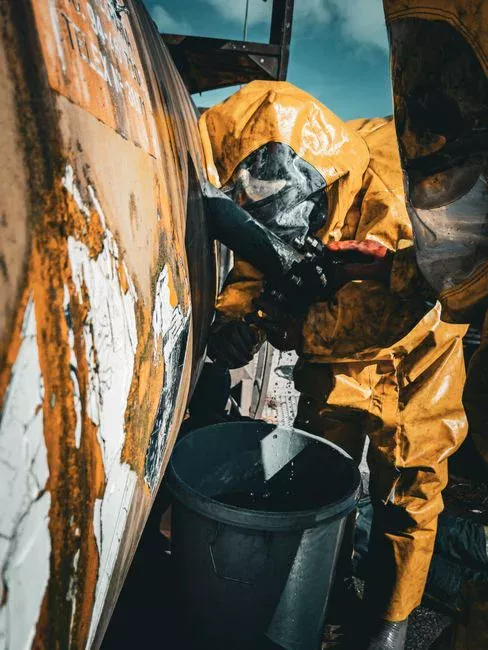
Pretreatment is not optional on a desizing stream. The membrane tank is the most expensive reactor in the train, and every kilogram of fiber, lint, and precipitated size that reaches it shortens membrane life and raises cleaning frequency. The upstream train must be specified and budgeted before the MBR itself.
Bar screening at ≤2 mm openings removes fiber and lint that mechanically lodge in membrane channels. A HydropureWater rotary mechanical bar screen handles the variable flow and the long fiber lengths typical of desizing wash water without blinding. pH correction to 6.5–8.0 follows, dosed via a HydropureWater automatic chemical dosing system using CO₂ (preferred, because it adds alkalinity and avoids sulfate loading) or sulfuric acid as the alternative. PVA precipitates aggressively above pH 9, and size residues will foul the membrane surface; operating outside the 6.5–8.0 band is one of the leading causes of irreversible fouling on textile MBRs.
Cooling via plate heat exchanger to ≤40 °C protects both membrane integrity and biomass viability. Above roughly 45 °C, the dissolved-oxygen saturation drops, mesophilic bacteria lose activity, and viscosity rises, all of which push the membrane module toward cake-layer fouling. The equalization basin that follows the cooler and dosing skid should be sized for 6–12 h HRT with gentle mixing — enough volume to flatten the desizing pulse and enough residence to let the pH probe and temperature sensor settle to a stable reading before the MBR feed pump draws from it. A mixed basin also lets the operator blend the morning's hot desizing discharge with the cooler rinse water from the evening shift, reducing the load on the heat exchanger.
Step 3 — Size the Bioreactor: HRT, SRT, and MLSS Targets
Biological design is where most desizing MBR specs go wrong. The bioreactor must hold the biomass long enough to acclimate to PVA — a polymer that resists degradation by un-acclimated activated sludge — and it must carry enough mixed-liquor solids to absorb the COD shock without dumping fines onto the membrane. The following targets are defensible for a submerged PVDF MBR on a PVA-bearing desizing stream in 2026:
| Parameter | Design Target | Engineering Rationale |
|---|---|---|
| HRT | 18–30 h | Low end for partially recovered PVA upstream; high end for full-strength liquor |
| SRT | 30–60 d | Long SRT builds PVA-acclimated biomass; conventional CAS runs 5–15 d |
| MLSS | 8,000–12,000 mg/L | Higher than municipal MBR (6,000–8,000) to handle elevated OLR; above 12,000 mg/L viscosity rises sharply |
| OLR | 0.6–1.2 kg COD/m³·d | Consistent with the 2025 Springer review noting MBRs tolerate high OLRs better than CAS |
| DO (aeration zone) | 1.5–2.5 mg/L | Standard aerobic band; enough for nitrification and COD oxidation |
| Membrane scour air | 0.3–0.5 m³/m² membrane area·h | Coarse-bubble scour through the integrated aeration box; controls cake layer |
The SRT target is the most important number in the table. PVA-degrading bacteria grow slowly and wash out below 20–25 d SRT in conventional systems; a 30–60 d SRT in the MBR lets the population establish and keeps residual PVA in the permeate low enough to pass a COD ≤100 mg/L discharge limit. The MLSS range sits higher than municipal MBR practice because the F/M ratio must stay in the 0.1–0.2 kg BOD/kg MLSS·d band for PVA-degrading biomass to dominate; below that band, the population drifts back to floc-formers that cannot metabolize PVA. Aeration sizing is split: process air for BOD oxidation and nitrification sized at 1.5–2× stoichiometric demand, and a separate coarse-bubble blower feeding the membrane scour box. For a worked example of an adjacent textile stream, see our guide to sizing MBR for white water discharge — the parameters differ but the calculation logic is the same.
Step 4 — Calculate Membrane Area from Sustainable Flux
Membrane area is the number the procurement team will question, so derive it from a defensible flux and apply a safety factor. For a submerged PVDF flat-sheet MBR on desizing effluent, the sustainable flux band is 12–18 L/m²·h — lower than the 20–25 L/m²·h common in municipal MBR because PVA adsorbs onto the membrane surface and forms a gel layer that resists backwash. Operating above 18 L/m²·h on this stream accelerates trans-membrane pressure (TMP) rise and shortens the chemical-cleaning interval.
| Step | Formula / Value | Worked Result (500 m³/d case) |
|---|---|---|
| Design flow | Q (m³/d) | 500 |
| Sustainable flux | J (L/m²·h) | 15 |
| Gross area | A = Q ÷ (J × 24 × 0.001) | 500 ÷ (15 × 24 × 0.001) = 1,389 m² |
| Design safety factor | 1.20–1.30 | 1.25 |
| Installed area | A × SF | ≈ 1,740 m² |
| Module count (DF-150) | A ÷ 150 m²/module | ≈ 12 modules |
| Permeate per module | 32–135 m³/d per module (per DF-series spec) | 12 × 32–135 ≈ 384–1,620 m³/d capacity |
For this 500 m³/day desizing case, twelve DF-series PVDF flat-sheet membrane modules housed in a HydropureWater integrated MBR system cover the design point with built-in redundancy. The 2025 Springer review cites a 0.04 μm nominal pore size as the full-scale precedent for virus-grade permeate (per Water, Air & Soil Pollution, 2025-04); the commercial 0.1 μm PVDF spec common on DF-series modules is the standard for desizing reuse where virus removal is not a discharge driver. Stay at 0.1 μm for the desizing service and route to RO only if the reuse target demands it.
Step 5 — Air, Cleaning, and Sludge-Handling Sizing
The auxiliary systems are where engineers lose scope. Specify the air, cleaning, and sludge train alongside the membrane area or the client will bounce the issue back at you. Membrane scouring air is metered at 0.3–0.5 m³/m² membrane area·h, delivered through the integrated aeration box on the DF series modules. For 1,740 m² of membrane, that is 520–870 m³/h of scour air from a dedicated coarse-bubble blower sized with a 1.2× turndown margin.
Process aeration is sized separately, to deliver 1.5–2.5 mg/L DO across the aeration zone and to keep the mixed liquor in suspension. As a rule of thumb, process-air demand runs 1.5–2× the stoichiometric oxygen requirement for the chosen F/M ratio — the multiplier covers endogenous respiration and the inefficiency of coarse-bubble diffusers at the depths typical of textile aeration tanks. Operate the MBR on an 8–10 minute permeate cycle followed by a 1–2 minute relaxation; this is the cheapest fouling control available and it costs no chemicals. Plan a chemical cleaning every 3–6 months: NaOCl at 1,000–3,000 mg/L for organic fouling, followed by citric acid at 1–2% for inorganic scale. Waste sludge production runs 0.15–0.30 kg TSS per kg COD removed; route it to a HydropureWater plate and frame filter press for dewatering to 18–22% dry solids, which lifts disposal economics above belt-press performance on this biological sludge. For a side-by-side cost/footprint comparison, see our MBR vs conventional activated sludge comparison.
Step 6 — Verify Discharge or Reuse Compliance
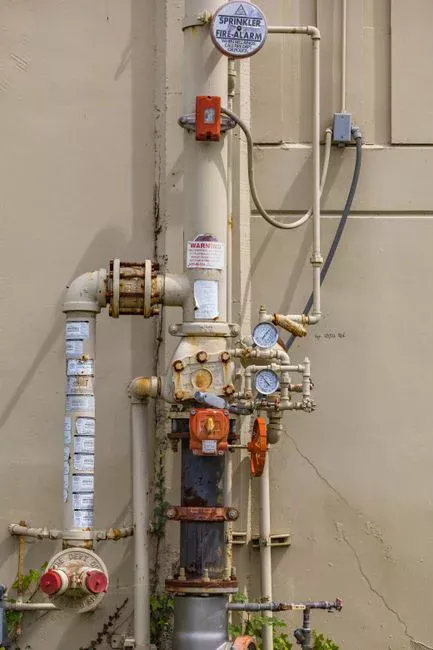
A sizing calc is not done until the permeate numbers tie back to the permit. An MBR designed to the parameters above should produce permeate at COD ≤100 mg/L, BOD ≤20 mg/L, TSS ≤5 mg/L, and turbidity ≤1 NTU — sufficient for direct discharge to most municipal textile-discharge limits and for feed to most RO systems. Commercial integrated MBR units are built at 10–2,000 m³/day (per HydropureWater product data, 2026), so the 500 m³/day case in this article sits comfortably inside the standard product range.
If the project driver is reuse — grey water for dyeing dilution, boiler feed, or process rinsing — MBR permeate alone is not enough. The 2024 Frontiers review documents that MBR effluent still contains non-biodegradable organics and microbial by-products that foul NF/RO membranes, with concentration polarization reducing rejection over time (Frontiers in Membrane Science and Technology, 2024-02). Route MBR permeate through a HydropureWater industrial RO system for recovery up to 95% and conductivity reduction to meet the reuse loop spec. The cost-of-water case for RO polishing is positive on most textile sites where the alternative is purchased municipal water at industrial tariff. For broader context on where MBR sits in the COD-removal hierarchy, see our review of the best COD-removal technology in 2026.
Frequently Asked Questions
What flux should I use to size an MBR on textile desizing effluent?
Use 12–18 L/m²·h for sustainable operation on PVA-bearing desizing liquor — lower than the 20–25 L/m²·h typical for municipal MBR because PVA forms a surface gel layer that resists backwash. Push above 18 L/m²·h only with documented PVA-recovery upstream and operating data to defend it.
Is PVA treatable in a standard MBR, or do I need a special configuration?
PVA is biodegradable in MBR, but only with an acclimated biomass at SRT 30–60 d and MLSS 8,000–12,000 mg/L. Conventional activated sludge at 5–15 d SRT cannot build the PVA-degrading population; the MBR's long-SRT operation is the feature that makes PVA removal feasible without a separate enzymatic stage.
Do I need RO downstream of the MBR for water reuse?
Yes, for high-purity reuse loops. MBR permeate carries residual non-biodegradable organics and microbial by-products that foul RO membranes over time (per Frontiers 2024), so MBR alone is not reuse-grade for boiler feed or dyeing dilution water. For discharge-only projects, MBR permeate at COD ≤100 mg/L is usually sufficient.
Should I specify ceramic or PVDF membranes for a desizing MBR?
Specify PVDF flat-sheet submerged modules for the 2026 capex envelope. Ceramic membranes tolerate higher temperature and pH, which is why the academic literature explores them for desizing, but their installed cost is typically 3–5× PVDF at the same area; PVDF is the commercial standard once the stream is cooled to ≤40 °C and neutralized to pH 6.5–8.0 upstream.