Why Bleach E-Stage Effluent Is Hostile to an MBR
Bleach E-stage effluent carries four process characteristics that will destroy a membrane bioreactor in weeks if the stream is sent straight in. First, residual active chlorine — the D0–Eop chlorination-extraction sequence leaves measurable ClO2, HOCl, and OCl⁻ in the washer discharge. Free chlorine at sub-mg/L levels diffuses through a 0.1 μm PVDF membrane and oxidizes the polymer backbone, while instantly killing the activated-sludge biomass the MBR depends on for BOD removal. Second, pH swings from the upstream chemistry are severe: the acidic chlorination stage sits at roughly 1.5–3.5, the alkaline extraction stage at roughly 10–12, and the mixed drain alternates between the two on every batch shift. Third, the stream leaves the washer at 55–70 °C — well above the 38–40 °C ceiling for sustained biological activity and the thermal-stress threshold where PVDF membranes compact and lose permeability. Fourth, dissolved lignin derivatives carry high color and high adsorbable organic halide (AOX); the chlorinated organics that define bleach effluent are precisely the recalcitrants the MBR cannot mineralize in one pass. EPA design guidance reinforces the point: wastewater must undergo "a high level of debris removal" before the MBR, and chemical addition points are standard upstream of the membrane step (per the EPA MBR fact sheet, 2019-08). Skip that pretreatment, and the MBR becomes a maintenance liability rather than a polishing step.
The Five-Stage Pretreatment Train
A defensible pretreatment train for bleach E-stage → MBR consists of five gates in series to protect the membrane. Each one solves a specific problem the previous gate cannot.
Stage 1 — Coarse screening. A rotary mechanical bar screen with 2–3 mm aperture pulls fiber, pulp mats, and broke out of the stream before anything downstream sees them. Anything larger than 3 mm will blind a DAF nozzle or wedge in an MBR cassette header. Continuous-duty screening with a rotary drum or step-screen is the workhorse here; intermittent hand-raked bars fail within weeks on a bleach line.
Stage 2 — Effluent cooling. A plate heat exchanger drops the stream from washer discharge (55–70 °C) to below 38 °C. Biological activity collapses above 40 °C — nitrification stops, BOD removal efficiency falls off, and EPS excretion spikes, accelerating membrane fouling. Thermal stress above 45 °C also drives PVDF membrane compaction, permanently reducing clean-water flux. Titanium or 904L plates are mandatory on the bleach service side because the chloride concentration after acid-stage neutralization will pit 316L within a single inspection cycle.
Stage 3 — pH equalization. A buffered hold-up tank with 20–45 min HRT and an automatic chemical dosing skid drives the mixed effluent to pH 6.5–7.5 ±0.5 using CO2 (preferred — it does not add dissolved solids) or NaOH/H2SO4 trim. The tank must also smooth the 2–4× peak-to-average diurnal swing from batch washer operation, because MBR hydraulics tolerate ±15% flow variation at best.
Stage 4 — Reducing-agent quench. Sodium bisulfite (NaHSO₃) is dosed under ORP control to drive residual ClO2 and HOCl below 0.1 mg/L total residual chlorine. The stoichiometric demand is roughly 1.65 mg NaHSO₃ per mg ClO2 and 1.38 mg NaHSO₃ per mg HOCl, plus a 10–15% safety margin. The control loop uses an inline ORP probe with the cutoff set at +200 mV (Ag/AgCl reference); above that, the controller calls for bisulfite. Below +200 mV, dosing latches off. Inline grab-sample DPD confirmation should still run once per shift.
Stage 5 — Dissolved air flotation. A dissolved air flotation unit with 30–50 μm micro-bubbles removes colloidal lignin, fiber fines, and TSS before the MBR. Expect 85–95% TSS removal and 40–70% color reduction on a well-conditioned bleach E-stage feed; polymer flocculant (typically a cationic polyacrylamide at 1–5 mg/L) is required to bridge the negatively charged lignin colloids. For a worked example of DAF sizing on this exact stream, see the DAF configuration guide for bleach E-stage effluent. For comparison with a high-strength biological stream on a different duty, the slaughterhouse blood water pretreatment before MBR walkthrough applies the same five-gate logic to a very different influent.
| Stage | Equipment | Inlet Spec | Outlet Spec | Control Variable |
|---|---|---|---|---|
| 1 — Screening | Rotary bar screen, 2–3 mm | Raw washer discharge | <3 mm particulate | Differential pressure, ≤0.3 m |
| 2 — Cooling | Plate heat exchanger (Ti or 904L) | 55–70 °C | <38 °C | Outlet T, ±2 °C |
| 3 — pH equalization | Buffered hold-up tank + dosing skid | pH 2–12 swing | pH 6.5–7.5 ±0.5 | pH probe, redundant |
| 4 — ORP quench | NaHSO₃ dosing, inline mixer | ORP >+400 mV, Cl2 >1 mg/L | Cl2 <0.1 mg/L, ORP <+200 mV | ORP probe, setpoint +200 mV |
| 5 — DAF | Dissolved air flotation, 30–50 μm bubbles | TSS 200–800 mg/L, color 1,000–3,000 Pt-Co | TSS <50 mg/L, color <500 Pt-Co | Surface TSS probe, polymer dose 1–5 mg/L |
Pretreatment-to-MBR Handoff: Targets the MBR Needs to See
The handoff between the pretreatment skid and the MBR skid functions as a technical contract. The MBR sees only what the pretreatment hands it, and the membrane warranty typically voids if any single parameter drifts out of spec. The consolidated interface targets are: pH 6.5–7.5 ±0.5, temperature <38 °C, total residual chlorine <0.1 mg/L, TSS <50 mg/L post-DAF, color <500 Pt-Co, and oil & grease <10 mg/L. Online instrumentation must include a redundant pH probe, an ORP probe on the quench outlet, a conductivity meter, and an in-line TSS meter. Any out-of-spec reading should trigger automatic diversion back to the equalization tank — not a hard shutdown, because bleach lines are continuous and a thermal/chemical slug on restart is worse than a short recycle loop. Flow equalization deserves its own gate: bleach washers are batch-operated, and raw diurnal swings of 2–4× peak-to-average will push MBR membrane flux variations into the 30–50% range while sharply accelerating fouling. An equalization tank sized for 20–45 min HRT is the cheapest insurance on the entire train.
MBR Configuration Choices After Pretreatment
The available configurations for pretreated bleach effluent are submerged PVDF flat-sheet or sidestream tubular. The 2026 default for pulp & paper bleach polishing is submerged flat-sheet — a PVDF flat-sheet MBR module rated 32–135 m³/d per cassette with integrated aeration scouring. Energy use is 10–20× lower than sidestream tubular because there is no recirculation pump pushing sludge across the membrane at high crossflow velocity; aeration does the scouring. Sidestream tubular still has a role on streams with high TSS or oil & grease that would blind flat-sheet, but post-DAF bleach E-stage does not have that profile. Operating envelope: MLSS 8,000–12,000 mg/L and SRT 30–60 days. The long SRT is not just a kinetic choice — it lets the biomass slowly mineralize residual AOX and break down color bodies that pass through DAF. For mills under ~2,000 m³/d, an integrated MBR membrane bioreactor system shipped as a turnkey skid is the standard procurement path. For a deeper comparison of submerged configurations, the submerged MBR manufacturer's buyer guide walks through cassette count, aeration intensity, and CIP sequencing. One important caveat: the MBR is a polishing and reuse step, not a destruction step. AOX and color residuals that pass pretreatment will pass the MBR mostly untouched.
Footprint, CAPEX, and 2026 Cost Framing
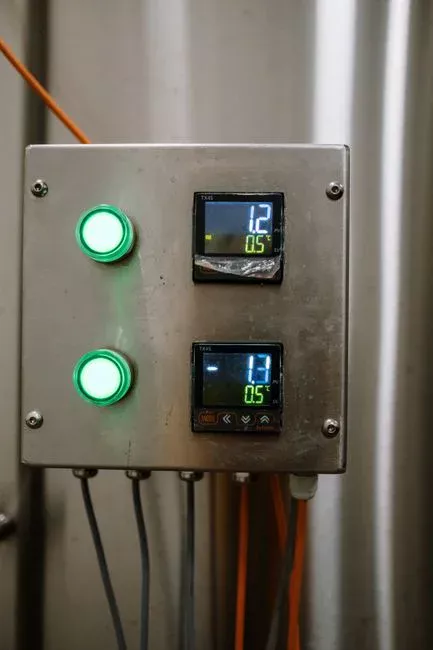
Pretreatment costs are offset by significantly lower long-term membrane replacement expenses. MBR achieves roughly 60% smaller footprint than conventional activated sludge for the same throughput, and adding DAF upstream typically adds only 8–12% to the total treatment-train footprint (per HydropureWater integrated system catalog, 2026). The bigger number is lifecycle cost: pretreatment CAPEX sits at 15–25% of total train CAPEX, but it avoids 50–70% of membrane replacement OPEX over a 10-year horizon because the membranes see oxidant-free, temperature-controlled, low-TSS feed instead of raw bleach drain. Skip pretreatment and the MBR runs hot — membranes foul in months instead of years, CIP frequency doubles, and the operator is on a service call every quarter. Run pretreatment and the MBR holds design flux for 8–10 years between membrane replacements. The decision framework is binary: pretreatment is not an optimization on this duty, it is a prerequisite.
Procurement Checklist for a Bleach E-Stage MBR Retrofit
Include these specifications in the vendor RFQ before pricing is requested:
- Redundant pH and ORP probes on the quench outlet, with auto-diversion logic back to the equalization tank
- NaHSO₃ dosing skid sized for 1.5× stoichiometric demand at peak ClO2/HOCl loading
- DAF micro-bubble spec: 30–50 μm, with polymer make-down and maturity tank
- Heat-exchanger plate material: titanium or 904L for chloride service (316L is not acceptable)
- Equalization tank HRT ≥30 min at peak flow, with mixing to prevent lignin settling
- MBR membrane warranty: minimum 5 years pro-rata, conditional on the interface spec above
- CIP protocol: documented chemical recipe, frequency, and flux-recovery acceptance criterion
- Pilot trial commitment: 60–90 days on-site before full-scale PO on any retrofit to an existing bleach line
Frequently Asked Questions
Why does bleach E-stage effluent need sodium bisulfite before an MBR?
Residual ClO2 and HOCl from the D0–Eop sequence will oxidize PVDF membrane polymer and kill the MBR biomass. NaHSO₃ at a stoichiometric ratio of 1.65 mg/mg ClO2 and 1.38 mg/mg HOCl drives total residual chlorine below 0.1 mg/L, controlled by an ORP probe setpoint at +200 mV.
What temperature should bleach E-stage be cooled to before MBR?
Below 38 °C. Biological activity collapses above 40 °C and PVDF membrane compaction accelerates above 45 °C, permanently reducing clean-water flux. A titanium or 904L plate heat exchanger is required for the chloride-rich bleach service side.
What pH does an MBR need to see from the
Frequently Asked Questions
What pretreatment does bleach E-stage effluent need before MBR?
Bleach E-stage effluent requires a multi-stage pretreatment sequence consisting of chemical dechlorination, pH neutralization, and primary solids removal. Because E-stage effluent contains high concentrations of chlorinated organics and residual oxidants, an equalization tank is necessary to dampen hydraulic surges and concentrate fluctuations.
Depending on the specific mill load, coagulation-flocculation or Dissolved Air Flotation (DAF) is typically implemented to reduce the Chemical Oxygen Demand (COD) and Total Suspended Solids (TSS) to levels that prevent membrane fouling.
How do you remove residual chlorine from bleach wastewater before biological treatment?
Residual chlorine is typically removed via chemical reduction using sodium bisulfite (NaHSO3) or sulfur dioxide (SO2) dosing. The dosage is calculated based on the stoichiometric requirement to neutralize free available chlorine (FAC) to levels below 0.1 mg/L to prevent the inhibition of biomass in the MBR.
Alternatively, activated carbon filtration or granulated activated carbon (GAC) beds can be used to adsorb residual chlorine and halogenated organic compounds, ensuring the biological process is not compromised by toxicity.
What pH is required for MBR influent from a pulp mill?
The influent pH for a pulp mill MBR must be stabilized between 6.5 and 8.5 to maintain optimal microbial activity and protect membrane integrity. Bleach E-stage effluent is typically highly alkaline, often exceeding pH 10 or 11, necessitating sulfuric acid (H2SO4) or carbon dioxide (CO2) injection for neutralization.
Maintaining this narrow range prevents the precipitation of salts and minimizes the risk of chemical degradation of the polymeric membrane materials, which can occur at extreme pH levels.
Why does bleach effluent damage MBR membranes?
Residual chlorine and strong oxidizing agents in bleach effluent cause irreversible chemical degradation of the polymer matrix in membranes, typically polyethersulfone (PES) or polyvinylidene fluoride (PVDF), leading to increased pore size and loss of selectivity.
Additionally, the high concentration of lignin and recalcitrant dissolved organic matter in E-stage effluent promotes the formation of a dense, hydrophobic cake layer on the membrane surface, significantly increasing transmembrane pressure (TMP) and reducing permeate flux.
Can DAF remove color and lignin before an MBR?
Yes, Dissolved Air Flotation (DAF) combined with chemical coagulants (such as alum or ferric chloride) can remove 40% to 70% of the lignin and associated color from bleach effluent. This process targets the high-molecular-weight organic fractions that are otherwise non-biodegradable.
By removing these hydrophobic compounds prior to the MBR, the system reduces the biological oxygen demand (BOD) load and significantly lowers the rate of membrane fouling caused by lignin-derived macromolecules.