
Why Blood Water Breaks Generic DAF Sizing
Segregated blood water from bleeding tables, paunch handling, and carcass wash typically carries 8,000–15,000 mg/L COD, 500–2,000 mg/L TKN, and 2,000–5,000 mg/L total suspended solids, roughly 3–5× the load of mixed paunch-and-cleaning effluent routed to a general slaughterhouse DAF (per S5 characterization review, 2022). The DAF that successfully treats mixed effluent fails on this stream because the dominant pollutants are not free oil or settleable solids — they are emulsified blood protein (predominantly albumin and globulin, 60–80 kDa molecular weight range) and sub-100 μm FOG droplets stabilized by protein surfactants. These colloids carry near-neutral surface charge and slip past a DAF tuned for free-oil lift. The result: a thin float layer, cloudy subnatant, and a downstream biological stage that gets ammonia-shocked within hours of a bleed cycle.
Three operational symptoms confirm the diagnosis: rising effluent turbidity during bleed shifts, rapid loss of the floc blanket when blood-water surges hit, and MBBR foam events correlated to morning slaughter peaks. The engineering fix is stream segregation at the plant piping level — routing blood and paunch contents to a dedicated DAF sized for the peak load, not the daily average — and reconfiguring that DAF for colloid capture rather than free-oil separation. A mixed-effluent DAF on blood water is the single most common under-performance root cause in slaughterhouse retrofits, and it cannot be solved by adding more tankage alone.
Sizing the DAF: Micro-Bubble, Pressure, Recycle, and Loading
A DAF configured for blood water is set by four dials the engineer must specify explicitly, because vendor default curves assume clean-water or light-FOG duty. The first dial is micro-bubble size, targeted at 10–50 μm. Bubbles in this range have enough residence time in the float layer to attach to protein-stabilized FOG droplets; larger 100–200 μm bubbles rupture on the high-viscosity blood-protein blanket and drag floc back into the subnatant. The second dial is saturation pressure, held at 4–6 bar(g) for a blood-water service. Below 4 bar the released bubbles trend larger and lift efficiency drops; above 6 bar the compressor work climbs without proportional protein removal because the limiting step is bubble–colloid attachment kinetics, not dissolution. The third dial is recycle ratio, set at 20–30% of forward flow. Higher recycle dilutes the influent COD and reduces the mass load on the floc blanket, but it also reduces hydraulic throughput per unit tank area. The fourth dial is hydraulic loading, checked against the equipment vendor's FOG-specific curve rather than the clean-water curve on the nameplate; blood-water service typically runs at 5–10 m/h surface overflow rate, well below the 15–25 m/h a clean-water DAF accepts.
Coagulant chemistry is the fifth lever and the one most often mis-specified. Charge neutralization on emulsified blood protein is handled by ferric chloride (FeCl₃) or polyaluminum chloride (PACl) dosed into a rapid-mix zone at 100–200 mg/L typical range, tuned by jar testing on the actual blood-water stream. The flocculant stage that follows uses an anionic polyacrylamide (APAM), 1–5 mg/L typical, high molecular weight (10–18 Mg/mol) to bridge the fragile blood-protein floc into particles large enough for bubble attachment. DAF with appropriate coagulant–flocculant chemistry is the established pre-treatment for FOG and protein in poultry slaughterhouse wastewater (S1, S2, 2021–2022). For a packaged unit sized to this service, a dissolved air flotation system configured for FOG duty with a dedicated saturation tank is the standard reference point. Dosing accuracy is critical because blood-water load swings 3–4× across a shift; an automatic chemical dosing skid with PAC and APAM metering tied to influent flow is the practical way to hold the chemistry window.
| Parameter | Blood-Water DAF Range | Clean-Water DAF Default | Driver |
|---|---|---|---|
| Micro-bubble diameter | 10–50 μm | 50–100 μm | Colloid attachment to protein-coated FOG |
| Saturation pressure | 4–6 bar(g) | 3–4 bar(g) | Smaller bubble release, stable float layer |
| Recycle ratio | 20–30% | 5–10% | Influent dilution, floc-blanket protection |
| Surface overflow rate | 5–10 m/h | 15–25 m/h | Float-layer residence on viscous blanket |
| HRT in contact zone | 3–5 min | 1–2 min | Bubble–colloid attachment kinetics |
| Coagulant (FeCl₃ or PACl) | 100–200 mg/L | 20–50 mg/L | Charge neutralization of protein colloids |
| Flocculant (anionic PAM) | 1–5 mg/L | 0.5–1 mg/L | Bridge fragile protein floc |
Expected Removals: What DAF Actually Delivers on Blood Water
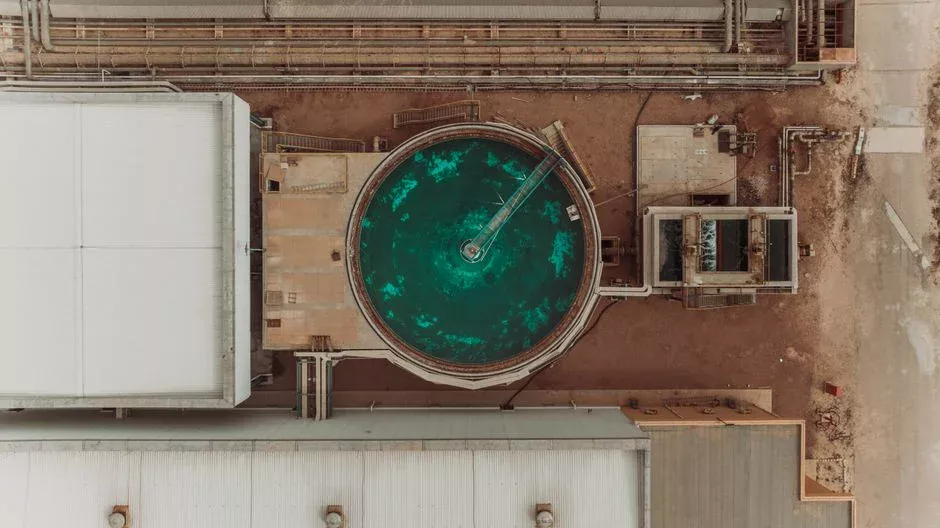
The only hard removal numbers in the published DAF-on-poultry-slaughterhouse literature are protein-reduction figures, and they tell a consistent story: DAF does the first cut, not the final polish. After DAF pre-treatment plus subsequent bio-delipidation with bacterial lipases, total protein reduction was 68.1% at one sampling point (P2) and 72.3% at another (P1), with earlier-stage protein reductions of 42.7% and 44% attributed to the DAF step itself (S1, 2021; S4, 2018 preprint). Translating to design expectation: a blood-water DAF on a well-tuned chemistry program will remove 40–75% of influent protein, with the upper end achievable only when coagulant dose, floc blanket depth, and bubble size are all aligned. FOG removal on DAF service for food-industry wastewater is typically 60–90% (engineering literature range, not measured in the scraped academic sources), and TSS removal generally tracks FOG because the two are co-floated on the same protein-stabilized bubble–particle aggregate.
What DAF does not do is also part of the spec. DAF effluent still carries dissolved protein fragments, ammonia from blood breakdown, and pathogens — including E. coli loads of 10⁴–10⁶ CFU/100 mL typical for untreated blood water. This is exactly why DAF is a load-reduction workhorse ahead of biological polishing, not a discharge-permit step on its own. The S5 review explicitly notes that treated SWW parameters in published Malaysian field data still exceeded safe discharge standards without biological polishing, and that observation generalizes to any high-strength blood stream. A correctly sized DAF should leave the downstream MBBR or MBR with a COD in the 1,500–4,000 mg/L range and TKN in the 200–600 mg/L range, both of which a nitrification/denitrification stage can handle within standard HRT windows.
Reuse vs Discharge: Two Process Trains From the Same DAF
The downstream train choice depends entirely on the effluent endpoint. For a discharge-only goal under EU IED BREF or local sewer limits, the minimum sufficient train is DAF → MBBR (nitrification/denitrification) → secondary clarification → disinfection, typically chlorination or UV. This train hits BOD₅ <25 mg/L, TSS <35 mg/L, and total nitrogen <15 mg/L at the cost of a longer MBBR HRT (12–24 h) and a properly sized anoxic zone for denitrification. For an in-plant reuse goal — carcass wash, scalding-tank makeup, or boiler feed — the train extends to DAF → MBBR → MBR membrane bioreactor system → disinfection. The MBR's submerged PVDF membrane at <1 μm nominal pore delivers the turbidity (<1 NTU) and E. coli control (>4 log removal) that product-contact reuse demands, and a properly designed MBR train on slaughterhouse reuse is covered in detail in the MBR configuration for reuse and discharge guide.
The decision heuristic is straightforward. If the reuse water touches product contact, cleaning of food-contact surfaces, or any application where microbial quality matters, the MBR is non-negotiable. If the water is for non-contact reuse (landscaping, floor wash outside production zones) or for compliant sewer discharge, the MBBR-only train is usually sufficient. The S3 review (Water, 2021-11) frames slaughterhouse wastewater recycling as desirable under increasing water scarcity, and that framing has only strengthened through 2025–2026 as freshwater cost and abstraction limits tighten across the EU. For very high-BOD blood water, MBR alone is overworked — the membrane fouls within days on unscreened FOG and protein, which is why DAF pre-treatment is mandatory on the reuse train. The ultrafiltration system for meat processing wastewater design spec covers the related UF step if protein fractionation is part of the reuse plan.
| Element | Discharge-Only Train | Reuse Train (Product Contact) |
|---|---|---|
| Pre-treatment | DAF on segregated blood water | DAF on segregated blood water |
| Biological step | MBBR (nitrification/denitrification), 12–24 h HRT | MBBR + submerged MBR (PVDF, <1 μm) |
| Solids separation | Secondary clarifier or DAF-III | Integral to MBR |
| Disinfection | Chlorination (2–5 mg/L Cl₂ residual) or UV (30–40 mJ/cm²) | UV + optional chlorination for distribution loop |
| Effluent BOD₅ target | <25 mg/L (per EU IED BREF BAT-AEL) | <5 mg/L |
| Effluent turbidity target | — | <1 NTU |
| E. coli / fecal coliform | Per local discharge limit | <1 CFU/100 mL detectable for product contact |
| Relative capex | 1.0× baseline | 1.6–2.0× baseline (MBR adds ~40–60%) |
Sludge and Chemical Handling Around the DAF

The float skimmed from a blood-water DAF is the highest-strength solid stream in the plant: 4–8% dry solids, protein-rich, with embedded FOG and blood solids that putrefy within hours at ambient temperature. It must be segregated from paunch solids and routed to a dedicated dewatering step, not co-mingled with general sludge. A plate and frame filter press on this stream typically achieves 28–35% dry cake, which is high enough for off-site rendering or composting under most EU animal-by-products regulations. A screw press for slaughterhouse wastewater is the lower-capex alternative for plants below 50 m³/d float volume, accepting a lower cake dryness of 18–22% in exchange for continuous operation and lower polymer consumption. On the chemical side, dosing must be PLC-controlled to track the 3–4× load swing across a slaughter shift; a manual dosing panel cannot hold the chemistry window on a blood stream. A automatic chemical dosing skid with flow-paced coagulant and flocculant metering is the practical standard for this duty.
Frequently Asked Questions
DAF vs API separator for blood water — which wins?
DAF. An API separator needs free oil with minimal emulsification; blood water is the opposite, with protein-stabilized emulsions at sub-100 μm droplet size. API on this stream gives 20–30% FOG removal at best, versus 60–90% on a properly configured DAF with coagulant chemistry.
What bubble size and saturation pressure for FOG + protein streams?
10–50 μm micro-bubbles at 4–6 bar(g) saturation pressure. This window is the engineering consensus for food-industry FOG service, including blood water, and is confirmed in the DAF pre-treatment literature for poultry slaughterhouse wastewater (S1, 2021).
Does segregated blood water really give 3–5× higher DAF removal than mixed effluent?
Standard engineering practice, yes. Segregation lets the engineer size the DAF for the actual peak load rather than dilute it across the full plant flow, and it lets the chemistry program target protein-colloid neutralization specifically. The S1/S4 DAF pre-treatment confirmation in the poultry slaughterhouse literature is built on segregated streams, not mixed effluent.
DAF + MBBR or DAF + MBBR + MBR — which train for which goal?
DAF + MBBR for compliant sewer discharge under EU IED BREF or equivalent local limits. DAF + MBBR + MBR for in-plant reuse where the water touches product contact, where turbidity <1 NTU and tight E. coli control are required, or where the plant targets near-zero liquid discharge.
What coagulant and flocculant for blood water?
Polyaluminum chloride (PACl) or ferric chloride for charge neutralization of the protein-stabilized colloids, followed by high-molecular-weight anionic polyacrylamide (10–18 Mg/mol) to bridge the fragile floc. Jar testing on the actual blood-water stream is mandatory because the optimal dose varies with bleed-cycle phase and seasonal carcass composition.