Why Hotel Wastewater in Auckland Looks Different in 2026
Hotel wastewater in 2026 sits at the intersection of four overlapping regulatory layers, and any treatment plant choice has to clear all four before it can be commissioned. The Water Services Act 2021 placed Taumata Arowai over all drinking-water and wastewater suppliers, which means a hotel discharging more than 2 m³/day now operates inside a regulated supplier framework. The National Policy Statement for Freshwater Management 2020, updated in 2024, tightens nutrient and ammonia expectations for any discharge to land or surface water, and Auckland Council is enforcing those limits through resource consent conditions rather than permitted activity rules. Add the Auckland Unitary Plan wastewater rules, plus the discharge clauses in the Auckland Regional Plan: Air, Land and Water, and an on-site treatment plant over 20 m³/day almost always triggers a TRC (discharge) consent that takes 12–18 months to process in 2026, with monitoring bonds and review conditions attached.
A domestic septic envelope does not survive this regulatory stack. Hotels generate high-strength, intermittent flows with FOG at 50–200 mg/L, laundry surfactant spikes that can push COD above 1,000 mg/L during turn-down service, food waste from on-site kitchens, and 2.5–3× peak-to-average flow ratios driven by evening housekeeping and restaurant turnover. Auckland Council's typical on-site discharge limits now land at BOD₅ ≤20 mg/L, TSS ≤30 mg/L, NH₄-N ≤10–15 mg/L, and faecal coliforms ≤200 CFU/100 mL (resource consent condition range, 2024–2026), which is closer to reuse quality than septic-tank quality. For most sites, a buried WSZ underground package sewage treatment plant is now the floor of the design, not the ceiling.
Sizing an Auckland Hotel or Resort Treatment Plant
The defensible design rule for a 2026 Auckland hotel is 200–300 L per guest per day, plus 50 L per staff member, plus kitchen and laundry contributions sized off fixture count rather than occupancy. Evening housekeeping combined with restaurant dinner service drives a peak factor of 2.5–3×, and the equalisation tank should hold at least 8 hours of average flow so the biological stage never sees a hydraulic shock. Influent characterisation for a typical 100-room resort with a full commercial kitchen and on-site laundry runs BOD₅ 250–400 mg/L, COD 500–800 mg/L, TSS 200–350 mg/L, FOG 50–200 mg/L, and NH₄-N 20–40 mg/L (per Auckland Council on-site discharge guidance, 2024–2026).
Worked example for a 100-room resort at 70% occupancy: 70 guests × 250 L plus 30 staff × 50 L equals roughly 19 m³/day average dry-weather flow; peak flow lands near 55 m³/day; the biological stage should be sized at 30 m³/day organic capacity with 55 m³/day hydraulic capacity to absorb the peak. Sizing below the peak envelope is the most common 2026 consent refusal reason, because reviewers specifically check that the equalisation volume, the aeration basin HRT (typically 18–24 hours for an SBR or MBR), and the sludge wasting rate are matched to the peak flow, not the average. The table below sets out the envelope a consulting engineer should hand to a supplier before requesting a quote.
| Parameter | Design value (100-room Auckland resort, 2026) | Source / note |
|---|---|---|
| Average dry-weather flow | 19 m³/day | 70 guests × 250 L + 30 staff × 50 L |
| Peak factor | 2.5–3.0× | Evening housekeeping + restaurant peak |
| Peak flow | ~55 m³/day | Used to size hydraulic capacity |
| Equalisation tank | ≥8 h average flow (~6 m³) | Smooths hydraulic and load spikes |
| Influent BOD₅ | 250–400 mg/L | High-strength vs residential ~200 mg/L |
| Influent FOG | 50–200 mg/L | Requires DAF pre-treatment |
| Biological stage size | 30 m³/day organic | HRT 18–24 h for SBR or MBR |
Technology Options Compared: MBR, SBR, MBBR, and BioPod
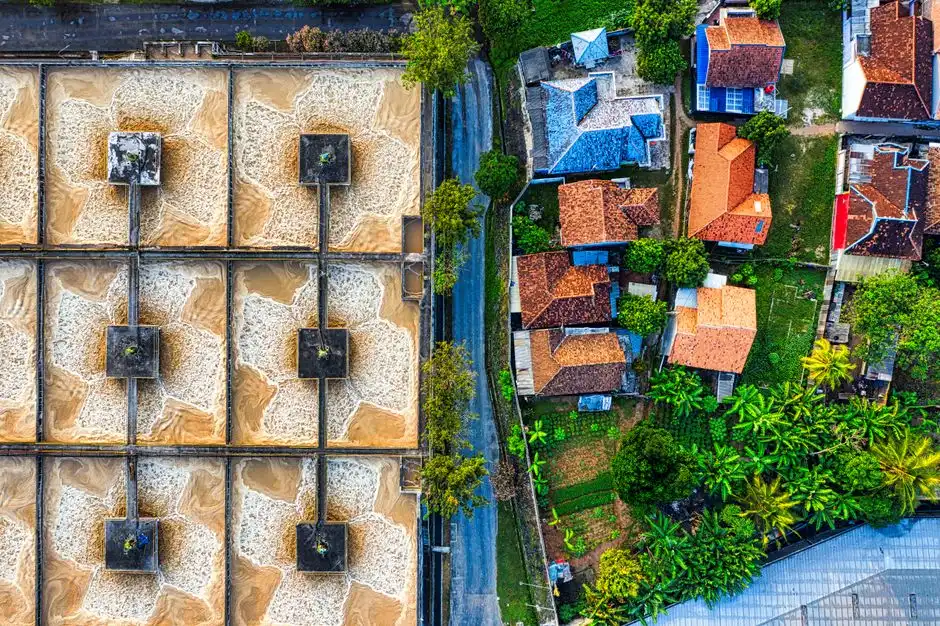
Four technologies are credible for a 2026 Auckland hotel: MBR, SBR, MBBR, and BioPod. The right answer depends on footprint, consent pathway, and whether treated water will be reused. The HydropureWater MBR membrane bioreactor system uses submerged PVDF membranes with a nominal pore size under 1 μm, delivering BOD₅ under 5 mg/L and TSS under 1 mg/L at 0.25–0.45 kWh/m³, with a footprint roughly 60% smaller than conventional activated sludge. Capacity scales modularly through DF-series PVDF flat-sheet membrane modules, each rated 32–135 m³/day, which lets a 100-room resort be built from stock modules rather than a one-off tank.
SBR remains the 2026 hotel default for 20–80 m³/day sites where footprint is not the binding constraint and the council consent limit sits at BOD₅ ≤20 mg/L rather than reuse quality. A single tank runs fill-react-settle-decant on a timer, so there is no separate clarifier and footprint lands at roughly 70% of conventional activated sludge. Effluent BOD₅ of 10–20 mg/L is achievable, and the technology is well understood by Auckland Council reviewers. The trade-off is controls: a competent operator or service contract is needed, and chronic SBR issues (bulking sludge, decanter faults) show up in our field data as the single largest cause of consent non-compliance for hotels — see the SBR operation troubleshooting guide for diagnosis. MBBR uses free-floating biofilm carriers in an aeration tank, tolerates load swings well, and is a strong retrofit option, but effluent at BOD₅ 15–25 mg/L usually needs a polishing stage before reuse water is permitted. BioPod is OSET-approved for New Zealand and pairs vermifiltration with supplementary aeration; it draws roughly 90% less energy than a conventional aerated system and is a fit answer for off-grid eco-lodges under 20 rooms, but it is unproven above 20 m³/day with continuous FOG loading from a commercial kitchen, so it is not a credible 2026 answer for a 100-room resort. Any hotel with a full commercial kitchen should install DAF pre-treatment for hotel kitchen FOG upstream of the biological stage, which takes FOG from 50–200 mg/L down to under 30 mg/L and protects the downstream membranes or biofilm carriers from fouling (HydropureWater field data, 2026).
| Parameter | MBR | SBR | MBBR | BioPod |
|---|---|---|---|---|
| Effluent BOD₅ | <5 mg/L | 10–20 mg/L | 15–25 mg/L | 10–30 mg/L |
| Effluent TSS | <1 mg/L | 15–30 mg/L | 20–40 mg/L | 15–30 mg/L |
| Footprint vs CAS | ~40% | ~70% | ~60% | ~50% |
| Energy use | 0.25–0.45 kWh/m³ | 0.8–1.5 kWh/m³ | 0.6–1.2 kWh/m³ | 0.05–0.15 kWh/m³ |
| Best fit (rooms) | >100 or reuse target | 20–100 | 30–150 retrofit | <20 off-grid |
| FOG tolerance | With DAF upstream | With DAF upstream | With DAF upstream | Not rated >100 mg/L |
2026 CAPEX and OPEX for a 100-Room Auckland Resort
Indicative 2026 installed CAPEX per m³/day in New Zealand dollars runs: WSZ package plant NZD 25,000–45,000, SBR NZD 30,000–55,000, MBR NZD 45,000–80,000 including membrane modules, and BioPod commercial unit NZD 18,000–28,000 with the FOG caveat noted above. For the 30 m³/day reference plant sized in the previous section, installed totals land at approximately NZD 1.6–2.4M for MBR, NZD 1.0–1.5M for SBR, and NZD 0.6–0.85M for BioPod, with civil works, consenting, and UV/ClO₂ disinfection typically adding 20–30% on top (HydropureWater field data, 2026; cross-checked against Auckland installer quotes).
OPEX is dominated by power: SBR and MBBR draw 0.8–1.5 kWh/m³ for aeration and decanting, while MBR lands at 0.25–0.45 kWh/m³ and BioPod at roughly 0.05–0.15 kWh/m³. At NZD 0.30/kWh commercial tariff, a 30 m³/day MBR runs about NZD 1,500–2,500/year in aeration and permeate pumping, versus NZD 5,000–8,000/year for an equivalent SBR. Membrane replacement on an MBR is budgeted at 15–20% of the membrane cost per year of useful life, which gives a 10-year amortised figure. The TRC consent application itself runs NZD 15,000–45,000 in 2026, plus a 12–18 month monitoring bond and annual compliance reporting. MBR effluent reused for landscape irrigation and toilet flushing can recover 30–50% of the treated volume, which reduces both potable water cost and Watercare wastewater levy exposure; sizing the reuse benefit against CAPEX is the single biggest lever in the business case (per the 2026 oil and grease discharge limit compliance guide and Watercare wastewater levy schedule, 2026).
| System | CAPEX (NZD, 30 m³/day) | Power draw | Annual power cost (NZD) | Reuse-ready? |
|---|---|---|---|---|
| WSZ package | 0.75–1.35M | 0.5–0.8 kWh/m³ | 1,650–2,600 | With polishing |
| SBR | 1.0–1.5M | 0.8–1.5 kWh/m³ | 2,600–4,900 | With UV/ClO₂ |
| MBR | 1.6–2.4M | 0.25–0.45 kWh/m³ | 820–1,500 | Yes, direct |
| BioPod | 0.6–0.85M | 0.05–0.15 kWh/m³ | 160–500 | With irrigation field |
Choosing the Right System: A 2026 Decision Framework
Four questions resolve most technology choices for an Auckland hotel in 2026.
- Site size: Under 20 rooms off-grid → BioPod with irrigation field. 20–100 rooms near reticulation → SBR with Network Discharge Consent (NDC) to Watercare. Over 100 rooms or any reuse target → MBR.
- Discharge route: If the site is inside the Watercare wastewater network, an NDC is faster (4–6 months) and removes the need for a full TRC review. Outside the network, a TRC is unavoidable and the 12–18 month clock starts on lodgement.
- Effluent quality target: BOD₅ ≤20 mg/L and TSS ≤30 mg/L for standard discharge → SBR or MBBR will clear it. ≤10 mg/L for unrestricted reuse (toilet flushing, sub-surface irrigation) → MBR only.
- Land area: Under 50 m² available footprint → MBR, because the membrane stage replaces the clarifier. 50–200 m² available → SBR. Large rural block with no footprint pressure → BioPod or MBBR.
For sites that want a buried installation with a landscaped surface and no above-ground plant room, a WSZ underground package sewage treatment plant rated 1–80 m³/h ships as a turnkey skid that pairs with any of the biological stages above; this is the option most Auckland hotels on tight urban sites end up selecting for the consent hearing, because the visual and noise footprint is zero.
Frequently Asked Questions
Do I need a discharge consent for a hotel in Auckland in 2026? Yes, any discharge over 20 m³/day to land or water requires a TRC from Auckland Council, which takes 12–18 months in 2026. Smaller flows may qualify for permitted activity rules under the Auckland Unitary Plan but still need design sign-off and an OSET-approved treatment system.
Can a hotel reuse treated wastewater for irrigation? Yes, MBR + UV or ClO₂ effluent typically meets NZ guidelines for restricted irrigation at BOD₅ <20 mg/L, TSS <30 mg/L, and EC <1,500 μS/cm; for unrestricted reuse (toilet flushing) the target tightens to BOD₅ <10 mg/L and turbidity <2 NTU, which is only achievable with MBR.
What is the best treatment for hotel kitchen FOG? DAF pre-treatment for hotel kitchen FOG followed by a biological stage; BioPod alone is not rated for continuous FOG loading above 100 mg/L, and any FOG above 50 mg/L reaching the biological stage will cause foaming, bulking, and membrane fouling.
How long does consenting take in 2026? 12–18 months for a TRC through Auckland Council and 4–6 months for an NDC with Watercare; engineering design and Taumata Arowai registration should run in parallel to compress the schedule.
Is MBR or SBR better for a 50-room Auckland motel? SBR for cost and simplicity, with allowance for the chronic operating issues documented in the SBR operation troubleshooting guide; MBR for reuse, footprint, and tighter consent limits, particularly if the site targets 30–50% reuse of treated water. For most 50-room motels inside the Watercare network without a reuse driver, SBR remains the 2026 default.