Why Hospital Wastewater in Barranquilla Needs a Dedicated Treatment Train
Hospital wastewater treatment in Barranquilla is governed by three binding instruments: Resolución 0631/2015 Article 14 (healthcare service discharge limits: BOD ≤300 mg/L, COD ≤600 mg/L, fecal coliforms <10⁶ NMP/100 mL), Decreto 3930/2010 (Vertimientos permit regime, which requires a PSMV — Plan de Saneamiento y Manejo de Vertimientos — registered with the Corporación Autónoma Regional del Atlántico), and Resolución 2115/2007 for any on-site reuse (drinking-water-quality parameters applied to toilet flushing). The standard 2026 process train is pre-screening + equalization → MBBR or A/O biological stage → MBR membrane polishing → chlorine dioxide or UV disinfection, sized at 0.6–1.2 m³/bed/day for tropical Caribbean conditions.
Hospital effluent is materially harder than municipal sewage. Per the Springer review (Verlicchi et al., 2017), raw hospital wastewater carries COD 200–2,000 mg/L, BOD 100–800 mg/L, TSS 50–500 mg/L, and fecal coliforms 10⁴–10⁷ CFU/100 mL, with frequent detection of pharmaceutical residues including ciprofloxacin (0.5–100 µg/L), amoxicillin, diclofenac, and iopamidol. Conventional activated sludge removes only 20–60% of these micropollutants, which is why a dedicated barrier train — not a connection to a municipal interceptor — is the only defensible path under Colombian permitting.
Barranquilla adds three local variables. First, sewage temperature sits at 28–32°C year-round, which raises biological kinetics by 1.3–1.5× compared with temperate plants but accelerates biofilm fouling in membrane bioreactors. Second, the Atlántico department carries a water-stress index above 50%, so reuse for toilet flushing, irrigation of hospital green areas, and cooling-tower make-up is economically rational. Third, post-2020 surveillance of SARS-CoV-2 RNA fragments in hospital effluent has shifted regulator expectations toward a dedicated disinfection barrier (ClO₂ or UV) rather than reliance on downstream municipal plants.
Typical Influent Characteristics for Barranquilla Hospitals
The table below consolidates design values for a 50–400 bed hospital on the Caribbean coast. Numbers combine the Springer hospital-effluent review (Verlicchi et al., 2017) and Latin American field data collected from midsize hospital plants in Colombia and Venezuela.
| Parameter | Unit | Typical range | Design value (100-bed) |
|---|---|---|---|
| Flow per bed | m³/bed/day | 0.4–1.2 | 0.8 |
| COD | mg/L | 200–2,000 | 800 |
| BOD₅ | mg/L | 100–800 | 350 |
| TSS | mg/L | 50–500 | 220 |
| NH₃-N | mg/L | 10–60 | 30 |
| Total nitrogen | mg/L | 20–80 | 45 |
| Total phosphorus | mg/L | 3–15 | 8 |
| Fats & oils | mg/L | 10–80 | 40 |
| Fecal coliforms | NMP/100 mL | 10⁴–10⁷ | 10⁶ |
| pH | — | 6.5–8.5 | 7.5 |
| Temperature | °C | 28–34 | 30 |
Peak-to-average ratios are the dimensioning driver most engineers miss. Weekday-to-weekend flow ratios run 1.5–2.5×, and monthly peaks during flu season (April–June in the Caribbean) push to 2.0–3.0×. The consequence is a mandatory equalization tank with 6–8 hours of HRT to buffer the bioreactor against hydraulic and load surges; this is the single most common undersizing error in packaged hospital plants shipped into the region.
Chemical hazards require source segregation, not bulk treatment. Formaldehyde from pathology (often 5–50 mg/L in segregated streams) and glutaraldehyde from endoscopy (1–10 mg/L) are biodegradable but toxic to nitrifiers at concentrations above 100 mg/L, so they need separate holding tanks. X-ray contrast media (iopamidol, iohexal) and cytostatic drugs from oncology are persistent — MBR alone removes 40–70% of contrast media and 60–80% of most antibiotics, so activated carbon polishing is added when these departments exist. Anything above 1 mg/L of total cytotoxic activity should be captured at source.
Recommended 2026 Process Train for Hospital Effluent in Barranquilla
The four-stage train below is what packaged MBR suppliers should be quoting against for any 50–400 bed hospital in the Atlántico department. Each stage carries a specific equipment reference and a verifiable operating window.
Stage 1 — Pre-treatment. A rotary mechanical bar screen at 3–5 mm aperture protects downstream membranes from wipes, gauze, and surgical textiles, which are the leading cause of premature MBR fouling. A grit chamber follows, then a flow-equalization tank sized for 6–8 h HRT with coarse-bubble mixing at 5–10 m³ air/m²·h to keep solids in suspension. pH adjustment to 6.5–8.0 is integrated at the equalization outlet.
Stage 2 — Biological. MBBR or A/O (anoxic/oxic) contact oxidation with HDPE carriers at 30–50% fill ratio. Operating window: HRT 8–14 h total, MLSS 3,000–5,000 mg/L in the oxic zone, F/M 0.08–0.15 kg BOD/kg MLSS·d, DO 2.0–3.0 mg/L in oxic and <0.5 mg/L in anoxic, recycle ratio 2:1 to 4:1. At 30°C influent, nitrification rates of 0.8–1.2 kg NH₃-N/kg MLSS·d are routinely achieved, which is roughly 1.3–1.5× the temperate baseline.
Stage 3 — MBR polishing. Submerged PVDF flat-sheet or hollow-fiber MBR modules with 0.1–0.4 µm pore size, operating at 10–30 LMH flux, 8–10 min suction / 2 min backwash cycle, and air-scour at 0.15–0.3 m³ air/m² membrane area per hour. The integrated MBR membrane bioreactor package in containerized form covers hospital flow ranges of 10–2,000 m³/day and delivers TSS <5 mg/L, turbidity <1 NTU, and BOD <30 mg/L. A lamella or plate settler upstream is not required because the MBR handles all solid-liquid separation.
Stage 4 — Disinfection. A chlorine dioxide disinfection generator sized at 1.5–2.5 mg/L ClO₂ dose with 30-minute contact time in a baffled contact tank (Ct ≥ 45 mg·min/L). The generator range of 50 g/h to 20 kg/h covers every hospital from a 30-bed clinic to a 400-bed tertiary center. ClO₂ is preferred over chlorine because it does not form trihalomethanes (THMs) with the high organic content of hospital effluent, it remains biocidal across pH 6–9, and a 0.3–2.0 mg/L residual is permitted under Resolución 2115/2007 for reuse applications.
Sludge handling. Wasted biological sludge at SRT 20–40 days is thickened in a high-efficiency sedimentation tank or a lamella thickener, then dewatered on a plate-and-frame filter press to 18–22% dry solids before off-site incineration or sanitary landfill. Sludge yield is typically 0.15–0.25 kg DS/kg BOD removed.
Expected Effluent Quality Against Resolución 0631/2015
The MBR + ClO₂ train produces an effluent that meets Resolución 0631/2015 Article 14 limits with substantial headroom — a critical safety margin for rainy-season infiltration and shock loads from radiology or oncology suites.
| Parameter | Unit | Resolución 0631/2015 limit | MBR + ClO₂ output (typical) | Margin |
|---|---|---|---|---|
| pH | — | 6.0–9.0 | 7.0–7.8 | within |
| Temperature | °C | <40 | 28–32 | within |
| TSS | mg/L | ≤200 | 3–8 | −96% |
| BOD₅ | mg/L | ≤300 | 5–25 | −92% |
| COD | mg/L | ≤600 | 40–90 | −85% |
| Fats & oils | mg/L | <30 | 5–15 | −50% |
| Total nitrogen | mg/L | ≤60 | 10–25 | −58% |
| Total phosphorus | mg/L | ≤10 | 2–6 | −40% |
| Fecal coliforms | NMP/100 mL | <10⁶ | <10³ | −99.9% |
Two conflict points need explicit handling. First, the Resolución 0631/2015 fecal coliform ceiling of 10⁶ NMP/100 mL is a discharge limit, not a reuse limit; for toilet flushing under Resolución 2115/2007, the target is <1 CFU/100 mL, which requires either UV polishing (40 mJ/cm² dose) or membrane ultrafiltration downstream of the MBR. Second, MBR alone removes 60–80% of most antibiotics but only 40–70% of X-ray contrast media; oncology and nuclear medicine departments should add a granular activated carbon (GAC) contactor (EBCT 15–20 min) ahead of the MBR for streams carrying more than 1 mg/L total cytostatic load.
CAPEX, OPEX and Sizing for a 100-Bed Barranquilla Hospital
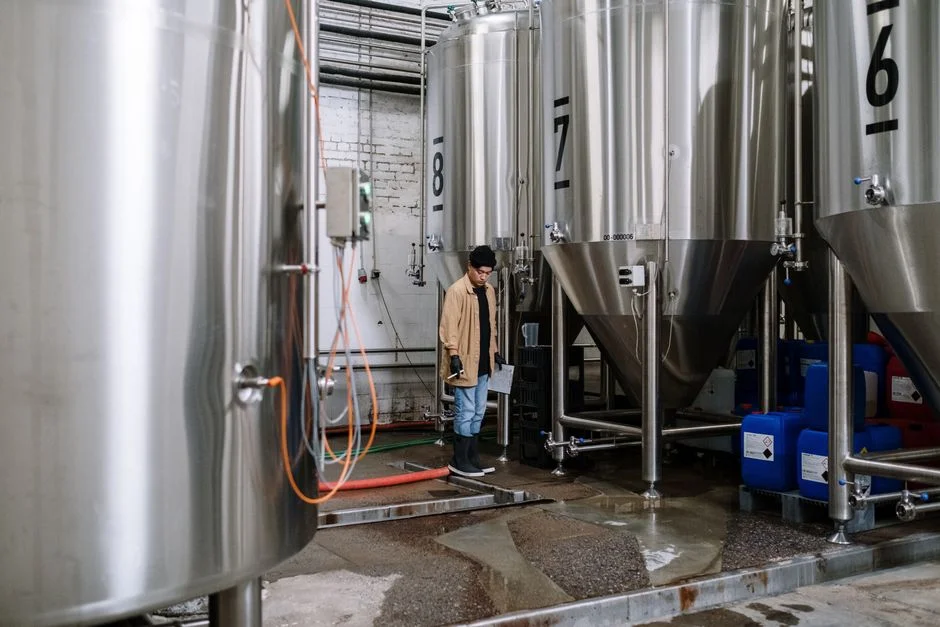
For a 100-bed facility at the design flow of 80 m³/day (0.8 m³/bed/day), the sizing math is straightforward. Hydraulic peaking factor 1.8–2.5× sets the equalization volume at 35–55 m³, the MBBR at 30–45 m³ (12 h HRT), and the MBR tank at 8–10 m³ with 80–120 m² of PVDF membrane area. The packaged integrated MBR membrane bioreactor + chlorine dioxide skid fits in two 40-ft containers and can be delivered CIF Barranquilla in 25–35 days from a Chinese OEM.
| Alternative | CAPEX (USD/m³/day) | 100-bed CAPEX (USD, 80 m³/d) | OPEX (USD/m³) | Compliance vs. Resolución 0631 |
|---|---|---|---|---|
| Septic tank + chlorination | 80–140 | 6,400–11,200 | 0.05–0.10 | Fails (BOD, TSS, N) |
| SBR (sequencing batch reactor) | 200–350 | 16,000–28,000 | 0.15–0.25 | Marginal on N, OK on BOD |
| MBR + ClO₂ (packaged) | 280–520 | 22,400–41,600 | 0.18–0.35 | Fully compliant + reuse-ready |
| MBR + ClO₂ + UV (reuse) | 380–620 | 30,400–49,600 | 0.25–0.45 | Fully compliant + Resolución 2115 reuse |
OPEX is dominated by ClO₂ chemical cost (NaClO₂ + HCl precursor, USD 1.40–1.80 per kg ClO₂ generated) and aeration energy at 0.6–1.2 kWh/m³ for MBR scouring and biological oxygen delivery. At Barranquilla's industrial tariff of roughly USD 0.13–0.18/kWh, energy runs USD 0.08–0.22 per m³ treated. Membrane replacement is the long-tail cost: PVDF flat-sheet modules last 5–8 years, translating to USD 0.02–0.05/m³ amortized. Import duty + IVA on Chinese-sourced packaged plants totals 19–28% depending on INCOTERM (FOB vs. CIF vs. DDP), and customs clearance at the Sociedad Portuaria de Barranquilla adds 5–10 days.
Frequently Asked Questions
Do small clinics in Barranquilla need full Resolución 0631/2015 compliance? Any healthcare facility discharging more than 1 L/s must register a PSMV with the CRA and meet the Article 14 discharge limits. Smaller clinics below 1 L/s still need a simplified vertimientos permit and are subject to the same analytical parameters during inspection cycles.
Can hospital effluent be reused for toilet flushing? Yes, but the reuse must meet Resolución 2115/2007 drinking-water parameters, which means adding UV (40 mJ/cm²) or ultrafiltration downstream of the MBR plus a residual disinfectant. Without that polishing train, toilet reuse is not permissible under Colombian regulation.
How often must a hospital discharge monitoring report be filed? Per Resolución 0631/2015, the minimum sampling cadence is quarterly for standard parameters, but monthly sampling is triggered for any parameter that exceeds twice the discharge limit during a single event. Reports go to the CRA and are public-record.
Is chlorine or chlorine dioxide preferred for hospital effluent? Chlorine dioxide. It avoids trihalomethane (THM) formation with the high organic load characteristic of hospital streams, maintains biocidal efficiency across pH 6–9 (chlorine drops sharply above pH 7.5), and operates at lower CT values, which reduces the contact-tank footprint.
Can a packaged MBR system from China be shipped and commissioned in Barranquilla? Yes. Containerized MBR + ClO₂ skids ship in 40-ft ISO containers with bilingual (Spanish/English) O&M documentation, pre-wired control panels, and a 6–10 week installation window including civil foundation, pipework, and commissioning. Most Chinese OEMs dispatch a commissioning engineer to site for SAT (site acceptance testing) and operator training, and the process documentation is structured to align with both Resolución 0631/2015 and the parallel US hospital wastewater engineering guide for cross-comparison during EPC review.
For maintenance protocols and O&M specifics on a pharmaceutical-bearing wastewater plant of this class, see the pharmaceutical wastewater O&M protocol. A direct comparison of compliance frameworks for a similar US-jurisdiction facility is documented in this parallel US hospital wastewater engineering guide.