Why Wood Processing Wastewater Is a Special Case for Aeration Technology
Wood-sector effluents combine three properties that punish conventional aeration: high organic load, refractory inhibitory compounds, and large temperature swings. Pulp and paper mills, MDF/OSB plants, and sawmill green-chain operations typically discharge streams at COD 1,500–10,000 mg/L, BOD₅ 500–4,000 mg/L, BOD/COD 0.3–0.5 (indicating a large fraction of slowly biodegradable material), TSS 200–3,000 mg/L, and temperatures of 25–55°C — well above the 10–20°C band where municipal activated-sludge kinetics are optimized (typical industry values, 2024–2025). The inhibitory load includes resin acids, chlorinated phenols, AOX, tannins, and (at MDF lines) formaldehyde, all of which demand long sludge age and robust nitrifier populations to achieve stable ammonia removal.
The aeration energy problem is therefore worse at a wood mill than at a municipal plant. Per Veolia's ZeeLung MABR analysis (2023), only 15% of the oxygen delivered by fine-bubble diffusers actually reaches the bacteria, and aeration accounts for roughly 60% of total plant power demand — a figure that scales directly with COD and temperature. Hot, high-strength wood streams force operators to push diffuser density and air flow to the upper end of the design envelope just to hold dissolved oxygen above 2 mg/L, inflating kWh/kg COD removed. Winter operation compounds the damage: cold white-water from chip washing drops basin temperature to 10–15°C, slowing nitrification in conventional activated sludge to 60–75% NH₄⁺ removal, while summer blowdown at 45–55°C strips DO and lifts sludge settling indices.
| Parameter | Sawmill / MDF / Pulp & Paper Range | Implication for Aeration |
|---|---|---|
| COD (mg/L) | 1,500–10,000 | High O₂ demand; bubble transfer at 15% efficiency becomes the bottleneck |
| BOD₅ (mg/L) | 500–4,000 | BOD/COD 0.3–0.5 — significant slowly biodegradable fraction |
| TSS (mg/L) | 200–3,000 | Fiber/pitch carryover; requires DAF pretreatment before any biofilm |
| Temperature (°C) | 25–55 (process), 10–15 (winter white-water) | Conventional nitrification drops below 70% in cold swings |
| Resin acids / phenols / AOX | Detected in most pulp & paper effluents | Require long SRT and acclimated nitrifiers; inhibit ASP biomass |
How MABR Works: Passive Aeration, Counter-Diffusion Biofilm
A membrane aerated biofilm reactor delivers oxygen by molecular diffusion through gas-permeable hollow-fiber or flat-sheet membranes — typically PVDF or PDMS composites — directly to a biofilm attached to the membrane's outer surface. Because the membrane is the air-water interface, no bubbles are formed, and the bulk liquid remains at near-zero dissolved oxygen, which is the defining condition that makes MABR different from any diffused-air process.
The biofilm geometry is counter-diffusion: O₂ diffuses inward from the membrane, while substrate (COD, NH₄⁺) diffuses inward from the bulk liquid. This produces stratified layers — an aerobic nitrifying zone at the membrane surface and an anoxic denitrifying zone at the biofilm-liquid interface — within a single film. The result is simultaneous nitrification-denitrification (SND) in one tank, with no separate anoxic basin or internal recycle. Per SUEZ's Søndersø reference (commissioned Feb 2023, the largest Nordic MABR installation to date), passive aeration replaces fine-bubble diffusers entirely, eliminating DO oversaturation and the off-gas losses that limit conventional transfer efficiency. Fluence reports 200+ commercial MABR projects globally, putting the technology firmly past the pilot stage.
Typical MABR module performance falls in a narrow band that suits wood-sector retrofit: oxygen flux 5–20 g O₂/m²·day, volumetric loading 0.5–2 kg COD/m³·day, and fixed-film operation that requires no MLSS control loop. Because biomass is attached rather than suspended, the reactor tolerates the long sludge age needed to grow slow-growing nitrifiers that survive resin-acid and phenolic loading, while the suspended-growth clarifier downstream sees a far more stable feed. The membrane cassette itself can be dropped into an existing aeration basin as a retrofit, which is the option most wood mills will evaluate first; the MBR membrane bioreactor downstream configuration is also common for new builds.
MABR vs Conventional Activated Sludge for Wood Effluent
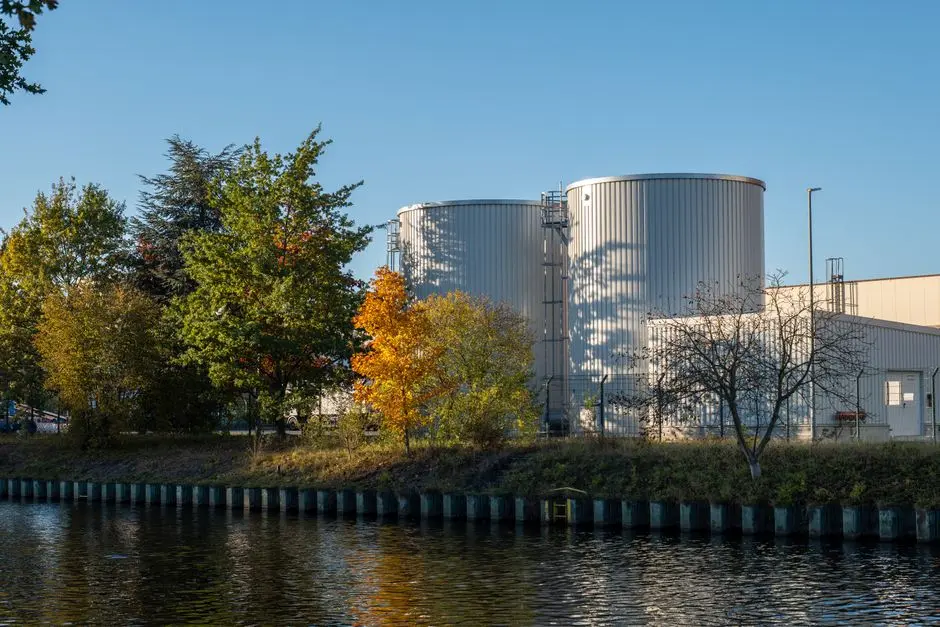
The honest comparison for a wood mill is not "MABR vs ASP in general" — it is "MABR retrofit vs your existing ASP under wood-sector influent swings." Three deltas matter: aeration energy, ammonia robustness across temperature, and sludge production downstream of the reactor. The table below uses the Veolia-derived 60% aeration share and 15% bubble-transfer efficiency as the ASP baseline, against published MABR performance ranges from Veolia ZeeLung and Fluence installations.
| Parameter | Conventional ASP (Wood Effluent) | MABR Retrofit (Wood Effluent) |
|---|---|---|
| Aeration energy share of plant power | ~60% | 10–25% (membrane diffusion only) |
| O₂ utilization efficiency | ~15% (fine-bubble) | 80–90% at the biofilm |
| Aeration kWh/kg COD removed | 0.8–1.4 | 0.3–0.6 |
| NH₄⁺ removal at 10–15°C | 60–75% | >90% (biofilm-protected nitrifiers) |
| Sludge yield (kg TSS/kg COD) | 0.4–0.6 | 0.15–0.25 |
| Footprint | Reference | 30–50% smaller for equal capacity |
| TSS tolerance in reactor feed | High (clarifier handles it) | <150–200 mg/L — DAF pretreatment mandatory |
| Free oil / grease tolerance | Tolerates short spikes | Sensitive — equalization required |
The 50–70% aeration-energy cut is the headline number, but the cold-weather ammonia robustness is what closes the deal at mills that have already lost a winter permit cycle to a nitrification crash. Sludge yield matters because downstream dewatering — typically a plate and frame filter press — scales with TSS load; halving sludge volume cuts both polymer use and disposal cost.
The constraint to be honest about: MABR membranes foul rapidly if fed TSS above 200 mg/L or any free oil/grease. At a sawmill or MDF plant, that means a properly sized DAF in front of the MABR cassette is non-negotiable — not a nice-to-have. Without a dissolved air flotation system dropping TSS below 150 mg/L, membrane life collapses and the operating-economics argument evaporates.
Designing a 2026 MABR Retrofit for a Sawmill or MDF Plant
The retrofit decision sequence for a wood-sector plant is short and the engineering choices are well-constrained. Six steps cover the full scope from influent buffer to sludge handling, and each step has a defensible 2026 design number.
Step 1 — Equalization. A 24-hour HRT equalization basin damps the temperature and load swings that come from batch white-water discharge (cold) and digester blowdown (hot). Without equalization, the MABR biofilm sees daily thermal shocks of 15–25°C, which no fixed-film process handles well.
Step 2 — DAF pretreatment. A dissolved air flotation unit sized for the peak flow drops TSS below 150 mg/L and removes wood fibers, pitch, and stickies that would otherwise coat the MABR membrane surface. For a 1,000 m³/day wood stream, a 15–25 m³/h DAF is typical.
Step 3 — MABR module sizing. For wood-sector ammonia loads, the working rule of thumb is 80–150 m² of biofilm area per kg NH₄⁺-N/day, with design flux 5–15 g O₂/m²·day. A 1,000 m³/day MDF line at 30 mg/L influent NH₄⁺-N needs roughly 2,500–4,500 m² of membrane area, typically packaged as 2–4 cassettes dropped into the existing aeration basin.
Step 4 — Blower and control retrofit. MABR modules operate at 0.3–0.8 bar supply pressure — well below the 0.6–0.8 bar needed by fine-bubble ASP grids. Most retrofits can downsize or remove the main process blower and replace it with a smaller rotary-lobe or high-speed turbo unit, often with a VFD for turndown. Existing DO control loops are repurposed to read membrane lumen pressure rather than basin DO.
Step 5 — Post-MABR polishing. MABR effluent typically carries 20–60 mg/L TSS from sloughed biofilm. A small MBR cassette or sand filter brings this below 30 mg/L for direct discharge or reuse; an MBR membrane bioreactor polishing step is the most common choice at wood mills targeting water reuse.
Step 6 — Sludge handling. MABR biofilm sloughing produces 30–50% less waste activated sludge than ASP, which directly reduces the hydraulic and polymer load on the downstream plate and frame filter press — a benefit quantified in this sludge treatment engineering guide for parallel sectors.
2026 CAPEX, OPEX, and Payback for a Wood-Sector MABR Retrofit
For a 2026 budget-grade estimate, retrofit CAPEX for a 500–2,000 m³/day wood-processing stream runs USD 280,000–650,000 inclusive of membrane modules, blowers, control retrofit, and DAF pretreatment — civil works excluded. The wide range tracks influent strength (COD and NH₄⁺-N loading) more than flow, because higher loadings demand larger membrane area rather than larger tanks.
| Cost Element | 2026 Retrofit Range (500–2,000 m³/day, wood sector) |
|---|---|
| MABR membrane modules + cassette frames | USD 120,000–320,000 |
| Blower replacement (rotary lobe / turbo + VFD) | USD 40,000–90,000 |
| Control retrofit (DO / pressure / SCADA) | USD 30,000–60,000 |
| DAF pretreatment unit | USD 60,000–120,000 |
| Installation, commissioning, engineering | USD 30,000–60,000 |
| Total CAPEX (ex civil) | USD 280,000–650,000 |
OPEX swings the other way. Aeration electricity drops from roughly 0.45 kWh/m³ at an ASP wood plant to about 0.15 kWh/m³ at an MABR plant. At USD 0.10/kWh and 1,000 m³/day, that is approximately USD 11,000 in annual aeration savings. Sludge disposal savings of 30–50% add another USD 3,000–8,000/year per 1,000 m³/day, depending on local dewatering and hauling cost. Simple payback lands at 3–5 years on energy and sludge alone, shorter where carbon pricing, water-reuse credits, or avoided permit excursions apply. Three 2026 cost drivers are worth tracking: PVDF membrane price has stabilized after the 2022–2023 spike, EU CBAM-linked carbon costs are starting to reward low-aeration processes, and high-speed turbo blower efficiency standards continue to tighten — all of which improve MABR's relative position versus a new ASP build. For plants considering a broader zero-liquid-discharge scope, the aeration cut compounds with the rest of the water-reuse train, as detailed in this ZLD retrofit considerations reference.
Frequently Asked Questions
Is MABR compatible with wood processing wastewater at COD up to 10,000 mg/L? Yes, provided influent TSS is reduced below 150–200 mg/L via DAF pretreatment and pH is held in the 6.5–8.0 range; the biofilm tolerates the high COD load and the resin-acid/phenolic fractions at typical wood-sector concentrations.
Can MABR be retrofitted into an existing activated sludge basin without major civil work? In most sawmill and MDF retrofits, the MABR cassettes are dropped directly into the existing aeration tank, with the main blower downsized or removed; civil work is typically limited to the DAF foundation and a small equalization basin.
What ammonia removal guarantee can be expected across seasonal temperature swings? Documented MABR performance at wood-sector installations exceeds 90% NH₄⁺ removal at 10–35°C, because the fixed biofilm protects slow-growing nitrifiers from washout that conventional ASP suffers in cold white-water periods.
How often do MABR membranes need replacement? PVDF and PDMS composite MABR membranes in wood-sector service typically show 8–12 year replacement intervals when DAF pretreatment is correctly specified and the feed stays within the membrane vendor's TSS and oil/grease limits.
Which suppliers should a 2026 shortlist include? Veolia (ZeeLung MABR), Fluence (MABR product family, 200+ commercial projects), and SUEZ (Søndersø, Denmark, commissioned Feb 2023) are the three commercial references with documented wood-sector and municipal retrofits at scale.