Why Cyanida Is a Tier-1 Compliance Parameter in Nigeria
Cyanide sits in a small group of parameters — alongside mercury, lead, and total chromium — where Nigerian regulators enforce single-digit mg/L limits and carry criminal liability under Section 27 of the NESREA Act 2007, not merely administrative fines. The International Cyanide Management Code documents that operations consistently discharging above 50 mg/L WAD cyanide have recorded wildlife deaths, while two operations that held tailings discharge below 50 mg/L WAD over a two-year monitoring window recorded zero wildlife fatalities (Donato 1999, cited in ICMI 4.4). Nigeria's surface-water band sits 100× below that benchmark, at 0.5 mg/L free cyanide under FMEnv S.I. No. 35 of 2024 — a number that drives equipment selection rather than permit negotiation.
Gold mining is the dominant load source: it generates an estimated 60–70% of the national cyanide effluent inventory, with electroplating, printed-circuit board manufacturing, and steel pickling supplying most of the remainder. Plating baths in the Lagos–Aba–Kano industrial corridor can contain 10–30% potassium ferricyanide, a complexed form that does not register on a free-cyanide MSDS but does register on a total-cyanide effluent test (per the US EPA cyanide fact sheet, regulations.gov). That gap — between what the MSDS reports and what the inspector measures — is where most first-year permit exceedances originate.
The Nigerian Regulatory Stack for Cyanide
There is no single "Nigerian cyanide limit." Compliance engineers must stack three federal instruments and overlay any state-level tightening before they can sign a permit application or specify a treatment train.
FMEnv S.I. No. 35 of 2024 — the National Environmental (Surface and Groundwater Quality) Regulations — sets the federal floor: 0.5 mg/L free cyanide for discharges into surface water, and 1.0 mg/L total cyanide for discharges into a municipal sewer under the effluent quality schedule. Nigerian Minerals and Mining Regulations 2011 (as amended) cap total cyanide in tailings discharge to receiving waters at 0.5 mg/L, with WAD cyanide monitored quarterly. NESREA's National Environmental (Electrical/Electronic Sector) Regulations add a sectoral overlay for electroplating and PCB facilities, requiring an operating cyanide destruct unit before any discharge.
State Environmental Protection Agencies — LASEPA in Lagos, OGEPA in Ogun, KEPA in Kaduna — may impose tighter local limits where discharges enter ecologically sensitive catchments such as the Lagos Lagoon or Niger Delta tributaries. Permit applicants should request the state-specific discharge schedule before finalising the P&ID; LASEPA in particular has been known to set 0.2 mg/L WAD in lagoon-sensitive sub-catchments.
| Instrument | Cyanide Form Regulated | Limit | Receiving Medium | Applies To |
|---|---|---|---|---|
| FMEnv S.I. No. 35 of 2024 | Free cyanide | 0.5 mg/L | Surface water | All sectors |
| FMEnv S.I. No. 35 of 2024 | Total cyanide | 1.0 mg/L | Municipal sewer | All sectors |
| Minerals & Mining Regs 2011 | Total cyanide | 0.5 mg/L | Receiving waters (tailings) | Gold mining |
| Minerals & Mining Regs 2011 | WAD cyanide | Monitoring only (quarterly) | Tailings supernatant | Gold mining |
| NESREA E&E Sector Regs | Total cyanide | 0.5 mg/L (operational target) | Any discharge | Electroplating / PCB |
| State EPAs (LASEPA, OGEPA, KEPA) | WAD or total | 0.2–0.5 mg/L | Sensitive catchments | Site-specific |
Free Cyanide, WAD Cyanide, and Total Cyanide — Which Number Counts?
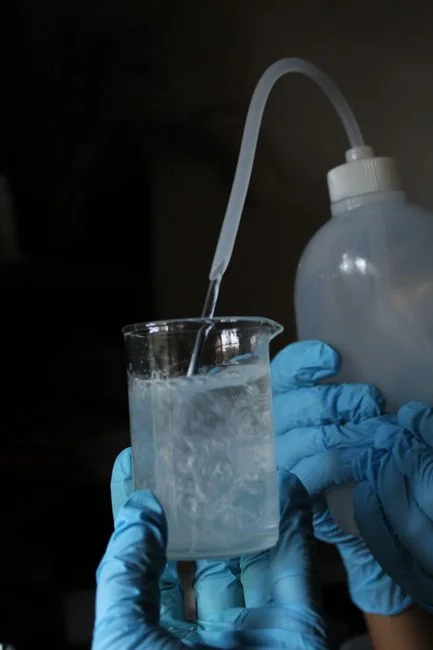
Free cyanide is the sum of HCN and CN⁻ present in solution at the sampling pH — the acutely toxic fraction. Weak acid dissociable (WAD) cyanide adds the cyanide bound to zinc, cadmium, copper, and nickel complexes, all of which dissociate at pH 4–6 and release free HCN. Total cyanide includes the strongly bound iron, cobalt, and gold complexes that survive acid digestion. The three numbers can differ by an order of magnitude on the same wastewater: a gold mill weak leachate might read 5 mg/L free, 15 mg/L WAD, and 80 mg/L total.
The US cyanide fact sheet (regulations.gov) warns that a free-cyanide analysis will not detect complexed forms, and that facilities exceeding their discharge limits on total cyanide frequently have MSDSs that show no free cyanide at all. A printed-circuit bath containing 10–30% potassium ferricyanide is the textbook case: the MSDS shows no free CN, but once ferricyanide breaks down under UV or reducing conditions, the discharge registers as a total-cyanide exceedance. NESREA inspectors increasingly demand EPA Method 335.4 (total cyanide by distillation followed by colorimetric or amperometric finish) for compliance reporting, and ASTM D7511 (gas-diffusion amperometry) for WAD on 2026 permit reviews.
Treatment Trains That Hit 0.5 mg/L in Nigerian Conditions
Four destruction technologies are commercially proven for the 0.5 mg/L free / 1.0 mg/L total discharge band Nigerian permits demand. Selection hinges on influent cyanide strength, thiocyanate co-contamination, reagent logistics, and ambient temperature at the site.
Alkaline chlorination oxidises free and WAD cyanide at pH 10.5–11 with a Cl₂:CN mass ratio around 8:1; residuals reliably fall below 0.1 mg/L WAD on a well-controlled reactor. The drawback is chlorine reagent logistics — a 20 t/day NaOCl demand at a mid-tier gold operation is hard to sustain in remote camps without a chlor-alkali on site, and an automatic chemical dosing system sized for the 8:1 stoichiometry is mandatory to avoid under-dose excursions. INCO SO₂/air uses copper-catalysed oxidation at pH 9–10 and handles thiocyanate co-contamination common in gold mill tailings; CAPEX is higher but reagent cost per kilogram of CN destroyed is lower at high influent strength. Biological destruction on methanol-fed rotating biological contactors becomes CAPEX-competitive above 500 mg/L influent and routinely achieves 0.05–0.2 mg/L WAD residual — but the biomass needs sustained temperatures above 15 °C, which Jos Plateau winter conditions can violate. Adsorption polishing on activated carbon or weak-base anion resin catches influent spikes that risk a 0.5 mg/L breach; spent regenerant returns to the head of the destruction train as a concentrated brine.
The hybrid train most common across Nigerian gold mines in 2026 runs: equalisation → alkaline chlorination → sand filtration → carbon polish → online cyanide analyser → discharge. The multi-media filtration stage between chlorination and polish removes suspended iron hydroxide floc that would otherwise blind the carbon bed and force premature breakthrough.
| Technology | Optimal pH | Influent Range | Residual WAD | CAPEX Band (USD, 50 m³/day) | Nigerian Site Notes |
|---|---|---|---|---|---|
| Alkaline chlorination | 10.5–11.0 | 10–500 mg/L | < 0.1 mg/L | 150,000–250,000 | Reagent logistics constrain remote sites |
| INCO SO₂/air | 9.0–10.0 | 100–1,000 mg/L | < 0.5 mg/L | 400,000–600,000 | Best for thiocyanate-bearing mill tailings |
| Biological (RBC) | 7.0–8.5 | 50–2,000 mg/L | 0.05–0.2 mg/L | 300,000–500,000 | Fails below 15 °C ambient |
| Carbon / resin polish | 6.5–9.0 | ≤ 5 mg/L (polishing) | < 0.05 mg/L | 80,000–150,000 | Always paired with a destruction stage upstream |
Sampling, Monitoring, and Online Analyzers for 2026 Compliance
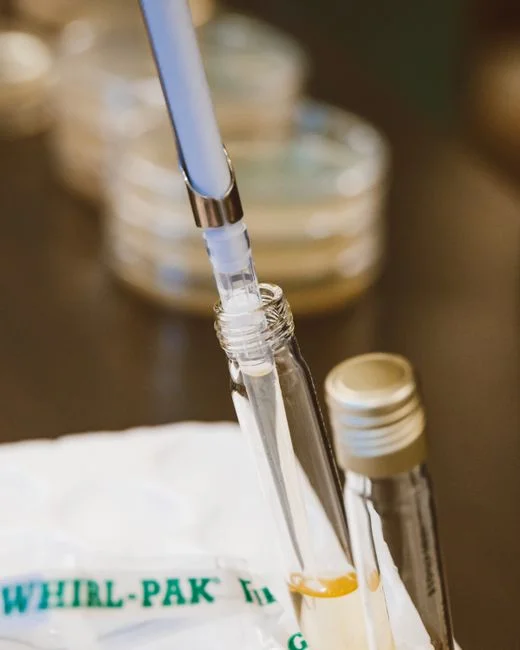
Default NESREA monitoring frequency for cyanide is a monthly grab sample drawn at the discharge manhole and analysed by a SON-accredited lab, escalating to weekly for the first permit year or following any documented exceedance. FMEnv S.I. No. 35 mandates a 24-hour composite sampler for facilities discharging above 50 m³/day, which captures most mid-tier gold operations and any electroplating line running more than one shift.
Online amperometric analyzers using vanadium-catalysed gas-diffusion cells deliver 15-minute readings at 0.01 mg/L resolution and integrate directly with the plant SCADA. The standard control logic trips a diversion valve back to equalisation on a 0.4 mg/L pre-alarm, well before the 0.5 mg/L permit ceiling is breached. For sites that already monitor chromium online, the same analyser skid can share a sample-conditioning rack; the engineering principles overlap with the online chromium monitoring sensor buyer's guide for industrial wastewater, which covers amperometric cell selection and reagent delivery in more depth.
Permit Fees, Penalties, and the 2026 Enforcement Climate
NESREA's annual effluent permit fees for cyanide-generating sectors sit in the ₦1.5–5 million band depending on discharge volume, with a per-parameter surcharge for cyanide on top of the base fee. Administrative penalties for a documented exceedance run ₦1–5 million per incident; repeat offenders face a shutdown notice under Section 27 of the NESREA Act 2007, with criminal liability attaching to the responsible officer rather than the corporate entity alone.
Mining-specific exposure is sharper: the Nigerian Minerals and Mining Regulations allow licence suspension or revocation after three exceedances in a 12-month period. For a mid-tier gold operation producing 800–1,200 oz/month, a 30-day shutdown translates to roughly ₦2.5–4 billion in lost revenue at 2026 gold prices, before remediation and resumption costs. The same cost-of-compliance arithmetic applies to any COD-bearing discharge governed by the COD discharge limit in Nigeria compliance guide, which most cyanide plants also have to satisfy in parallel.
Forward-looking note for 2026: NESREA is piloting a continuous cyanide monitoring requirement at all Class A gold mines, but this has not yet appeared in a federal gazette. Procurement teams should treat online amperometric analyzers as defensible best practice today and as likely mandatory within 12–18 months.
Frequently Asked Questions

What is the free cyanide discharge limit into Nigerian surface water?
0.5 mg/L under FMEnv S.I. No. 35 of 2024, measured as free cyanide at the discharge manhole and reported monthly on a SON-accredited lab CoA using EPA Method 335.4 or equivalent.
What total cyanide limit applies to gold mining tailings discharge?
0.5 mg/L total cyanide to receiving waters under the Nigerian Minerals and Mining Regulations 2011 (as amended), with WAD cyanide monitored quarterly on the tailings supernatant.
Which destruction technology gives the lowest residual WAD cyanide?
Biological destruction on methanol-fed RBCs typically achieves 0.05–0.2 mg/L WAD residual, but alkaline chlorination reliably delivers < 0.1 mg/L WAD at lower CAPEX for sites without ambient temperature constraints.
What does a NESREA cyanide exceedance actually cost?
An administrative penalty of ₦1–5 million per incident, with shutdown notice under Section 27 of the NESREA Act for repeat offenders; mining licence suspension applies after three exceedances in a 12-month period.
Does a free-cyanide MSDS exempt a plating facility from total-cyanide testing?
No. NESREA inspectors accept only total cyanide results (EPA Method 335.4) for compliance reporting, and complexed forms from potassium ferricyanide baths register on total cyanide even when free-cyanide analysis reads zero.