What Counts as MABR Spare Parts and Consumables
MABR (membrane aerated biofilm reactor) consumables are grouped into six BOM line items: hollow-fiber membrane modules, membrane gaskets and O-rings, aeration-blower service kits, instrumentation sensors (DO, pH, ORP, pressure, level), CIP cleaning chemicals, and anti-scalant/anti-fouling agents. Together, these represent every recurring expense a process engineer must budget for in a 5–10 year MABR retrofit cycle.
Unlike conventional activated sludge, MABR eliminates clarifier and return-activated-sludge consumables but introduces membrane-integrity items that do not exist in a CAS plant. The largest delta is the hollow-fiber module replacement reserve, which has no equivalent in a non-membrane biofilm process. Sensor density is the second structural difference: because MABR delivers bubble-less aeration through a sealed module, operators monitor membrane integrity (vacuum hold-test, bubble-point), DO at the lumen and bulk-liquid phase, and differential pressure across the fiber bundle — a sensor stack closer to an MBR than to a trickling filter.
Per the FCC reporting cited in the 2026 MABR market report, industrial IoT network penetration in US water utilities reached 78% — a figure that maps directly onto the digital-sensor replacement line. Connected probes are replaced on a tighter cycle than legacy analog instruments because failure is detected and logged automatically, which makes the sensor line a true consumable rather than a fixed asset. The Aug 2025 MBBR cost reference uses a USD 5,000–20,000 initial spare-parts kit for a non-membrane biofilm system; MABR kits trend 40–80% higher because the hollow-fiber module exclusion logic pushes the engineering, instrumentation, and air-side service-kit components into the kit envelope.
Hollow-Fiber Membrane Module Replacement Cost
Hollow-fiber modules drive 55–70% of total MABR consumables cost, contributing USD 0.025–0.055/m³ over an 8–12 year service life. The wide range reflects membrane chemistry (PVDF vs composite PES), manufacturer, and how aggressively the operator runs flux and CIP cycles.
Unit pricing sits at USD 180–420 per m² of membrane area; 1,000–10,000 m³/day industrial skids typically carry 50–150 m² of installed membrane. At a 10,000 m³/day plant, a single full-module replacement event therefore lands between USD 45,000 and USD 250,000 depending on area and vendor — a number that justifies the annualized reserve line most procurement reviewers will ask about.
The 8–12 year service-life assumption is grounded in the NSF USD 12M+ MABR hollow-fiber research grant program noted in the 2026 market report; newer composite membranes with reinforced potting and oxidative-CIP-tolerant fibers push the upper bound, while legacy PVDF modules in food-processing matrices with high FOG tend to fall on the lower end. The three field drivers of shortened membrane life are flux over-rating (operating above 5–8 LMH on a hollow-fiber designed for 3–5 LMH), CIP chemical incompatibility (free chlorine sustained above 5,000 mg/L damages PVDF), and air-supply drying during shutdowns that cracks potted ends.
Full module replacement is not the only path. Individual fiber poting repair runs USD 1,200–3,500 per repair event and is the right choice when integrity-test failure is localized to 1–3 fibers, a common situation in plants that have not yet stabilized CIP chemistry.
| Parameter | Typical Range (2026) | Notes |
|---|---|---|
| Membrane area per module | 50–150 m² | Common for 1,000–10,000 m³/day industrial skids |
| Unit cost | USD 180–420/m² | PVDF lower bound; composite reinforced upper bound |
| Service life | 8–12 years | Based on NSF-funded research program, 2026 |
| Normalized OPEX | USD 0.025–0.055/m³ | Annualized over service life |
| Fiber poting repair | USD 1,200–3,500/event | For localized integrity failure on 1–3 fibers |
Gaskets, O-Rings, and Membrane-Integrity Seals
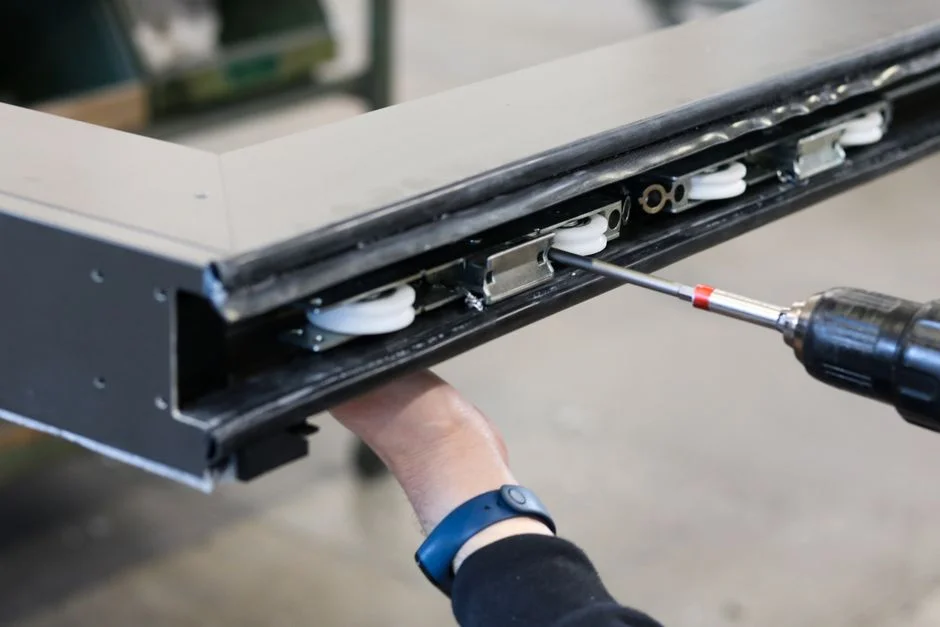
Membrane gaskets, header O-rings, and module end-cap seals account for USD 0.003–0.008/m³ on a 24–36 month replacement cycle. The cycle length is set by compression-set behavior in EPDM and by chemical attack from residual CIP oxidant, both of which are accelerated at the elevated temperatures used during the acid CIP cycle (30–45°C).
Common failure modes each push the operator toward a different material. Compression set on standard EPDM drives the move to peroxide-cured EPDM or Viton for headers that see temperature cycling. Chemical attack from chloride residuals drives the move to FFKM at module end-caps where CIP is hardest to rinse. Biofouling at the header — often missed until a vacuum hold-test fails — drives a quarterly visual inspection cycle on the gasket face.
Per-unit pricing sits at USD 12–45 for standard EPDM header gaskets and USD 60–180 for Viton end-cap seals on industrial MABR modules. A 5–8% gasket line-item contingency inside the maintenance budget reflects observed field failure rates, where 1 in 12 industrial MABR skids will lose a header seal inside the first 36 months due to a missed re-torque after a CIP event.
Adding an upstream rotary mechanical bar screen is the single most effective way to extend gasket life: it removes rags, plastics, and fibrous debris that score the seal face during module handling.
| Component | Material | Unit Cost (USD) | Replacement Cycle |
|---|---|---|---|
| Header gasket | EPDM (peroxide-cured) | 12–45 | 24–36 months |
| End-cap seal | Viton (FKM) | 60–180 | 24–36 months |
| Module potted-end O-ring | FFKM or silicone | 25–90 | 24–36 months |
| Manifold flange gasket | EPDM with PTFE facing | 30–110 | 36 months |
Aeration Blower Service Kits and Air-Side Components
Aeration-blower service kits (air filter, bearing kit, seal kit, oil change) contribute USD 0.005–0.015/m³ over a 12–24 month service interval. Bearing and seal replacements dominate this line; the air filter and oil are minor cost items but drive the service-interval schedule.
Blower inlet filters are replaced every 3–6 months on continuous-duty industrial MABR skids at USD 40–110 per filter. A clogged inlet filter raises the discharge pressure needed to maintain membrane lumen airflow, which forces the blower into a higher current draw and accelerates bearing wear — so the cheap filter has a measurable payback.
Per the 78% industrial IoT penetration figure in the 2026 MABR market report, the addition of vibration and temperature sensors on the blower is now standard practice and counts as a predictive-maintenance consumable line. Connected vibration sensors on a positive-displacement blower shorten bearing-failure detection from a quarterly teardown to a 24-hour alert.
Positive-displacement blowers require oil changes every 2,000–4,000 hours; high-speed turbo blowers eliminate oil entirely and push bearing replacement to 30,000+ hours. The OPEX gap is real: a typical 10,000 m³/day MABR plant running PD blowers will spend USD 3,500–7,500/year on oil and seals where an equivalent turbo-blower skid spends under USD 1,500/year on bearing service only. Automated air-distribution manifolds add non-warranty solenoid valve rebuild kits at USD 220–650 per valve, replaced on a 3–5 year cycle.
Instrumentation Sensors: DO, pH, ORP, and Pressure Probes
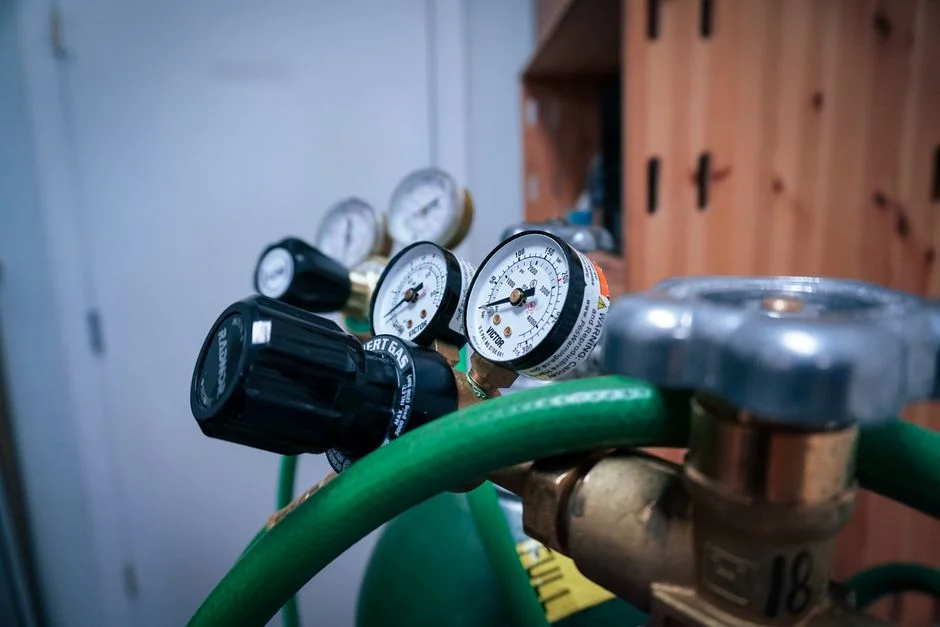
Dissolved oxygen probes account for USD 0.004–0.010/m³ on a 12–18 month replacement cycle at USD 380–720 per probe for optical-luminescent industrial MABR installations. Optical-luminescent DO probes are now the default for MABR because they are not consumed by hydrogen sulfide and tolerate CIP residuals better than the older galvanic cells.
pH and ORP probes run USD 220–520 each on an 18–24 month cycle, contributing USD 0.003–0.007/m³ combined. Pressure transducers for membrane integrity (vacuum hold-test) and differential pressure for fouling detection run USD 180–450 each on a 24–36 month cycle. Calibration consumables — buffer solutions, electrolyte fills, and replacement membrane caps — add a further USD 600–1,400/year for a typical industrial MABR skid.
Per the 2026 MABR market report, the 78% water-utility IoT penetration shortens the practical sensor replacement interval because failures are detected and logged automatically. A connected probe that drifts out of calibration triggers a work order within hours; an analog probe drifts silently until a manual grab sample flags it, often weeks later, by which time the process has been operating off-spec.
| Sensor Type | Unit Cost (USD) | Replacement Cycle | Normalized Cost (USD/m³) |
|---|---|---|---|
| Optical-luminescent DO probe | 380–720 | 12–18 months | 0.004–0.010 |
| pH probe | 220–520 | 18–24 months | 0.002–0.005 |
| ORP probe | 220–520 | 18–24 months | 0.001–0.002 |
| Pressure / dP transducer | 180–450 | 24–36 months | 0.001–0.003 |
| Calibration consumables (annual) | 600–1,400/yr | Recurring | 0.002–0.004 |
CIP Chemicals and Biofilm-Control Consumables
CIP chemicals — typically sodium hypochlorite at 2,000–5,000 mg/L free chlorine followed by citric acid at 1–2% — contribute USD 0.006–0.018/m³ annualized, with 2–4 CIP events per year on a well-operated industrial MABR. The high end of the range corresponds to a plant recovering from a flux excursion; the low end is steady-state maintenance CIP on a stable influent.
Anti-scalant or anti-fouling dosing to control membrane scaling on high-hardness influent adds USD 0.002–0.006/m³. The dosing is delivered by a PLC-controlled anti-scalant and CIP chemical dosing skid, which holds dose setpoints within ±5% of target and logs consumption to the SCADA mass-balance.
A standard CIP cycle is a 4–8 hour soak, with the acid stage run at 30–45°C to dissolve inorganic scale, followed by neutralization to pH 6–8 before return to the aeration basin. Skipping neutralization kills biofilm on the air-side and forces a 6–8 week recovery before ammonia removal performance returns to spec.
Matrix sensitivity drives the wide cost range. Food-processing wastewater with high FOG (fats, oils, grease) typically requires 3–4 CIP events per year and pushes toward the upper bound; pharmaceutical effluent with solvent traces may require specialty oxidant-resistant membrane grades and more frequent auditing, sometimes a 2–3× multiplier on the chemical line. The 2026 microplastics and pharmaceutical compliance trend is a forward driver of more frequent CIP chemical audits; for a deeper dive into API wastewater chemistry, see the pharmaceutical API wastewater treatment process engineering guide.
MABR vs MBBR vs IFAS: OPEX Comparison for Spare Parts and Consumables
MABR consumables run USD 0.04–0.11/m³, dominated by the hollow-fiber module replacement reserve. MBBR consumables run USD 0.018–0.062/m³ (per the MBBR maintenance cost benchmark 2026) — lower because there is no membrane to replace, but with more carrier-media top-up and aeration-diffuser spend. IFAS consumables run USD 0.18–0.62/m³ (per the IFAS operating cost 2026 reference) — materially higher because IFAS carries both carrier-media and mixed-liquor consumables, plus a more complex aeration grid.
Per the 2026 MABR market report, retrofit projects account for 17% of MABR market share (USD 76.8M), driven by MABR's smaller footprint and shorter construction schedule, not by lower consumables cost. The honest procurement argument is footprint and schedule — MABR wins on those two axes and loses on consumables versus MBBR.
| Cost Component | MABR (USD/m³) | MBBR (USD/m³) | IFAS (USD/m³) |
|---|---|---|---|
| Membrane / module replacement | 0.025–0.055 | N/A | N/A (or IFAS media) |
| Carrier media top-up | N/A | 0.005–0.015 | 0.020–0.060 |
| Gaskets / seals | 0.003–0.008 | 0.002–0.006 | 0.005–0.012 |
| Blower service kits / diffusers | 0.005–0.015 | 0.005–0.018 | 0.020–0.050 |
| Instrumentation sensors | 0.010–0.022 | 0.004–0.010 | 0.010–0.025 |
| CIP + anti-scalant chemicals | 0.008–0.024 | 0.003–0.013 | 0.020–0.060 |
| Sludge handling consumables | Negligible | Negligible | 0.105–0.413 |
| Total consumables | 0.04–0.11 | 0.018–0.062 | 0.18–0.62 |
Building a 5-Year MABR Spare-Parts Budget
Year 1 carries the full spare-parts kit (excluding membrane modules) at USD 8,000–25,000 for a 1,000–10,000 m³/day system, plus CIP chemical startup doses and sensor startup spares. Years 2–5 settle into a steady-state OPEX of USD 0.04–0.11/m³ dominated by sensor and CIP cycles, with gasket and blower service-kit renewals on their respective 24–36 month and 12–24 month cycles. Year 8–12 is the membrane module replacement event; the right pre-funding line is a capital reserve of USD 0.025–0.055/m³ annualized.
Apply a 5–8% spare-parts contingency and a 10–15% contingency on chemicals, reflecting the 2026 supply-chain volatility noted in the MABR market report. Sodium hypochlorite pricing in particular has moved ±25% quarter-over-quarter in 2025–2026, and the chemical line is the most exposed to that volatility.
If the wastewater matrix is variable — common in fine-chemical and pharmaceutical plants — the budget may need to add a downstream polishing step; the activated carbon filter for fine chemical wastewater engineering guide covers sizing and replacement intervals for that polishing train.
| Year | Major Spend | Annualized Cost (USD/m³) | Notes |
|---|---|---|---|
| 1 | Full spare-parts kit (no modules), CIP startup, sensor spares | 0.12–0.18 (kit-heavy) | One-time USD 8,000–25,000 kit spend |
| 2 | Sensor cycle, gasket reseal, blower service | 0.04–0.11 | Steady-state |
| 3 | Sensor cycle, CIP events, blower service | 0.04–0.11 | Steady-state |
| 4 | Gasket reseal, DO probe cycle, CIP events | 0.04–0.11 | Steady-state |
| 5 | Sensor + CIP + blower service | 0.04–0.11 | Module reserve continues |
| 8–12 | Hollow-fiber module replacement event | 0.025–0.055 annualized reserve | Capital event; pre-fund Years 1–8 |
Frequently Asked Questions
What is the typical MABR consumables cost per m³ in 2026?
MABR consumables run USD 0.04–0.11/m³ for a 1,000–10,000 m³/day industrial hollow-fiber system. Hollow-fiber module replacement dominates at USD 0.025–0.055/m³; instrumentation, blower service kits, gaskets, and CIP chemicals add the remaining USD 0.015–0.055/m³ combined (HydropureWater field data, 2026).
How often do hollow-fiber MABR membrane modules need replacement?
Service life is 8–12 years per the NSF USD 12M+ MABR hollow-fiber research grant program cited in the 2026 market report. Replacement is driven by flux over-rating, CIP chemical incompatibility, and air-supply drying; localized fiber poting repair at USD 1,200–3,500 per event is an alternative to full replacement when integrity-test failure is limited to 1–3 fibers.
What does a Year-1 MABR spare-parts kit cost?
USD 8,000–25,000 for a 1,000–10,000 m³/day system, modules excluded. The kit covers gaskets, blower service consumables, instrumentation spares, CIP chemicals, and anti-scalant startup dose — comparable to the USD 5,000–20,000 MBBR kit but higher because of MABR's membrane-integrity and sensor-heavy stack (per Aug 2025 MBBR cost reference).
How does MABR OPEX compare to MBBR and IFAS?
MABR USD 0.04–0.11/m³; MBBR USD 0.018–0.062/m³ (per the MBBR maintenance cost benchmark 2026); IFAS USD 0.18–0.62/m³ (per the IFAS operating cost 2026 reference). MABR sits above MBBR because of membrane replacement; MABR is materially below IFAS because IFAS carries both carrier-media and mixed-liquor consumables.
What is the MABR CIP chemical cost per m³?
CIP chemicals run USD 0.006–0.018/m³ annualized at 2–4 events per year, with sodium hypochlorite at 2,000–5,000 mg/L free chlorine and citric acid at 1–2%. Pharmaceutical and high-FOG food-processing matrices drive a 2–3× multiplier on this line; the 2026 microplastics and API compliance trend is increasing CIP audit frequency (HydropureWater field data, 2026). For an MBR-skid comparison, see MABR-adjacent MBR membrane bioreactor systems.
Related Equipment
- replaceable MBR flat sheet membrane modules — specifications, capacity range, and technical data