Why Spare-Parts OPEX Defines the Real Cost of a Sludge Dryer
A US$25,000–50,000 horizontal sludge dryer quote — the OEM/ODM class common on Made-in-China — looks like a line-item purchase, but the 5-year cumulative spend on spare parts and consumables lands at 30–70% of CAPEX on belt and paddle geometries, with heat-pump units trending lower (HydropureWater field data, 2026). The sticker price is a down payment. The dominant failure mode isn't catastrophic mechanical collapse; it's the unplanned downtime that follows from a missing bearing or seal during a 4-week parts lead time. At a typical municipal or food-plant site, a single 8-hour stoppage costs US$2,000–8,000 in lost treatment capacity, off-site cake haulage, and contract disposal fees (HydropureWater field data, 2026). That multiplier turns every spare-parts decision into a working-capital decision, not a maintenance one.
Three categories structure any vendor quote and should structure your budget:
- Wear parts — bearings, mechanical seals, paddles/blades, drive belts, girth-gear segments. Defined service life, replace on hours or months.
- Consumables — lubricants, filter elements, belt-cleaner chemicals, heat-transfer-fluid top-up. Usage-proportional, billed per litre or per kilogram.
- Serviceables — compressors, gearboxes, VFDs, full PLCs. Scheduled overhaul at multi-year intervals, typically 4–8× the cost of a wear-part replacement.
Even sub-US$50,000 used units like the MSU:10G small-multipurpose frame and the JWI 120E (Met-Chem listings) carry meaningful parts spend once they're recommissioned. The 5-year ownership view is the only honest one.
Sludge Dryer Types and Their Distinct Wear Profiles
Wear-parts overlap between dryer geometries is low. A heat-pump belt dryer and a hollow-blade paddle dryer share almost no SKUs, which is why a stocking strategy built for one will leave the other exposed. Before sizing any spares budget, locate your dryer in one of the four geometry classes below.
The reference Made-in-China low-temperature heat-pump belt dryer SKUs (JSBOEEP) represent a geometry where primary wear sits on the filter belt, tracking rollers, drive chain, and inlet air filters — the moving web and the air-handling circuit, not the heat-transfer surface. Hollow-blade dryers, including the unackdry "hollow blade dryer for drying dyestuff/sludge/mud" listing, concentrate wear on the shaft-end mechanical seals, the shaft pillow-block bearings, the gearbox, and the heating-medium O-rings — essentially all rotating and pressure-containing interfaces. Rotary drum and three-cylinder dryers (teconway silica-sand/sludge rotary geometry) shift the wear burden to the trunnion rollers, the tyre-and-bolts, the girth gear plus its lubricant, and refractory or liner patches at the discharge end. The horizontal OEM/ODM class at US$25,000–50,000 is typically a thin-film paddle geometry, so its wear profile overlaps hollow-blade: heavy on seals, bearings, and shaft couplings. In all four classes, upstream dewatering quality sets the wear rate — a downstream plate and frame filter press that delivers a drier cake (22–28% DS vs. 18% DS) measurably extends belt and seal life.
| Dryer geometry | Primary wear items | Wear driver |
|---|---|---|
| Belt / heat-pump belt (5–30 m²) | Filter belt/cloth, tracking rollers, drive chain, inlet air filters | Air-borne moisture cycling, feed abrasiveness, belt tracking |
| Hollow-blade / paddle (small horizontal) | Mechanical seals, pillow-block bearings, gearbox, O-rings | Shaft deflection, hot-oil contact, abrasive grit ingress |
| Rotary drum / three-cylinder | Trunnion rollers, tyre + bolts, girth gear + lube, liner patches | Thermal cycling, dust load, refractory spalling |
| Heat-pump low-temperature | Compressors, evaporator coils, refrigerant service, condensate filters | Compressor hours, refrigerant chemistry, defrost cycles |
Wear Parts Catalogue: What Breaks, When, and What It Costs in 2026
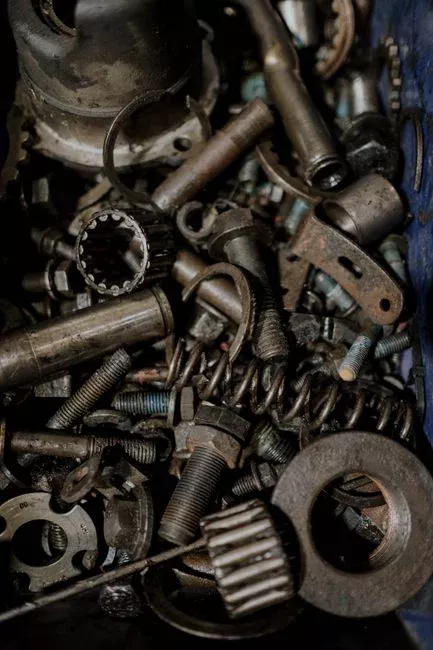
Below is the line-item list you can paste into an RFQ or maintenance budget. Prices are 2026 USD, drawn from HydropureWater field installations and current vendor-quote ranges; intervals are operating-hour-based where the unit runs continuously, or month-based for batch operations.
Bearings — pillow-block and SKF-equivalent — have a typical service life of 12,000–25,000 hours in a clean, lubricated environment; expect 6,000–12,000 hours in an oil-and-grease-laden feed. Cost runs US$180–650 per bearing, US$900–2,800 per full set on a paddle-shaft pillow-block. Mechanical seals on paddle and rotary shafts need replacement every 8,000–18,000 hours or 12–24 months; single-cartridge seals sit at US$320–1,400, with silicon-carbide face upgrades for abrasive feed roughly doubling that. Filter belt and cloth on belt dryers is the dominant consumable line: 6–18 months depending on feed abrasiveness, with PTFE-coated polyester cloth at US$45–180 per m² and a full belt module (cloth, edge reinforcement, tracking hardware) at US$1,200–4,800 per m² installed. Drive-train wear is cheap individually but accumulates: V-belts at US$25–90 each, replaced every 4,000–8,000 hours; roller chain at US$8–35 per metre, replaced every 8,000–15,000 hours; gear oil at US$120–400 per changeout on an annual cycle. Sensors and control components — temperature probes at US$60–220, pressure transmitters at US$180–450, VFDs at US$450–1,800 — are the items most often unstocked and most often responsible for the longest unplanned stoppages. Heat-pump dryers add compressor scheduled service at 8,000–12,000-hour intervals, US$1,200–3,500 per service including refrigerant top-up and contactor replacement.
| Wear part | Replacement interval | 2026 unit cost (USD) | Notes |
|---|---|---|---|
| Pillow-block bearing (SKF-equivalent) | 12,000–25,000 h | 180–650 / bearing | Halve interval on oil-laden feed |
| Mechanical seal (single cartridge) | 8,000–18,000 h or 12–24 mo | 320–1,400 / seal | SiC faces +80–100% for abrasive feed |
| Filter belt / cloth (PTFE-coated polyester) | 6–18 mo | 45–180 / m² cloth; 1,200–4,800 / m² installed | Dominant belt-dryer consumable |
| V-belt (drive) | 4,000–8,000 h | 25–90 each | Replace as matched set |
| Roller chain | 8,000–15,000 h | 8–35 / m | Including connecting links |
| Gearbox oil change | Annual / 4,000 h | 120–400 / changeout | Synthetic PAO preferred |
| Temperature probe (PT100) | 24–48 mo | 60–220 | Stock at least two |
| Pressure transmitter | 36–60 mo | 180–450 | Stock one per critical loop |
| VFD (fan / pump drive) | 5–8 yr | 450–1,800 | Vendor-stocked not on-site |
| Heat-pump compressor service | 8,000–12,000 h | 1,200–3,500 / service | Includes refrigerant + contactor |
Consumables: The Quiet 2–5% of CAPEX You Forgot to Budget
Consumables scale with hours, not with failure events, which is exactly why they get under-funded — there's no breakdown ticket, only a monthly invoice. The annual lubricant budget for a small-to-mid dryer runs US$600–2,200: high-temperature synthetic grease for bearings at US$18–45/kg, gear oil at US$8–22/L, plus a top-up allocation for hydraulic oil on seal-pot systems. Pneumatic consumables — FRL filter elements, solenoid-valve rebuild kits, desiccant charges — typically sit at US$250–900/year and are easy to forget because they're billed to instrumentation, not to the dryer line. Heat-transfer-medium losses (thermal-oil top-up, glycol make-up, steam-trap discharge) run US$300–1,500/year; oil- and grease-laden feed sludges increase this materially because carry-through contaminates the heating circuit. Cleaning chemicals — belt-cleaner solutions, CIP detergents, heat-pump descaler — run US$400–1,800/year, scaling directly with feed chemistry: a dairy or slaughterhouse sludge cake will be at the upper end, a primarily mineral water-treatment cake at the lower end. Filters (inlet air, exhaust, HEPA on odour-controlled systems) cost US$120–600 per changeout at 2–4 changeouts per year, with HEPA on enclosed systems the most expensive line. If you operate an upstream automatic chemical dosing system for conditioning, allow an additional 5–10% on cleaning-chemical budget because polymer carry-through into the dryer accelerates fouling of belts and evaporator coils.
Annual OPEX Benchmark by Dryer Type
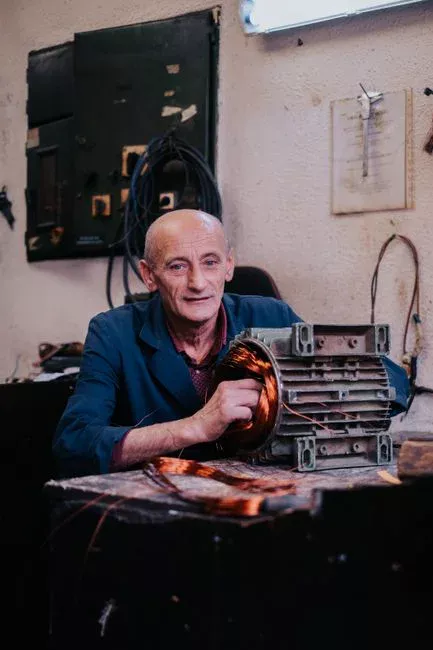
The 2026 industry benchmark for annual parts-plus-consumables spend lands at 6–14% of CAPEX, with geometry determining where within that band a given unit sits. Use the table below as a pre-procurement estimator or as a post-installation sanity check against your own GL codes.
Belt and heat-pump belt dryers in the US$80,000–250,000 CAPEX class (5–30 m² belt area) carry an annual parts-plus-consumables bill of US$7,000–22,000, or 8–12% of CAPEX, dominated by belt and cloth replacement. Hollow-blade and paddle dryers in the small horizontal OEM/ODM class (US$25,000–50,000 CAPEX) run US$2,500–7,000 per year, or 8–14% of CAPEX, dominated by mechanical seals and shaft bearings. Rotary drum dryers on a mid-size unit show US$12,000–40,000 per year, with tyre/liner and girth-gear service driving predictable cost peaks at year 3 and year 6 — budget for those peaks, don't amortize them. Heat-pump low-temperature dryers sit at the bottom of the range, 3–5% of CAPEX, because the geometry has few moving parts; the trade-off is higher electricity-driven OPEX, which is outside the parts scope but real.
| Dryer type | Typical CAPEX class (USD) | Annual parts + consumables (USD) | % of CAPEX | Dominant cost line |
|---|---|---|---|---|
| Belt / heat-pump belt (5–30 m²) | 80,000–250,000 | 7,000–22,000 | 8–12% | Belt/cloth replacement |
| Hollow-blade / paddle (small horizontal) | 25,000–50,000 | 2,500–7,000 | 8–14% | Seals + shaft bearings |
| Rotary drum (mid-size) | 150,000–400,000 | 12,000–40,000 | 6–10% | Tyre/liner + girth-gear service (year 3 & 6 peaks) |
| Heat-pump low-temp | 100,000–300,000 | 4,000–12,000 | 3–5% | Compressor service + refrigerant |
Spares Stocking Strategy: Critical, Planned, and Insurance
The objective isn't to minimize parts spend; it's to convert unplanned spend into planned spend. Three tiers cover the decision space, and the lead-time rule below is the cut-off between them. Critical spares stay on-site for immediate use: one set of shaft bearings, one set of mechanical seals, a matched set of drive belts, one temperature probe, and one pressure transmitter per critical control loop — typically US$1,800–4,500 of working capital tied up per dryer. Planned spares sit at the vendor under kit-pricing or a 4-week lead-time agreement: gearboxes, VFDs, full belt modules, larger bearings — these come at 6–10% discount versus spot buy because the vendor holds the stock, not you. Insurance spares are kept only for redundant lines or remote sites where delivery exceeds 2 weeks: a spare gearbox, a spare motor assembly, a spare control PLC. The decision rule is mechanical: anything with a delivery longer than 2 weeks belongs on-site, because on most plants the average unplanned downtime cost exceeds the carrying cost of the part within 18 months. For multi-line sites with shared duty, formalize this in a SCADA engineering guide for wastewater plants framework that ties critical-spares status to uptime KPIs rather than to purchase-order cycles. The same principle applies whether the site is a municipal WWTP, a food-processing ETP, or a side-stream of a brewery or textile dye-house — the geometry of the dryer sets the parts list, but the stocking logic is universal.
| Tier | Typical contents | Working capital per dryer (USD) | Lead time | Trigger to hold |
|---|---|---|---|---|
| Critical (on-site) | Bearings, mechanical seals, drive belts, temp + pressure spares | 1,800–4,500 | Same day | Any item on the 30-day failure list |
| Planned (vendor kit) | Gearbox, VFD, full belt module, larger bearings | 6–10% discount vs. spot | 2–4 weeks | Items on 6–24 month replacement cycle |
| Insurance (remote / redundant) | Spare gearbox, motor, PLC | 8,000–25,000+ | Multi-week | Lead time >2 weeks and site has no redundant line |
Frequently Asked Questions
What percentage of CAPEX should a sludge dryer allocate annually to spare parts and consumables in 2026? Industry data for 2026 places annual parts-plus-consumables spend at 6–14% of CAPEX, with belt geometries at the upper end (8–12%) and heat-pump geometries at the lower end (3–5%); paddle and hollow-blade dryers span the full 8–14% band depending on feed abrasiveness (HydropureWater field data, 2026).
How does feed-sludge chemistry change wear-part replacement frequency? Oil- and grease-laden feed, abrasive grit, and high-chloride brine sludges can double bearing and mechanical-seal replacement frequency versus a clean water-treatment cake. The dominant mechanism is seal-face wear and grease washout, not corrosion alone, which is why silicon-carbide seal faces pay back on industrial ETPs but rarely on municipal WWTPs.
What is the standard on-site critical-spares holding for a single sludge dryer line? 8–12 weeks of on-site critical spares is the working norm in 2026, with the most-stocked items being shaft bearings, mechanical seals, drive belts, and at least one of each control sensor (temperature probe and pressure transmitter). On most sites this equates to US$1,800–4,500 of working capital per dryer.
What does 5-year cumulative wear-part spend look like versus original CAPEX? For belt and paddle dryers, 5-year cumulative wear-part spend typically lands at 35–65% of original CAPEX. Heat-pump units come in lower because the geometry has fewer wear items; rotary drum dryers often exceed the upper bound due to year-3 and year-6 service peaks on the girth gear and tyre/liner.
Related Equipment
- MBR membrane bioreactor system — specifications, capacity range, and technical data