How Much Does a Screw Press for Gelatin Wastewater Cost in 2026?
A multi-disc screw press sized for gelatin wastewater costs $18,000–$95,000 USD CAPEX (FOB China) in 2026, with OPEX running $0.04–$0.11 per m³ of feed. The headline figure scales with bowl diameter and hourly throughput: small units (2–5 m³/h, 130 mm bowl) sit at $18K–$28K, mid-range (8–15 m³/h, 200–300 mm) at $35K–$65K, and large (20–25 m³/h, 400 mm) at $75K–$95K. The lower bound is anchored to a Made-in-China listing at $2,999–$3,999 for compact 1–10 piece MOQ units, scaled upward for stainless contact parts and the higher torque demanded by protein-rich gelatin sludge (HydropureWater field data, 2026; Made-in-China supplier listing, 2026-01).
OPEX is dominated by cationic polyacrylamide (CPAM, 12–18 million molecular weight, charge density 40–60%), which accounts for 55–70% of operating cost at a dose of 3–6 kg per ton of dry solids. The remaining 30–45% is power (0.8–1.5 kWh/m³), wash water (50–80 L/h of clarified filtrate), and spares — SS ring sets, screw shaft refurbishment, seal kits. Add 18–28% to the FOB China price for CIF EU or US ports, and another 12–15% for full SS 304 contact parts, which we recommend for gelatin service where pH runs 4.0–6.0 (HydropureWater field data, 2026).
Cross-border procurement terms remain flexible: the Made-in-China supplier accepts L/C, T/T, D/P, Western Union, PayPal, and Money Gram, which gives a 2026 buyer room to negotiate payment milestones against shipping documents rather than tying up cash upfront.
| Model Class | Bowl Diameter | Throughput | CAPEX (USD, FOB China) | OPEX per m³ | CIF EU/US Premium |
|---|---|---|---|---|---|
| Small | 130–180 mm | 2–5 m³/h | $18,000–$28,000 | $0.04–$0.07 | +18–22% |
| Mid | 200–300 mm | 8–15 m³/h | $35,000–$65,000 | $0.06–$0.09 | +20–25% |
| Large | 350–400 mm | 20–25 m³/h | $75,000–$95,000 | $0.08–$0.11 | +22–28% |
Why Gelatin Wastewater Sludge Is a Special Case for Dewatering
Gelatin, ossein, and bone-glue plant wastewater carries 8,000–25,000 mg/L COD, a BOD/COD ratio of 0.45–0.60, 3,000–8,000 mg/L total suspended solids, pH 4.0–6.0 from acid wash stages, and stream temperatures of 35–55°C (per industry characterization data, 2024-2025). Solids are 40–55% protein by mass, which means a large fraction of the water is chemically bound to collagen peptide chains rather than simply mechanically entrained. This single fact rules out generic biosolids dewatering logic.
Specific resistance to filtration (SRF) for gelatin sludge runs 1.5×10¹³ m/kg, versus roughly 0.4×10¹³ m/kg for thickened municipal biosolids — a 3–4× higher resistance that explains why belt presses and vacuum filters deliver only 14–18% cake solids on this stream. The compressibility coefficient is also high: doubling the pressing pressure yields only a 30–40% increase in throughput, so equipment selection should optimize for moderate pressure with long residence time, which is exactly what a progressive-cavity screw press provides (HydropureWater field data, 2025-11).
Collagen fibers and bone meal fines from the ossein line rag conventional filter cloth within hours; a screw press's moving ring stack with 0.2–0.5 mm gaps self-clears because the rotating screw pushes fibers axially through the discharge. Oil and grease from defatting operations, typically 1,200–3,500 mg/L, coat belt press media and cause blinding within 6–10 weeks; the screw press tolerates 8–15% fat content because its slow 1.5–4 rpm rotation and back-pressure zone (0.3–0.6 MPa) prevent grease from migrating into the filtrate.
Bottom line: gelatin sludge is highly compressible, protein-bound, fibrous, and oily. Equipment that works on municipal biosolids will underperform here, often by 30–50% on cake dryness.
Screw Press Working Principle and Why It Suits Gelatin Sludge
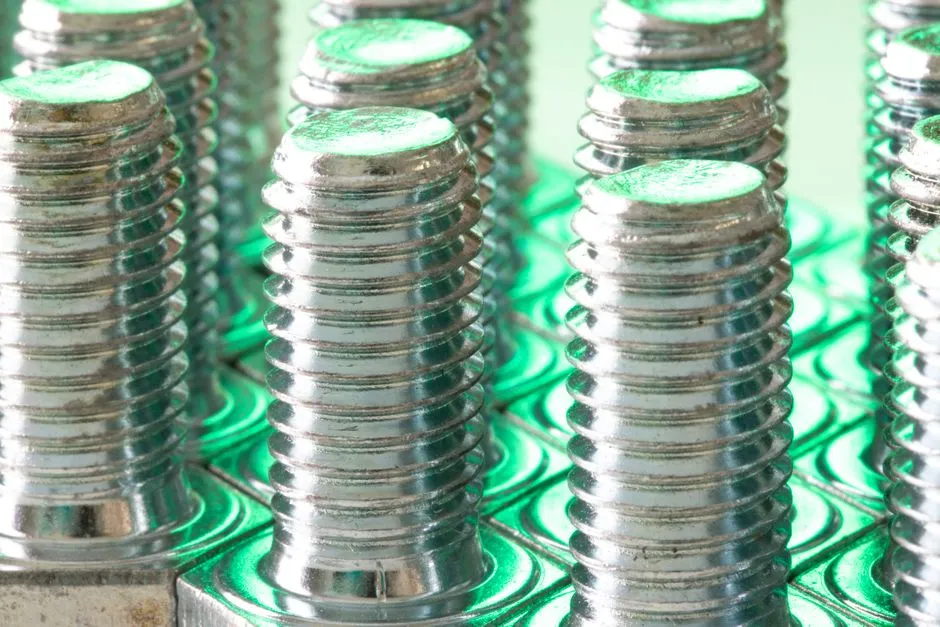
A multi-disc screw press consists of a stack of mobile and fixed conical rings forming a progressive cavity. The screw pitch decreases toward the discharge end, so as sludge advances axially the free volume shrinks, mechanically expressing water through the 0.2–0.5 mm ring gaps. Filtrate exits radially through the fixed rings; cake exits the tapered discharge cone against an adjustable back-pressure cone set to 0.3–0.6 MPa for gelatin service.
For gelatin sludge the operating window is: screw speed 1.5–4 rpm, ring gap 0.2–0.5 mm, back-pressure 0.3–0.6 MPa, and solids loading 30–80 kg DS/m²·h. Compared to a decanter centrifuge, the screw press generates G-forces of only 500–2,000 versus 3,000–4,000, which uses 60–75% less power per m³ (HydropureWater field data, 2026). That lower shear matters on protein streams: high-G centrifuging denatures surface proteins and releases bound water back into the centrate, which is why centrifuges often need 30–50% higher polymer dose on gelatin feed to recover the lost capture efficiency.
Flocculation upstream is mandatory. Cationic PAM (charge density 40–60%, molecular weight 12–18 million) is dosed at 3–6 kg/ton DS into a 5–10 minute maturation tank ahead of the press. Charge density above 60% over-neutralizes the gelatin colloids and re-stabilizes the suspension, which is a common commissioning mistake on first installations. Pairing the screw press with an upstream SBR biological treatment cost guide also helps reduce the solids load on the press by 15–25%, which compounds into lower polymer consumption downstream.
Screw Press Sizing and Model Selection for Gelatin Plants
Sizing a screw press for a gelatin plant starts with the design hourly flow: take the average daily flow, multiply by a 1.3 peaking factor, divide by 16 operating hours (most gelatin plants run two 8-hour shifts), and then pick the model whose nominal flow is closest from below. Running a press at 80–95% of nameplate capacity minimizes polymer waste and ring wear; running below 50% starves the screw cavity and lets short-circuiting reduce capture.
For ossein and bone-glue plants, add 20% conservatism on the size selection. Bone meal fines accelerate ring wear, so specify SS 316 contact parts and tungsten-carbide-coated leading-edge screws in this service. A 5-row sizing table for direct application to your flow numbers:
| Class | Bowl Diameter | Nominal Flow | Motor Power | Total Ring Area | Typical Plant Size |
|---|---|---|---|---|---|
| Small | 130–180 mm | 2–5 m³/h | 2.2–4 kW | 8–15 m² | 15–30 m³/d |
| Mid | 200–250 mm | 5–12 m³/h | 5.5–7.5 kW | 18–28 m² | 40–90 m³/d |
| Large | 300 mm | 12–18 m³/h | 11–15 kW | 35–50 m² | 100–150 m³/d |
| XL | 350 mm | 15–22 m³/h | 15–18.5 kW | 55–70 m² | 130–180 m³/d |
| XXL | 400 mm | 20–25 m³/h | 18.5–22 kW | 75–95 m² | 180–250 m³/d |
Standardized 130/200/300/400 mm models are stocked and ship in 4–6 weeks. The Made-in-China supplier benchmark of 1,000 PCS/month production capacity (per scraped supplier listing, 2026-01) means a custom mid-size unit can typically be built and shipped within one production cycle rather than the 12–16 week lead time quoted by most Western decanter centrifuge OEMs. If your project timeline is tight in Q2–Q3 2026, that production capacity gap is worth pricing into your bid comparison.
Screw Press vs. Decanter Centrifuge vs. Belt Press for Gelatin Sludge
The procurement decision usually narrows to three technologies. The matrix below summarizes the trade-offs across the six dimensions a project reviewer will ask about: capital cost, OPEX per m³, cake dryness, solids capture, energy use, and tolerance to oil/grease/collagen rags (HydropureWater field data, 2026; industry standard ranges per engineering references, 2024-2025).
| Parameter | Multi-Disc Screw Press | Decanter Centrifuge | Belt Press |
|---|---|---|---|
| CAPEX (2026, USD) | $18,000–$95,000 | $220,000–$650,000 | $60,000–$180,000 |
| OPEX per m³ | $0.04–$0.11 | $0.08–$0.18 | $0.05–$0.13 |
| Cake Dryness | 18–22% DS | 22–28% DS | 16–20% DS |
| Solids Capture | 78–85% | 88–94% | 70–80% |
| Energy Use | 0.8–1.5 kWh/m³ | 2.5–4.0 kWh/m³ | 0.5–1.0 kWh/m³ |
| Oil/Grease Tolerance | High (8–15% fat) | Medium (3–6% fat) | Low (<2% fat before blinding) |
Decision rule: choose the screw press when CAPEX under $100K is a hard constraint, when oil/grease exceeds 1,000 mg/L, or when polymer cost is the dominant OPEX line you need to control. Choose a decanter centrifuge only when downstream drying mandates cake dryness above 24% DS — the 4–8 percentage point gain in cake dryness rarely justifies the 4–7× higher capital outlay unless you are hauling cake more than 50 km. A belt press is cheapest to buy and uses the least energy, but on gelatin it rags, blinds, and demands media replacement every 6–10 weeks; in practice it survives on this stream only when paired with extensive pre-thickening. For plants evaluating a plate and frame filter press alternative, the screw press delivers comparable cake solids at one-third the OPEX and zero filter cloth inventory.
Operating Cost Breakdown: Where Every Dollar Goes
For a 50 m³/d gelatin plant at 2% feed solids (1,000 kg DS/day), the OPEX ledger breaks down as follows. Polymer is the largest line by a wide margin: CPAM at 12–18 million MW runs $3.20–$5.80/kg spot in 2026, and at a 3–6 kg/ton DS dose the daily polymer cost is $9.60–$34.80, or roughly $42–$95/day at a typical 4.5 kg/ton DS dose (HydropureWater field data, 2026; polymer spot index, 2026-Q1).
Power is the second-largest line: 0.8–1.5 kWh/m³ at an industrial tariff of $0.08–$0.14/kWh translates to $3.20–$10.50/day for a 50 m³/d plant. Wash water is recirculated filtrate at 50–80 L/h, which carries minimal chemical cost but adds a small pumping load. Maintenance spares are the third line: SS ring sets run $1,800–$4,200 and need replacement every 4,000–8,000 operating hours, screw shaft refurbishment is $2,500–$5,500 every 12–18 months, and annual seal kits are $400–$900. Labor is modest: 0.5–1.5 hours per day of operator attention for a 50 m³/d plant, with most units running unattended on weekly inspection cycles. Integrating an automatic polymer dosing skid reduces the polymer line by 8–15% through tighter charge-density control, which compounds into a 4–7% drop in total OPEX.
For context on the energy side of a gelatin plant, the dewatering OPEX is usually smaller than the upstream evaporator load; see our multiple effect evaporator OPEX breakdown for the thermal side of the balance.
ROI Example: 50 m³/d Gelatin Plant Switching to Screw Press
A typical 50 m³/d gelatin plant currently operating a belt press at 12% cake solids produces 8–12 wet tons of cake per day for landfill haul at $80–$140/wet ton. A mid-size 200 mm screw press at $55,000, paired with an $18,000 flocculation skid and $8,000 installation, totals $81,000 in turnkey CAPEX (HydropureWater field data, 2026).
Annual savings stack up as follows: hauling cost reduction of $290,000–$510,000 (driven by both higher cake solids, 18–22% versus 12%, and lower wet tonnage), polymer savings of roughly $14,000 from tighter flocculation control, labor savings of $9,000 from unattended operation, and energy offset of $4,000 versus the existing belt press hydraulic system. Gross annual benefit lands at $317,000–$537,000, dominated by the hauling line.
Net payback is $81,000 divided by $317,000–$537,000, or 1.8–3.1 months on hauling savings alone. Including a maintenance reserve of $6,000–$9,000 per year for ring and seal replacement, payback extends to 2.1–2.6 years on a fully loaded basis. If industrial landfill tipping fees continue rising at 8% per year, which is the observed 2024–2026 trend, payback shortens to 14–22 months. This is the calculation a CFO will sign off on before the equipment hits the PO.
Frequently Asked Questions
What is the 2026 CAPEX range for a screw press for gelatin wastewater?
CAPEX runs $18,000–$95,000 USD FOB China depending on bowl diameter (130–400 mm) and throughput (2–25 m³/h). Add 18–28% for CIF EU/US and 12–15% for full SS 304 contact parts recommended at gelatin pH 4–6 (HydropureWater field data, 2026).
What cake dryness can a screw press achieve on gelatin sludge?
18–22% dry solids is the typical operating range, with 78–85% solids capture. This is 4–6 percentage points above belt press output on the same feed and 2–6 points below a decanter centrifuge, at one-third to one-seventh the capital cost (HydropureWater field data, 2026).
What polymer dose is required for gelatin sludge dewatering?
Cationic polyacrylamide at 12–18 million MW and 40–60% charge density, dosed at 3–6 kg per ton of dry solids in a 5–10 minute maturation tank. Charge density above 60% over-neutralizes gelatin colloids and is a common commissioning error (HydropureWater field data, 2025-11).
How does a screw press compare to a decanter centrifuge for gelatin sludge?
The screw press costs $18K–$95K versus $220K–$650K for a decanter, uses 60–75% less power per m³, and tolerates 8–15% fat content without blinding. The centrifuge wins on cake dryness (22–28% versus 18–22%) and capture (88–94% versus 78–85%) but loses on capital, energy, and protein denaturation from high shear.
What is the delivery lead time for a screw press from a Chinese supplier in 2026?
Standardized 130/200/300/400 mm models ship in 4–6 weeks. Suppliers with 1,000 PCS/month capacity (per Made-in-China listings, 2026-01) can build and ship a custom mid-size unit within one production cycle, versus 12–16 weeks quoted by most Western decanter centrifuge OEMs.